Natural dyes
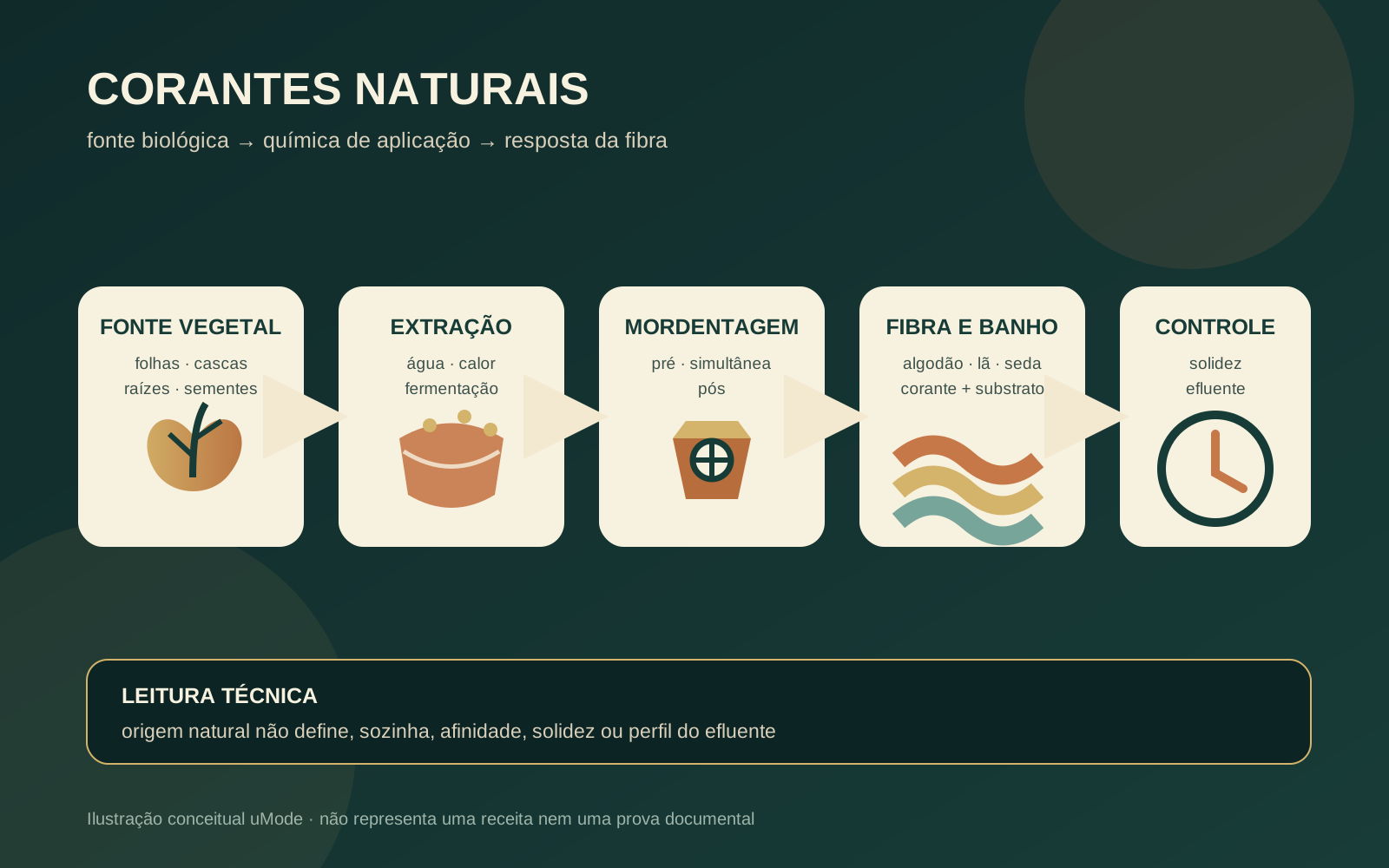
Natural dyes are used to colour textile fibres, but their performance depends on the substrate, dye chemistry and mordanting. Natural indigo illustrates a fermentation-and-aeration route; tannins and mordants can change affinity and complex formation. Fastness, reproducibility and wastewater require a technical reading of the process rather than an assumption based only on biological origin.
On this page
What is Natural dyes?
Natural dyes are used to colour textile fibres, with wide application on cotton, linen, wool and silk and more limited application on nylon and polyester. The term describes a family of colorants, not one recipe: the result depends on the fibre, the dye compound and the mordanting stage. In fashion’s supply chain, this places the topic alongside textile finishing, cotton, wool and silk.
Classification by chemical structure is presented as the most appropriate and widely accepted system. It groups colorant families by chemical groups with characteristic properties instead of treating every biologically sourced material as equivalent.
How does natural dyeing produce colour?
Natural indigo illustrates a route in which plants are steeped in water until fermentation starts; after glucoside hydrolysis, the liquor is separated and aerated. Aeration converts indoxyl into indigotin, which separates as a precipitate. The example shows that “natural” can involve chemical transformations and a defined process sequence.
Mordanting describes when the mordant is applied: pre-mordanting, meta-mordanting or post-mordanting. The literature defines mordant dyes as dyes that can be bound to a material with little or no affinity by adding a mordant that increases interaction between dye and fibre. Some dyes are capable of forming complexes with a metal mordant.
Tannins improve fibre affinity towards different natural dyes and are used as mordants. The source also describes uses in glues, inks and stains; for textile technique, the relevant point is their relation to affinity and mordanting, not an equivalence between all tannins and all substrates.
What limits development and control?
Shade reproducibility and the availability of well-defined procedures are recurring challenges. Shade lasting performance under water and light exposure is also a recurring limitation. These limits make the relations to quality control and garment laundry relevant, without turning fastness into a property guaranteed by biological origin.
Metallic mordanting adds a specific environmental limit: it can generate wastewater containing residual toxic metal ions associated with environmental impacts and health problems. The dye’s natural origin therefore does not describe the process profile by itself. Wastewater must be considered together with the chemistry actually used, while fibre and finishing choices remain related to recycled cotton and digital printing as supply-chain relations, not synonyms.
Natural dyes matter to fashion because they combine a biological source, application chemistry and a surface response that can vary across fibres and mordanting routes. Technical use depends on keeping those layers distinct: origin, chemical structure, process sequence, affinity, fastness and wastewater.
Verified facts
- Natural dyes have wide application on natural fibres such as cotton, linen, wool and silk, and can be applied to nylon and polyester to some extent.
Source: intechopen.com ↗ - Shade reproducibility and the availability of well-defined procedures are recurring challenges in natural-dyed textiles.
Source: intechopen.com ↗ - Shade lasting performance under water and light exposure is a recurring challenge in natural-dyed textiles.
Source: intechopen.com ↗ - In natural indigo processing, fermentation hydrolyses a glucoside and aeration converts indoxyl into indigotin, which separates as a precipitate.
Source: intechopen.com ↗ - Tannins improve fibre affinity towards different natural dyes.
Source: ebi.ac.uk ↗ - Tannins are used as mordants, as well as in glues, inks and stains.
Source: ebi.ac.uk ↗ - Some natural dyes are capable of forming complexes with a metal mordant.
Source: ebi.ac.uk ↗ - Mordant dyes can be bound to a material with little or no affinity by adding a mordant that increases the interaction between dye and fibre.
Source: ebi.ac.uk ↗ - Mordanting is classified by the time of mordant application as pre-, meta- and post-mordanting.
Source: ebi.ac.uk ↗ - Metallic mordants can generate wastewater containing residual toxic metal ions associated with environmental impacts and health problems.
Source: ebi.ac.uk ↗ - Classification by chemical structure is presented as the most appropriate and widely accepted system for classifying natural colorants.
Source: ebi.ac.uk ↗
Related entries
Cotton
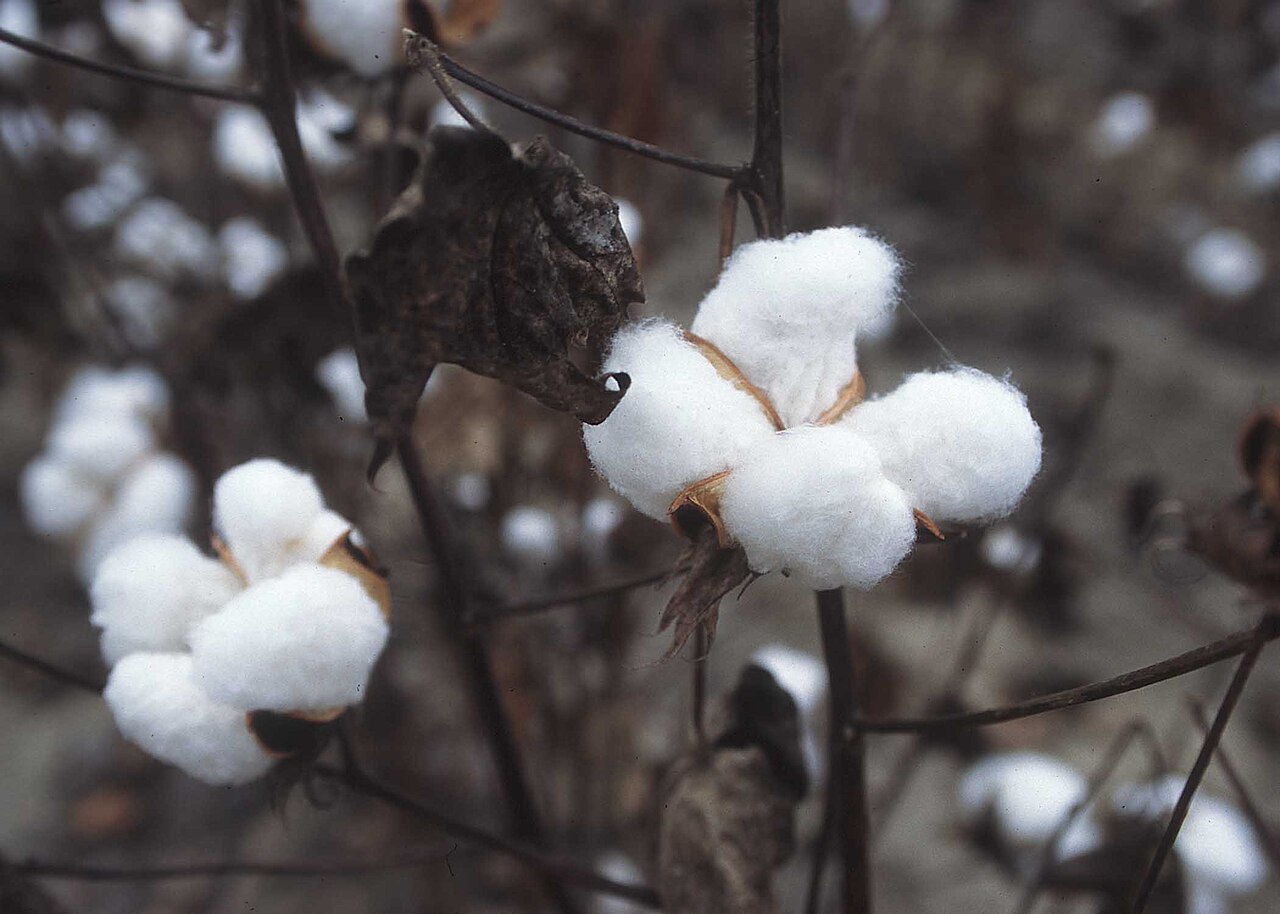
Cotton is the most widely used natural fiber in the global textile industry. Grown around the seeds of the cotton plant (Gossypium), it is prized for comfort, breathability and versatility in apparel.
Recycled cotton
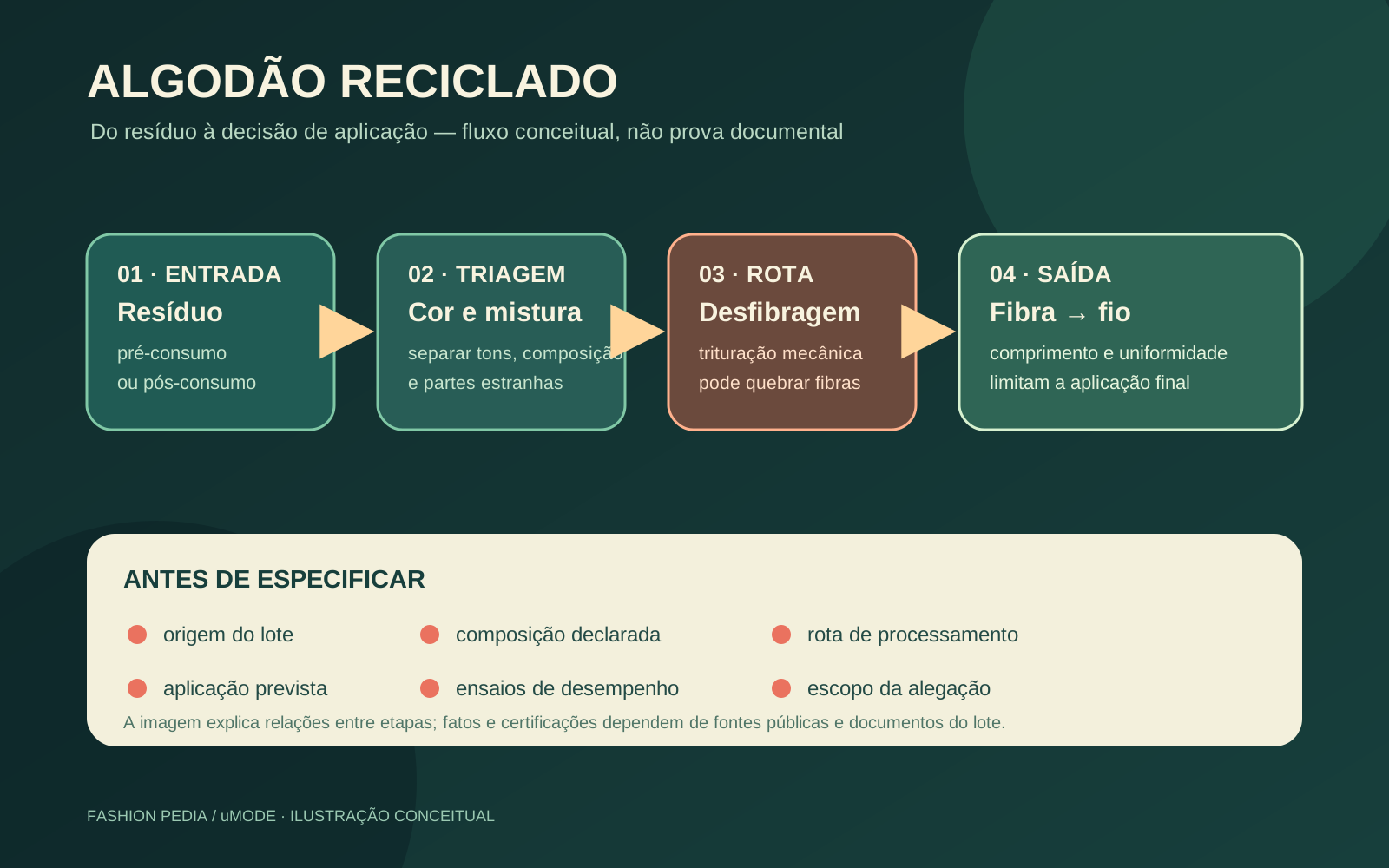
Recycled cotton is cotton fabric converted back into cotton fibre for reuse in textile products. The input may be pre-consumer or post-consumer material; sorting, shredding, fibre length and intended application determine what a given lot can deliver.
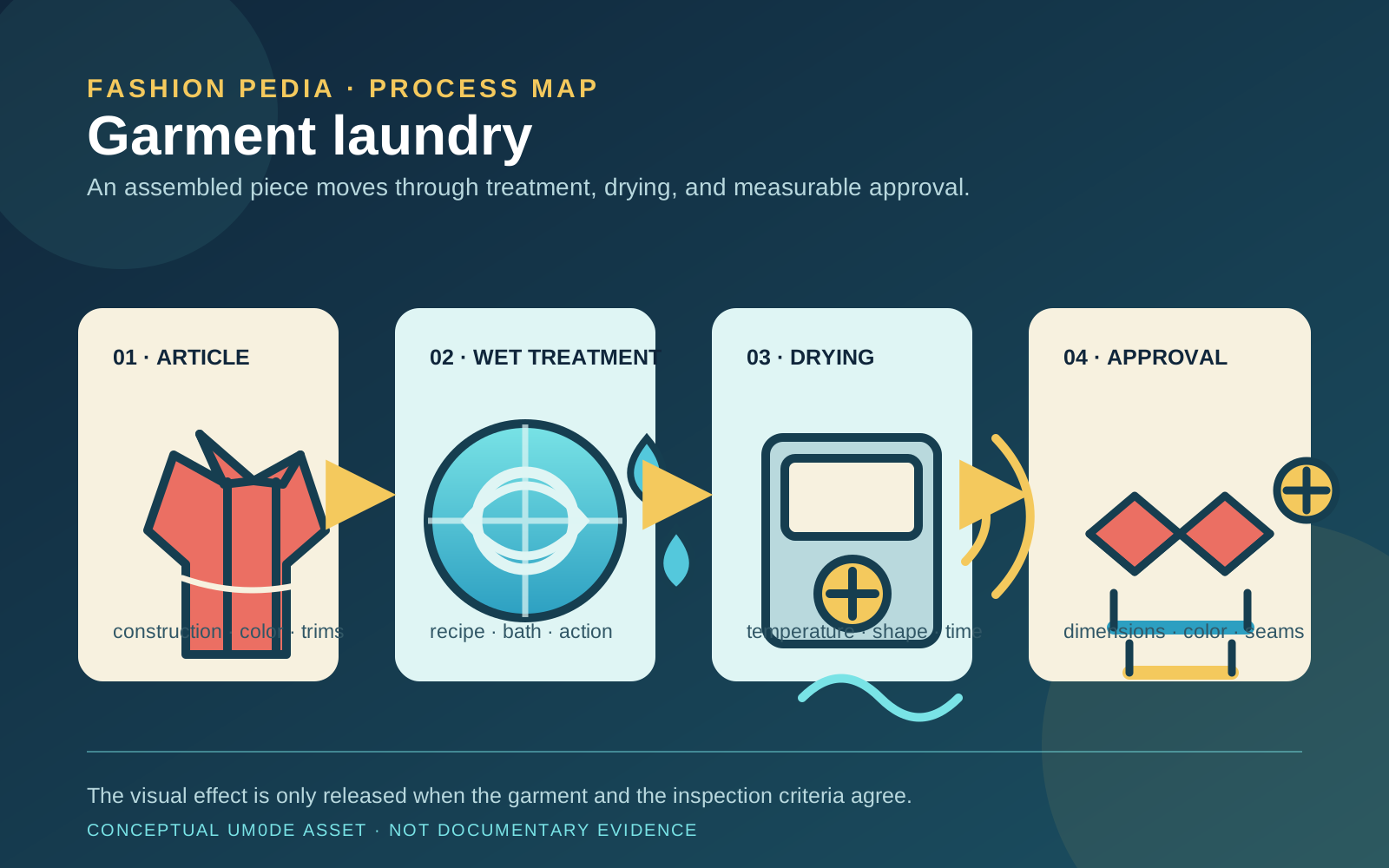
Industrial garment laundry
Industrial garment laundry is the controlled wet treatment and drying of an already-sewn garment to obtain cleaning, appearance change, or a finish. Approval must separate the visual effect from measurable results such as dimensional change, color change, appearance, and seam twist.
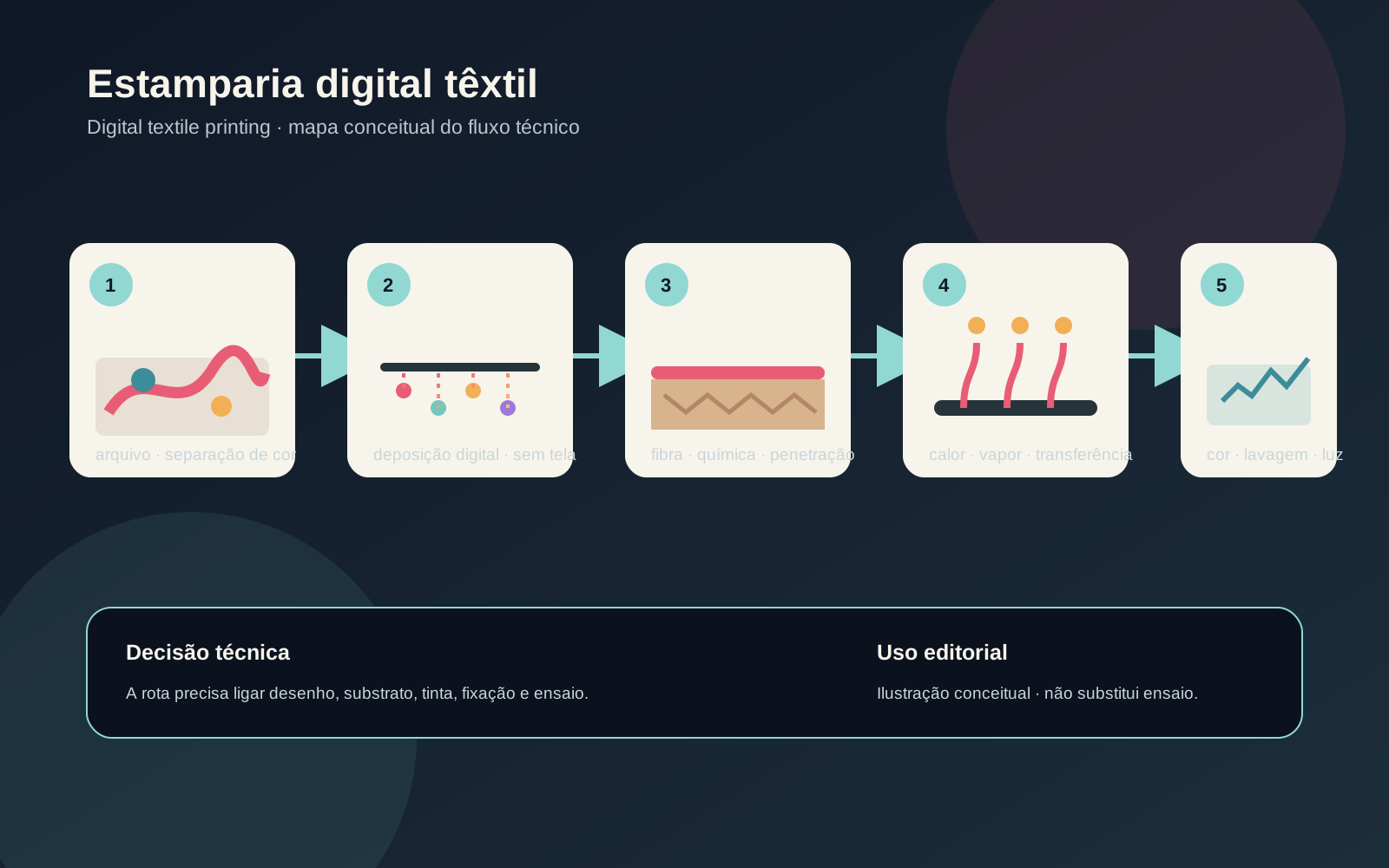
Digital textile printing
Digital textile printing places an image on a textile substrate through a digitally controlled print system. The route must be selected with the substrate, ink, preparation or transfer, fixation, and relevant fastness tests considered together.

Apparel quality control
Apparel quality control combines specifications, inspection, and testing to check whether fabrics, trims, and garments meet the expected performance for a product and end use. The process can examine color, drape, hand, durability, conformance, defects, fit, seam integrity, shrinkage, and drying performance. Quality decisions depend on the product and its intended use.
Sources
Want to apply this to your operation?