Digital textile printing
Digital textile printing places an image on a textile substrate through a digitally controlled print system. The route must be selected with the substrate, ink, preparation or transfer, fixation, and relevant fastness tests considered together.
On this page
What is Digital textile printing?
Digital textile printing applies an image through a digital print system rather than relying on a prepared screen for every design. Mimaki’s published chronology places the technology’s breakthrough in the late 1990s, when the textile industry was looking for more customization, shorter lead times, and more flexible production. For fashion teams, that history matters less as a date to memorize than as a change in the decision model: the artwork must be evaluated together with the substrate and the finishing route.
The first specification question is not “which printer is available?” but “which result must be reproduced on which substrate?” Record composition, construction, stretch, print side, artwork scale, and tolerances before approving a sample. Digital printing can support fashion prototyping, short runs, and on-demand work, but it does not remove the need to define the material and the finish.
How is the print route assembled?
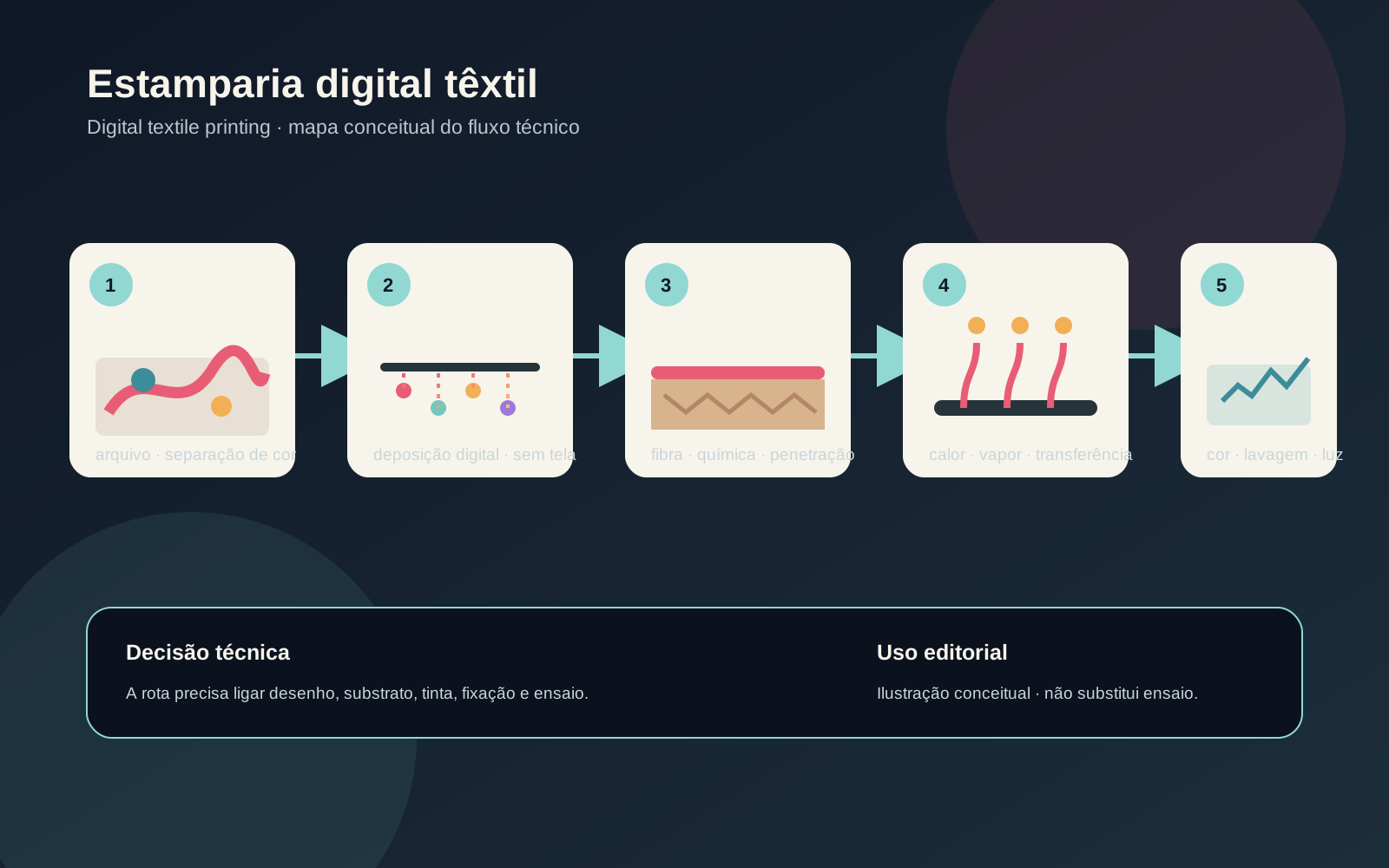
A digital textile route connects five decisions: preparing the file, depositing ink, controlling the relationship between fibre and ink, fixing or transferring the colour, and checking the resulting fastness. The artwork is only the input; the final appearance comes from the interaction between substrate and chemistry. In Mimaki’s TRAPIS example, transfer printing uses an inkjet printer and a high-pressure calender in two steps: the design is printed onto pigment transfer paper and then applied to the material.
That example separates two workflow families. For digital dye printing, Mimaki reports that fabric often requires pretreatment and washing after fixation to achieve fastness, colour accuracy, and compatibility with different substrates. A pigment-transfer route can rearrange those stages; steps from one technology should not be assumed to apply to another without checking the equipment, ink, and textile specifications.
For product development, document the exact combination: approved artwork, colour reference or profile, substrate lot, ink, preparation, fixation temperature and time, and later finishing. A technical specification makes the approved result repeatable, while colour management explains how the visual reference will be compared across screen, proof, and printed textile.
How should colour and fastness be validated?
Validation begins with the intended use, not with a single visual score. AATCC presents methods for colour resistance to perspiration, water, laundering, crocking, and light; each exposure addresses a different use or care risk. Select tests that match body contact, laundering, friction, and exposure. Quality control is not only checking whether the motif looks sharp: it also records the method, conditions, result, and acceptance criterion.
AATCC states that its textile evaluation methods are international standards cited in government, industry, and company specifications. The method therefore belongs in the technical conversation: “approved” without naming the test is incomplete information. During sample approval, keep the physical reference, substrate identification, and test result with the digital artwork.
Cotton and silk appear in Mimaki’s description of TRAPIS as materials that can receive printing with one pigment ink, while polyester often participates in dye-sublimation routes; that does not make all fibres interchangeable. Compare adhesion, handle, coverage, stretch, laundering, and light performance for the chosen combination itself.
What are the technique’s limits?
Digital textile printing is not an automatic promise of lower cost, greater accuracy, or sustainability. Mimaki attributes the estimate of 14.5 litres of water saved per square metre and a nearly 90 percent reduction to its own research on TRAPIS versus digital dye printing. That figure belongs to the stated solution and comparison; it is not a universal property of every digital printing process.
Replacing screens with a file is not enough for an industrial decision. Consider yield, usable width, speed, drying or curing, preparation, post-treatment, colour stability, and testing. When a collection combines polyester, cotton, and blends, approve each route and substrate instead of assuming that a visual result on one fibre will transfer to another. This keeps design, development, production, and quality aligned without erasing the differences between techniques.
Verified facts
- Digital printing began transforming textile production in the late 1990s, as the industry sought greater customization, shorter lead times, and new production practices.
Source: mimakieurope.com ↗ - Mimaki describes digital textile printing as able to print directly onto fabrics and to support on-demand production and intricate patterns without setup limitations from screens.
Source: mimakieurope.com ↗ - In Mimaki's TRAPIS system, digital textile transfer uses two steps: an inkjet printer and a high-pressure calender.
Source: mimakieurope.com ↗ - In the digital dye-printing route described by Mimaki, fabric often needs pretreatment and washing after fixation to achieve fastness, colour accuracy, and compatibility with different substrates.
Source: mimakieurope.com ↗ - The TRAPIS solution described by Mimaki can print on materials including natural fibres such as cotton and silk with a single type of pigment ink.
Source: mimakieurope.com ↗ - According to research cited by Mimaki, TRAPIS saves about 14.5 litres of water per square metre, a nearly 90 percent reduction versus digital dye printing.
Source: mimakieurope.com ↗ - AATCC presents methods for evaluating colour resistance to perspiration, water, laundering, crocking, and light exposure.
Source: aatcc.org ↗ - AATCC states that its textile evaluation test methods are international standards cited in government, industry, and company specifications.
Source: aatcc.org ↗
Related entries

Fashion product technical specification
A technical specification is the controlled information set that translates an approved fashion product into verifiable sampling and manufacturing requirements. It brings together drawings, materials, measurements, construction, tolerances, identification, labelling, comments and revision history; its content varies by category, company, market and stage.
Polyester
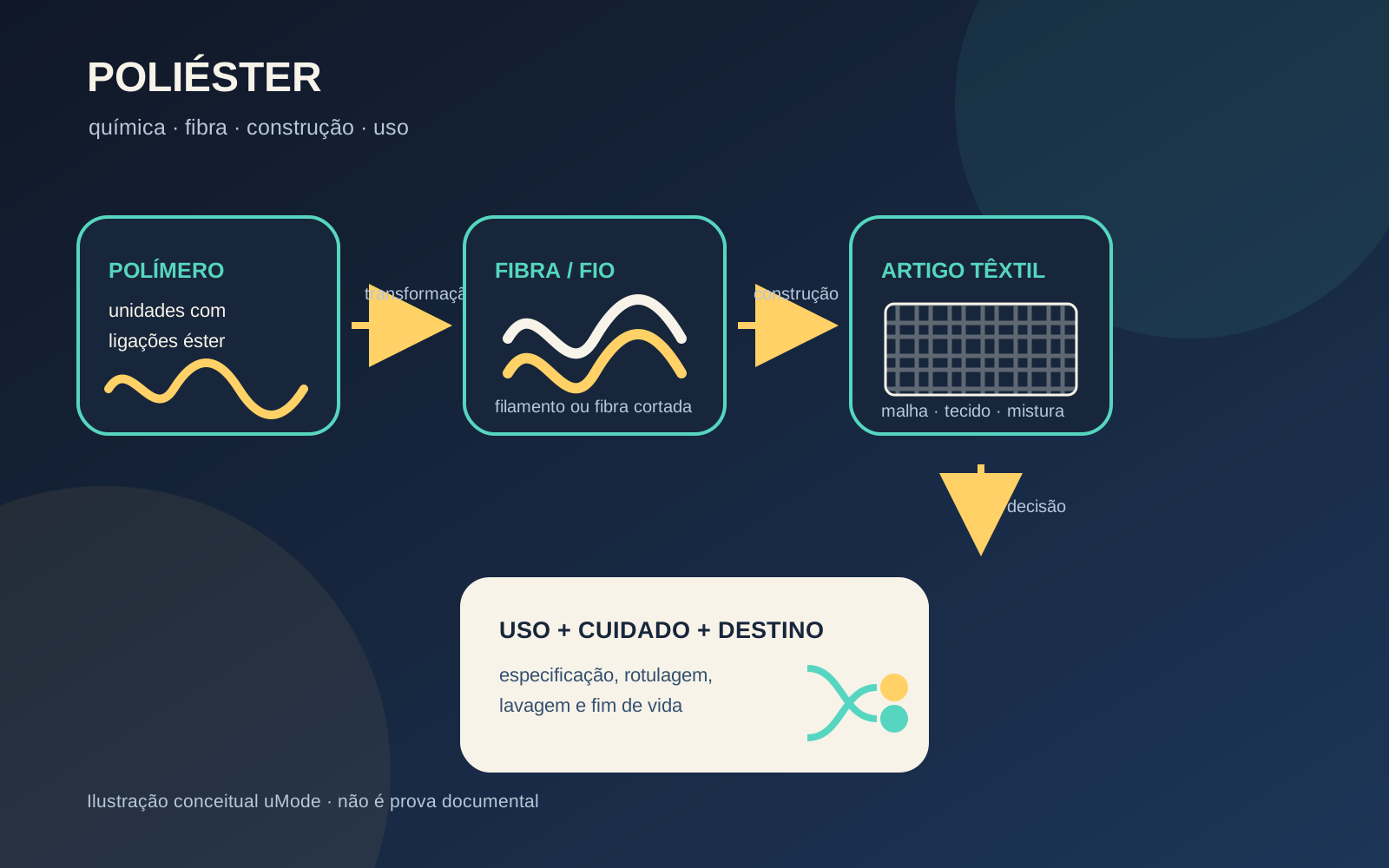
Polyester is a family of polymers with ester linkages; in fashion, the name most often refers to textile fibers and products based on PET. The result still depends on fiber, yarn, construction, and the rules that govern fiber composition and care.
Fashion Product Prototyping
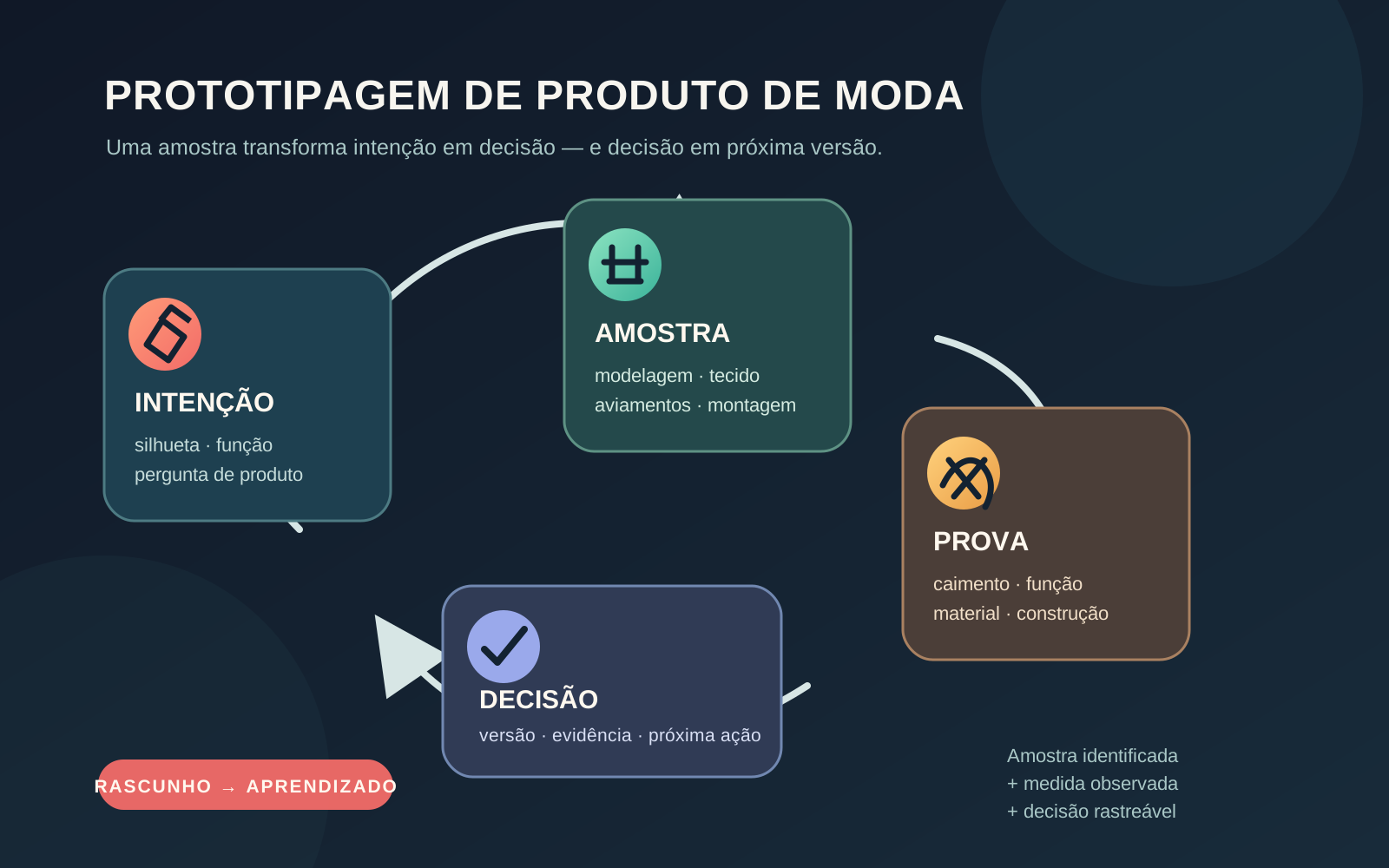
Fashion product prototyping is the process of building and evaluating samples that turn a design intention into a specified, fitted and manufacturable product. It connects design, patternmaking, materials, construction, fit and revision records before a production decision.
Sources
Want to apply this to your operation?