Wool
Wool is the textile fiber obtained from the fleece of sheep and other animals. Insulating and elastic, it is the basis of winter knitwear and tailoring.
What is wool?
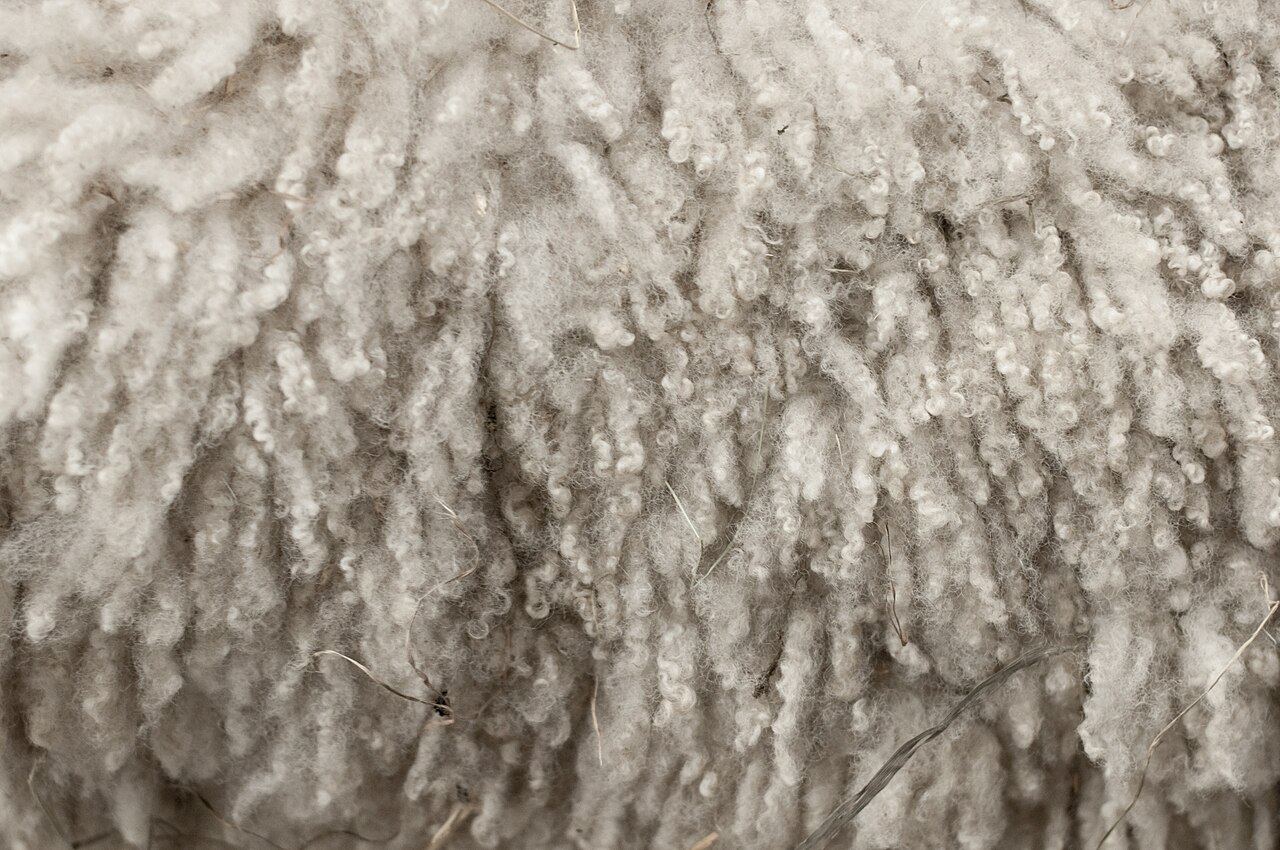
Wool is the textile fiber obtained from the fleece of sheep and some other animals, composed mostly of the protein keratin — the same protein family that forms hair and nails. It has historically been the central fiber of the textile industry in cold climates and of classic tailoring, behaving very differently from plant fibers like cotton and linen.
How does wool behave as a fiber?
Two structural traits explain almost everything about how wool behaves. First, the fibers have a natural waviness — called crimp — which gives the yarn elasticity and bulk and is the reason wool garments spring back into shape after being stretched. Second, the fiber's surface is covered in microscopic scales (the cuticle), which allow wool to felt when exposed simultaneously to heat, moisture and agitation — a process used both intentionally, in felt production, and accidentally, when a wool garment shrinks in the wrong wash.
Wool also has an unusual capacity to hold moisture — up to roughly 30% of its own weight in water — without the fabric feeling wet to the touch, and it keeps insulating thermally even when damp. It's this combination of elasticity, wrinkle resistance and thermal performance even in adverse conditions that makes wool indispensable in winter garments. From flannel to tweed — a rough-surfaced fabric of Scottish origin — wool defines an entire family of seasonal constructions with no direct equivalent among plant fibers.
Why does wool matter?
Handling wool on a tech pack and in production differs structurally from cotton and linen: cutting, sewing and pattern making require their own parameters because of the fiber's elasticity and its tendency to felt under heat and friction — something a development team needs to anticipate before defining washing process, interlining and finishing. Recognizing whether a garment uses wool twill, wool knitwear or tweed already shapes pattern-making decisions whole steps before production, which at uMode translates into a more precise tech pack and less rework between development and factory.
Verified facts
- Wool is the textile fiber obtained from the fleece of sheep and some other animals.
Source: pt.wikipedia.org ↗ - Wool is composed mostly of the protein keratin.
Source: en.wikipedia.org ↗ - Wool fibers have a natural waviness (crimp), which gives the yarn elasticity and bulk.
Source: britannica.com ↗ - The scaled surface (cuticle) of a wool fiber allows it to felt when exposed to heat, moisture and agitation.
Source: en.wikipedia.org ↗ - Wool can retain up to roughly 30% of its own weight in moisture without feeling wet, and continues to insulate even when damp.
Source: en.wikipedia.org ↗ - Tweed, a rough-surfaced wool fabric, originated in Scotland.
Source: en.wikipedia.org ↗
Related entries
Twill
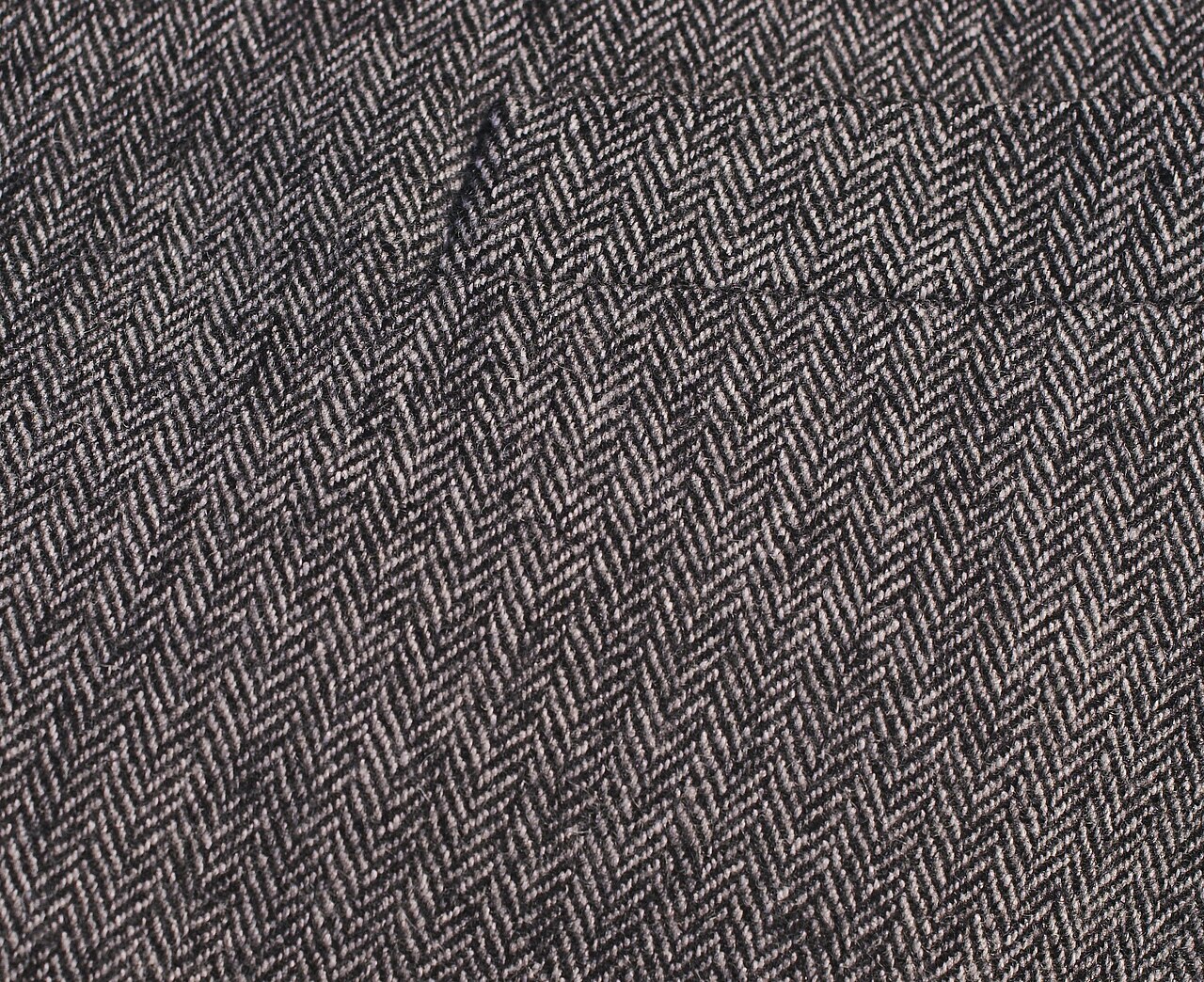
Twill is one of the three fundamental weave structures, recognizable by the diagonal ribs on its surface. Durable and substantial, it is the base structure behind denim, gabardine, and much of utilitarian apparel.
Cotton
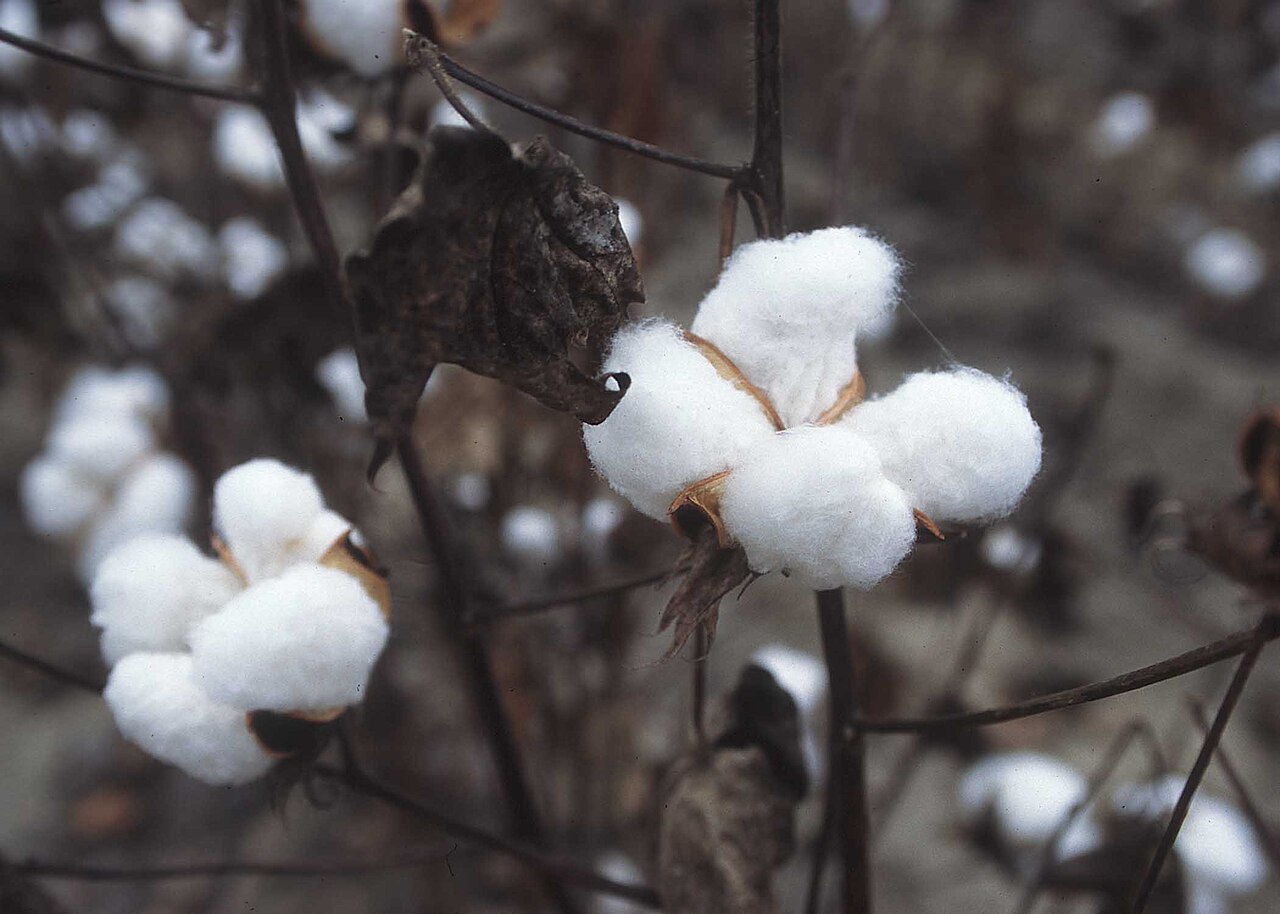
Cotton is the most widely used natural fiber in the global textile industry. Grown around the seeds of the cotton plant (Gossypium), it is prized for comfort, breathability and versatility in apparel.
Sources
Want to apply this to your operation?