Industrial garment laundry
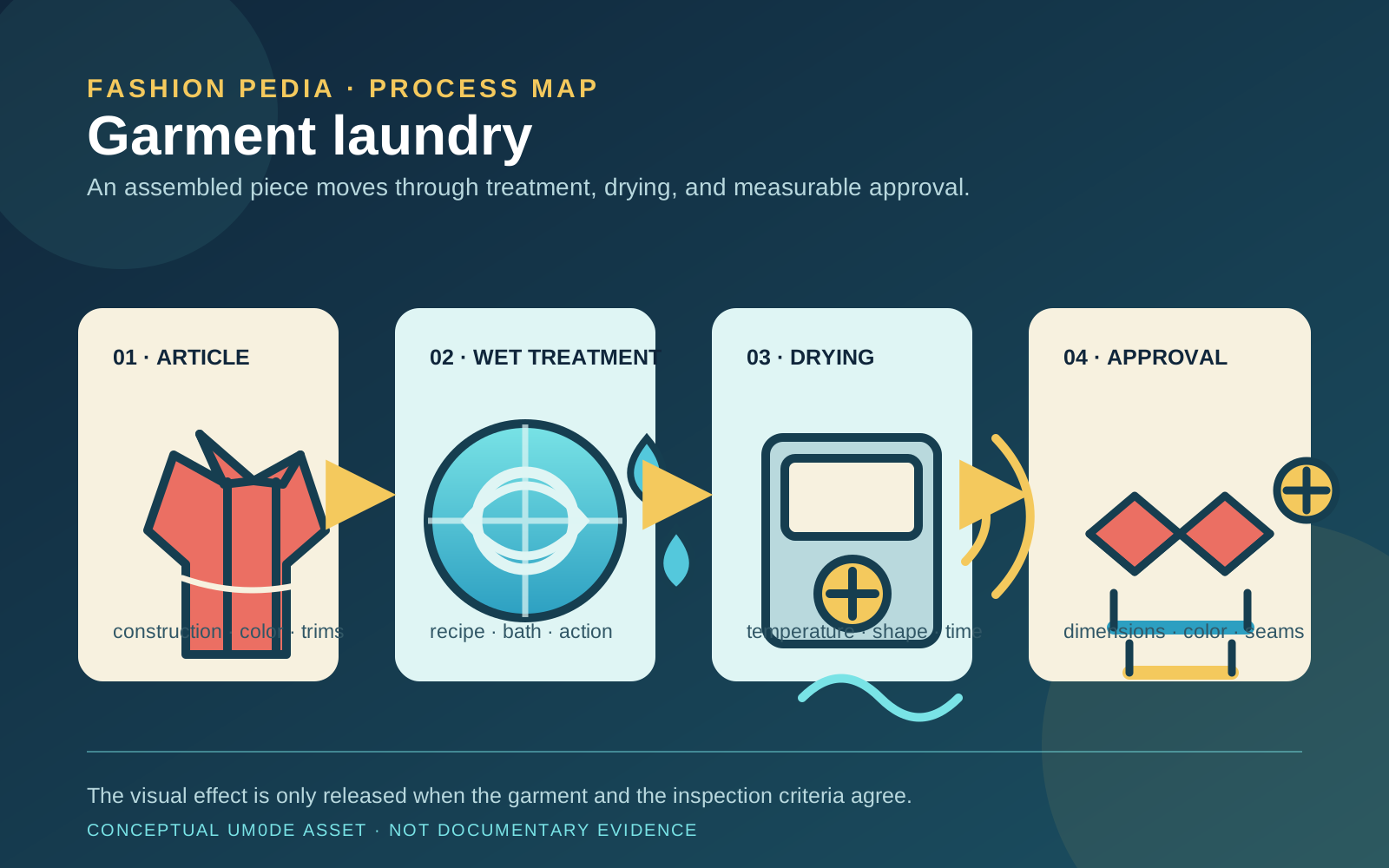
Industrial garment laundry is the controlled wet treatment and drying of an already-sewn garment to obtain cleaning, appearance change, or a finish. Approval must separate the visual effect from measurable results such as dimensional change, color change, appearance, and seam twist.
On this page
What is Industrial garment laundry?
Industrial garment laundry is the treatment of an already-sewn garment, not of loose fiber, yarn, or fabric. The operation may use washing, rinsing, drying, and finishing to seek cleaning, a change in appearance, a change in hand, or a visual effect. Words such as “softened” or “faded” are not enough by themselves: approval must state what will be observed and measured.
This boundary keeps garment laundry separate from the broader textile wet-processing and finishing scope. The EPA describes textile mills as operations that receive fibers, transform materials into yarn or fabric, and finish those materials; that scope includes work before garment assembly. In garment laundry, the decision object is the assembled product, with its construction, seams, color, trims, and care instructions.
How is the effect developed and controlled?
Development starts with a sample and a recipe that identifies the garment, the intended effect, and the release criterion. An operating sheet may record bath ratio, load, time, temperature, pH, mechanical action, product or product combination, rinses, drying, and inspection method. These are parameters to define for the specific article; they are not a universal recipe and should not be copied from another style without validation.
AATCC shows why repeatability matters in laundering tests: standardized equipment, detergent, machines, and ballast reduce test variation. Its methods and training cover dimensional change in garments, seam twist, and appearance after laundering. In product development, that turns a visual effect into checks for before-and-after measurements, seam twist, color change, color staining, stain release, and general appearance.
The reference sample should represent the article and version that will enter production. For jeans or twill, a surface effect may be part of the goal; in flat knitting or a garment with trims, dimensional change, distortion, and component function may dominate approval. Textile quality control compares the result with defined tolerances instead of accepting a purely subjective impression.
What must be separated in environmental and chemical review?
Wastewater is a process and facility question, not automatic proof of impact or compliance. The EPA links wastewater to textile operations such as desizing, bleaching, dyeing, printing, and special finishes, but its page covers the U.S. textile-mill category rather than a Brazilian limit for one garment laundry. The facility must assess its own stream, license, and local requirements instead of importing another jurisdiction’s numbers.
Chemical products also need the right level of communication. OSHA’s hazard-communication page organizes resources on safety data sheets, labeling, and pictograms. That helps structure information and training; it does not by itself determine which Brazilian rules apply or replace a facility-specific exposure assessment.
How is a laundry batch released?
Release compares the produced garment with the approved sample and records dimensions, color, appearance, seam twist, stains, and trim function when those criteria belong to the article. Sample approval and technical specification should identify the recipe version and the tolerance used to release, rework, or segregate the batch.
Laundry is not synonymous with dyeing or with all textile finishing. It is an operation on an assembled garment, while AATCC laundering methods evaluate laundering effects under standardized conditions. The distinction keeps attention on the real product: the effect is approved only when garment, process, and inspection criterion correspond between development and production.
Verified facts
- Standardized laundering tests require dedicated test equipment and materials, including detergent, washing machines, and ballast designed for consistency.
Source: aatcc.org ↗ - AATCC compares reference detergents for performance in dimensional change, color change, color staining, stain release, and general appearance tests.
Source: aatcc.org ↗ - AATCC's laundering module includes methods for dimensional changes of garments after home laundering, seam twist before and after laundering, and appearance of apparel and other textile end products after laundering.
Source: aatcc.org ↗ - AATCC reference-detergent recipes are kept the same from lot to lot to reduce one variable when test data are compared.
Source: aatcc.org ↗ - The EPA links wastewater generation in textile mills to processes such as wool scouring, finishing, desizing, bleaching, mercerizing, dyeing, printing, and special finishes.
Source: epa.gov ↗ - In the EPA's textile-mill regulatory category, effluent limitations vary by subcategory and include parameters such as BOD5, COD, total suspended solids, oil and grease, sulfide, phenols, total chromium, and pH.
Source: epa.gov ↗ - OSHA's hazard-communication page gathers resources on safety data sheets, labeling, and pictograms for communicating chemical hazards.
Source: osha.gov ↗ - The EPA describes textile mills as activities that receive and prepare fibers, transform materials into yarn or fabric, and finish those materials.
Source: epa.gov ↗
Related entries
Fashion sample approval
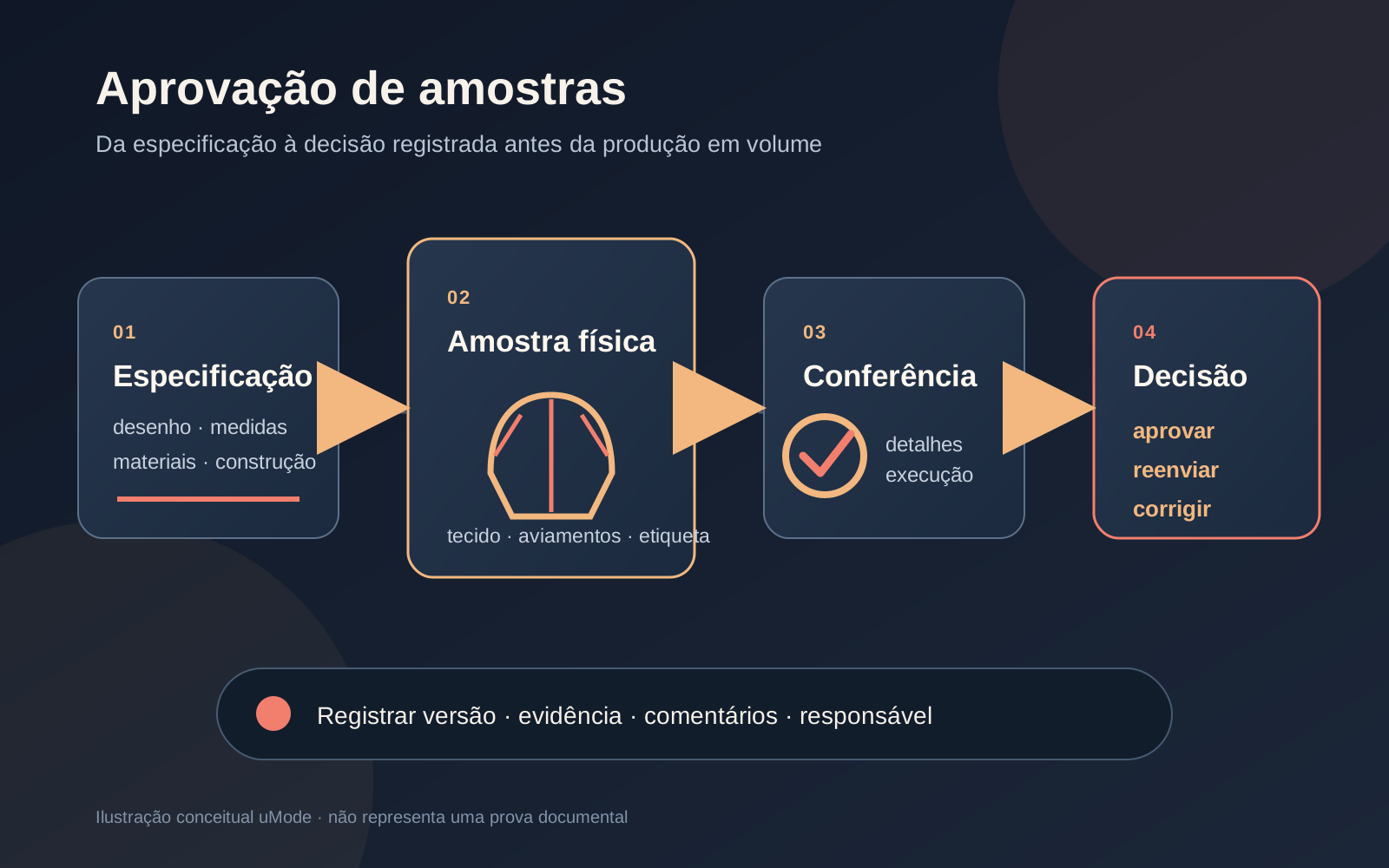
Fashion sample approval is the process of comparing a physical sample with documented requirements for style, materials, construction and identification, recording deviations and deciding whether the garment can proceed, needs resubmission or requires correction before volume production.

Fashion product technical specification
A technical specification is the controlled information set that translates an approved fashion product into verifiable sampling and manufacturing requirements. It brings together drawings, materials, measurements, construction, tolerances, identification, labelling, comments and revision history; its content varies by category, company, market and stage.
Jeans
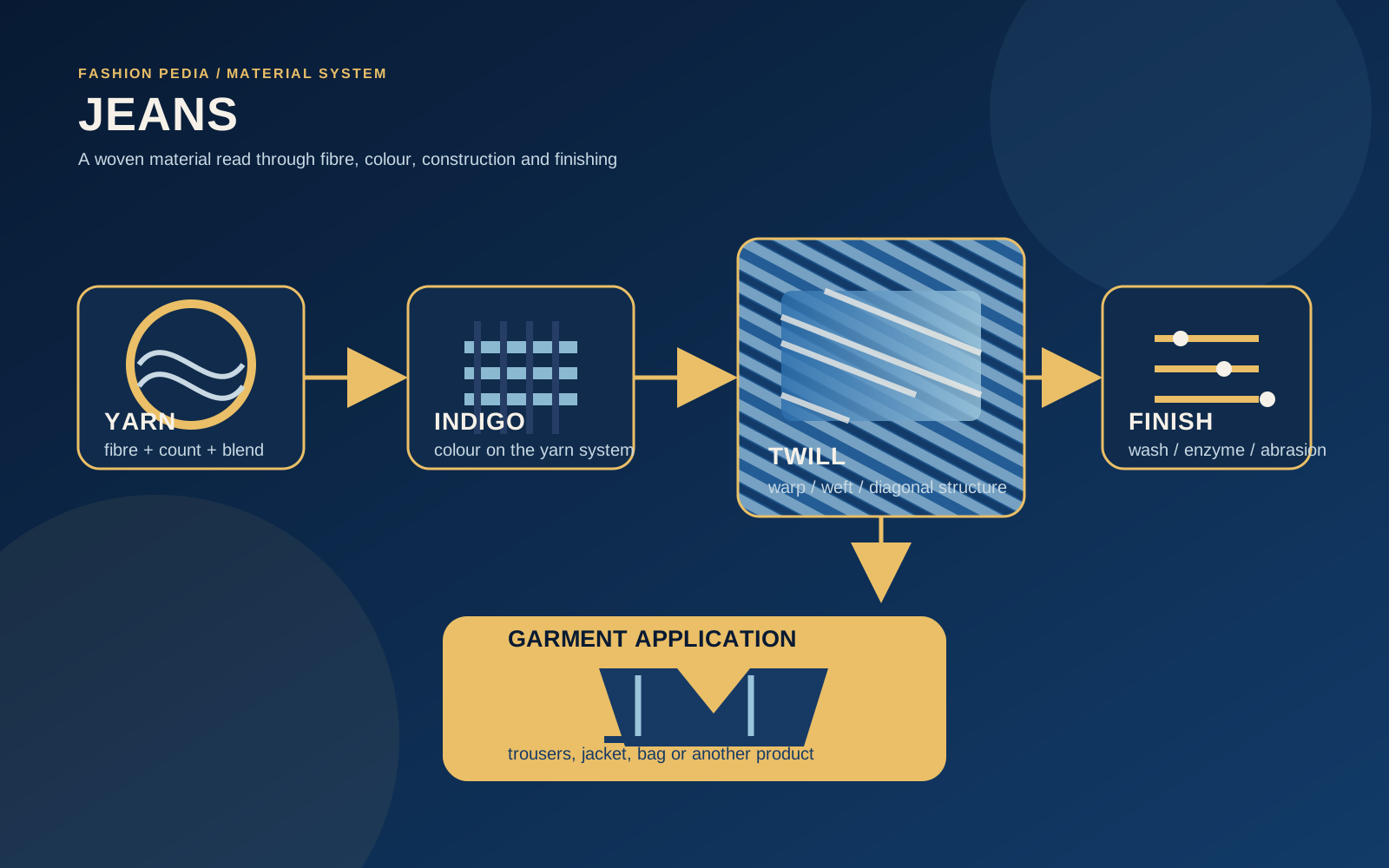
Jeans is a textile material based on denim, usually a woven twill in which yarn, indigo dye, construction and finishing shape the appearance and behaviour. Jeans names the material; trousers or a jacket are garments made from it.
Twill
Twill is one of the three fundamental weave structures, recognizable by the diagonal ribs on its surface. Durable and substantial, it is the base structure behind denim, gabardine, and much of utilitarian apparel.
Sources
Want to apply this to your operation?