Flat knitting
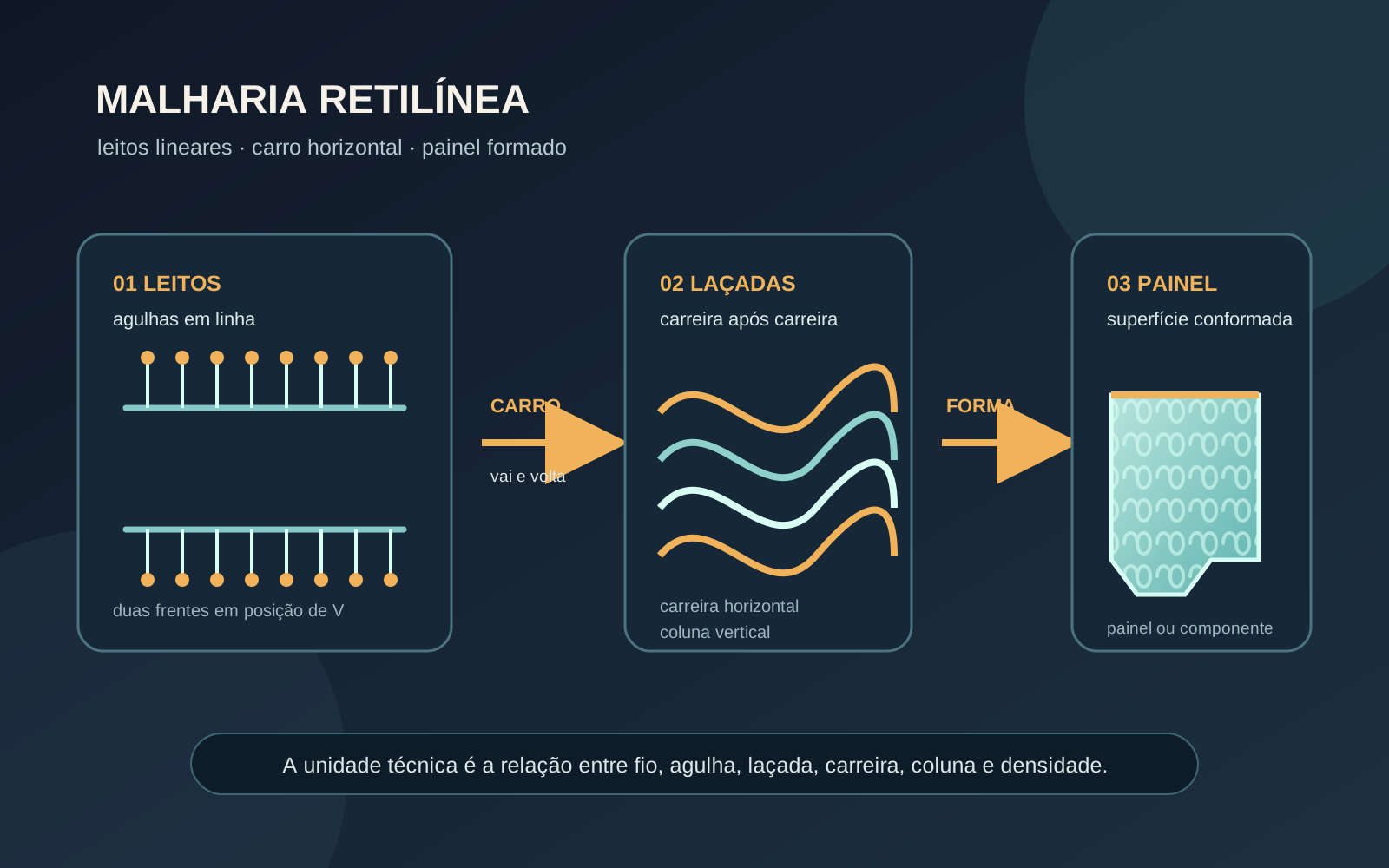
Flat knitting forms knitted fabric on a weft-knitting machine with linear needle beds and a carriage that travels horizontally. The arrangement can shape panels and garment components during knitting; it is not the same as circular knitting, which forms a tube around a cylinder.
On this page
What is Flat knitting?
Flat knitting is a knitting technique within weft knitting, using linear needle beds and a carriage that travels horizontally across the machine. Knitting in the broad sense forms fabric through series of intermeshed loops, with the loop as the basic structural unit. Technical classification separates weft knitting from warp knitting. This entry focuses on the flat-bed part of weft knitting rather than treating every knitted surface as flat knitting.
NPTEL separates weft-knitting equipment into flat-bed and circular-bed machines. On a flat-bed machine, the needles do not move laterally; cams that reciprocate laterally actuate the axial movement needed for loop formation. In Groz-Beckert’s industrial description, the needle beds face one another in a V-shaped position, while the carriage carries the cam mechanisms back and forth over the beds.
How are loops, courses and wales formed?
The needle is the machine element that forms the loop. Depending on the machine type, latch, bearded or compound needles may be used. In weft knitting, loops form across the fabric width, and the structure can be made from a single supply package. Repeated carriage and needle motion turns that principle into successive rows, while stitch geometry organizes the surface.
Read a sample on two axes: a course is a horizontal row of loops and a wale is a vertical column. Stitch density is calculated as wales per unit width multiplied by courses per unit length. In a technical specification, these terms should be recorded with the measurement condition, selected structure and yarn identification; this keeps comparison from collapsing into a photograph or a commercial name.
What can a flat-knitting machine shape?
Flat knitting can form a shape during the knitting process. Groz-Beckert lists sweaters, jackets, vests and accessories such as collars, cuffs and caps as typical applications, alongside three-dimensional molded parts for technical uses. The flat-knitting scope therefore concerns more than a generic fabric description: the unit being assessed may be a surface, a shaped panel or an article formed during knitting.
Keep the distinction from circular knitting explicit. NPTEL describes circular-bed knitting as another weft-knitting configuration, while the industrial source describes circular knitted fabrics as endless tubes made by circular needles. “Flat” identifies linear beds and horizontal carriage travel; “circular” identifies formation around a cylinder. A seamless article is not, by itself, evidence of flat knitting.
How should a sample be specified and checked?
Start by recording the architecture: weft knitting, flat bed or another configuration; then record structure, yarn, needle, course, wale and stitch density. For quality control, AATCC test methods and procedures for textile evaluation are international standards cited in government, industry and company specifications. That statement does not select one method for every article: the evaluation must be tied to the property being compared and to the adopted procedure.
In product development, a flat-knitted sample should preserve the relationship between drawing, parameters and observed result. Flat knitting matters because it connects loop construction, panel formation and product decisions in one technical reading. It does not guarantee drape, dimensional stability or performance without a defined structure, yarn, density and test condition.
Verified facts
- Knitting is the process of fabric formation by producing series of intermeshed loops, which are the basic units of knitted fabric.
Source: archive.nptel.ac.in ↗ - The two general knitting principles are weft knitting and warp knitting.
Source: archive.nptel.ac.in ↗ - In weft knitting, loops are formed across the fabric width and the structure can be made from a single supply package.
Source: archive.nptel.ac.in ↗ - Weft knitting includes flat-bed machines and circular-bed knitting machines.
Source: archive.nptel.ac.in ↗ - In a flat-bed machine, the axial needle movement needed for loop formation is actuated by cams that reciprocate laterally.
Source: archive.nptel.ac.in ↗ - A needle is the machine element that forms the loop; latch, bearded and compound needles are used according to machine type.
Source: archive.nptel.ac.in ↗ - A course is a horizontal row of loops and a wale is a vertical column of loops.
Source: archive.nptel.ac.in ↗ - Stitch density is the product of wales per unit width and courses per unit length.
Source: archive.nptel.ac.in ↗ - On flat knitting machines, needle beds face each other in a V-shaped position and the carriage moves horizontally back and forth over them.
Source: groz-beckert.com ↗ - Flat knitting can form a shape during the knitting process; described applications include sweaters, jackets, vests, accessories and three-dimensional molded parts.
Source: groz-beckert.com ↗ - AATCC test methods and procedures for textile evaluation are international standards cited in government, industry and company specifications.
Source: aatcc.org ↗
Related entries
Industrial knitting
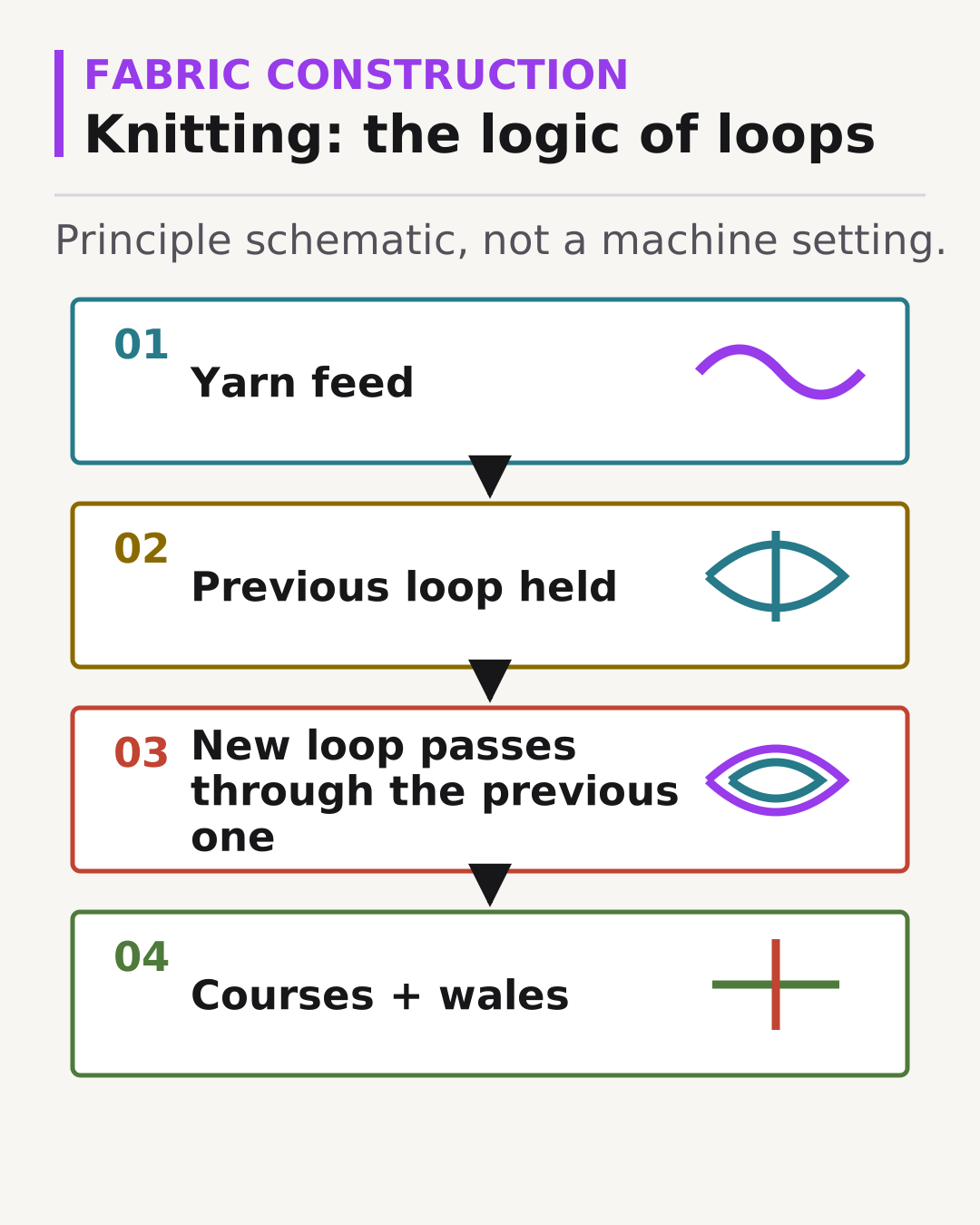
Knitting is the process of forming fabric through series of intermeshed loops. It divides into weft knitting, in which yarn travels across the width and needles form loops in sequence, and warp knitting, in which parallel yarns feed needles that work simultaneously along the fabric length.
Circular knitting
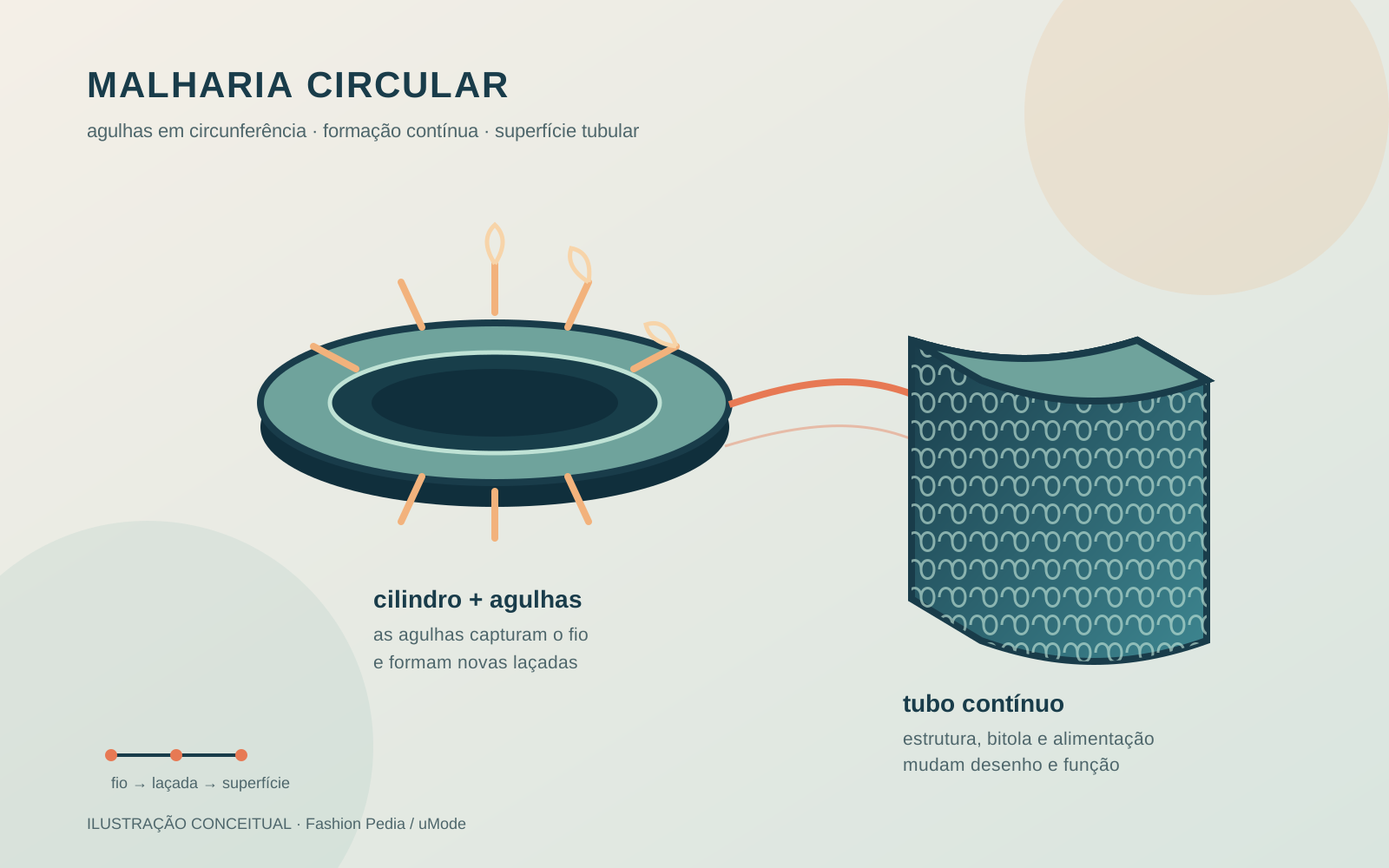
Circular knitting is a fabric-forming technique in which needles arranged on a circular bed produce a continuous tubular knitted structure. The result depends on the interaction of yarn, needles, cylinder, feeding, structure and gauge; the same machine logic can serve open fabrics, separated pieces or seamless constructions.

Fashion product technical specification
A technical specification is the controlled information set that translates an approved fashion product into verifiable sampling and manufacturing requirements. It brings together drawings, materials, measurements, construction, tolerances, identification, labelling, comments and revision history; its content varies by category, company, market and stage.
Sources
Want to apply this to your operation?