Garment patternmaking
Garment patternmaking is the technique of turning measurements, proportions, and design intent into patterns used to cut and assemble a garment. It connects a block, flat pattern construction or draping with fabric information, production markings, fitting, alterations, and grading; the result is a testable development basis, not an automatic guarantee of fit.
On this page
What is Garment patternmaking?
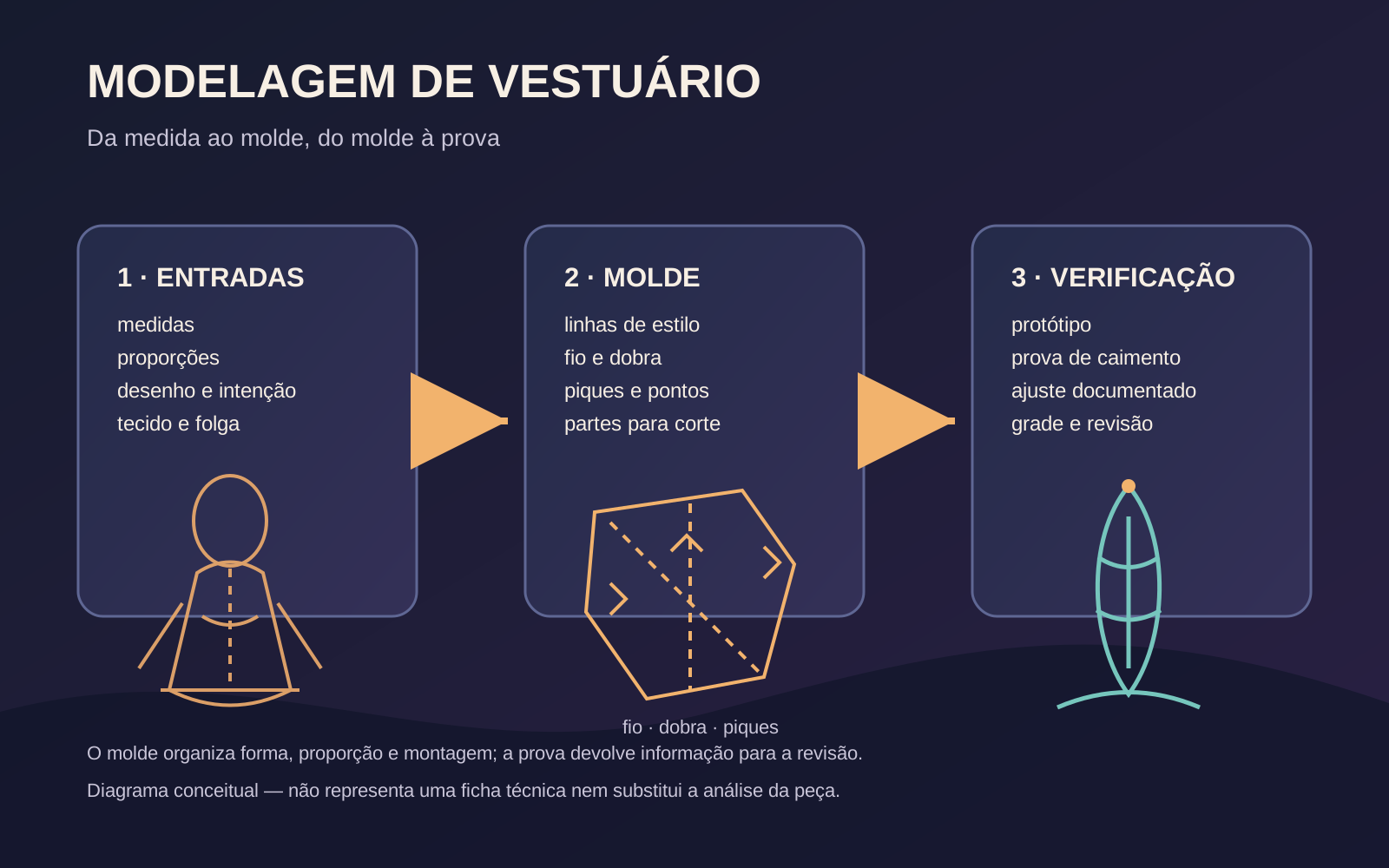
Garment patternmaking is the technique of turning measurements, proportions, and visual intent into pieces that can be cut and assembled. A pattern is the bridge between a drawing and a garment: it organizes lines, dimensional relationships, ease, and matching points without replacing fabric analysis or fitting. The starting point may be a fitted block, a measurement-based flat construction, or draping on a form.
The term also names the work of creating and cutting patterns. In draping, test fabric is pinned to a form, marked, and converted into paper or retained as a cutting reference. In flat construction, lines are drafted and manipulated on a base; in both approaches, the pattern must make clear what will be cut, joined, and checked. A technical drawing communicates design intent, while a measurement chart supplies construction references.
How does a pattern guide cutting and assembly?
A pattern guides cutting and assembly because it gathers shape, orientation, and correspondence points for each piece. The grainline indicates how to place the piece against the straight grain of the fabric; fold lines, matching points, seam allowances, zipper placement, and fit marks make the transfer to cloth more controlled. These markings are not decoration: they reduce ambiguity when separate pieces reach the cutting table and sewing operation.
Material changes the decision. Fabric properties can affect pattern development, sewing, finishing, and fit, so one geometry should not be treated as universal for fabrics with different behavior. In product development, a tech pack gathers specifications and a prototype makes it possible to observe the relationship between pattern, fabric, and body. Material traceability may support quality assurance, but it does not replace pattern analysis.
How do fitting, alteration, and grading enter the process?
Fitting turns the first sample into information for pattern revision. The team analyzes the garment’s fit, records problems clearly, identifies whether the cause lies in measurement, line, ease, fabric, or construction, and returns the alteration to the correct version. Fit should not be inferred only from a drawing’s appearance or from one isolated approval.
After alteration, grading applies dimensional rules to create derived sizes. It must preserve design intent and be checked across a full size range, not only at two extremes. Technical documentation links pattern development, construction, fitting, and a specifications packet; quality control checks requirements but does not replace patternmaking judgment.
Where does the technique sit in the fashion chain?
Patternmaking occupies a translation position between design and execution. In a geographically dispersed textile and apparel sector, its documentation helps make decisions about cutting, assembly, fitting, and revision communicable across teams, without erasing differences among suppliers, fabrics, and methods. It connects to product development, technical documentation, and sample development, but it is not synonymous with any of them.
The technical boundary matters: a well-marked pattern still needs checking in fabric, size, and construction. Grading does not promise the same fit for every body; fiber traceability alone does not prove garment quality; and a conceptual illustration does not document a real product. Patternmaking becomes useful through an explicit chain from input and decision to sample, observation, and revision.
Verified facts
- A pattern is a template from which garment pieces are traced onto fabric before they are cut out and assembled.
Source: en.wikipedia.org ↗ - A sloper, or block pattern, is a custom-fitted basic pattern from which patterns for different styles can be developed.
Source: en.wikipedia.org ↗ - The process of creating or cutting patterns is called patternmaking, pattern making, or pattern cutting.
Source: en.wikipedia.org ↗ - In draping, a fabric mock-up is pinned directly on a form and its outline and markings are transferred to a paper pattern, or the fabric itself can be used as the pattern.
Source: en.wikipedia.org ↗ - A pattern grainline should be aligned parallel to the straight grain of the fabric.
Source: en.wikipedia.org ↗ - Notches and other pattern symbols can indicate seam allowances, fit-related lines, zipper placement, fold points, and matching points between pieces.
Source: en.wikipedia.org ↗ - FIT Technical Design learning outcomes include developing and sewing production patterns and documenting how a garment is to be constructed for the manufacturer.
Source: fitnyc.edu ↗ - FIT describes analyzing garment fit and documenting problems clearly as a Technical Design competency.
Source: fitnyc.edu ↗ - FIT connects pattern development, construction, fitting, and creation of a Technical Specifications Packet.
Source: fitnyc.edu ↗ - FIT includes distinguishing properties of different fabric types and how they affect pattern development, sewing, finishing, and fit.
Source: fitnyc.edu ↗ - FIT includes analyzing a grading specifications sheet and grading basic patterns in a full size range without compromising the original design.
Source: fitnyc.edu ↗ - CottonWorks states that U.S. cotton can be traced from the gin to the mill and links that traceability to quality assurance.
Source: cottonworks.com ↗ - The ILO describes the textiles, apparel, leather, and related products sector as geographically dispersed and shaped by dynamic market-driven transformations.
Source: ilo.org ↗
Related entries
Fashion technical drawing
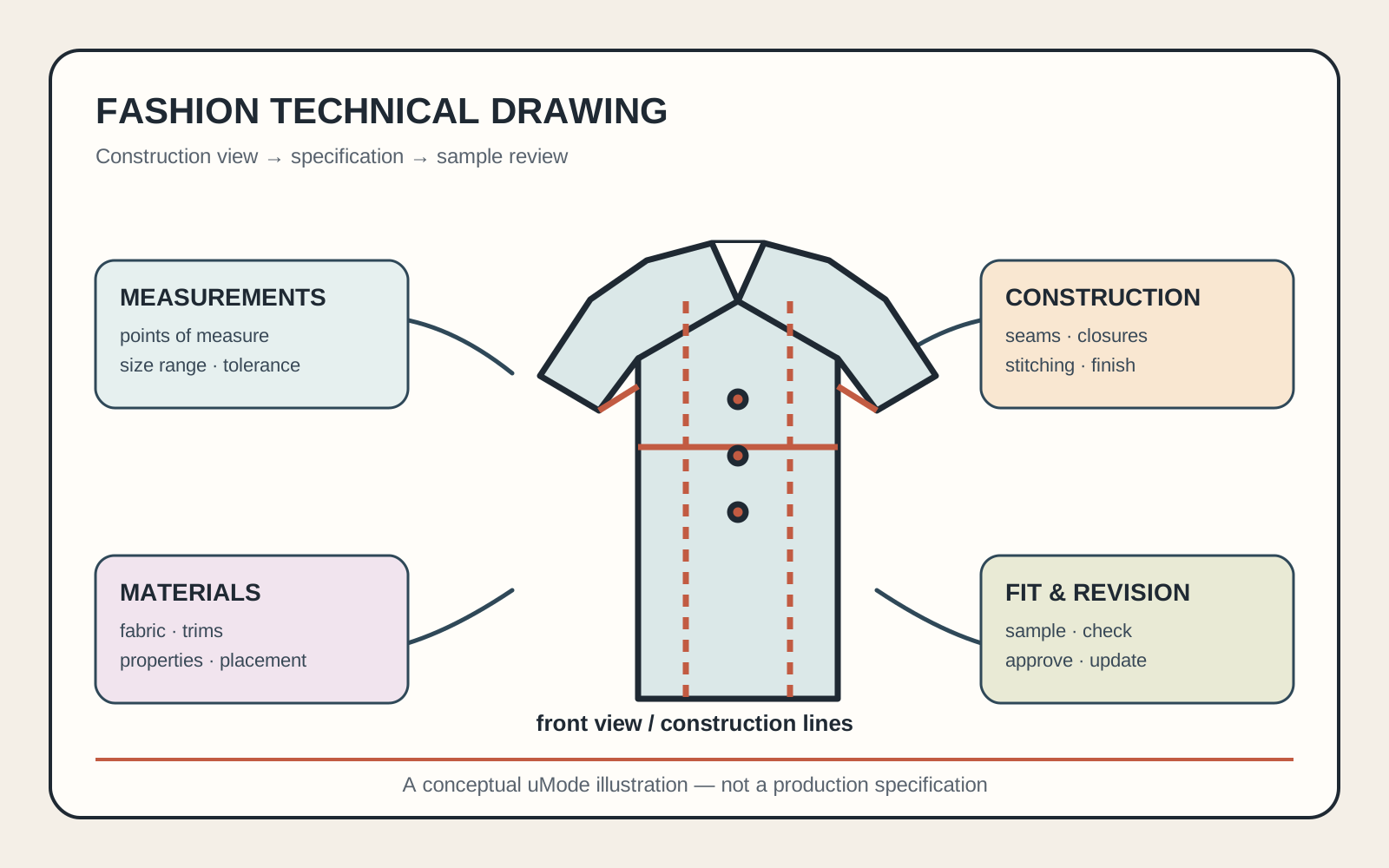
Fashion technical drawing is a construction-oriented representation used to communicate a garment’s form, details, measurements and manufacturing decisions. In apparel development it connects with patternmaking, specifications, fitting, materials and production; it does not replace a complete tech pack or physical validation.
Garment fitting
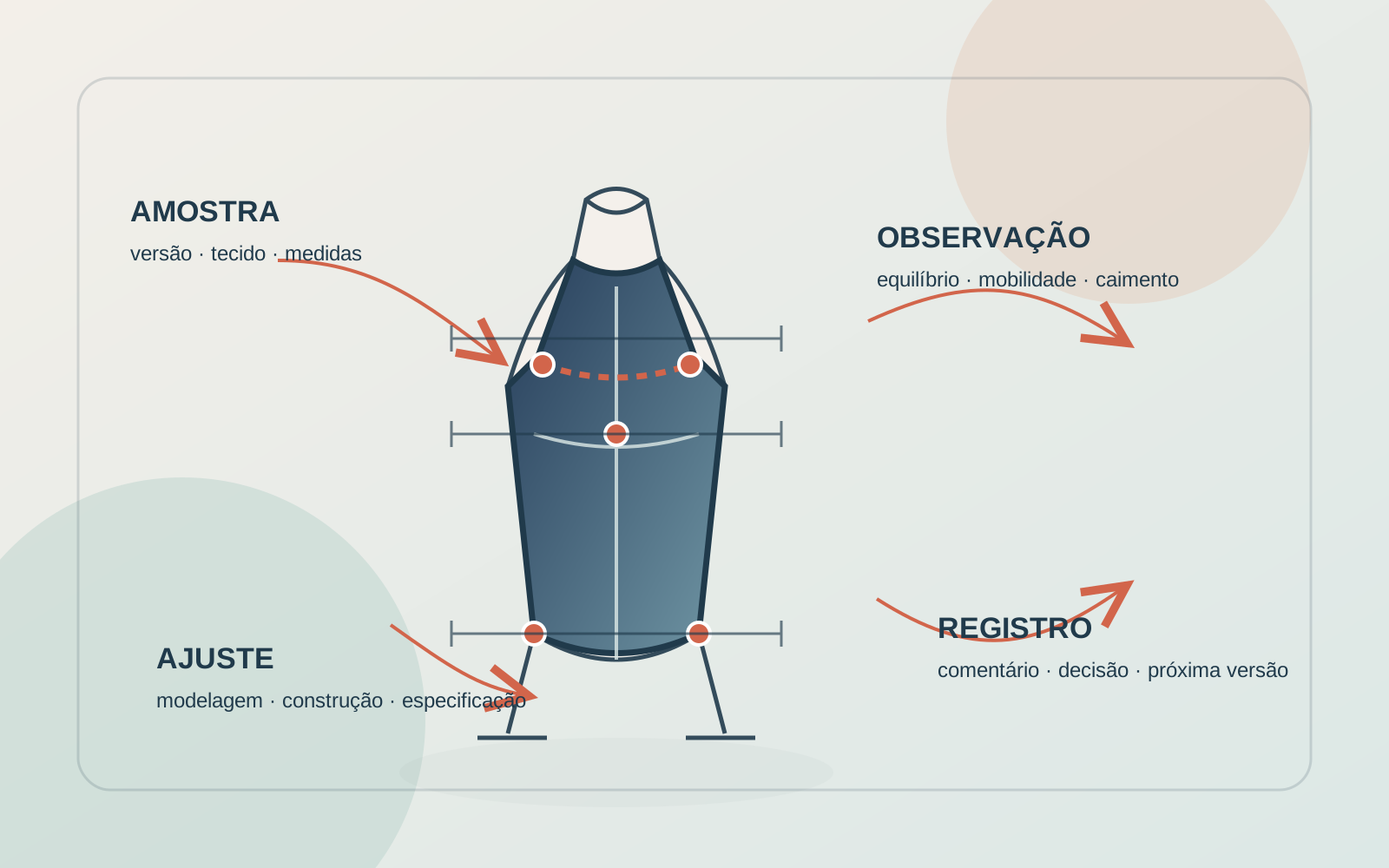
Garment fitting is the process of comparing a dressed sample with a style's design, specifications, and intent. The team observes fit, balance, movement, and construction, records decisions, and sends changes into the next version.

Fashion product technical specification
A technical specification is the controlled information set that translates an approved fashion product into verifiable sampling and manufacturing requirements. It brings together drawings, materials, measurements, construction, tolerances, identification, labelling, comments and revision history; its content varies by category, company, market and stage.
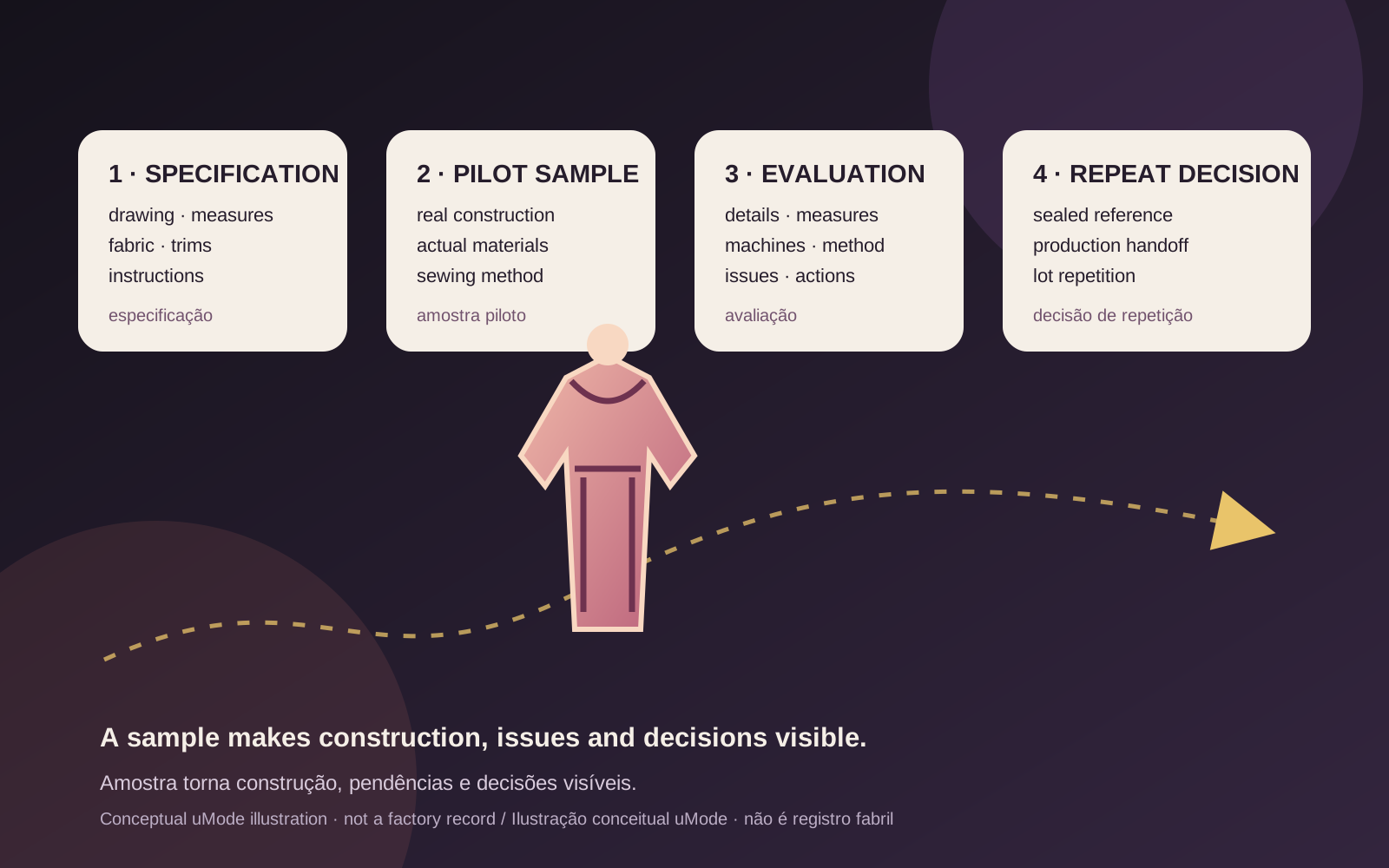
Garment production pilot sample
Garment production pilot sample. A garment production pilot is the development, review and approval of a product sample under product-making conditions. It connects the technical pack, materials, measurements, tests, construction and decision-making before the garment is repeated in production.
Sources
- https://en.wikipedia.org/wiki/Pattern_(sewing)
- https://www.fitnyc.edu/academics/academic-divisions/business-and-technology/technical-design/degree-details/outcomes.php
- https://cottonworks.com/sourcing/
- https://www.ilo.org/topics-and-sectors/industries-and-sectors/textiles-apparel-leather-and-related-products
Want to apply this to your operation?