How to reduce spreadsheets and WhatsApp in collection management
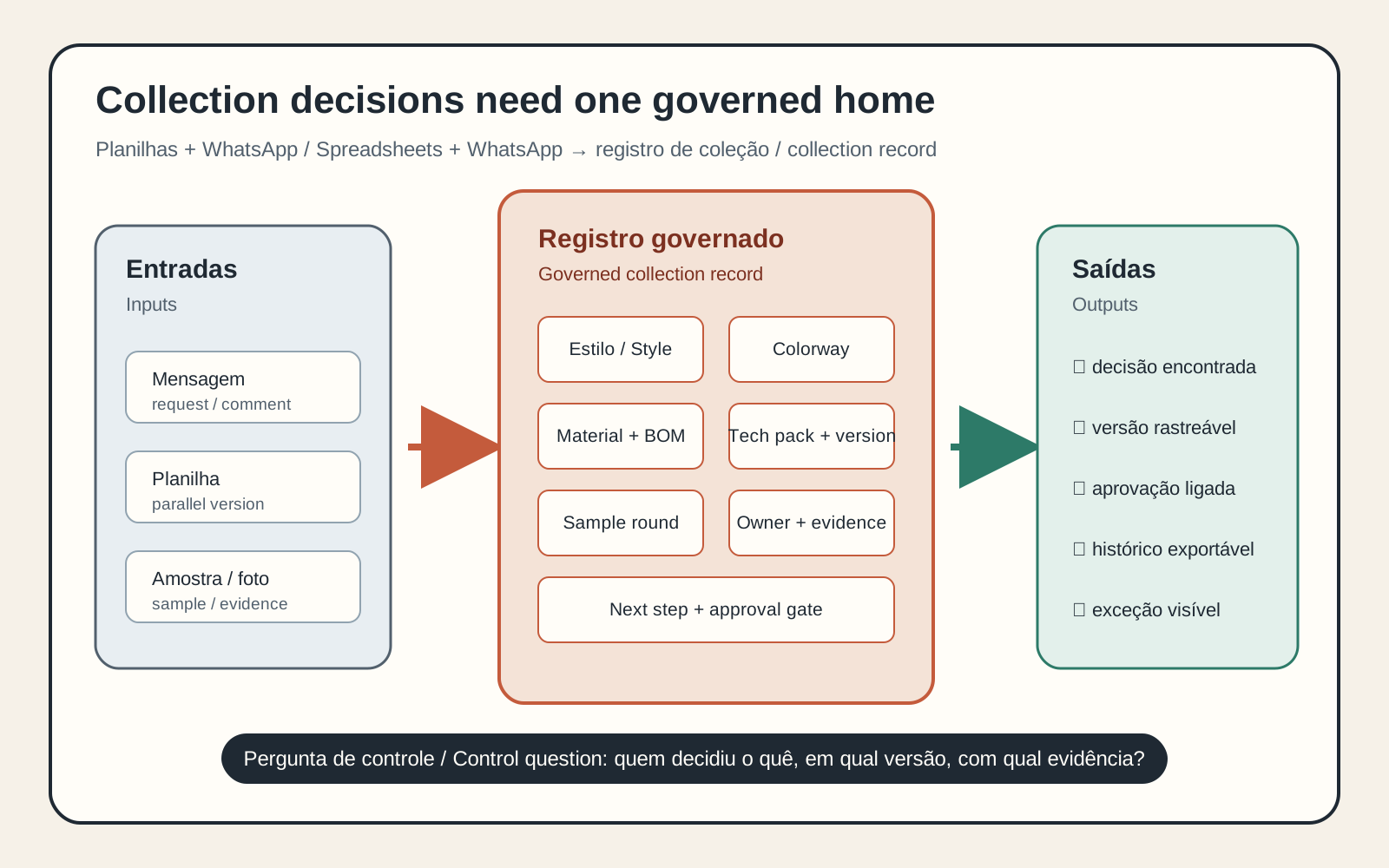
How to reduce spreadsheets and WhatsApp in collection management. Reducing spreadsheets and WhatsApp in collection management does not mean removing conversation. It means moving style, material, tech-pack, fitting and approval decisions out of parallel records and into a governed product record with an object, version, owner, evidence and next step, while messages remain a controlled intake channel.
On this page
What is How to reduce spreadsheets and WhatsApp in collection management?
Reducing spreadsheets and WhatsApp means moving the decision to the object it changes: a message may start a request, but the collection record should stay with the relevant product object. Instead of searching several groups for the latest answer about a style, the team opens the collection map, identifies the version of the tech pack and records who decided, which evidence was used and what happens next.
The distinction matters. IBM describes PLM as product-lifecycle management and points to centralized repositories for product data; Oracle lists items, parts, documents, requirements, change orders and quality workflows. That does not make every tool PLM or prove a productivity gain. It defines the working boundary: a style, colorway, material, BOM, measurement set, sample, supplier, approval or order needs a stable identity before a conversation becomes a task.
How can a conversation become a product record?
Turn each request into an activity with five minimum fields: object, version, owner, evidence and next step. For a fitting comment, the object is the style and sample; the version is the tech pack or garment being evaluated; the owner is the person executing the change; evidence is the photo, measurement, comment or public file; and the next step is the internally defined action and due date. Do not copy the whole conversation: capture the decision and preserve the permitted link to context.
W3C provenance gives a precise name to what disappears when a spreadsheet is duplicated: the entities, activity and people involved in producing the record. Use that logic for a color, composition, measurement, tolerance or supplier change. The PROV family was designed for provenance interchange across heterogeneous environments; therefore, keep identifiers and versions exportable instead of relying on a column called “last update.”
For collection events, Activity Streams provides an operational vocabulary: version control can record actor, object, target, origin, result and instrument. The team can adapt those fields to “who approved,” “which style,” “which stage,” “where the request came from,” “what resulted” and “which tool was used.” This is a process convention, not a claim that WhatsApp or a spreadsheet implements the standard.
Which collection objects and gates should leave parallel records?
Start with a flow that has an observable beginning and end, such as sample approval or a material change. The governed record should connect collection management, tech pack, apparel BOM, specification version and sample approval without erasing the differences between them.
For a style, separate at least: product identity, colorway, material and composition, measurements and grading, fitting comments, sample round, supplier, target cost, calendar, status and approval criterion. Each gate needs an input, an authorized person, an exit condition and evidence. If a message says “approved,” it closes the stage only when linked to the exact tech-pack or sample version; otherwise, treat it as a pending signal.
Oracle calls the governed flow of data between stages and partners a digital thread. In this process design, that suggests one identifier across design, development, sourcing, supplier and production. IBM also describes version control and permissions: archive invalid versions, restrict editing of critical fields and expose the change that altered material, measurement or cost. Fashion PLM can be one implementation, but governance comes before tool selection.
How can reduction be measured without creating another parallel dashboard?
Measure the flow, not the number of messages. Choose a baseline for a defined style sample and compare, over a defined period, the time needed to find a decision, conflicting-version count, rework after approval, fields without an owner and exceptions that returned to WhatsApp. Also record what remained outside the system: a supplier without access, an urgent request, a physical sample, a change without a photo or a broken integration.
Use a stop rule: if the new record requires duplicate typing, does not preserve the version or does not show the owner, fix the design before demanding adoption. The goal is not to remove fast communication; it is to prevent conversation from becoming the only proof of a collection decision. For products with regulated information, the European Commission’s description of a Digital Product Passport reinforces the value of keeping information associated with the product, component or material—without turning that description into a universal requirement for every collection.
Collection management · Tech pack · Fashion PLM · Apparel BOM · Version control · Sample approval
Verified facts
- IBM describes PLM as an approach for managing a product lifecycle from concept and design through procurement, production, service and disposal.
Source: ibm.com ↗ - IBM says PLM tools provide centralized repositories for product data and collaboration across teams.
Source: ibm.com ↗ - IBM records that PDM uses version-control systems to track each product iteration, apply user-specific permissions and protect sensitive data.
Source: ibm.com ↗ - IBM includes bills of materials, or BOMs, in the evolution of product-data management.
Source: ibm.com ↗ - Oracle describes PLM as managing information and processes at every stage of a product or service lifecycle.
Source: oracle.com ↗ - Oracle lists items, parts, products, documents, requirements, engineering change orders and quality workflows among PLM data.
Source: oracle.com ↗ - Oracle describes a digital thread running from ideation and design through manufacturing, supply chain and service, carrying governed data between systems, processes, partners and ecosystems.
Source: oracle.com ↗ - W3C defines provenance as information about the entities, activities and people involved in producing a piece of data or thing, which can support assessments of quality, reliability or trustworthiness.
Source: w3.org ↗ - W3C says the PROV family defines a model, serializations and supporting definitions for interoperable provenance interchange in heterogeneous environments.
Source: w3.org ↗ - W3C describes Activity Streams 2.0 as a JSON model for representing potential and completed activities.
Source: w3.org ↗ - The Activity Streams specification lists actor, object, target, origin, result and instrument as additional properties of activity objects.
Source: w3.org ↗ - The European Commission describes the Digital Product Passport as a digital identity card for products, components and materials that stores information to support sustainability, circularity and legal compliance.
Source: commission.europa.eu ↗
Related entries

Collection management
Collection management coordinates a fashion line's journey from idea through production, service and disposal by connecting people, product data, processes, decisions, versions and events across teams and partners.

Fashion product technical specification
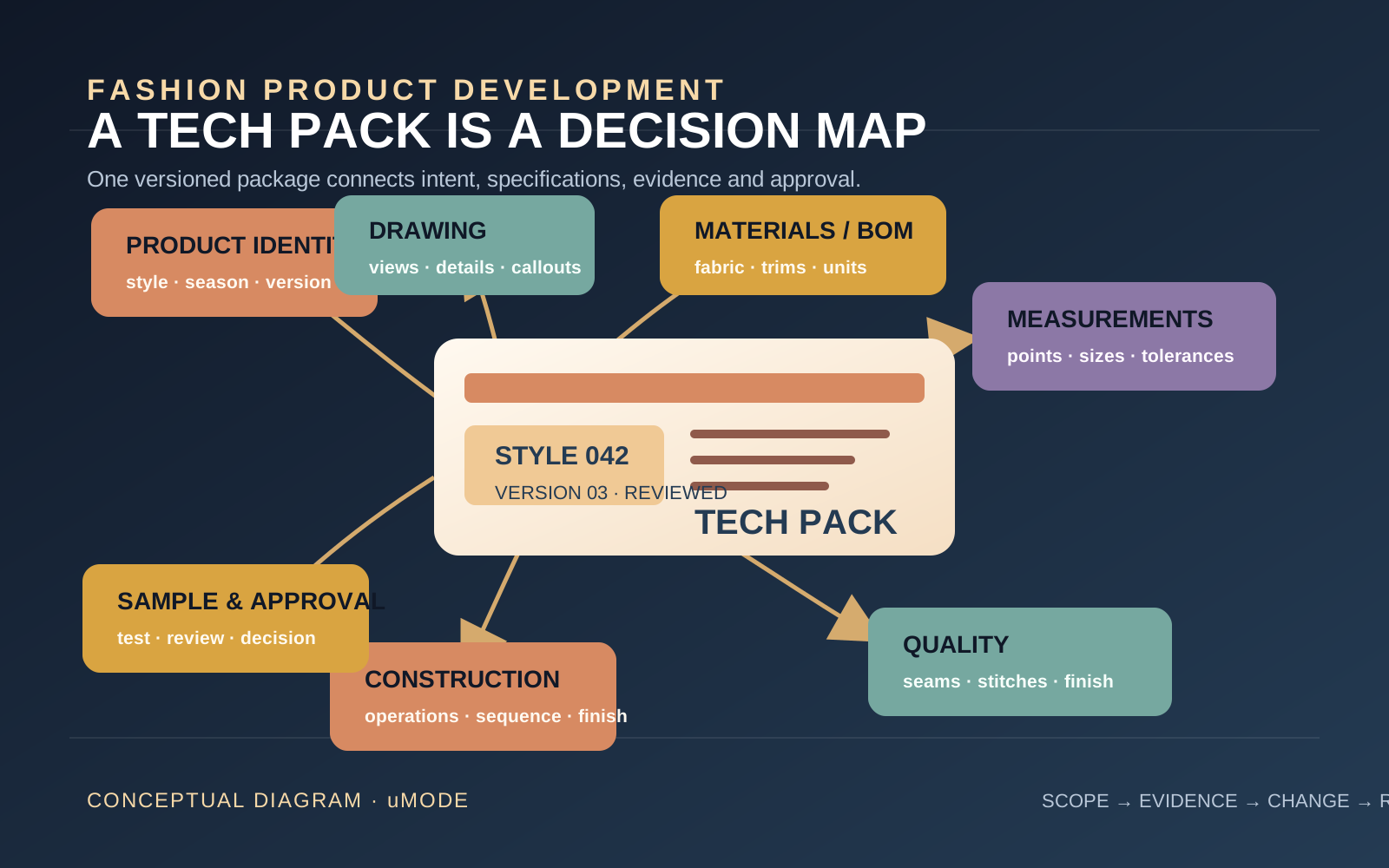
A technical specification is the controlled information set that translates an approved fashion product into verifiable sampling and manufacturing requirements. It brings together drawings, materials, measurements, construction, tolerances, identification, labelling, comments and revision history; its content varies by category, company, market and stage.
How to control tech pack versions
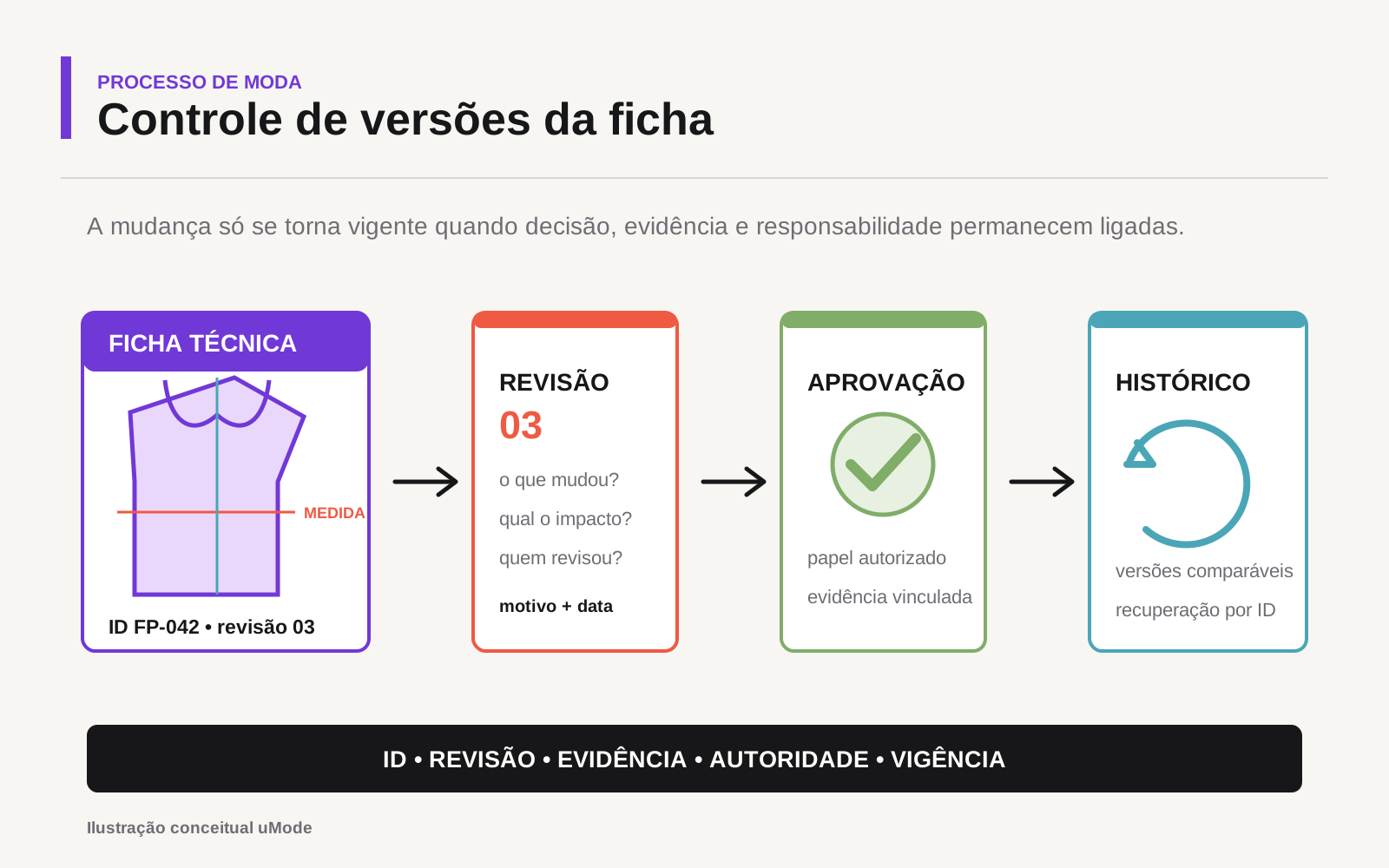
How to control tech pack versions. Controlling tech pack versions means recording every product change with an identifier, owner, reason, status, approval and effective date. The method applies configuration-control and product-lifecycle principles to the concrete decisions of an apparel supply chain.

Fashion PLM: data, product, and lifecycle
Fashion PLM is the structured management of the data, decisions, and workflows that follow a product and a collection from concept through post-launch. It connects tech packs, materials, costs, samples, approvals, suppliers, and versions so that every function works from a traceable product definition.
Collection map
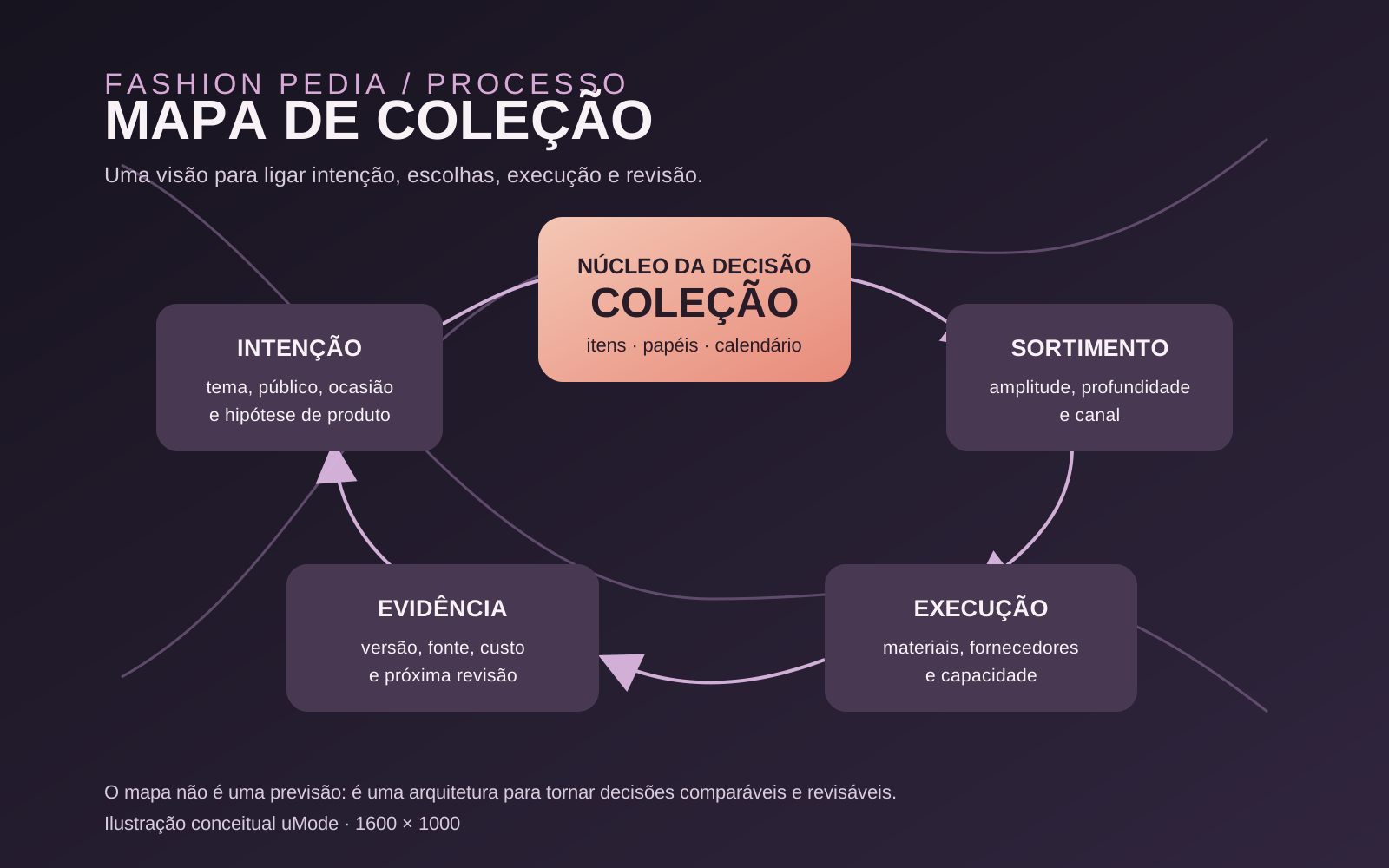
A collection map is a process view that makes the relationships between intent, items, assortment, execution, and review explicit. It organizes hypotheses and decisions for comparison without confusing planning with a guaranteed forecast or automatic purchasing authority.
Sources
- https://www.ibm.com/think/topics/product-lifecycle-management
- https://www.oracle.com/scm/product-lifecycle-management/what-is-plm/
- https://www.w3.org/TR/prov-overview/
- https://www.w3.org/TR/activitystreams-core/
- https://commission.europa.eu/energy-climate-change-environment/standards-tools-and-labels/products-labelling-rules-and-requirements/ecodesign-sustainable-products-regulation_en
Want to apply this to your operation?