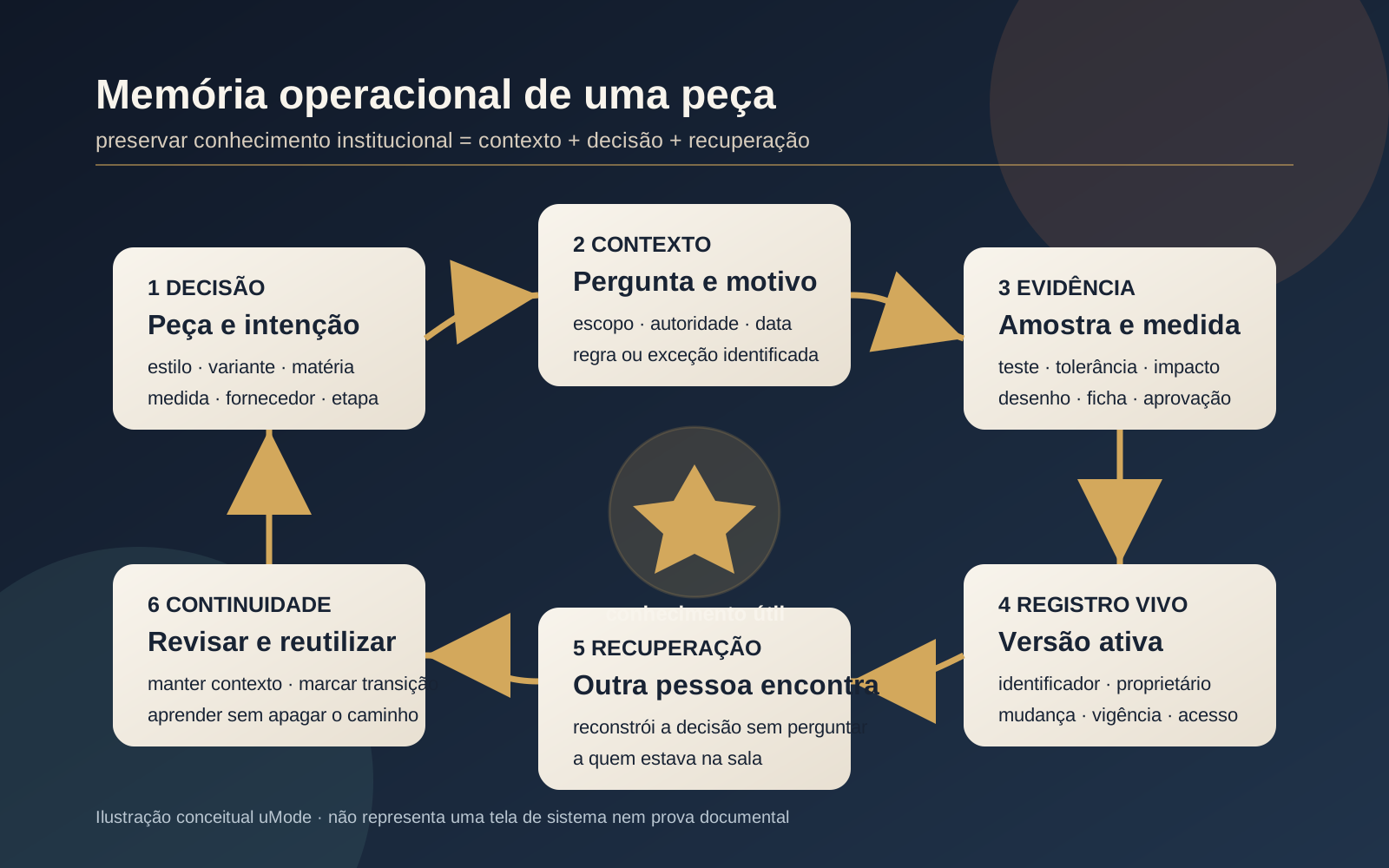
How to measure the ROI of AI initiatives
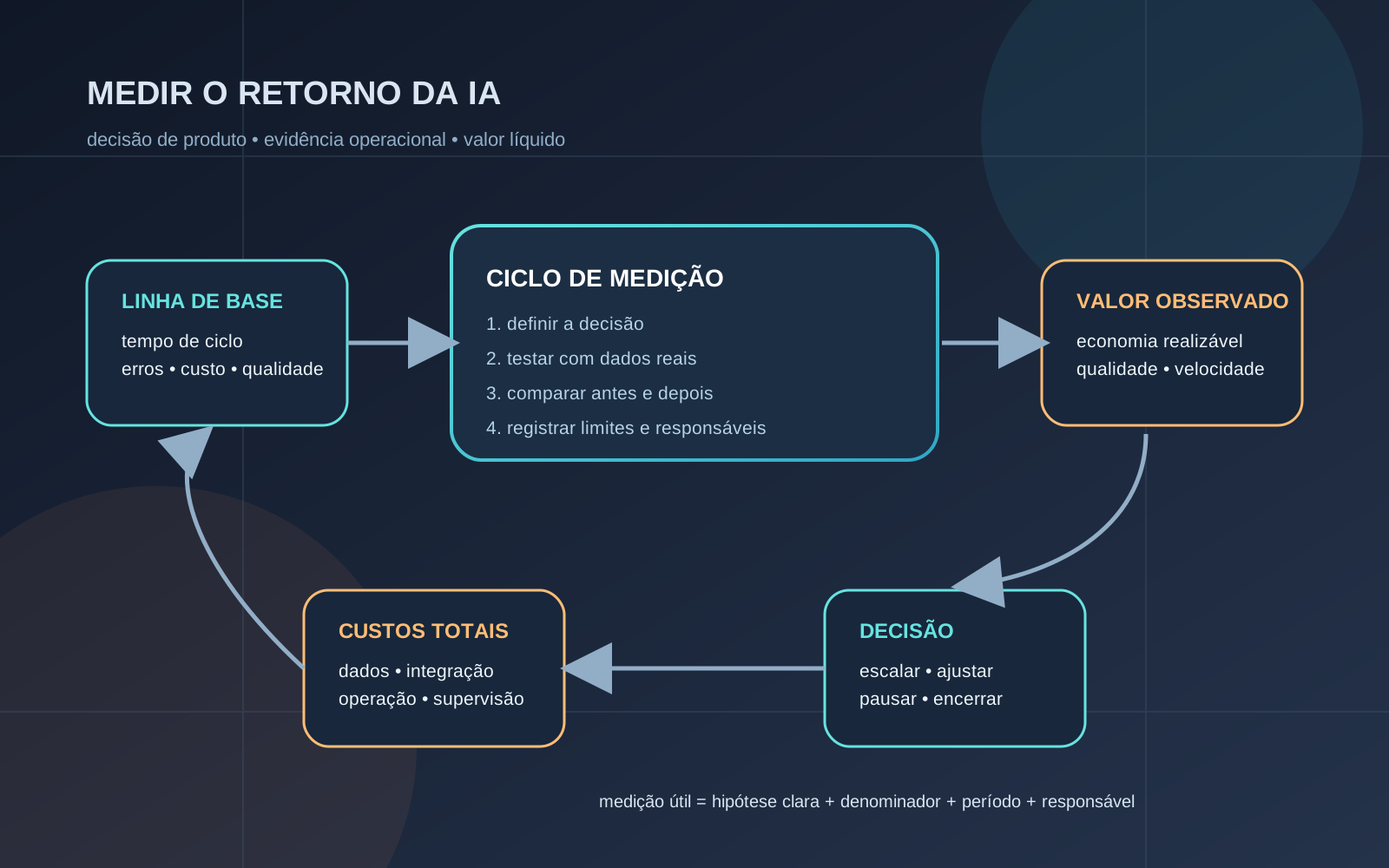
How to measure the ROI of AI initiatives. Measuring the ROI of an AI initiative means comparing a process change with a baseline while including implementation, operating, and oversight costs and observing value, quality, and risk within the same decision scope. In fashion, the measure must connect the claimed gain to the collection, product, or channel workflow that actually changed.
On this page
What is How to measure the ROI of AI initiatives?
Measuring the ROI of an AI initiative means turning a promise of improvement into a verifiable comparison: what process existed before, what changed, what the change required, and what value appeared afterward. The number is useful only when it keeps its unit, period, population, and owner. In a fashion operation, this prevents “faster” from hiding more rework or “more sales” from mixing product, channel, and calendar effects.
Start with the decision. Demand planning, collection management, and product development may pursue different outcomes: shorter analysis time, a better forecast, fewer data errors, or faster approval. Each outcome needs its own baseline. Record the indicator before the change and set the rule that will define improvement, stability, or deterioration.
Which costs and benefits belong in the calculation?
The calculation should include the total cost of the chosen scope, not just a license or model usage. List data preparation, integration, implementation, training, operations, monitoring, review, and exception handling. On the other side, separate realizable savings, released capacity, quality, speed, and avoided loss. A management intention does not automatically become financial benefit: if a team merely shifts hours into reviewing outputs, that work remains a cost of the initiative.
Compare the result with the baseline over a defined window. For a tool supporting technical specifications, track time to first version, number of corrections, incomplete items, and final approval. For demand forecasting, keep error, overstock, stockouts, and changed decisions separate. For content generation, track production, suitability, editing, and asset performance. The formula can be simple; the comparison design cannot be vague.
Data governance helps fix each indicator’s definition, origin, unit, and owner. Without that agreement, “cost per product,” “approval time,” and “error rate” may refer to different objects in design, planning, and retail. The ROI record should show the observed difference and what remained outside the calculation.
How should risk, quality, and accountability be included?
Financial return does not replace quality or control. NIST’s AI RMF seeks to incorporate trustworthiness into the design, development, use, and evaluation of AI systems. GAO’s accountability framework organizes practices around governance, data, performance, and monitoring; GAO also presents questions for entities considering, selecting, and implementing these systems. These references help widen the measurement beyond a single figure.
In fashion, translate that into process tests: who may approve a suggestion, which data feed the output, how a change is traced, when a person must intervene, and how an error is corrected. Record incidents, exceptions, observed bias, and oversight time alongside productivity indicators. Product lifecycle management may centralize versions and approvals, but it is not automatic proof that AI caused the result.
The OECD AI Principles promote innovative and trustworthy use of AI that respects human rights and democratic values. For a collection initiative, that leads to practical questions: does the team understand the output’s purpose? Was performance followed in the real context? Is a person or area accountable for the decision? Does the claimed benefit remain valid when quality, risk, and oversight are measured in the same period?
What should happen after the first measurement?
The first measurement should produce an explicit decision: expand, adjust, keep testing, or stop. Compare scenarios with stated assumptions and preserve the window used; do not rewrite the baseline after seeing the result. If the initiative teaches the team something about a process, describe that learning as decision value, not as revenue already realized. Retail indicators can add context when channel, product, and period remain consistent.
A useful ROI brief fits on one page: hypothesis, affected decision, baseline, formula, included costs, observed benefits, risks, owner, period, data source, and exit rule. Product, technology, planning, sourcing, and operations should be able to read the same record. That makes return more than an isolated number: it becomes a criterion for investing more precisely across the fashion value chain.
Verified facts
- NIST's AI RMF seeks to incorporate trustworthiness considerations into the design, development, use, and evaluation of AI products, services, and systems.
Source: nist.gov ↗ - NIST developed the AI RMF in collaboration with the private and public sectors.
Source: nist.gov ↗ - NIST says that the AI RMF 1.0 was released on January 26, 2023.
Source: nist.gov ↗ - NIST published a companion AI RMF Playbook, along with a roadmap and a crosswalk.
Source: nist.gov ↗ - GAO's AI accountability framework is organized around governance, data, performance, and monitoring.
Source: gao.gov ↗ - GAO says that each principle in its framework describes practices and questions for entities considering, selecting, and implementing AI systems.
Source: gao.gov ↗ - The OECD AI Principles promote use of AI that is innovative and trustworthy and respects human rights and democratic values.
Source: oecd.ai ↗ - The OECD says its AI Principles were initially adopted in 2019 and updated in May 2024.
Source: oecd.ai ↗
Related entries
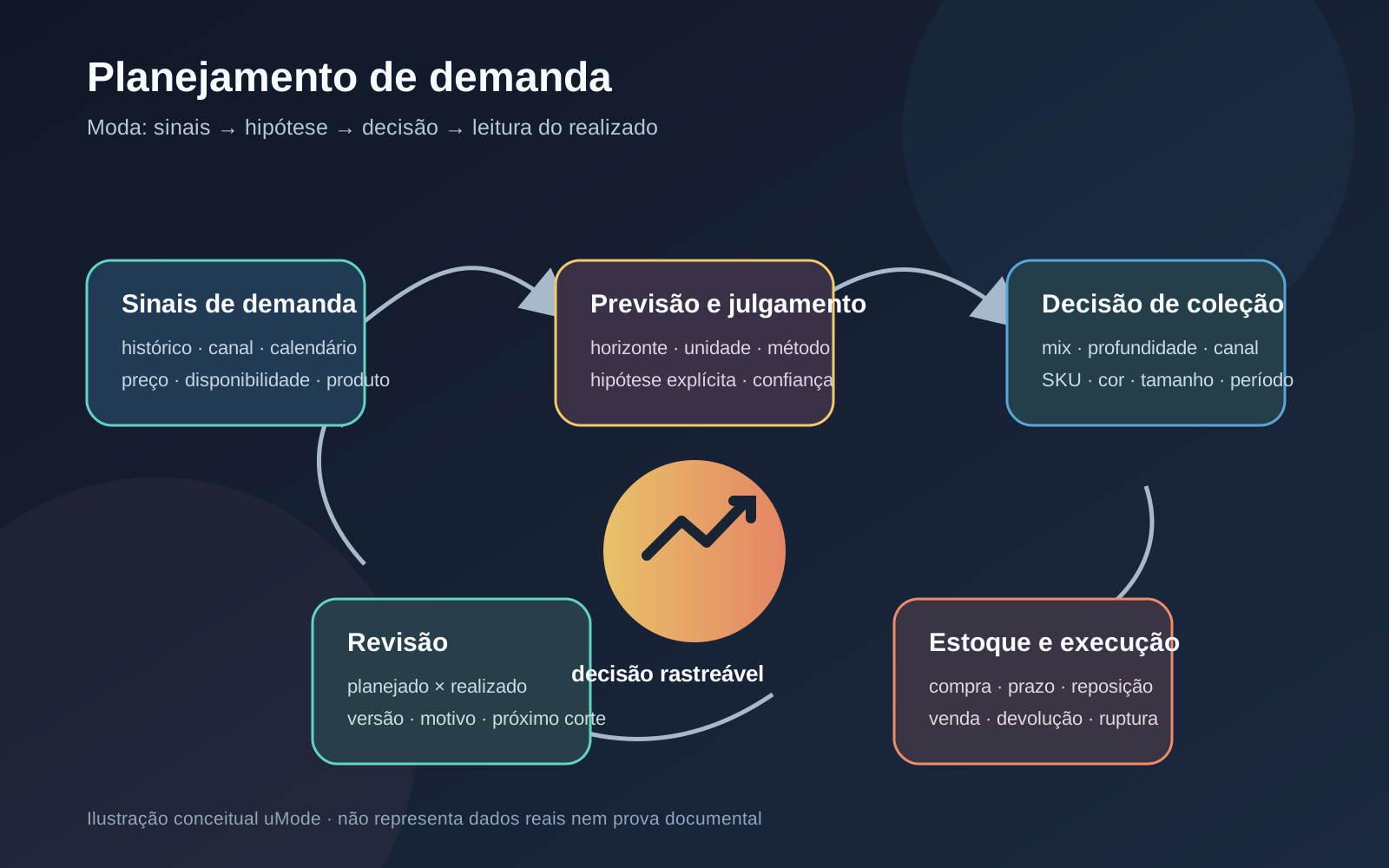
Demand planning in fashion
Demand planning in fashion turns demand signals, history, calendar context and judgement into explicit decisions about assortment, volume, channel and review. It combines forecasting with governance: every hypothesis needs a horizon, unit, owner and rule for revision when the collection or market changes.
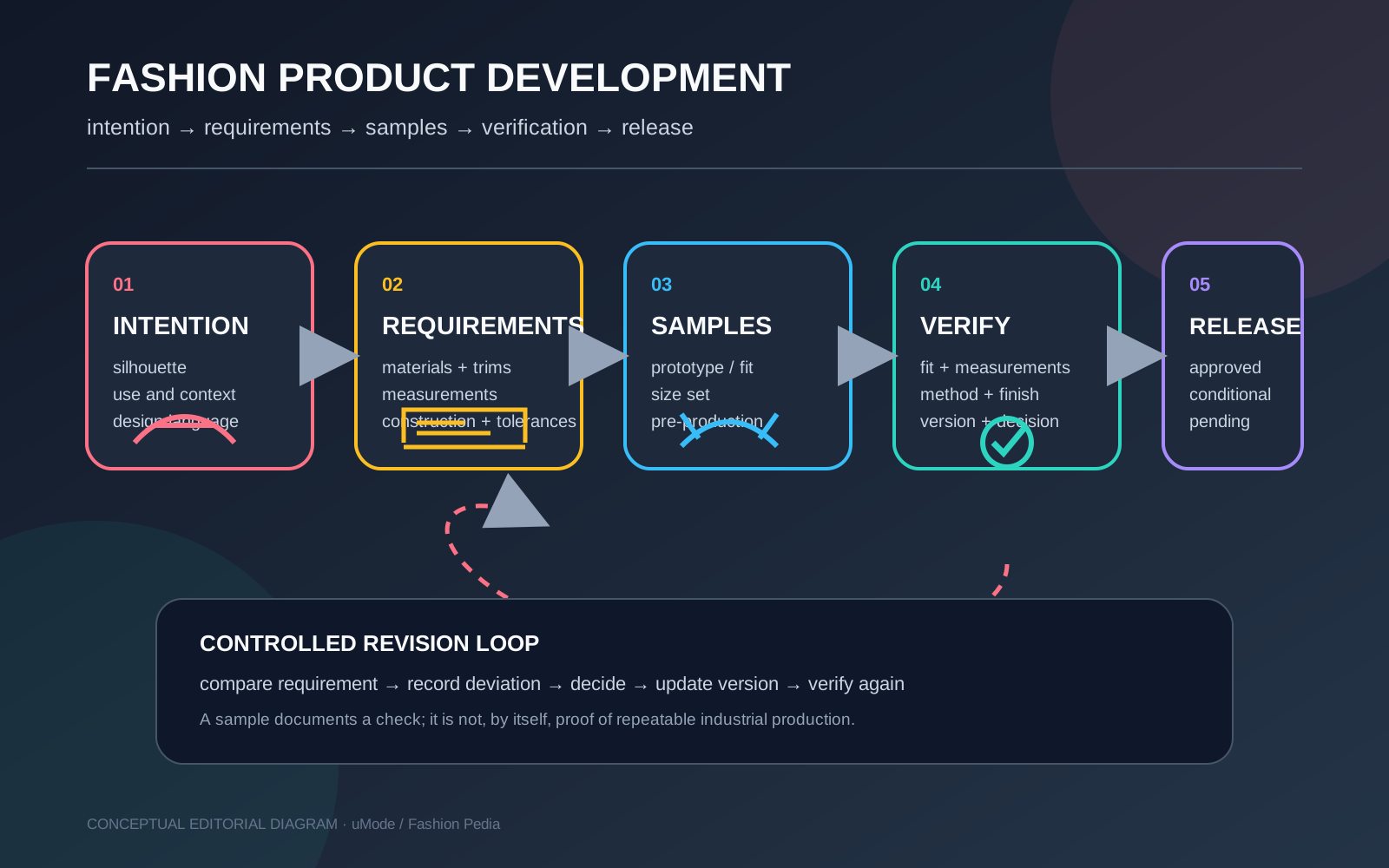
Fashion Product Development and Engineering
Fashion product development and engineering turns a design intention into verifiable requirements for building, fitting, revising, and releasing a garment or collection. The process connects concept, technical specification, patternmaking, materials, construction, measurements, samples, quality, cost, and lifecycle data without treating aesthetic approval as proof of industrial repeatability.

Collection management
Collection management coordinates a fashion line's journey from idea through production, service and disposal by connecting people, product data, processes, decisions, versions and events across teams and partners.

Fashion PLM: data, product, and lifecycle
Fashion PLM is the structured management of the data, decisions, and workflows that follow a product and a collection from concept through post-launch. It connects tech packs, materials, costs, samples, approvals, suppliers, and versions so that every function works from a traceable product definition.
Sources
Want to apply this to your operation?