Initial Stock Allocation
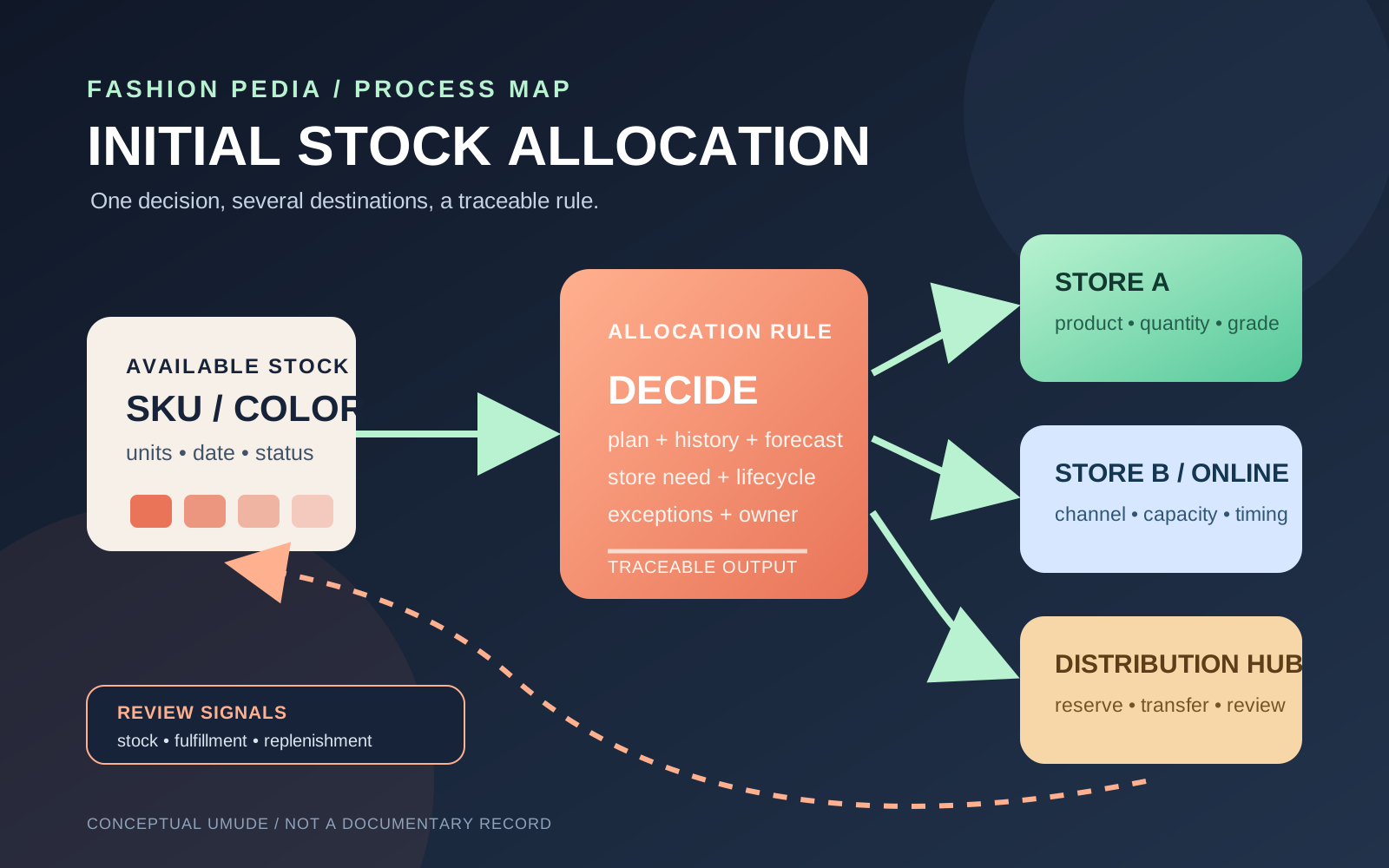
Initial stock allocation is the process of deciding how the first available quantity of a product will be distributed across stores, channels, or other service points. A sound record makes the product, destination, quantity, data source, and exceptions visible.
On this page
What is Initial Stock Allocation?
Initial stock allocation is the decision to distribute a product’s first available quantity across service points before replenishment needs are observed. In the supply chain, inventory is tracked from the manufacturer to the warehouse and then to the point of sale. An allocation is therefore more than sending cartons: it records which product, destination, quantity, and rule produced the decision. Inventory management and demand planning are related, but they are not synonyms.
The operational aim is to bring the right product to the right place at the right time. This framing is useful in fashion because one SKU can have different sizes, colors, channels, and calendars. The decision record should preserve its unit, cut-off date, available stock, and exceptions. When a business works across multiple channels, inventory is typically spread across several points in the supply chain; the allocation should state whether the destination is a store, distribution center, e-commerce channel, or another node.
Which inputs guide the distribution?
Allocation can use actual sales, historical data, plan information, demand forecasts, or a combination of those inputs. Each input answers a different question: actuals describe what happened, a plan describes an intention, and a forecast expresses an expectation. These roles should not be merged into one field, and a forecast should not be treated as a guaranteed sale. Demand forecasting, assortment, and collection planning help name the assumptions.
Individual store need can be determined with metrics suited to the product, store characteristics, and product lifecycle. A rule that distributes equally may therefore be a starting point rather than a universal explanation. The owner should state which metrics were used, which locations were excluded, and what was entered manually. If an algorithm produced the result, the record should still retain its parameters and a reviewable output; a tool does not replace responsibility for the decision.
Input quality matters because inventory visibility includes knowing when to order, how much to order, and where to store stock. An incomplete product record or unreconciled balance can produce a precise-looking distribution that is hard to explain. Before execution, compare the available-stock unit with the rule’s unit, confirm the cut-off date, and separate in-transit goods, reservations, and returns when those states exist in the company’s operating dictionary.
How should a fashion allocation be reviewed?
Review starts by comparing the recorded distribution with the stock that was actually available for each destination. Accurate store-stock data supports fulfillment and replenishment decisions, but it does not automatically make the commercial decision good. Replenishment is a later step; sell-through can be a monitoring signal when the organization defines its period, denominator, and availability basis.
A useful review asks: did the rule use the planned source? Did the store receive the expected item and size range? Did the calendar, capacity, or channel change? Did the variance come from a bad input, an exception, or a post-cut-off change? These are governance prompts, not universal facts about every company. They make the decision auditable without claiming that one method fits every collection.
In fashion, documentation should separate initial allocation, transfer, replenishment, return, and markdown. It should also state what allocation does not answer: it does not replace planning, repair an incorrect product record, or guarantee a sale. A clear distribution lets buying, planning, logistics, and stores discuss the same product unit and moment. Collection management connects the decision to the calendar; product data quality helps reduce ambiguity.
The desired output is a short, reproducible, reviewable record: available stock, destinations, quantities, data source, applied rule, exceptions, and owner. Keeping these elements separate lets a team change policy without erasing the decision history. That is what distinguishes initial allocation from a simple manual distribution and connects the process to merchandise supply without confusing the two stages.
Verified facts
- Inventory management tracks inventory from the manufacturer to the warehouse and from the warehouse to the point of sale.
Source: ibm.com ↗ - The aim of inventory management is to have the right products in the right place at the right time.
Source: ibm.com ↗ - Inventory visibility includes knowing when to order, how much to order, and where to store stock.
Source: ibm.com ↗ - A multichannel operation typically has inventory spread across several points in the supply chain.
Source: ibm.com ↗ - Retail allocation can use actual sales, historical data, plan information, demand forecasts, or a combination of these inputs.
Source: oracle.com ↗ - Individual store need can be determined by metrics suited to the product, store characteristics, and product lifecycle.
Source: oracle.com ↗ - Allocation algorithms can spread available inventory across locations.
Source: oracle.com ↗ - Accurate store-stock data supports fulfillment and replenishment decisions.
Source: oracle.com ↗
Related entries
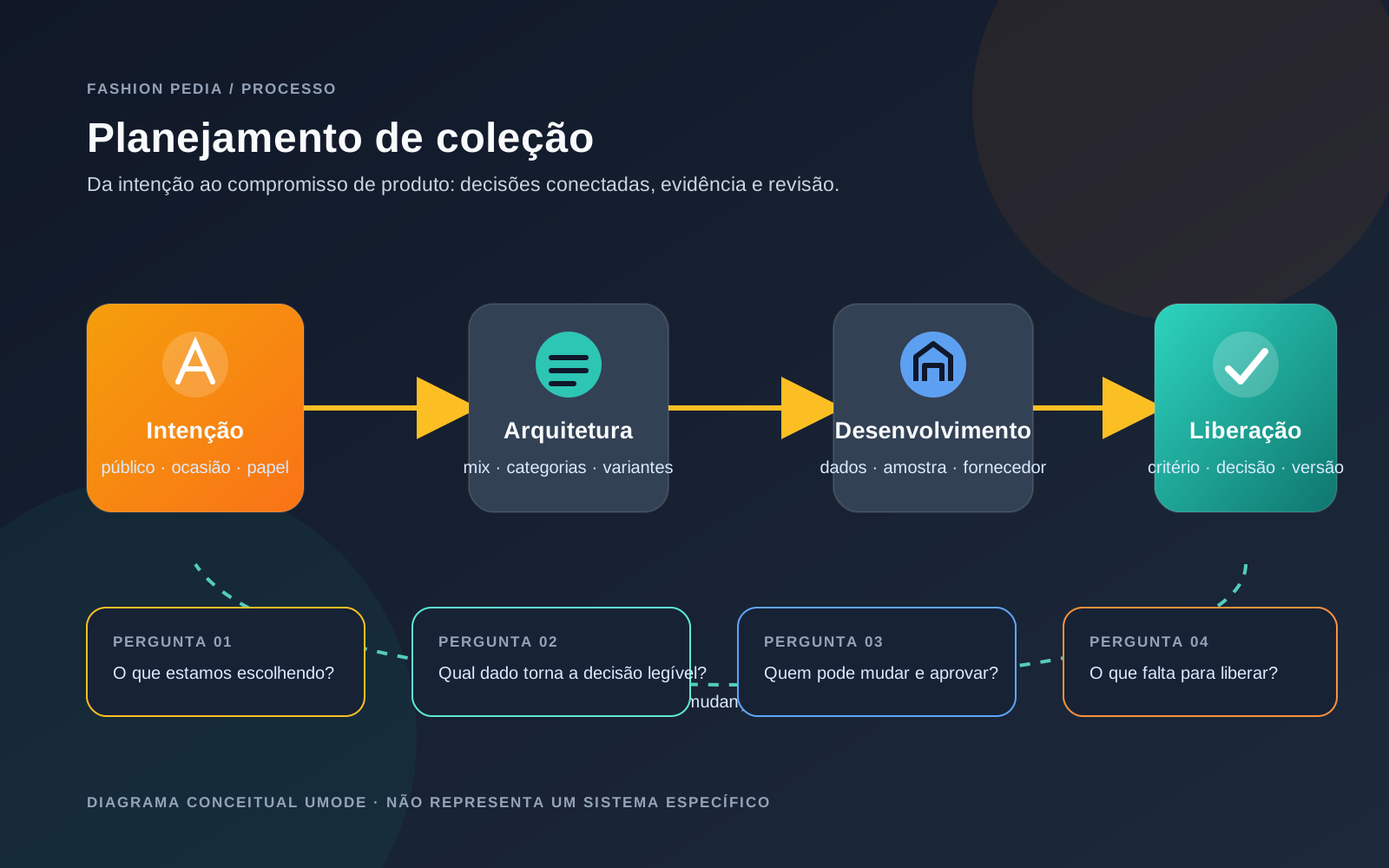
Collection planning
Collection planning is the process of turning a collection intention into controlled decisions about products, data, stages, owners, changes and release criteria. It connects product direction, development, sourcing and information without reducing the plan to a calendar or a software tool.
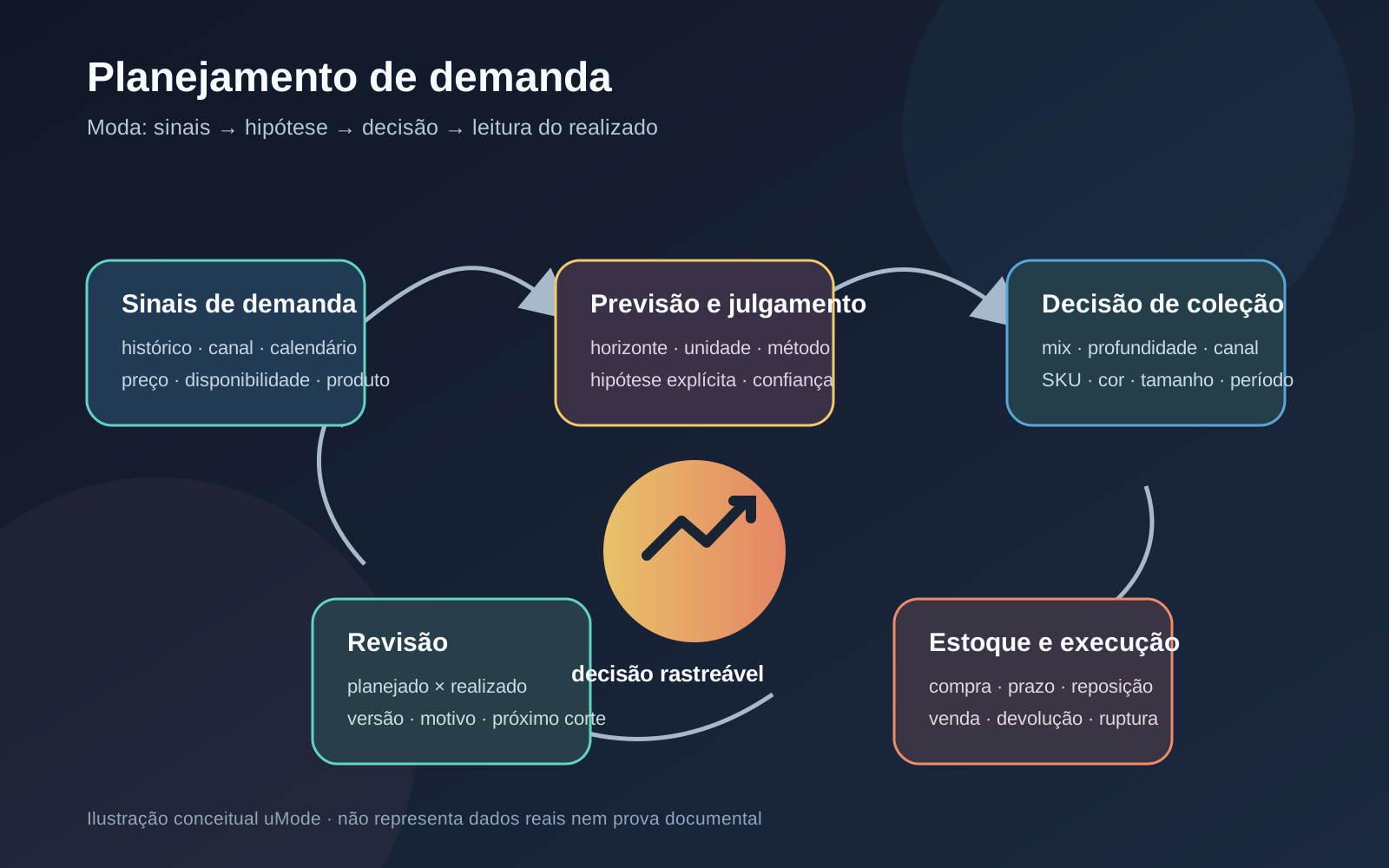
Demand planning in fashion
Demand planning in fashion turns demand signals, history, calendar context and judgement into explicit decisions about assortment, volume, channel and review. It combines forecasting with governance: every hypothesis needs a horizon, unit, owner and rule for revision when the collection or market changes.
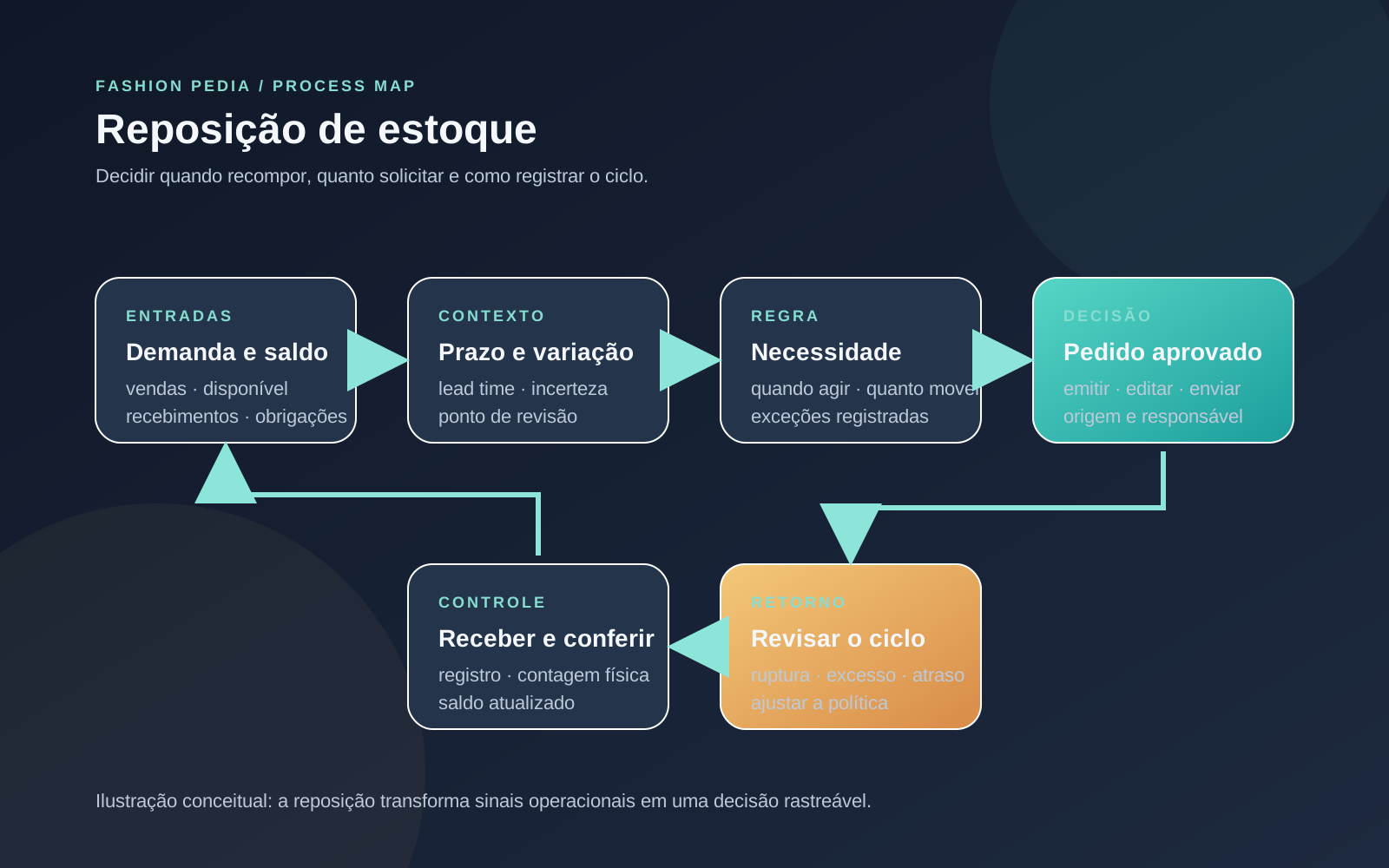
Inventory replenishment
Inventory replenishment is the process of deciding when to restore an item's availability and how much to request for a future need. The decision combines recorded stock, demand, expected receipts, obligations, purchasing lead time and demand variation; the order must then be approved, received and recorded.
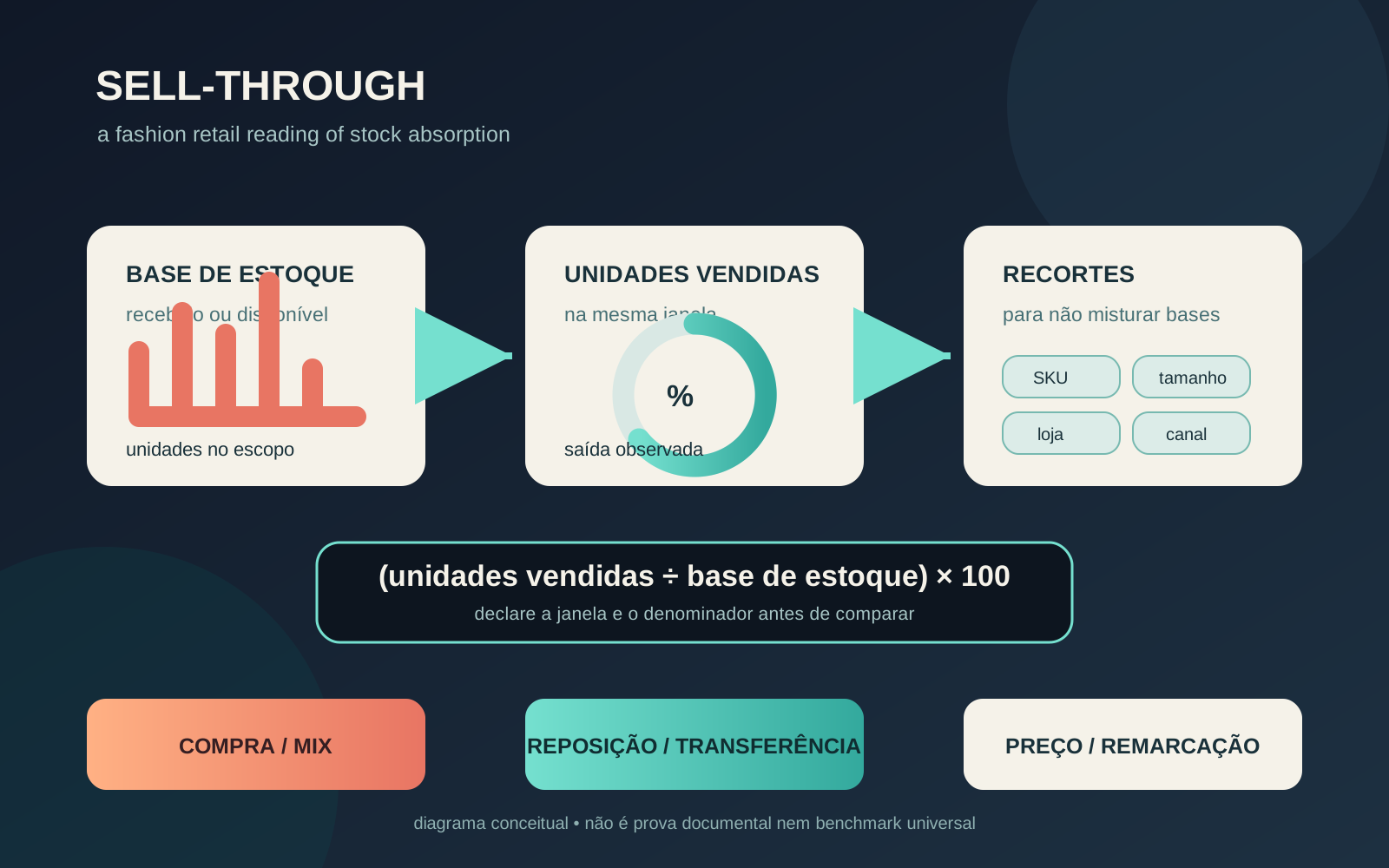
Sell-through in fashion retail
Sell-through in fashion retail. Sell-through is the percentage of units sold from inventory received or made available within a defined window. In fashion retail, the metric becomes useful when it is cut by style, color, size, store, channel, and product life cycle, with the denominator stated before it informs buying, replenishment, or markdown decisions.
Sources
Want to apply this to your operation?