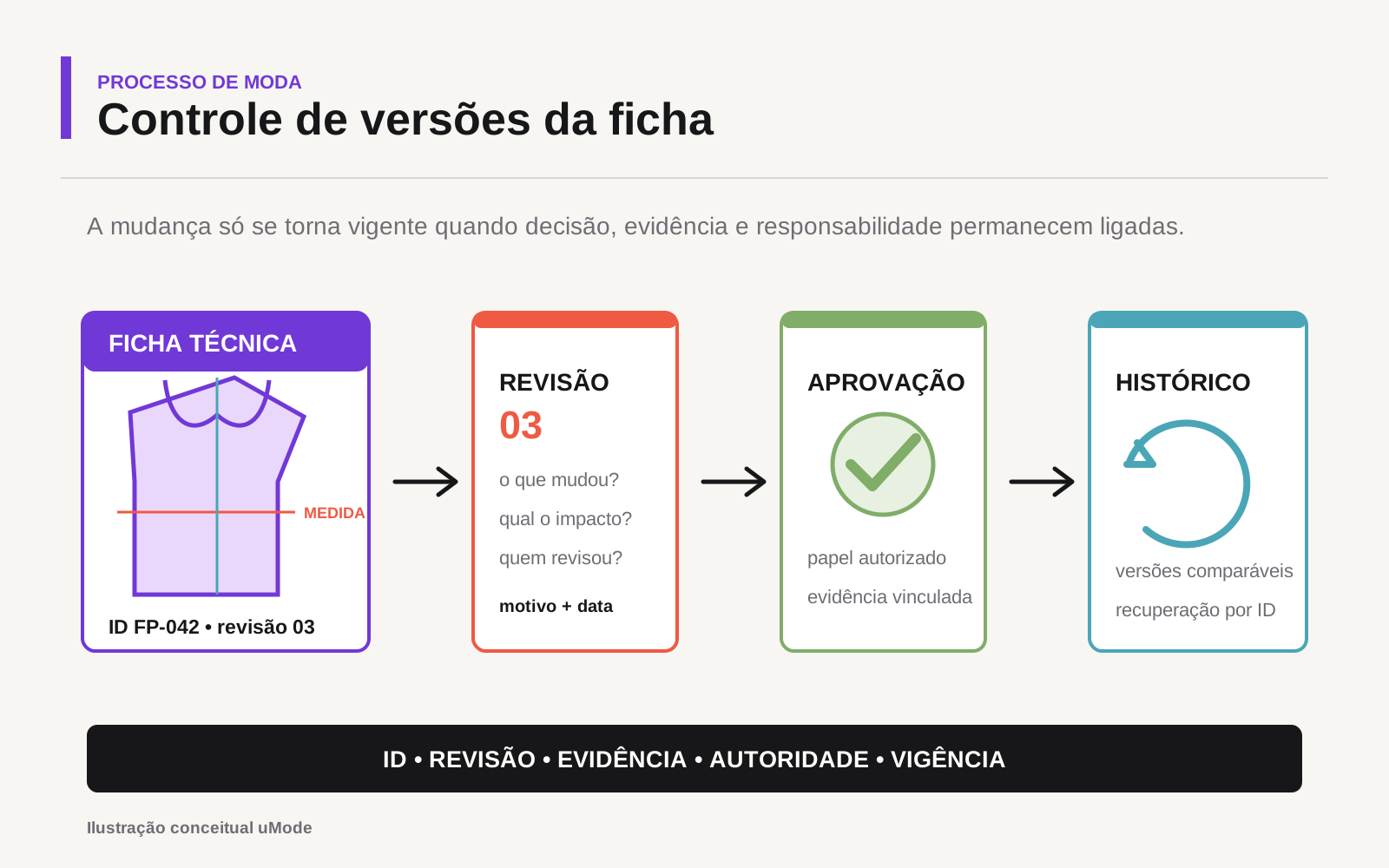
How to choose software for a fashion operation
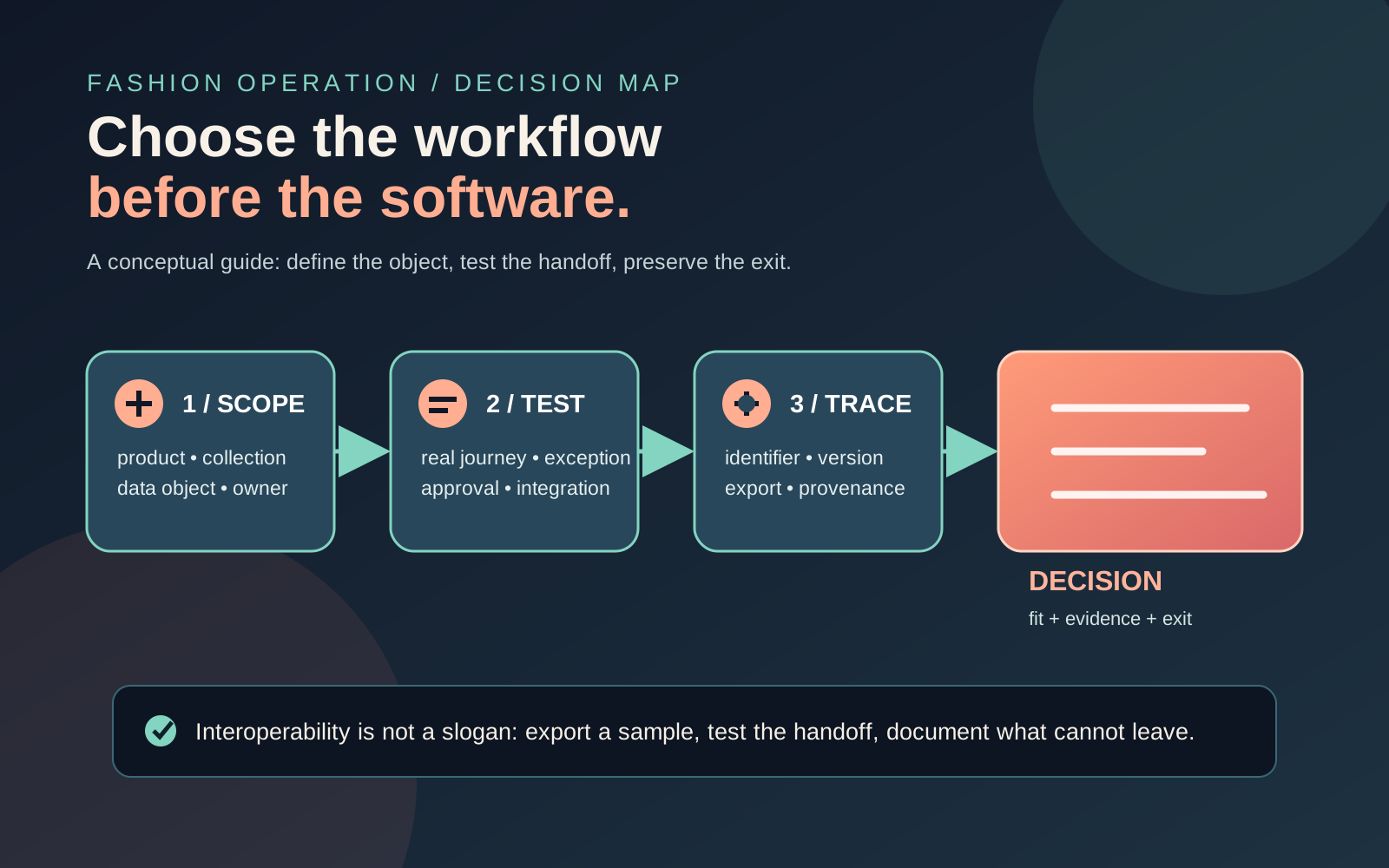
How to choose software for a fashion operation. Choosing software for fashion is a decision process that starts with workflows and information objects, not with a feature demonstration. A comparison should test data, integrations, permissions, traceability, adoption, cost, and exit within the operation’s actual scope.
On this page
What is How to choose software for a fashion operation?
Choosing software for a fashion operation means turning a workflow and information problem into verifiable decision criteria. Before comparing screens, name the object that must be controlled: a collection, product, tech pack, material, supplier, order, attribute, approval, or document. The scope prevents PLM, ERP, PLM, and PIM, and data classification and taxonomy from being treated as synonyms.
The first deliverable is a map of inputs, outputs, owners, states, exceptions, and decisions. For a creative team, the object may be a product version; for engineering, a specification; for purchasing, a data set that must reach the next system. The question is not “which platform has the most modules?” but “which decision will become safer, faster, or more traceable after the change?”
How can features be compared without buying a promise?
Compare real journeys, not feature lists. Choose three or four cases from the operation: create a product, change a measurement, approve a sample, update an attribute, or send data to the next channel. For each case, record the input, owner, approval rule, required history, expected output, and response to missing information.
Use observable criteria: import and export, API, search, attachments, versioning, permissions, change history, approval states, master data, and integration support. W3C describes Web standards as building blocks of a consistent and harmonious digitally connected world and optimizes them for interoperability, security, privacy, accessibility, and internationalization. This makes interoperability and access testable criteria rather than decorative words.
If the operation uses artificial intelligence for classification, recommendation, or generation, include governance in the selection. NIST presents the AI RMF as a voluntary framework for incorporating trustworthiness into the design, development, use, and evaluation of AI systems; that does not prove that a particular product fits the operation. Ask for documentation about purpose, data, limits, human validation, records, and service exit.
How should data, traceability, and vendor dependence be assessed?
Assess the data path after implementation. A useful record should retain a definition, identifier, unit, owner, version, origin, and update rule that fit the workflow. Regulation (EU) 2024/1781 treats the digital product passport as a way to make information available across the value chain and, in its regulatory context, calls for data to be accurate, complete, and up to date. Use that principle as a quality test, not as an automatic claim of legal compliance.
Ask whether each object has a stable identifier and whether a change can be traced to its origin. The same regulation calls unique product identification fundamental to supply-chain traceability. In fashion, this can guide tests for lot, variant, colour, size, material, and supplier when those objects are within scope. Also verify readable export, schema documentation, and data recovery when the contract ends.
Interoperability must be demonstrated with an exit scenario. The regulation provides for transfer through an open interoperable network without vendor lock-in; W3C connects standards with an interoperable Web. Therefore, request a sample export, test an integration, and record fields that do not cross the boundary. A vendor-led happy-path demonstration is not a substitute for testing representative data.
How should a decision and pilot be organised?
Build a matrix with the problem, object, criterion, weight, evidence, gap, cost, and exit condition. Separate licensing from implementation, migration, integration, training, maintenance, and operations. Invite creative, product, engineering, planning, data, purchasing, and technology roles when each group has a journey to test; the decision should preserve ownership of each data object.
Define a pilot with a population, input data, owners, duration, measures, and stop criteria. Measure what the problem requires—such as data completeness, handoff time, rework, exceptions, or integration success—with a formula, period, population, and source. Do not turn a pilot result into a guarantee for the whole company.
The final record should show alternatives considered, tests run, decisions, open questions, and the review date. Collection management should connect to product development and engineering without absorbing their responsibilities; data governance clarifies authority while software supports the chosen workflow.
Which mistakes should be avoided?
Buying by module count confuses intent, process, and technology. It is also risky to assess only the happy path: an urgent change, incomplete data, duplicate record, insufficient permission, unresponsive supplier, and contract exit reveal the strength of the design. An untested requirement is a hypothesis, not an approval.
Another mistake is accepting a record that does not explain origin, version, and authority. Without that context, teams may compare similar-looking numbers that represent different objects or periods. A responsible choice does not search for universal software; it searches for a verifiable fit among workflow, information, integration, people, and risk within the fashion operation’s defined scope.
Verified facts
- NIST’s AI RMF is intended for voluntary use.
Source: nist.gov ↗ - The AI RMF seeks to incorporate trustworthiness considerations into the design, development, use, and evaluation of AI products, services, and systems.
Source: nist.gov ↗ - NIST developed the AI RMF in collaboration with the private and public sectors.
Source: nist.gov ↗ - NIST says that AI RMF 1.0 was released on January 26, 2023.
Source: nist.gov ↗ - NIST published a companion AI RMF Playbook.
Source: nist.gov ↗ - W3C describes Web standards as building blocks of a consistent and harmonious digitally connected world.
Source: w3.org ↗ - W3C says Web standards are implemented in browsers, blogs, search engines, and other software.
Source: w3.org ↗ - W3C says its Web standards are optimized for interoperability, security, privacy, accessibility, and internationalization.
Source: w3.org ↗ - W3C publishes recommendations that are considered Web standards.
Source: w3.org ↗ - Regulation (EU) 2024/1781 describes the digital product passport as a tool for making information available to actors across the entire value chain.
Source: eur-lex.europa.eu ↗ - The same regulation says that digital product passport data should be accurate, complete, and up to date.
Source: eur-lex.europa.eu ↗ - The regulation calls unique product identification fundamental to enabling supply-chain traceability.
Source: eur-lex.europa.eu ↗ - The regulation provides for data transfer through an open interoperable network without vendor lock-in.
Source: eur-lex.europa.eu ↗
Related entries

Fashion PLM: data, product, and lifecycle
Fashion PLM is the structured management of the data, decisions, and workflows that follow a product and a collection from concept through post-launch. It connects tech packs, materials, costs, samples, approvals, suppliers, and versions so that every function works from a traceable product definition.
ERP, PLM, and PIM
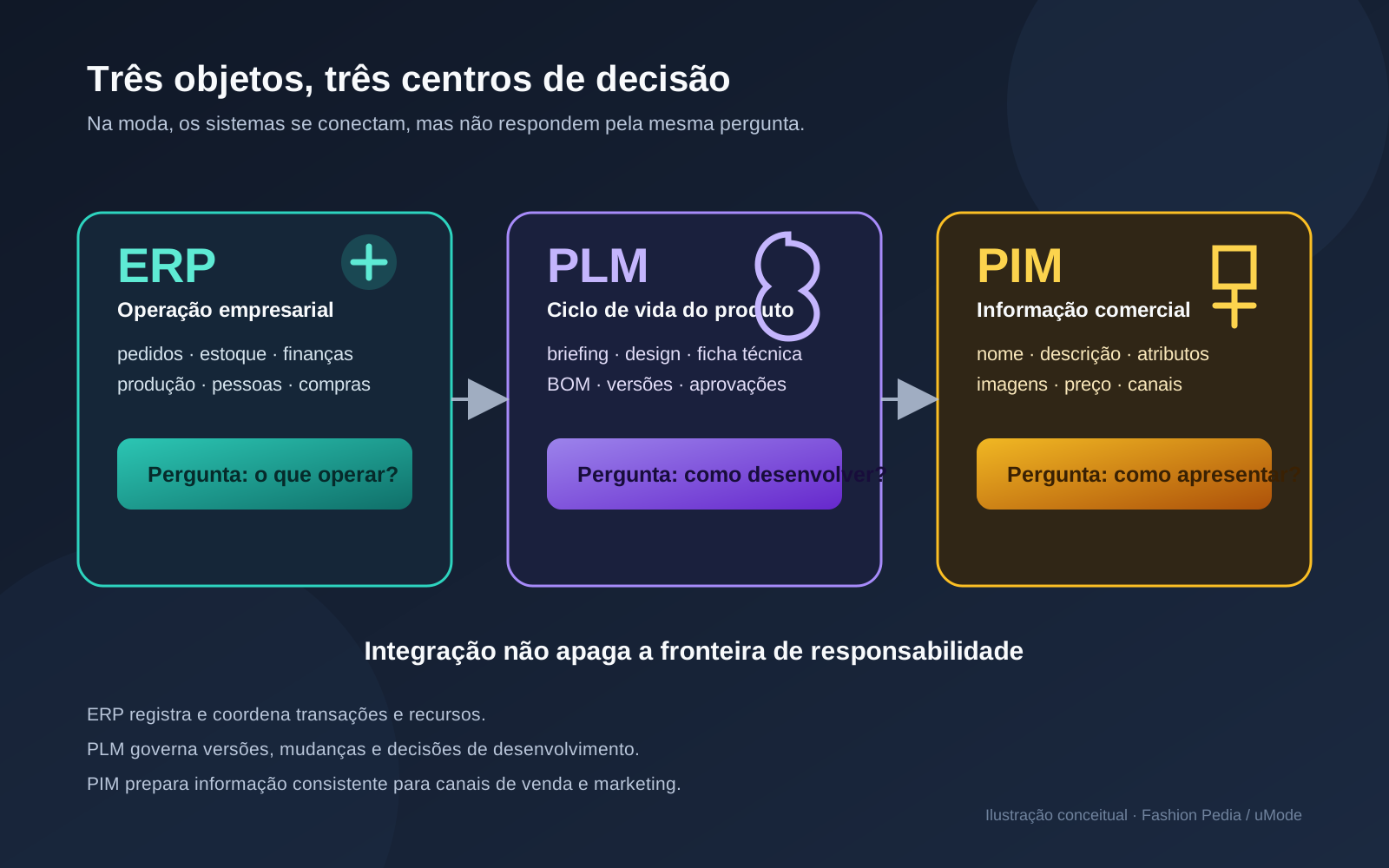
ERP, PLM, and PIM organize different objects in a fashion value chain: ERP integrates business processes and transactional data; PLM follows product lifecycle decisions and development; and PIM centralizes, enriches, and distributes product information for sales and marketing channels.
Product cataloging, enrichment, and taxonomy
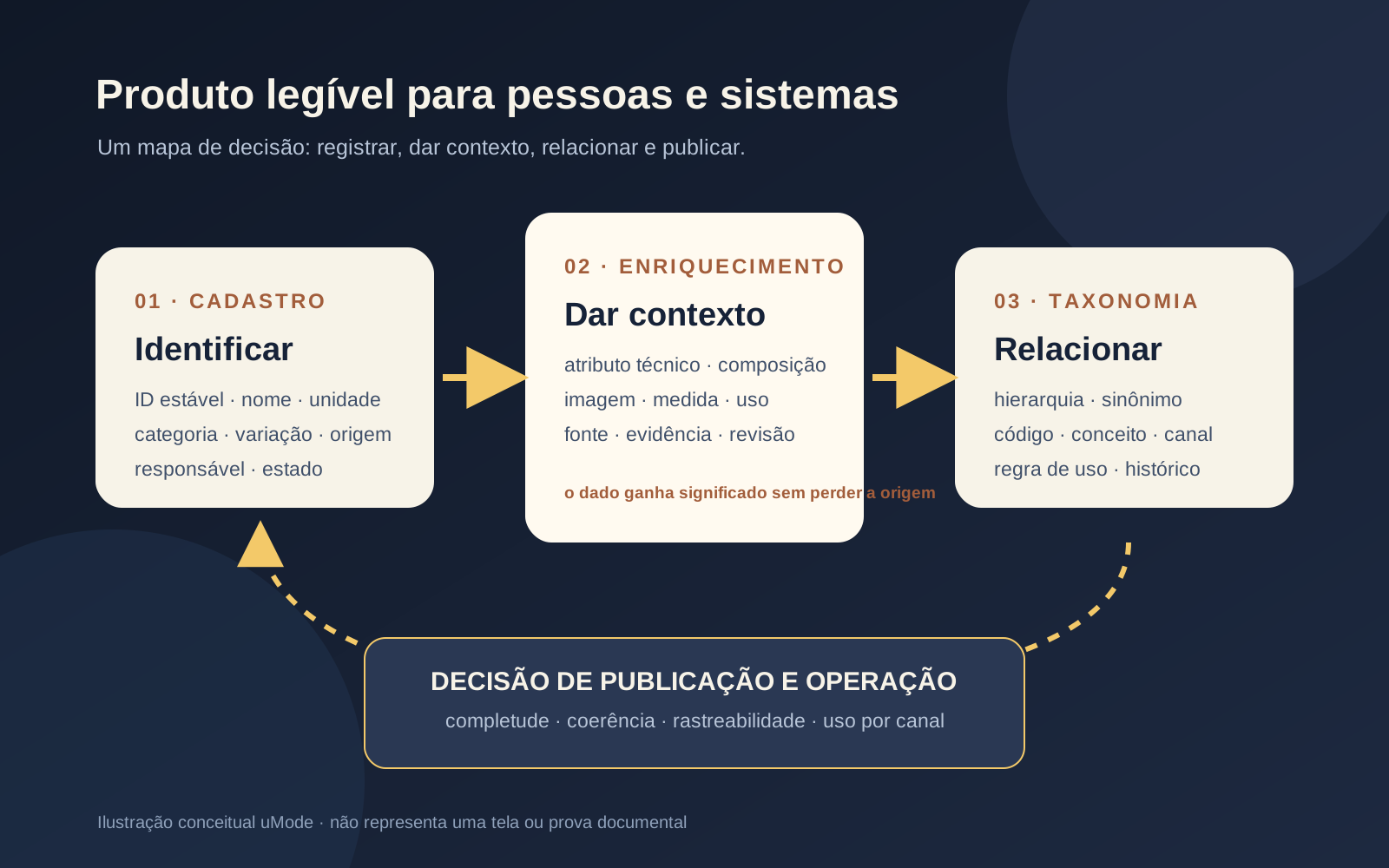
Product cataloging, enrichment, and taxonomy is a process for turning fashion objects into records that can be identified, understood, related, and used. It separates the minimum product record from contextual information and from the relationships that support consistent search, operations, and publishing.

Collection management
Collection management coordinates a fashion line's journey from idea through production, service and disposal by connecting people, product data, processes, decisions, versions and events across teams and partners.
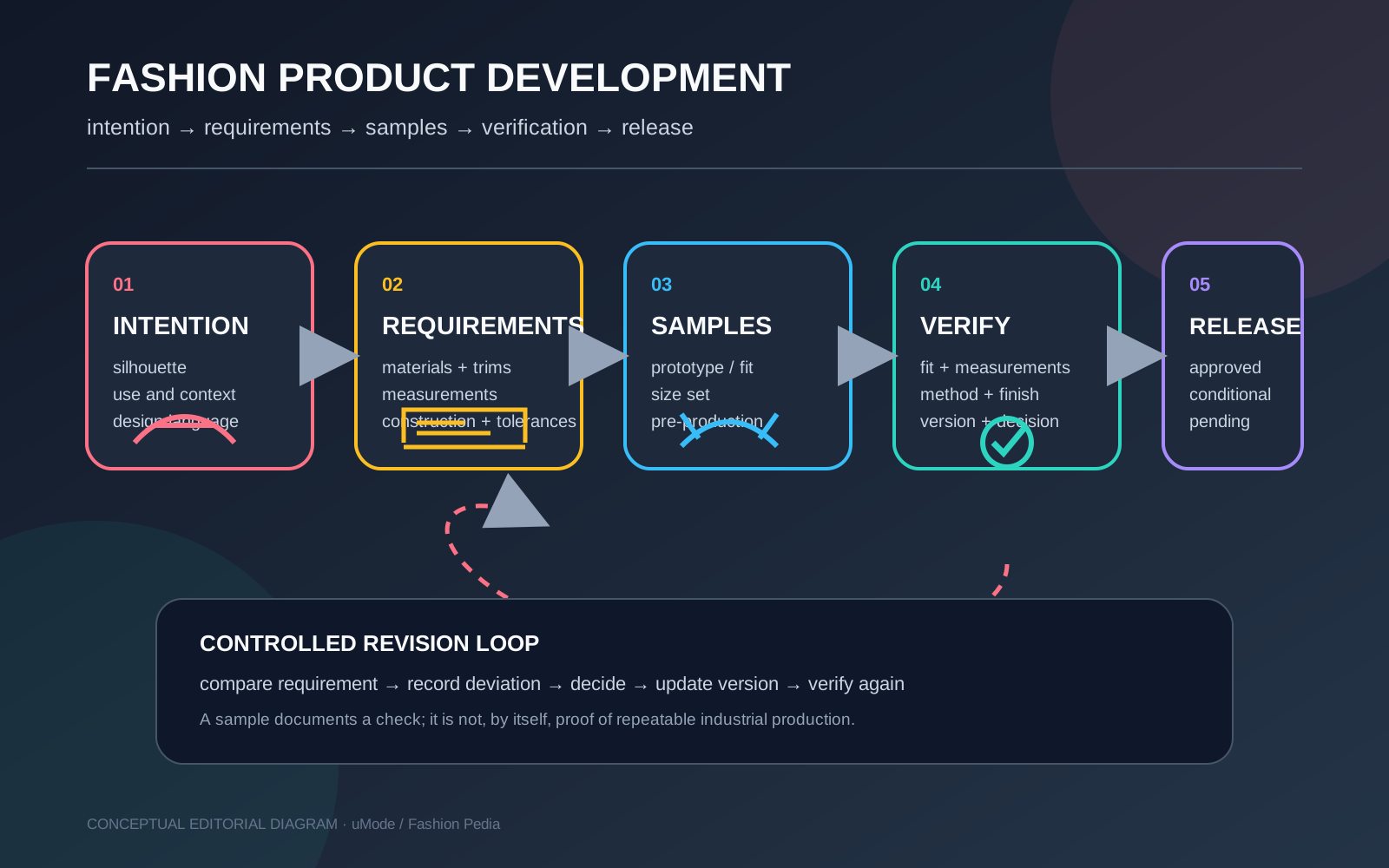
Fashion Product Development and Engineering
Fashion product development and engineering turns a design intention into verifiable requirements for building, fitting, revising, and releasing a garment or collection. The process connects concept, technical specification, patternmaking, materials, construction, measurements, samples, quality, cost, and lifecycle data without treating aesthetic approval as proof of industrial repeatability.
Sources
Want to apply this to your operation?