Velvet
Velvet is a short, dense-pile fabric whose raised surface responds to light and touch. Fashion selection must separate fibre from construction and record pile, ground, direction, composition, finish and acceptance criteria.
On this page
What is Velvet?
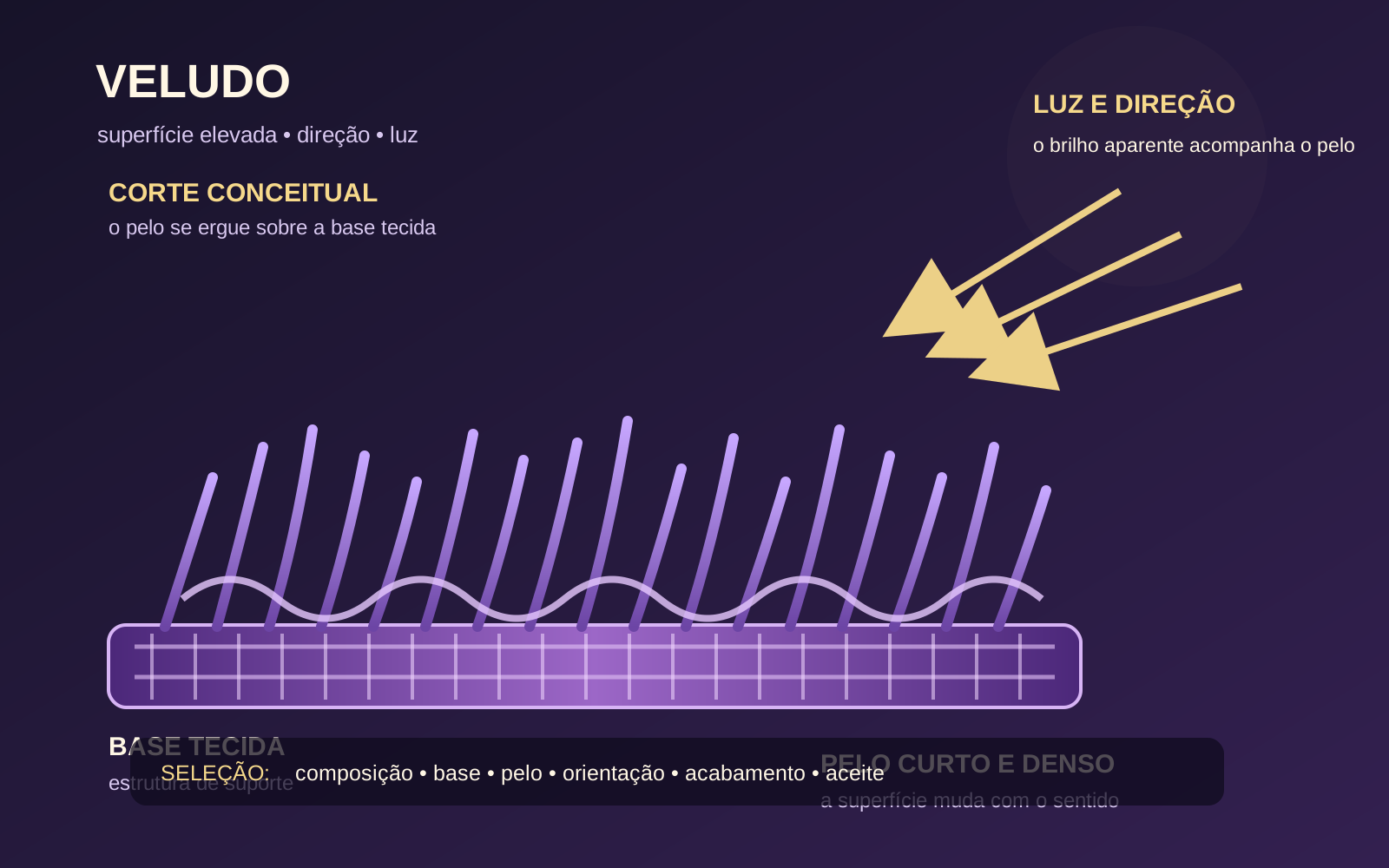
Velvet is a short, dense-pile fabric, not a specific fibre. Its material identity comes from the raised surface: fibres stand perpendicular to the ground and create an area that responds distinctly to light and touch. The pile is usually less than half a centimetre high, while the article’s reading also depends on uniformity and density. For that reason, velvet should be described in the specification by article and construction, not only by a commercial name.
The distinction between fibre and fabric is decisive. Silk, cotton and synthetic-fibre velvets belong to the same surface family while using different raw materials. In textile material selection, composition, ground, pile, finish and intended use should remain separate fields. “Velvet” does not by itself establish silk content, luxury, durability or easy care.
How is the pile formed, and why does the appearance change?
Manufacturing can use a double-weave construction: two ground fabrics are made together and the connecting structure is separated so that pile remains on one surface. The exact article construction must be confirmed in the supplier specification; this page’s illustration is conceptual only. The result is a three-dimensional surface rather than a flat plane without pile.
The pile behaves directionally. When hand, light or sight moves in different directions, appearance and feel can change. In a garment, orientation therefore becomes a product decision: samples, patterns and approved garments should record the chosen direction. Patternmaking must respect that choice to avoid visually discordant panels. Density should also be treated as a specification variable because the consulted source connects it with appearance, feel, performance and manufacturing cost.
How should velvet be selected for a collection?
Start with the intended use and compare identified articles. Record composition, construction, available pile height and density, ground, usable width, colour, finish, lot, supplier, care information and acceptance tolerances. Then test an oriented sample: observe the surface with the pile, against it and under the light expected for the product. This does not replace testing; it makes the visual decision reproducible.
The textile chain helps locate the information. A fabric-manufacturing course describes fabric as flexible material made by interlacing yarns or intermeshing loops and places fabric manufacturing among the major chain stages alongside fibre, yarn and chemical processing. For woven velvet, weaving is therefore a construction relation, while finishing can name later treatments without becoming a synonym for the material. Loom technology alone does not define the article: systems exist that insert weft with air and with water, but the purchased fabric specification must identify the actual construction.
What should be controlled before approval?
In quality control, compare the approved sample with the received lot using consistent light and orientation. Check pile continuity, crush marks, changes of direction between panels, apparent colour variation, declared composition and usable width. Record the result, lot, date and decision in the technical specification. Available density, height and composition may not be expressed with the same method by every supplier; an unverified field should remain open for confirmation.
Velvet can appear in clothing and, according to the consulted source, also in athletic wear and automotive interiors. That range does not make every article equivalent: product, construction and acceptance criteria still determine the selection. Relations with knitting, product development and fit approval help navigate construction, decision and observation; they are not evidence that every velvet has the same performance.
Verified facts
- Velvet is recognized by a dense, evenly cut pile surface.
Source: textileschool.com ↗ - The pile fibres stand perpendicular to the base fabric and interact with light, touch and environmental conditions.
Source: textileschool.com ↗ - Velvet pile height is usually less than half a centimetre.
Source: textileschool.com ↗ - Velvet has directional properties: its appearance and feel change with viewing angle and pile direction.
Source: textileschool.com ↗ - Velvet manufacturing can use a double-weave process that subsequently separates the two ground fabrics.
Source: textileschool.com ↗ - Pile density is described as influencing appearance, feel, performance and manufacturing cost.
Source: textileschool.com ↗ - Silk, cotton and synthetic-fibre velvets exist.
Source: textileschool.com ↗ - Modern techniques and fibre innovations have extended velvet applications to athletic wear and automotive interiors.
Source: textileschool.com ↗ - Textile fabrics are generally flexible two-dimensional materials made by interlacing yarns or intermeshing loops, with exceptions such as nonwovens and braids.
Source: archive.nptel.ac.in ↗ - Fabric manufacturing is one of four major stages of the textile value chain, alongside fibre production, yarn manufacturing and textile chemical processing.
Source: archive.nptel.ac.in ↗ - Most apparel fabrics are manufactured by weaving, although knitting is advancing especially in sportswear.
Source: archive.nptel.ac.in ↗ - Air-jet looms insert weft yarn using air, while water-jet looms insert weft yarn using water.
Source: toyota-industries.com ↗
Related entries

Industrial weaving
Weaving is the process of forming fabric by regularly interlacing two yarn systems: warp in the lengthwise direction and weft across the width. The construction results from warp preparation, shed formation, weft insertion and beat-up, and control of yarn delivery and fabric take-up.
Industrial knitting
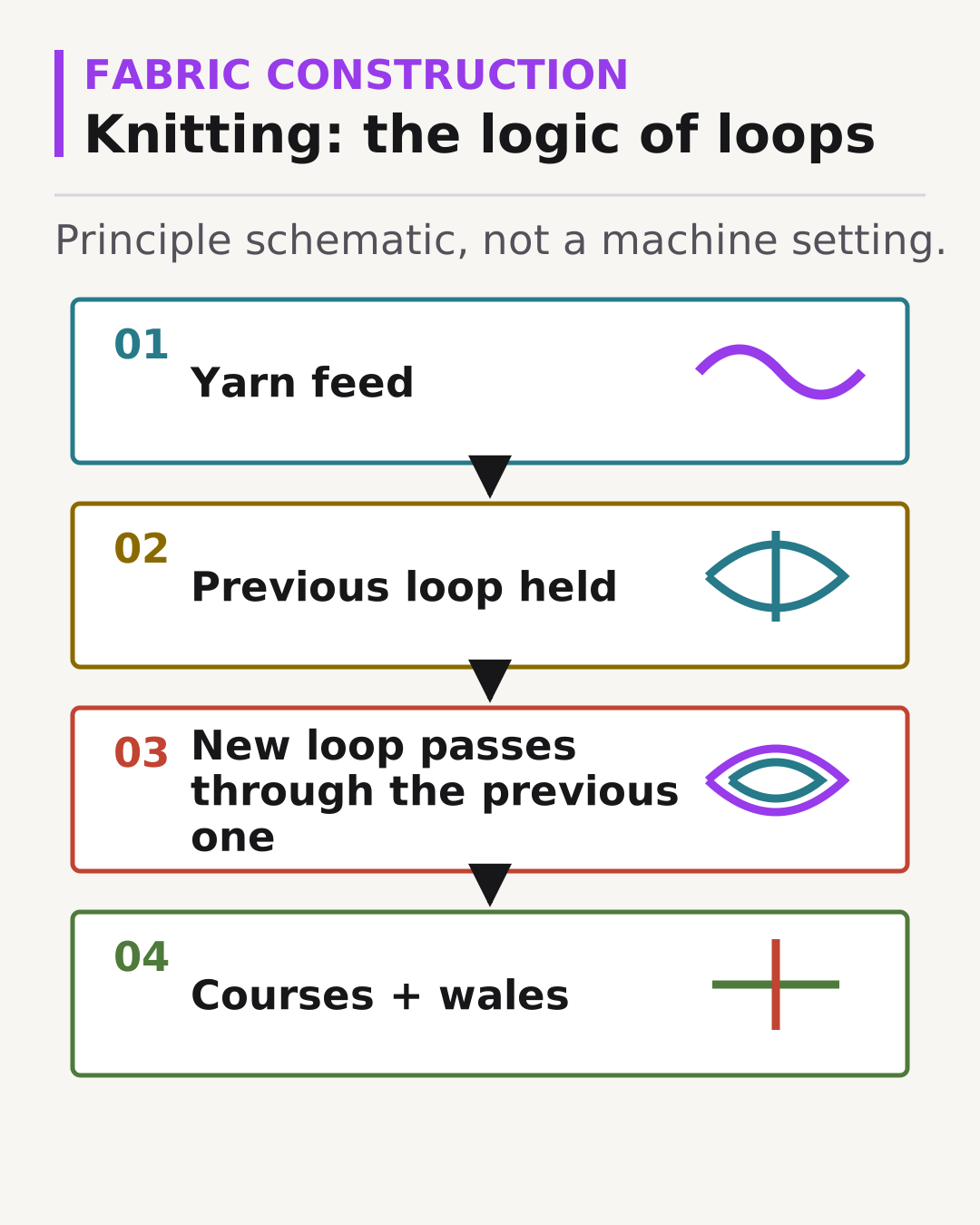
Knitting is the process of forming fabric through series of intermeshed loops. It divides into weft knitting, in which yarn travels across the width and needles form loops in sequence, and warp knitting, in which parallel yarns feed needles that work simultaneously along the fabric length.

Fashion product technical specification
A technical specification is the controlled information set that translates an approved fashion product into verifiable sampling and manufacturing requirements. It brings together drawings, materials, measurements, construction, tolerances, identification, labelling, comments and revision history; its content varies by category, company, market and stage.
Garment patternmaking
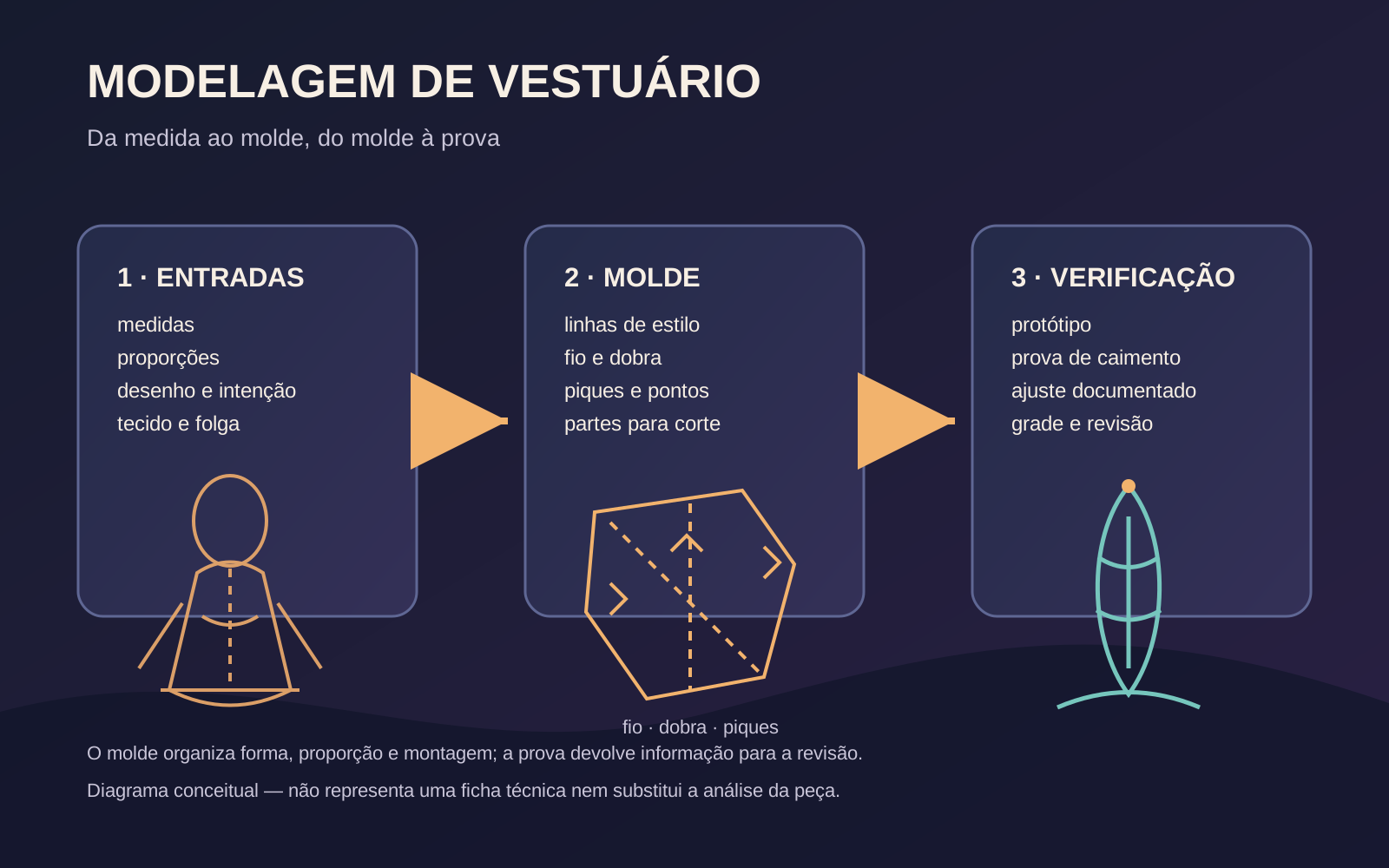
Garment patternmaking is the technique of turning measurements, proportions, and design intent into patterns used to cut and assemble a garment. It connects a block, flat pattern construction or draping with fabric information, production markings, fitting, alterations, and grading; the result is a testable development basis, not an automatic guarantee of fit.

Apparel quality control
Apparel quality control combines specifications, inspection, and testing to check whether fabrics, trims, and garments meet the expected performance for a product and end use. The process can examine color, drape, hand, durability, conformance, defects, fit, seam integrity, shrinkage, and drying performance. Quality decisions depend on the product and its intended use.
Sources
Want to apply this to your operation?