Viscose
Viscose is a regenerated cellulosic fibre made by the viscose process and used as a textile material in yarns and fabrics. The name identifies the fibre, not one fixed appearance: construction, blends, finishing and wet-state behaviour must be assessed on the finished article.
On this page
What is Viscose?
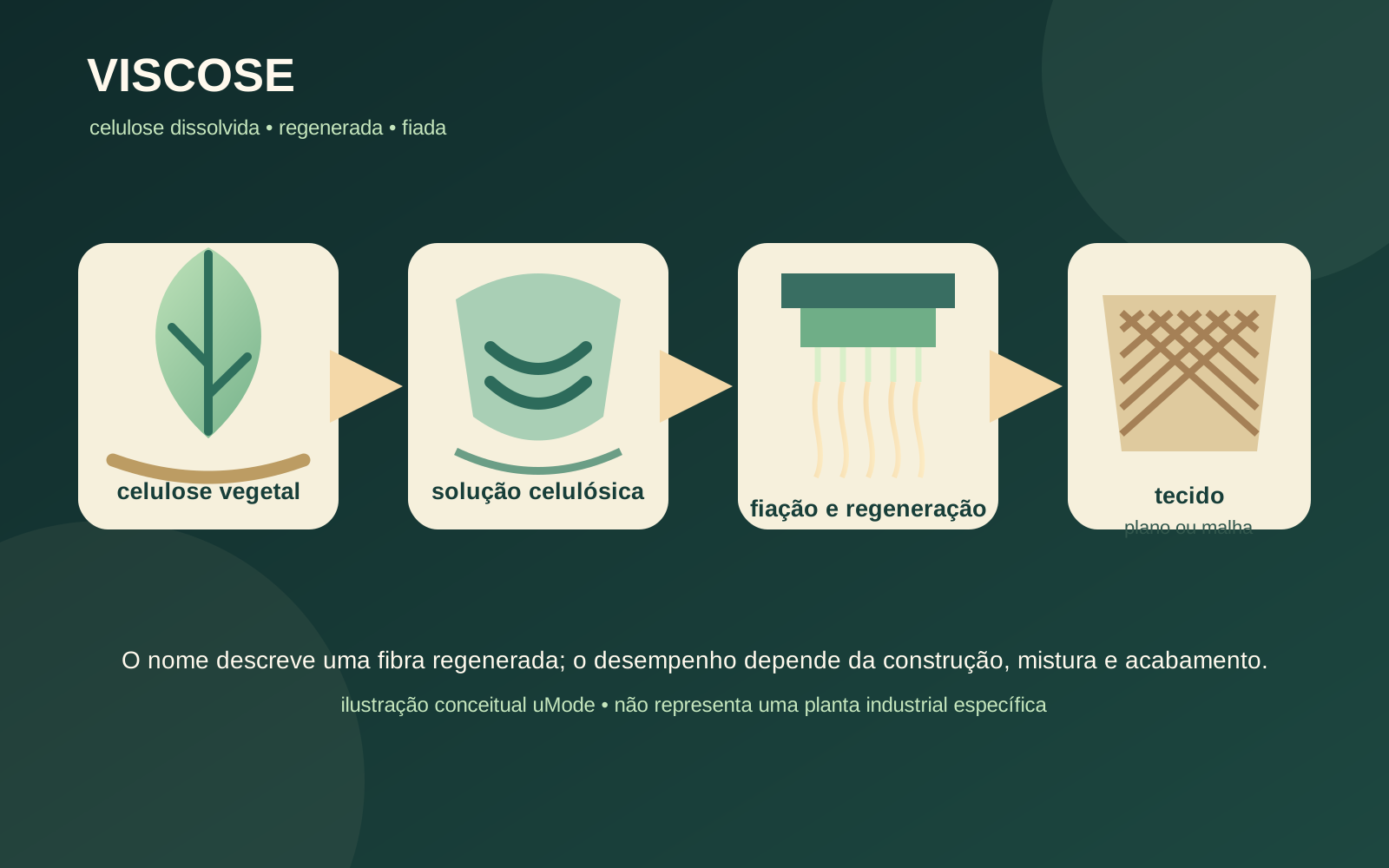
Viscose is a regenerated cellulose fibre obtained by the viscose process for filament or discontinuous fibres. This definition separates the material from a yarn, a fabric and a finished garment. “Viscose” therefore does not by itself tell us whether an article is woven or knitted, light or substantial, pure or blended.
A material record should pair the name with composition, supply form, construction, finishing and use requirements. The same fibre family can enter articles with different responses because perceived performance also depends on yarn, structure and finishing. The connection to cellulosic fibres places viscose in the graph without treating it as a synonym for every regenerated fibre.
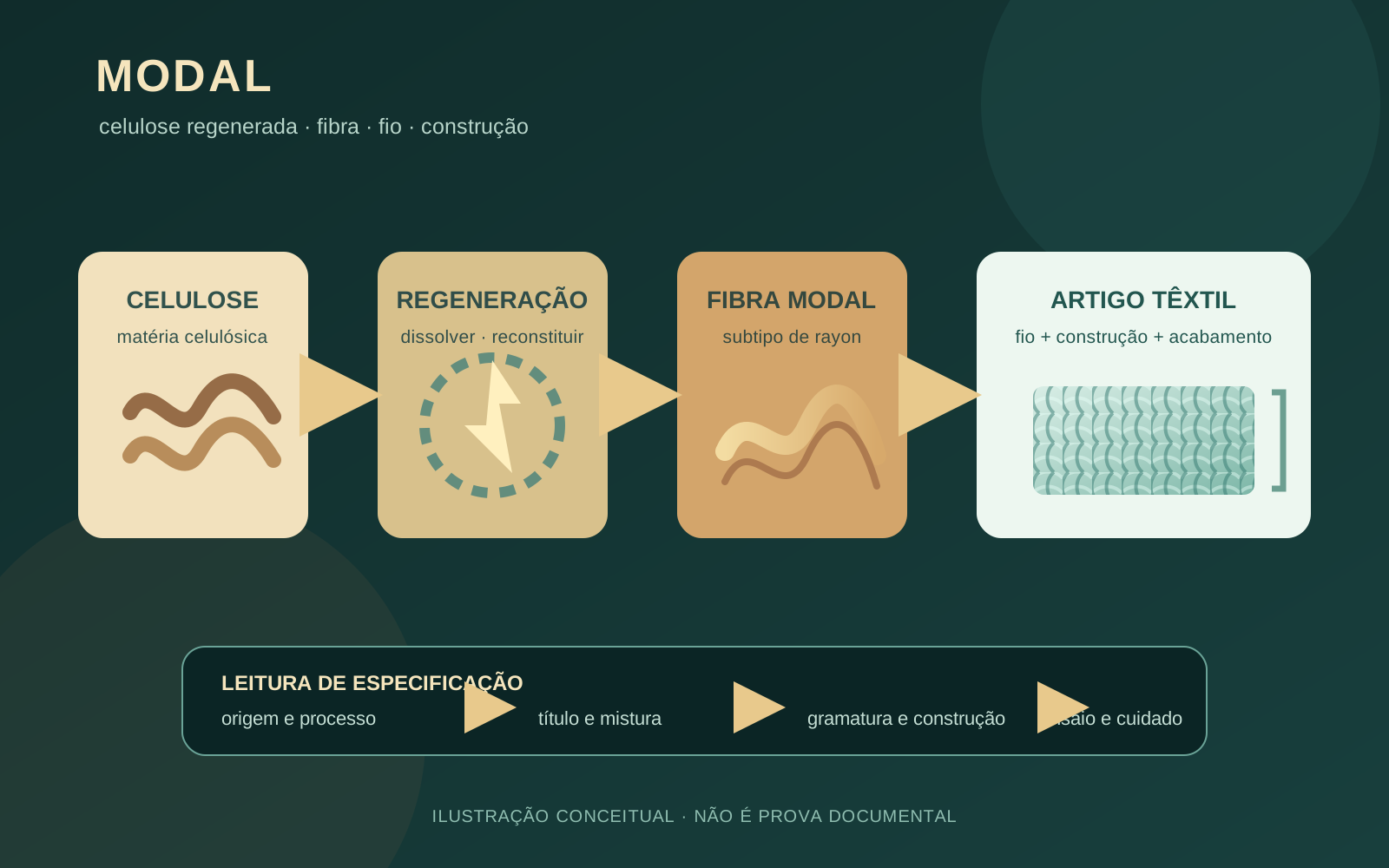
Modal should be treated as a close technical relation, not as an interchangeable word in every context. European regulation describes it as a regenerated cellulose fibre obtained by a modified viscose process, with specific requirements for breaking force and wet modulus. The technical review also presents it as a trade name for special viscose fibres with high wet modulus.
How does the viscose process turn cellulose into fibre?
In the conventional process, reactions between carbon disulfide and cellulose form cellulose xanthate, which is responsible for dissolving cellulose. The solution is then taken through fibre formation; this describes the material route, not the appearance or drape of a finished fabric.
The chemistry matters in development because choosing viscose is not only a hand-feel decision. The technical literature describes carbon disulfide as an environmentally sensitive chemical in the conventional process. It also records that the fibres are washed to remove residual carbon disulfide and that the compound’s high volatility may lead to losses through evaporation. These points support requesting process documentation rather than turning the fibre name into an environmental promise.
In a technical specification, record declared composition, article construction, finish, intended use and acceptance criteria. Control should follow the actual lot and article received. A conceptual description of the route does not replace testing, supplier specifications or compliance verification.
Which performance concerns matter in fashion?
Regular rayon, often identified as viscose on commercial labels, has low wet strength and may become unstable, stretching or shrinking when wet. Development should therefore consider washing, drying, pattern cutting and article stability instead of inferring behaviour from the word “viscose” alone.
This limitation affects product construction directly. For a fluid pattern, the team may prioritise drape; for an article exposed to frequent washing, it should define tolerances and stability criteria. A fitting observes the visual result, but the technical decision must remain tied to the article, lot and test method.
The material should also not be confused with the systems that manage it. Quality control checks requirements; finishing changes or stabilises article characteristics; a technical specification records the requirement. Viscose is the material under review, not the approval process, the tool or a performance guarantee.
When comparing viscose, regular rayon and modal, keep regulatory names, commercial names and measured properties distinct. The safe collection question is specific: which fibre was declared, in which construction, with which finish and under which use conditions? That discipline connects textile materials and product development without inventing equivalences.
Verified facts
- Viscose is a regenerated cellulose fibre obtained by the viscose process for filament and discontinuous fibres.
Source: eur-lex.europa.eu ↗ - Modal is a regenerated cellulose fibre obtained by a modified viscose process, with technical requirements for breaking force and wet modulus.
Source: eur-lex.europa.eu ↗ - In the conventional viscose process, carbon disulfide is used and is described in the technical literature as an environmentally sensitive chemical.
Source: bioresources.cnr.ncsu.edu ↗ - In viscose dissolution, reactions between carbon disulfide and cellulose form cellulose xanthate, which is responsible for dissolving cellulose.
Source: bioresources.cnr.ncsu.edu ↗ - Viscose fibres are washed to remove residual carbon disulfide, whose high volatility may lead to losses through evaporation.
Source: bioresources.cnr.ncsu.edu ↗ - Regular rayon has the largest market share and is mainly used for apparel and home furnishings, with the term viscose appearing on commercial labels.
Source: bioresources.cnr.ncsu.edu ↗ - Regular rayon has low wet strength and may become unstable, stretching or shrinking when wet.
Source: bioresources.cnr.ncsu.edu ↗ - Modal is a trade name for special viscose fibres with high wet modulus.
Source: bioresources.cnr.ncsu.edu ↗
Related entries
Modal
Modal is a manufactured regenerated-cellulose fibre in the rayon group. Its high-wet-modulus and polynosic forms are relevant when a product brief needs more controlled wet behaviour; the final decision still belongs to the specified fibre, yarn, construction and care context.

Fashion product technical specification
A technical specification is the controlled information set that translates an approved fashion product into verifiable sampling and manufacturing requirements. It brings together drawings, materials, measurements, construction, tolerances, identification, labelling, comments and revision history; its content varies by category, company, market and stage.
Sources
Want to apply this to your operation?