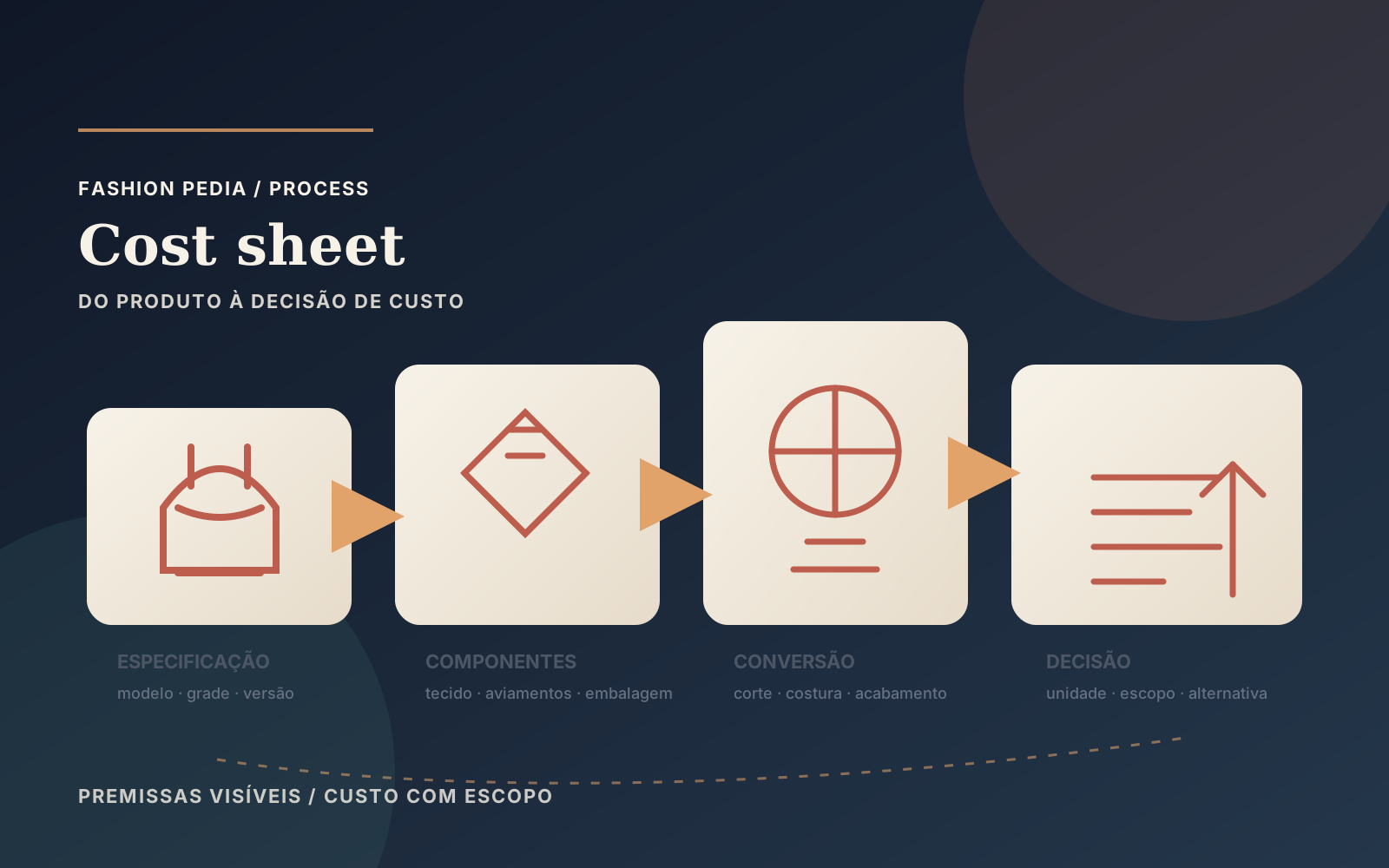
Fashion Product Cost Formation
Fashion product cost formation is the process of identifying, measuring, and assigning resources consumed by a garment, variant, or batch within a stated scope. It combines materials, conversion, waste, services, and overhead in a versioned cost sheet while distinguishing manufacturing cost, landed cost, and selling price.
On this page
What is Fashion Product Cost Formation?
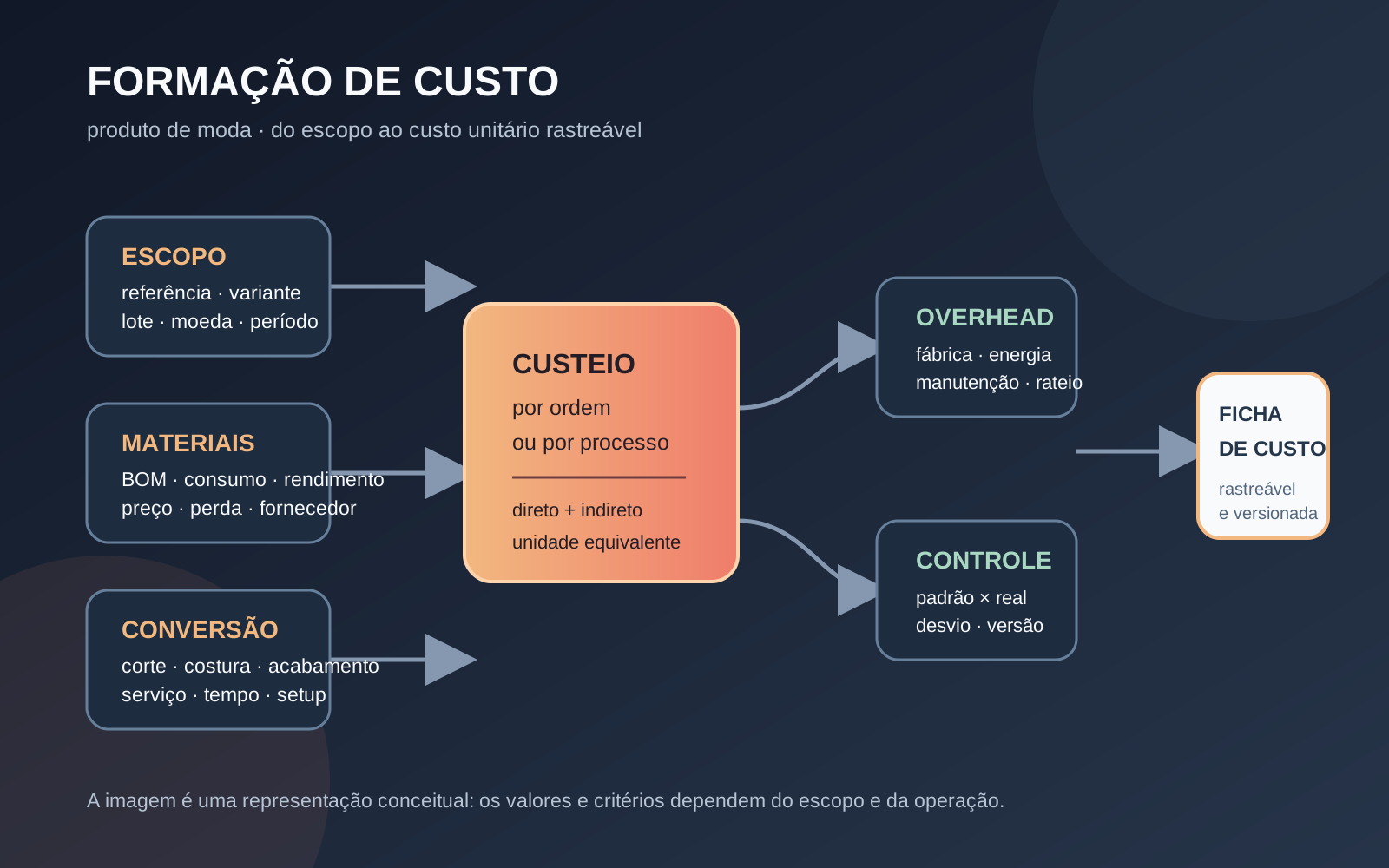
Cost formation is the process of identifying and assigning resources to a product within a defined scope. For a fashion product, that object may be a style, a colour-and-size variant, a pilot batch, or a production order. The first decision is to state the unit, currency, period, purchasing condition, and exclusions. This keeps a cost sheet separate from a promise about price or margin.
The technical base combines direct materials, direct labour, and manufacturing overhead. In a bill of materials (BOM), fabric, lining, thread, zipper, button, label, and packaging can be inputs; consumption calculation turns width, length, quantity, and planned waste into a purchasing requirement. The sheet should retain the product and assumption version, because changing composition, supplier, finish, or quantity changes the cost reading.
IAS 2 describes inventory cost as a combination of purchase, conversion, and other costs incurred to bring an item to its present location and condition. That accounting reference does not by itself decide every item in a fashion management sheet: the management scope should explicitly record freight, taxes, external services, packaging, waste, and excluded costs.
How should the method and cost sheet be built?
The method should follow the production pattern. Job order costing suits a made-to-order garment, a small collection, or a sample when materials and labour can be traced to that order. Process costing suits a repetitive line or standardized batch: costs accumulate by process or department and are then related to production volume. A fashion operation can combine both, calculating the repeatable base by process and adding a customization traced to a job.
An operational cost sheet can follow this sequence:
- Scope: identify style, variant, batch, quantity, period, currency, and purchasing condition.
- Materials: record component, purchase unit, net consumption, yield, waste, unit price, and supplier. Fabric must be linked to construction and finishing; in a woven fabric, warp and weft are directions and consumptions that should not be confused.
- Conversion: separate cutting, sewing, pressing, laundry, printing, embroidery, and finishing; record time or contracted operation price when that is the chosen base.
- Overhead: choose an allocation base that is coherent with the resource consumed, such as machine hours, labour hours, or operation. A flat per-piece allocation can distort products that follow different routings.
- Reconciliation: compare standard cost, estimate, and actual batch cost, explaining variances in consumption, price, yield, rework, subcontracting, and volume.
For partially completed units, equivalent units help a process system distribute work and materials between completed production and work in process. The decision to use FIFO, weighted average, or specific identification belongs to the accounting method and organizational context; it should not be hidden as if it were merely a spreadsheet formula.
Which distinctions matter in fashion?
Manufacturing cost, landed cost, total cost, and selling price answer different questions. Price formation starts from cost and adds commercial decisions; it is not synonymous with cost formation. A technical pack describes construction, measurements, and materials; it feeds the cost sheet but does not replace value assignment. Product development decides and validates the solution; cost formation measures the economic consequences of the recorded decisions.
The textile stage also needs specificity. In weaving, warp preparation includes operations before the loom; those operations can create yarn consumption, labour, setup, and waste that belong either to the purchased or produced fabric scope. Textile materials names the matter and construction; Textile finishing covers later transformations. The sheet must state whether the received value already includes those services or whether they will be added separately.
The common risk is hiding assumptions. A new version should be opened when the style changes material, consumption, operation sequence, supplier, quantity, currency, or allocation rule. The record should answer: which version was used, for which batch, with which price source, and what difference appeared between plan and actual? This turns the sheet from an isolated number into a comparable base for development, sourcing, production, and analysis.
The value of cost formation is decision traceability. It allows scenarios to be compared without confusing cost with price, makes the effect of a construction change visible, and locates the component that explains a variance. The tool may be a spreadsheet or a system; the method still depends on scope, unit, assumptions, value sources, and assignment criteria.
Verified facts
- Inventory cost includes purchase costs, conversion costs — direct labour and production overhead — and other costs incurred in bringing inventory to its present location and condition.
Source: ifrs.org ↗ - IAS 2 provides guidance for determining inventory cost and for the subsequent recognition of that cost as an expense.
Source: ifrs.org ↗ - Ordinarily interchangeable items may use FIFO or weighted average, while items that are not ordinarily interchangeable use specific identification.
Source: ifrs.org ↗ - Job order costing fits situations where product or customer specifications and costs are not identical and direct material and direct labour can be traced to the final product.
Source: openstax.org ↗ - Process costing fits standardized products made continuously or in large batches when an input cost is difficult to trace to one individual unit.
Source: openstax.org ↗ - In a process system, each department accumulates costs and equivalent units help calculate unit cost when some units are only partially complete.
Source: openstax.org ↗ - Manufacturing or product costs include direct materials, direct labour, and manufacturing overhead.
Source: openstax.org ↗ - Manufacturing overhead consists of indirect factory-related costs such as electricity, depreciation, supplies, and personnel who are not direct labour.
Source: accountingcoach.com ↗ - Manufacturing overhead must be divided and allocated to units produced because its costs are not directly traceable to each product.
Source: accountingcoach.com ↗ - An allocation method without a cause-and-effect relationship or an evident correlation with its allocation base can assign an improper amount of overhead to products.
Source: accountingcoach.com ↗ - Weaving interlaces two sets of yarns; warp yarns run along the length and weft yarns run across the width of the fabric.
Source: cottonworks.com ↗ - In warp preparation, warping, slashing, and drawing-in or tying-in take place before fabric formation on the loom.
Source: cottonworks.com ↗
Related entries
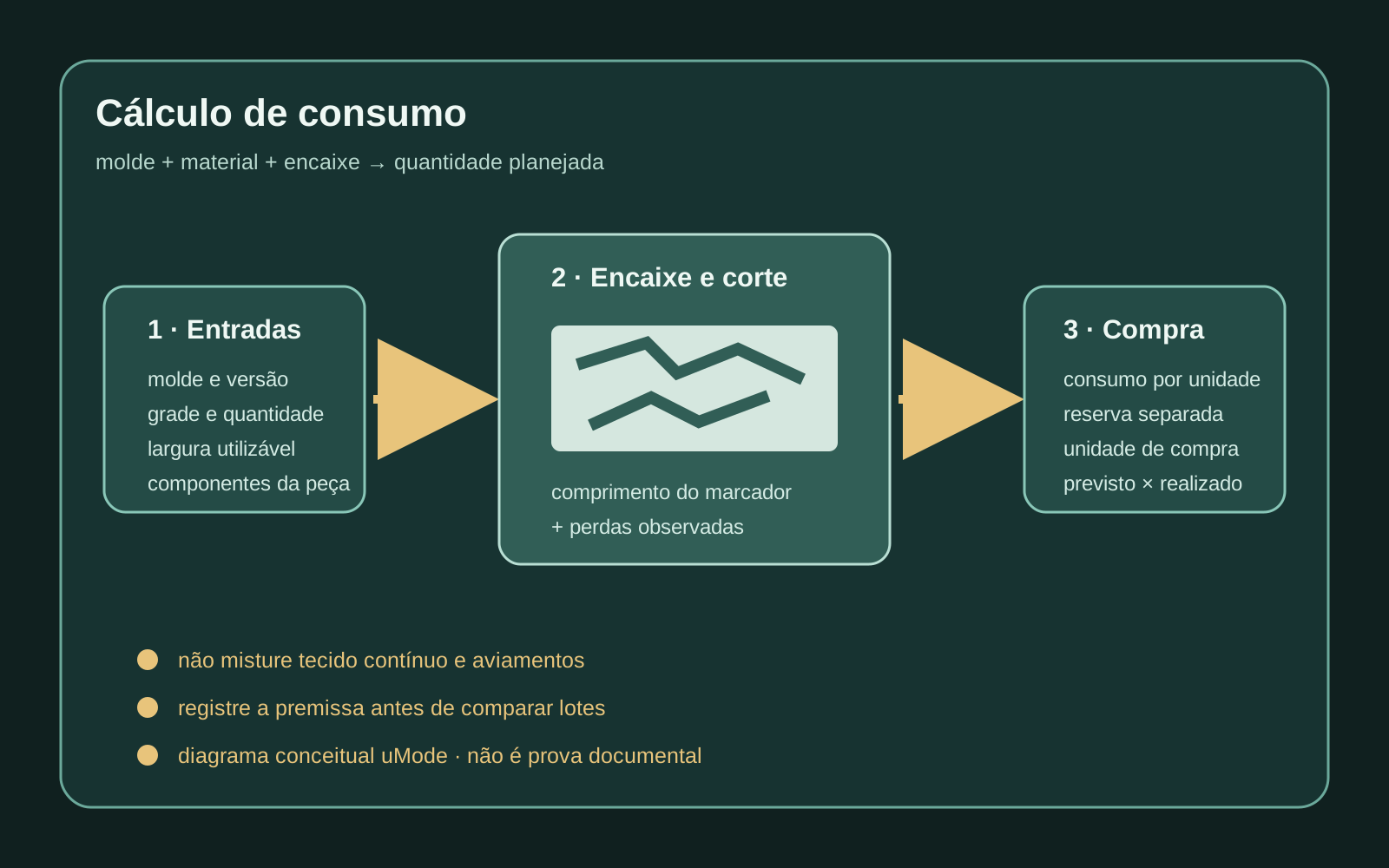
Material consumption calculation
Material consumption calculation records the fabric and component quantities required for a product, size range, or production lot under explicit assumptions. In apparel, it connects the pattern, marker, material, observed losses, and purchasing unit without treating a development estimate as the same thing as measured production usage.
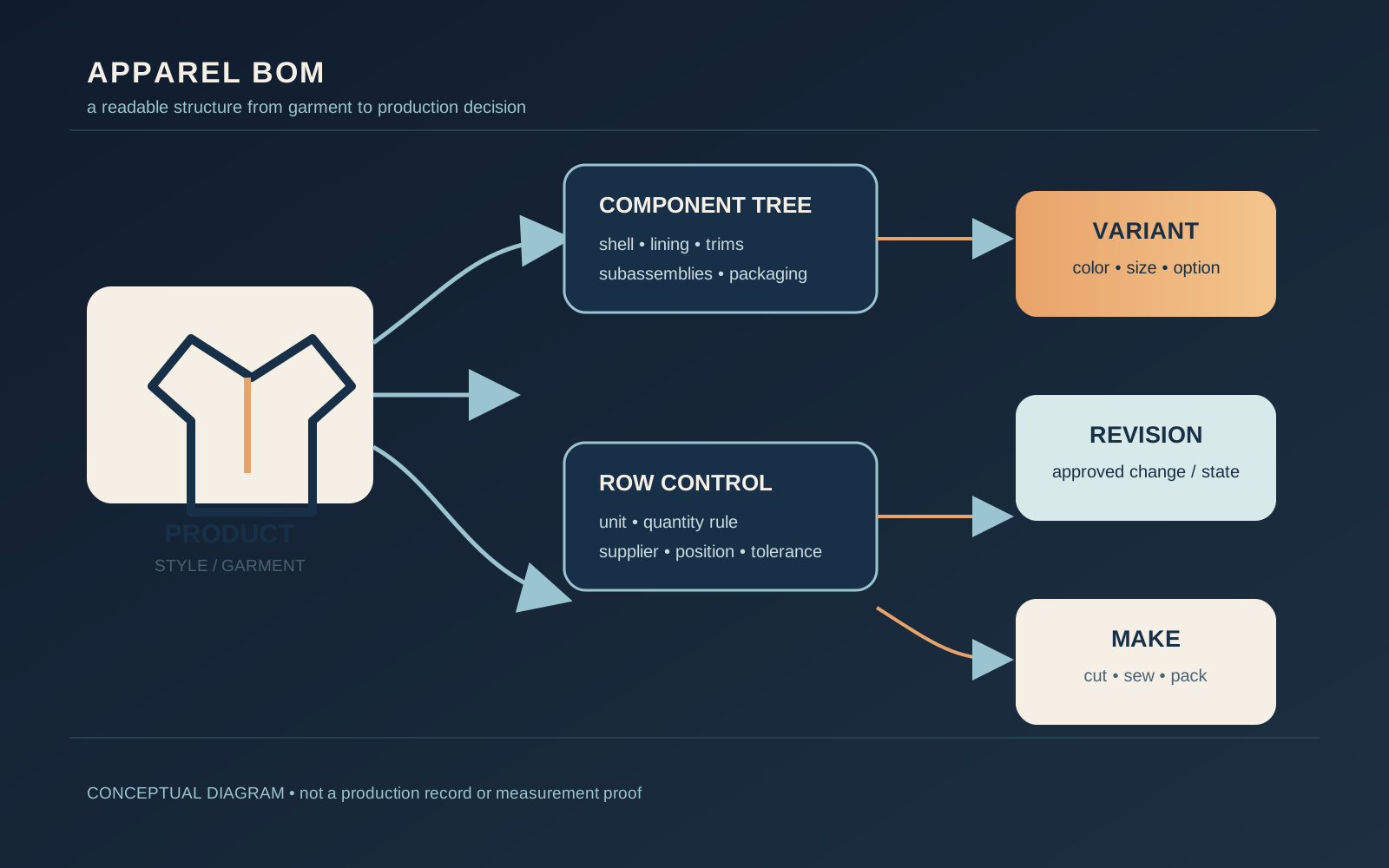
Apparel bill of materials (BOM)
Apparel bill of materials (BOM). An apparel bill of materials organizes the component structure of a garment: raw materials, parts, components, subassemblies, and the quantities needed to make the product. For a collection, it should separate hierarchy, variant, and revision so it is not mistaken for calculated consumption, available inventory, or accounting cost.

Fashion product technical specification
A technical specification is the controlled information set that translates an approved fashion product into verifiable sampling and manufacturing requirements. It brings together drawings, materials, measurements, construction, tolerances, identification, labelling, comments and revision history; its content varies by category, company, market and stage.
Sources
- https://www.ifrs.org/issued-standards/list-of-standards/ias-2-inventories/
- https://openstax.org/books/principles-managerial-accounting/pages/5-1-compare-and-contrast-job-order-costing-and-process-costing
- https://www.accountingcoach.com/manufacturing-overhead/explanation
- https://cottonworks.com/learning-hub/weaving/weaving-basics/
Want to apply this to your operation?