Fashion product cost sheet
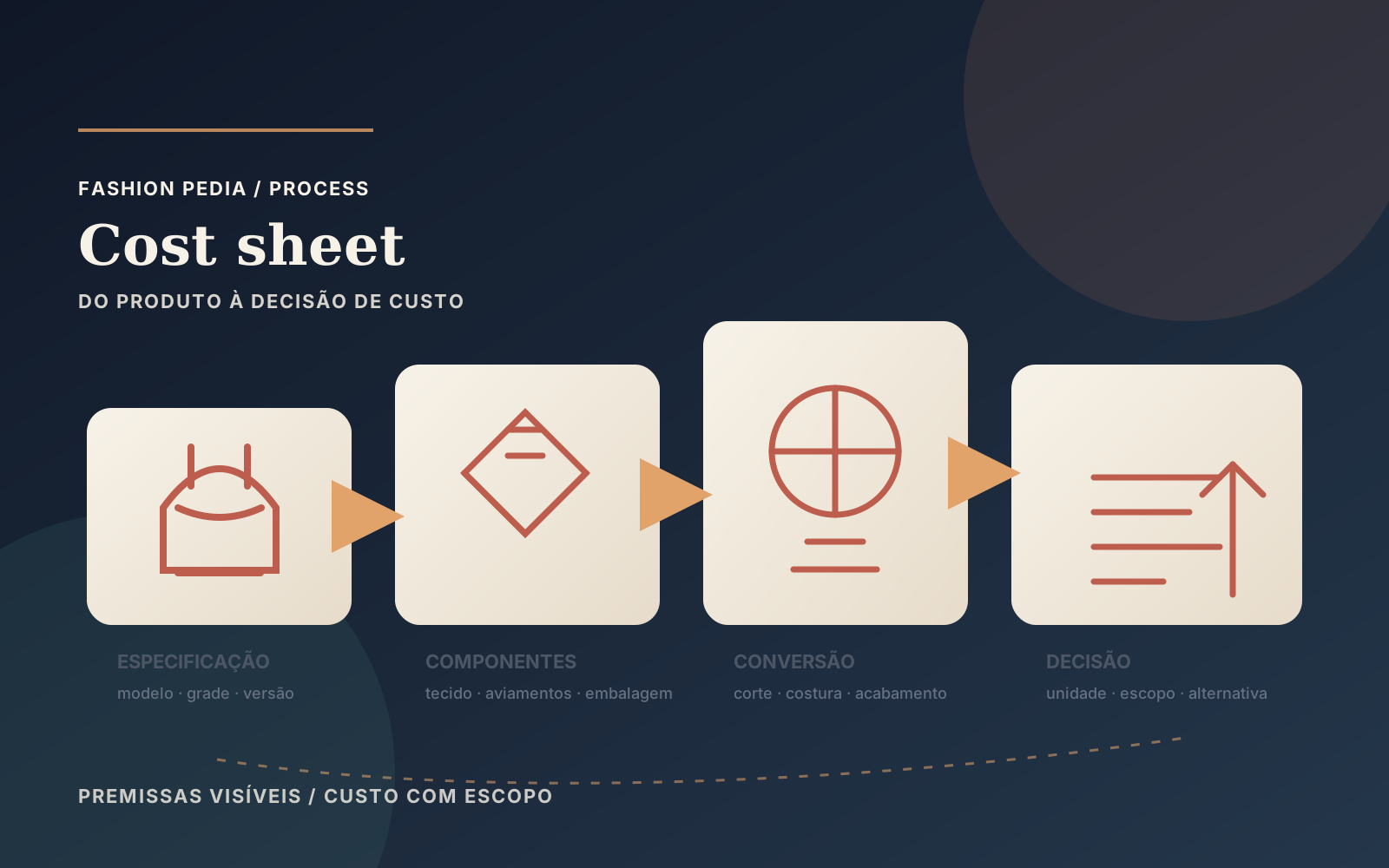
A fashion product cost sheet is the process of calculating and organizing the cost of making a garment, connecting materials, labor, packaging, operations, and purchasing assumptions to the unit being analyzed. A useful sheet separates consumption, unit price, conversion, and scope so product alternatives can be compared without confusing cost, markup, and margin.
On this page
What is Fashion product cost sheet?
A fashion product cost sheet organizes the process of calculating how much it costs to make a garment. The operational definition of costing includes materials, labor, and packaging, so the sheet starts with the unit being analyzed — one garment, a batch, or another declared basis — rather than an isolated price. Its relationship with a technical specification is direct: the specification supplies the product that becomes cost lines, while pre-costing records an estimate used during development.
In practice, separate product cost, selling price, markup, and margin. For every line, state the calculation basis and scope: material, operation, quantity, unit price, and the condition being considered. This prevents a fabric quotation from being read as a confirmed cost or a margin from being inferred from a partial cost.
Which components belong in the sheet?
Direct costs for a garment can be organized into fabric, trims, accessories, and labor. In a separate block, record indirect costs required for production, such as electricity, rent, machine maintenance, and administrative expenses. The distinction does not impose one universal chart of accounts; it gives product, sourcing, and production teams a clearer reading. A product BOM helps keep components identified before prices are applied.
Fabric deserves its own line because consumption is an average number of meters — or kilograms for knits — required to make the garment. Per-garment fabric cost uses fabric price and average consumption. If the pattern, size range, or marker utilization changes, update the quantity before comparing alternatives. Consumption calculation should not disappear into a generic line.
Pricing may also consider accessories, print or embroidery, washing, C.M., and freight. Record what is outside the basis as well: packaging, taxes, logistics, or commission may belong to another layer of the model. The goal is a consistent unit, not a sum of lines with incompatible scopes.
How should the process support a decision?
Use the sheet to compare material, construction, and finishing alternatives while keeping the same unit and scope. A lower price is not automatically an equivalent option if the material, operation, or delivery condition changes. Garment manufacturers use CAD systems to determine fabric consumption; operationally, link the sheet quantity to the pattern or marker version used for the calculation.
IAS 2 provides an important accounting boundary: inventory cost includes purchase, conversion, and other costs needed to bring inventory to its present location and condition; conversion includes direct labor and production overhead. This framework does not replace a company’s policy, but it helps state what the sheet is intended to measure. Relate the number to margin and markup only after stating the basis, channel, and items excluded from cost.
A mature cost sheet preserves product version, quotation date, unit, supplier, consumption, and operation scope. When a premise changes, create a new version instead of mixing an old composition with a new price. This keeps the technical specification, pre-cost, and product BOM pointed at the same product being analyzed.
Connections
technical specification · pre-cost · product BOM · margin · markup · consumption calculation
Verified facts
- Costing is the process of calculating the cost of producing a garment, including materials, labor, and packaging.
Source: zepel.co ↗ - Direct costs for a garment include fabric, trims, accessories, and labor costs.
Source: zepel.co ↗ - Indirect costs are not directly related to one piece but are necessary for production; examples include electricity, rent, machine maintenance, and administrative expenses.
Source: zepel.co ↗ - Fabric consumption is the average number of meters, or kilograms for knits, required to make a garment.
Source: onlineclothingstudy.com ↗ - Garment manufacturers use CAD systems to determine fabric consumption.
Source: onlineclothingstudy.com ↗ - Fabric cost per garment can be calculated using fabric price and average fabric consumption.
Source: onlineclothingstudy.com ↗ - Garment pricing may consider fabric consumption, fabric cost, accessories cost, print or embroidery, washing charge, C.M., and freight.
Source: textileschool.com ↗ - Under IAS 2, inventory cost includes costs of purchase, costs of conversion, and other costs incurred to bring inventory to its present location and condition.
Source: ifrs.org ↗ - Under IAS 2, conversion costs include direct labour and production overhead.
Source: ifrs.org ↗
Related entries

Fashion product technical specification
A technical specification is the controlled information set that translates an approved fashion product into verifiable sampling and manufacturing requirements. It brings together drawings, materials, measurements, construction, tolerances, identification, labelling, comments and revision history; its content varies by category, company, market and stage.
Material consumption calculation
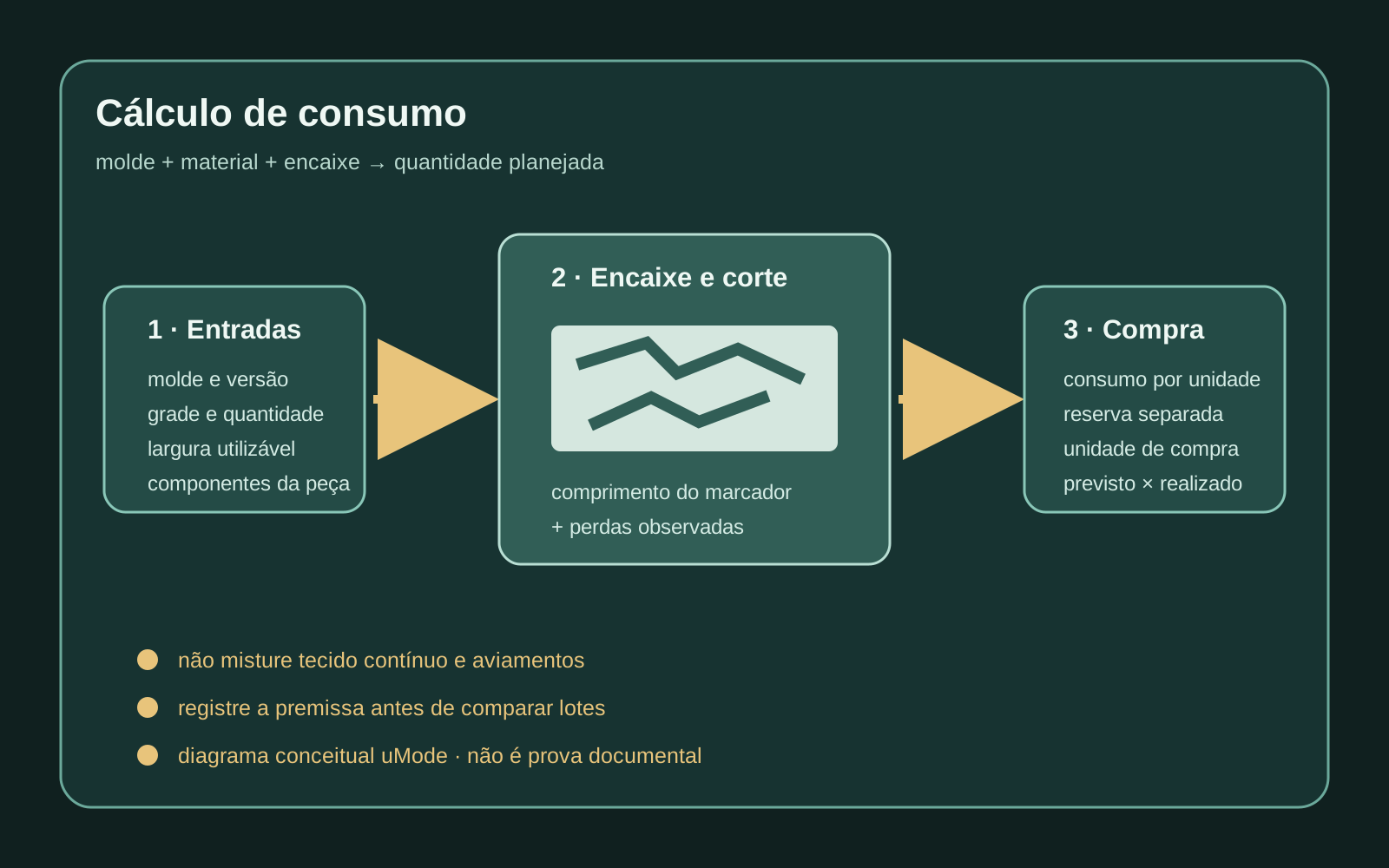
Material consumption calculation records the fabric and component quantities required for a product, size range, or production lot under explicit assumptions. In apparel, it connects the pattern, marker, material, observed losses, and purchasing unit without treating a development estimate as the same thing as measured production usage.
Sources
Want to apply this to your operation?