Fashion sourcing
Fashion sourcing turns product requirements into a verifiable decision about materials, suppliers, capacity, cost, timing and risk. It connects samples, evidence and purchase orders without reducing supplier choice to the lowest price.
On this page
What is Fashion sourcing?
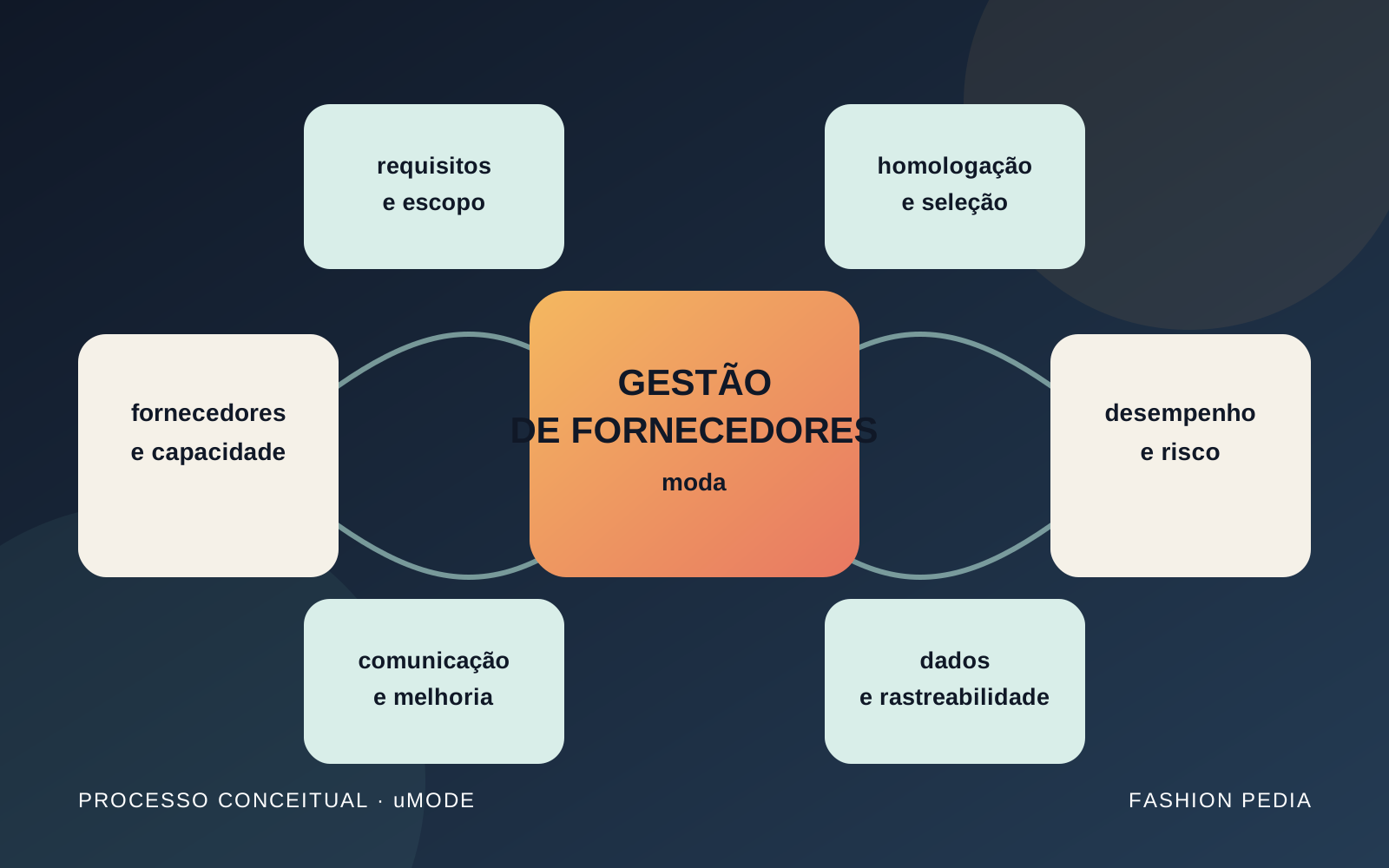
Fashion sourcing is the process of finding, comparing and developing sources so a product can be made against a declared set of requirements. It is not simply locating a factory or requesting a price: it connects the tech pack, material, capacity, timing, quality, origin and risk to a decision another person can review. CottonWorks illustrates this logic by directing professionals toward suppliers that fit product specifications and the operation required for the final product.
The unit of analysis must be explicit. It may be a fibre, fabric, trim, pilot garment, production unit or purchase order. Mixing these layers creates weak comparisons: a quotation can look attractive until its composition, width, finish or capacity differs from the collection requirement. Sourcing is also not the same as fashion buying: buying formalizes acquisition, while sourcing builds and qualifies alternatives before and during that decision.
How does the process start and end?
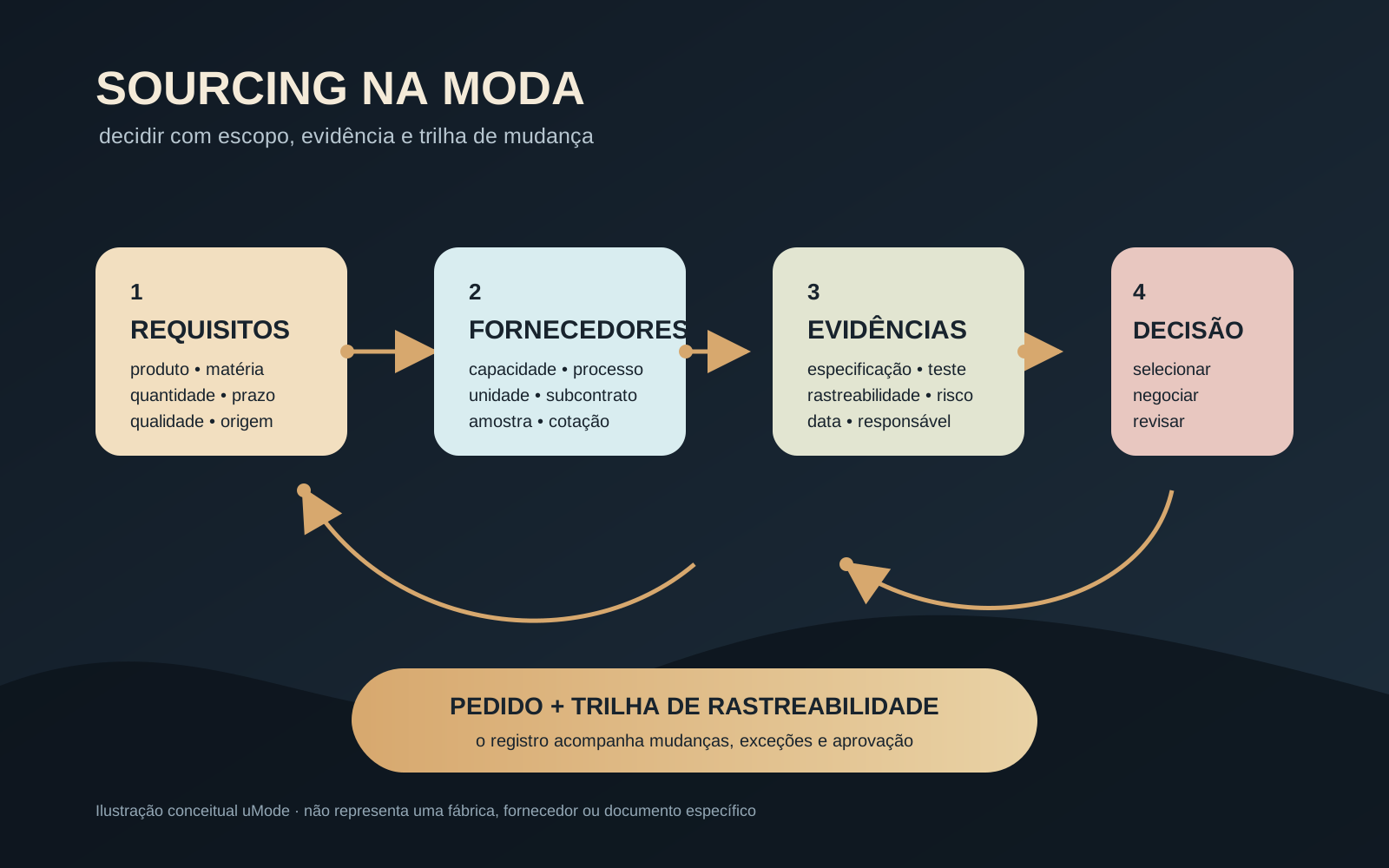
The process starts with a verifiable brief and ends with an order whose origin, version and acceptance condition remain legible. Record composition, construction, GSM or relevant measurements, volume, tolerances, colour, tests, packing, destination and delivery window. Then turn the brief into a comparable fashion RFQ, keeping mandatory requirements separate from negotiable ones.
During screening, compare suppliers by actual capacity, available processes, approved sample, timing, total cost, commercial requirements and evidence of origin. The chain described by Abit is broad, so a supplier's trading name does not identify who spins, weaves, finishes, cuts, sews, prints or packs. The record should distinguish the contracted entity, the unit performing the process and any subcontracting.
The decision should retain assumptions and open points. If the selected option depends on a sample, a tariff, a colourfastness test or a capacity date, record that dependency with the approval. Issuing the purchase order does not end sourcing: it starts the follow-up of volume changes, substitutions, delays, non-conformities and re-approval.
Which evidence differentiates fashion suppliers?
Useful evidence is specific to the risk and linked to the item being purchased. For fabric, it may include declared composition, construction, width, GSM, colour, lot, test and physical sample. For a production unit, it may include processes, capacity, address, subcontractors, contacts, working conditions and change history. For an international route, include classification, origin, applicable tariff and cost assumptions; CottonWorks highlights the importance of understanding tariffs for sourcing and cost management.
Traceability is not a generic badge. CottonWorks links cotton traceability to quality assurance and trust in the supply chain; in a fashion workflow, that means linking fibre or fabric to the lot, supplier, approval and order. Textile traceability is the relationship between those records, not a promise that every data point is automatically true. Dates, owners, document versions and verification methods must remain attached.
Social due diligence is also part of the decision. The ILO records that forced labour affects countries and economic sectors and that 63% occurs in the private economy; price and timing therefore cannot be the only filters. The ETI Base Code provides a vocabulary of labour clauses based on ILO conventions. Use it to structure questions, evidence and follow-up, without treating a questionnaire or one audit as a permanent guarantee. Human-rights due diligence should state what was checked, what remains uncertain and what action follows.
How can teams avoid fragile decisions?
The first safeguard is to separate requirement, evidence, assumption and commitment. The second is to compare alternatives on the same scope: quantity, unit, timing, currency, duties, freight, finishing, loss and payment terms. The third is to record why an option was selected and which triggers require reassessment. A matrix can organize work, but it does not replace a sample, technical dialogue, capacity verification or risk-proportionate investigation.
Do not promise savings, speed or sustainability without a method and comparison period. Do not confuse declared capacity with capacity available for the collection, or document compliance with current conditions at a unit. When a supplier changes, volume grows or material is substituted, the trail must preserve the earlier decision and the reason for review.
In Brazil, Abit's reported scale—R$221 billion in revenue and 25,700 formal production units—makes scope essential: sourcing is not a universal directory but a decision practice situated in an extended chain. Supplier approval, fashion lead time and fashion quality are process connections; none replaces judgement about the specific product and route.
Verified facts
- CottonWorks presents sourcing as finding cotton suppliers that fit product specifications and the operation required for the final product.
Source: cottonworks.com ↗ - CottonWorks' U.S. supplier list spans the cotton supply chain from yarn spinners to knit and woven fabric mills, dyers and finishers.
Source: cottonworks.com ↗ - CottonWorks states that U.S. cotton can be traced from the gin to the mill.
Source: cottonworks.com ↗ - According to CottonWorks, cotton traceability enhances quality assurance and strengthens trust across the supply chain.
Source: cottonworks.com ↗ - CottonWorks treats understanding tariffs as essential for efficiently sourcing and managing costs.
Source: cottonworks.com ↗ - The ILO describes forced labour as a severe violation of human rights affecting 27.6 million people in all countries and economic sectors.
Source: ilo.org ↗ - The ILO reports that 63% of forced labour happens in the private economy.
Source: ilo.org ↗ - The ILO says forced labour disrupts fair competition between businesses.
Source: ilo.org ↗ - The ETI Base Code contains nine clauses reflecting relevant International Labour Organization conventions on labour practices.
Source: ethicaltrade.org ↗ - The ETI Base Code was negotiated and agreed by ETI's founding trade union, NGO and corporate members.
Source: ethicaltrade.org ↗ - Abit reports R$221 billion in 2024 revenue for Brazil's textile and apparel chain.
Source: abit.org.br ↗ - Abit reports 25,700 formal production units in Brazil's textile and apparel sector.
Source: abit.org.br ↗ - Abit describes Brazil as the Western world's largest complete textile chain, from fibre production through retail and fashion shows.
Source: abit.org.br ↗
Related entries
Fashion Supplier Qualification
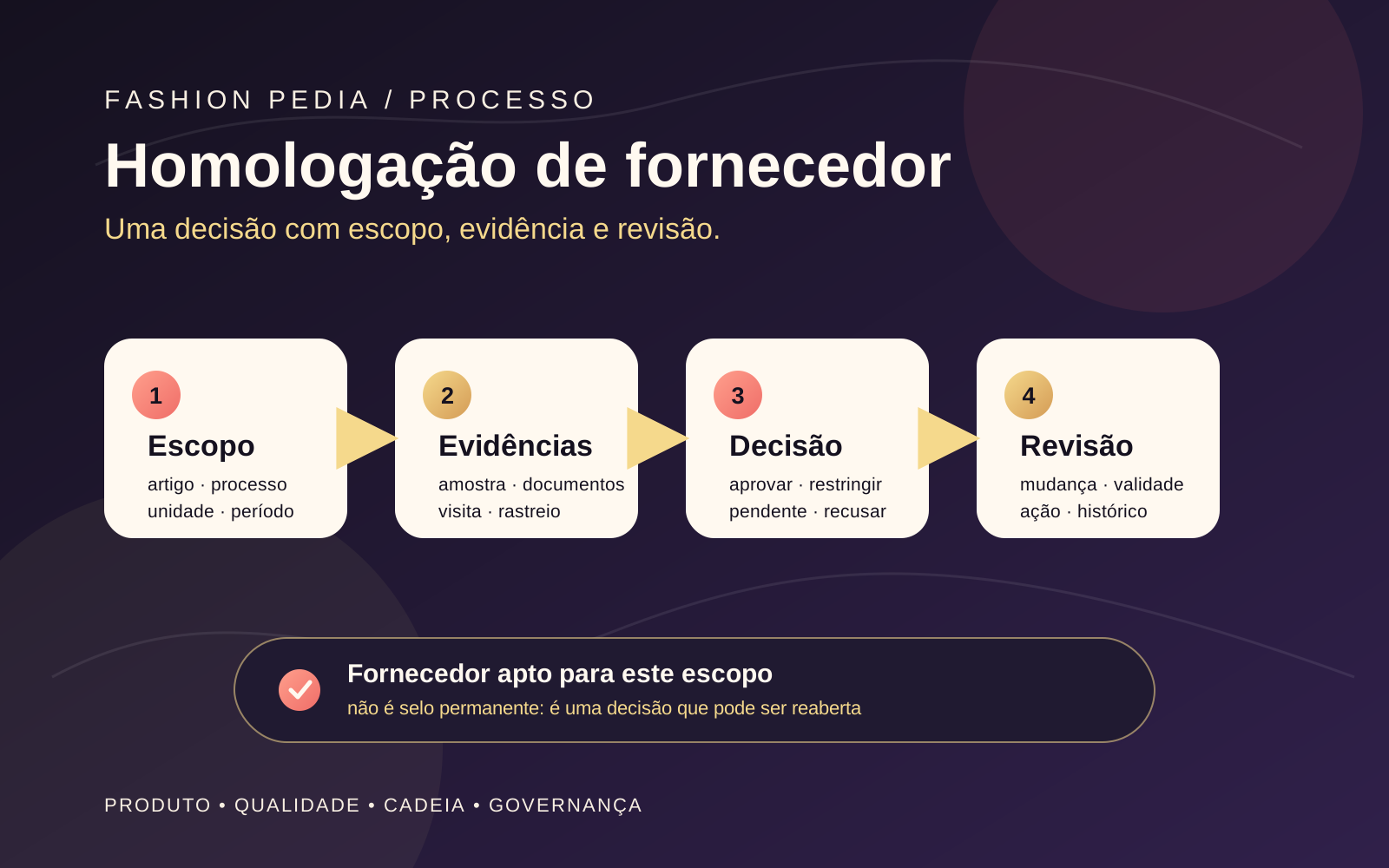
Fashion supplier qualification is the process of deciding, for a defined scope, whether a company can be used with explicit requirements, evidence, responsibilities and review points. In fashion, the decision should connect development, quality, purchasing, production and traceability without confusing a vendor record, a certificate or a single order with permanent approval.
RFQ in the fashion supply chain
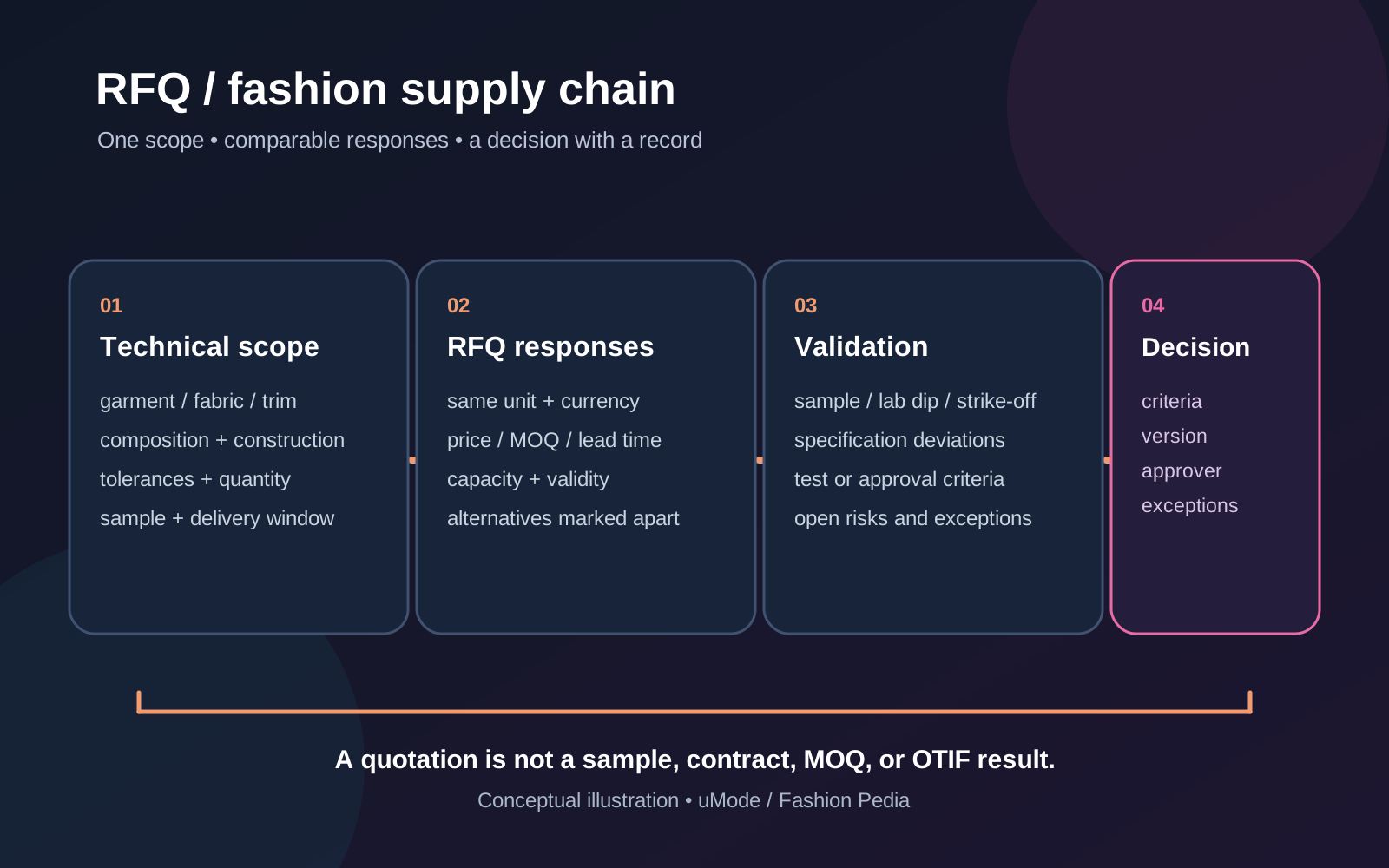
RFQ in the fashion supply chain. An RFQ (Request for Quotation) is a process for requesting and comparing quotations against the same product, service, or material scope. In fashion, it turns garment, fabric, trim, or finishing requirements into a response-ready request, separates price from capacity and timing, and records which requirement version supported the decision.
Lead time in the fashion supply chain
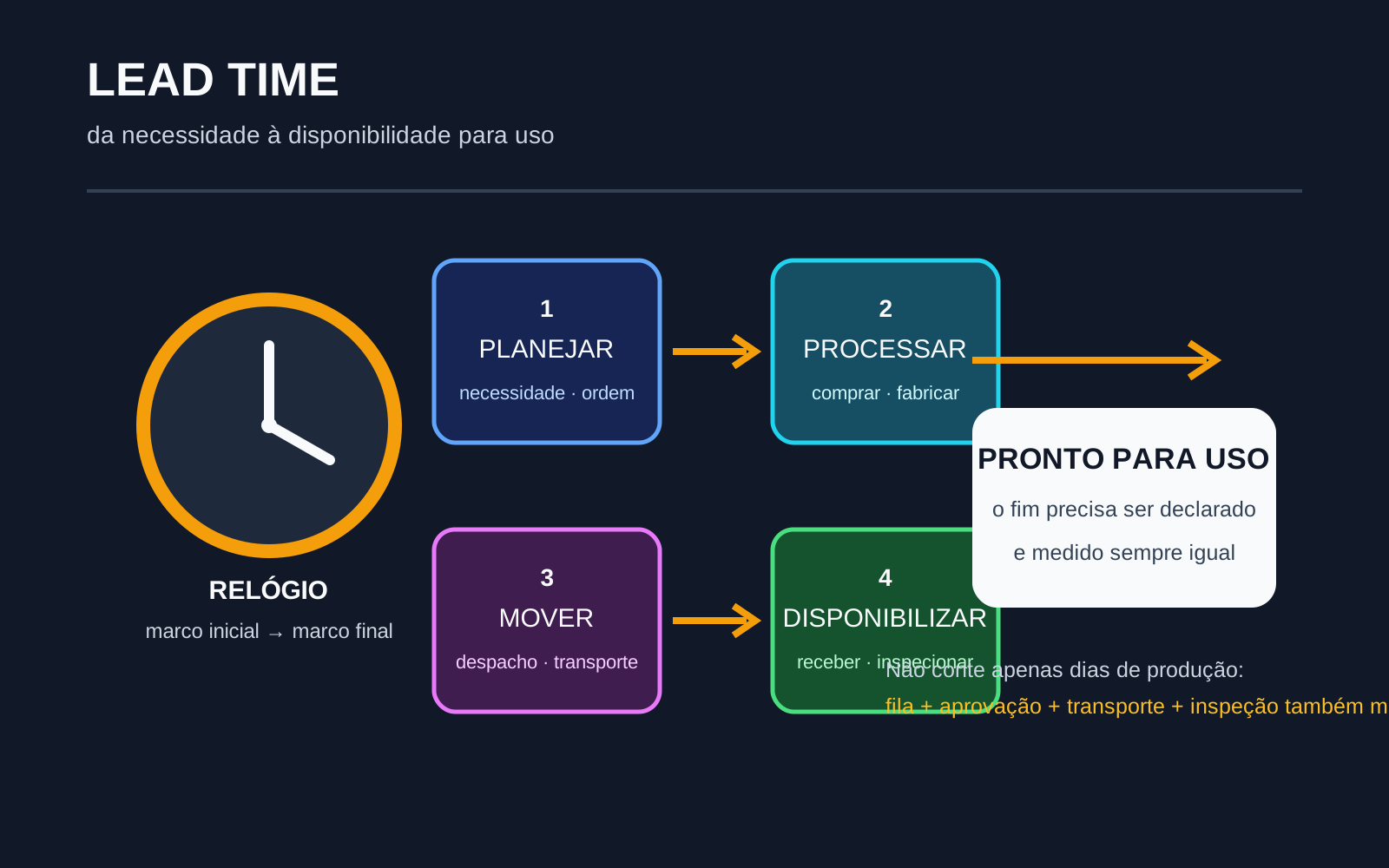
Lead time in the fashion supply chain. Lead time in a fashion supply chain is the elapsed time between defined operational milestones, such as ordering and receipt or design and production. A useful measure states its object, start, end, waiting periods, calendar, unit and availability condition.
Purchase order in the fashion industry
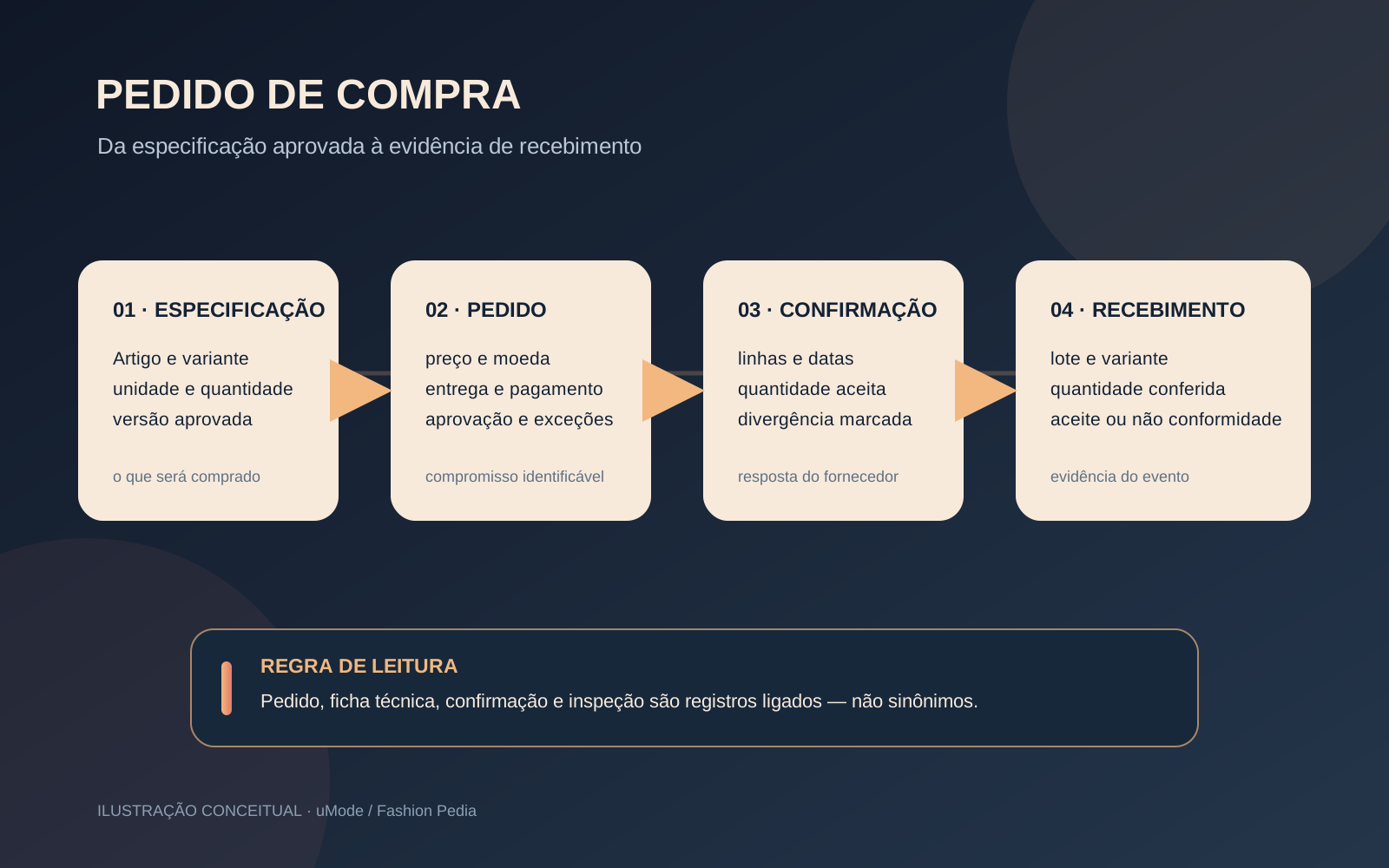
Purchase order in the fashion industry. A purchase order is the document through which a buyer requests goods or services and records conditions such as price and payment. In fashion, it works best when it connects style, variant, specification, quantity, delivery and receiving criteria to an approved decision, without replacing the technical specification or inspection.
Sources
Want to apply this to your operation?