Fashion quality analyst
A fashion quality analyst turns a garment, material or lot requirement into comparable checks, recorded evidence and a decision to accept, correct or hold. In apparel, the scope may combine fibre composition, colour fastness, performance, construction, chemical safety and labelling, without treating a single test method or certificate as universal product approval.
On this page
What is Fashion quality analyst?
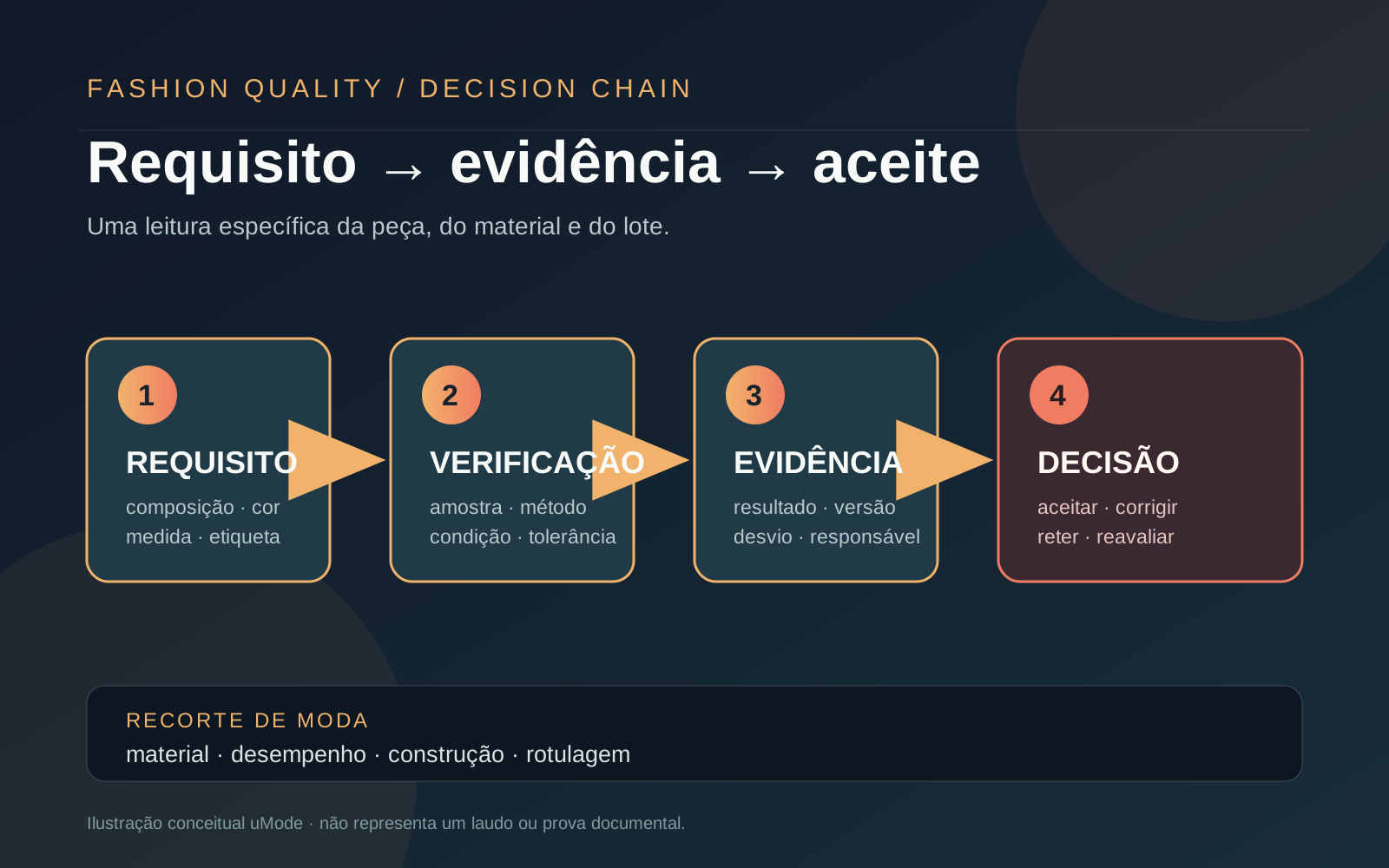
A fashion quality analyst turns a product requirement into a checkable question and connects that question to a sample, method, result and decision. The role is not limited to spotting visible defects: it preserves the link between what was requested, what was measured and what may be accepted, corrected or held. In a tech pack, that means treating fibre content, construction, measurements, colour, finish, trims, label and care instructions as requirements with their own criteria.
The method follows the risk. For colour, the public AATCC list separates TM8 for crocking, TM15 for perspiration and TM61 for accelerated laundering. For fibre identity, the same list distinguishes qualitative analysis in TM20 from quantitative analysis in TM20A. For repellency, TM22 is listed as a spray method. These names are not results: they show why the quality question should be defined before the test is selected.
How is the analysis structured?
The analysis starts with a compact matrix: requirement, object, method, condition, result, tolerance, owner and decision. The object may be a fibre, fabric, colour, garment, trim, label or lot. The condition must travel with the result, because treating different tests as answers to the same question creates a false equivalence. The record should retain sample identity and the reason for any exception or rejection.
In composition work, separating qualitative from quantitative analysis prevents “which fibre is present?” from being confused with “what proportion of each fibre is present?”. In performance work, crocking, perspiration, laundering and spray repellency are different questions. Quality control is where inspection, testing and disposition are recorded; a nonconformity is a deviation from a requirement, not merely the evaluator’s personal preference.
Where does fashion quality change scope?
The scope changes when the check concerns harmful substances and skin contact. OEKO-TEX STANDARD 100 describes a label for textiles tested for harmful substances from yarn to finished product, and says that thread, buttons and accessories are included in the tested items. The programme also differentiates requirements by intensity of skin contact and says that limit values are reviewed at least annually. A certificate is therefore evidence with a defined scope, not permission to claim that every aspect of a garment has been approved.
Labelling is another control surface. Regulation (EU) No 1007/2011 addresses fibre names and the labelling and marking of fibre composition in textile products. For the analyst, the label is a product requirement to verify alongside the article and its destination market. The date of a consolidated version matters as well: legislation should be checked for the applicable text and status rather than cited as a timeless rule.
What are the limits of the role?
The role does not replace a laboratory, regulatory authority, product engineer or commercial decision. A listed method does not by itself provide a tolerance, sampling plan or release criterion; those parameters must be defined for the product and context. A safety label does not prove fit, durability, appearance or suitability for every use. Likewise, a correct label cannot repair an incorrect fibre composition.
Sample approval records a development decision; quality analysis checks defined requirements and documents deviations. Supplier approval concerns the supply relationship and its risks, while the analyst may use its records as an input without treating approval as proof for every lot. In a fashion PLM, versions and results can remain connected to the product, but the tool does not choose the criterion on its own.
The most useful output is a traceable decision: what was checked, by which method, against which requirement, on which sample and with what consequence. When a test method, certificate and labelling rule answer different questions, fashion quality stops being a single stamp and becomes a chain of evidence specific to the garment.
Verified facts
- AATCC lists TM8 for colourfastness to crocking using a crockmeter.
Source: aatcc.org ↗ - AATCC lists TM15 for colourfastness to perspiration.
Source: aatcc.org ↗ - AATCC lists TM20 for qualitative fibre analysis.
Source: aatcc.org ↗ - AATCC lists TM20A for quantitative fibre analysis.
Source: aatcc.org ↗ - AATCC lists TM22 for water repellency by the spray method.
Source: aatcc.org ↗ - AATCC lists TM61 for accelerated colourfastness to laundering.
Source: aatcc.org ↗ - OEKO-TEX STANDARD 100 is a label for textiles tested for harmful substances, from yarn to finished product.
Source: oeko-tex.com ↗ - Under STANDARD 100, every thread, button and accessory is tested against a list of more than 1,000 harmful substances.
Source: oeko-tex.com ↗ - OEKO-TEX says that more intensive skin contact brings stricter human-ecology requirements and laboratory tests.
Source: oeko-tex.com ↗ - OEKO-TEX says that it reviews its limit values for harmful substances at least once a year.
Source: oeko-tex.com ↗ - Regulation (EU) No 1007/2011 addresses textile fibre names and the labelling and marking of fibre composition in textile products.
Source: eur-lex.europa.eu ↗ - EUR-Lex identifies a current consolidated version of Regulation (EU) No 1007/2011 dated 15 February 2018.
Source: eur-lex.europa.eu ↗
Related entries

Apparel quality control
Apparel quality control combines specifications, inspection, and testing to check whether fabrics, trims, and garments meet the expected performance for a product and end use. The process can examine color, drape, hand, durability, conformance, defects, fit, seam integrity, shrinkage, and drying performance. Quality decisions depend on the product and its intended use.

Fashion product technical specification
A technical specification is the controlled information set that translates an approved fashion product into verifiable sampling and manufacturing requirements. It brings together drawings, materials, measurements, construction, tolerances, identification, labelling, comments and revision history; its content varies by category, company, market and stage.
Fashion Supplier Qualification
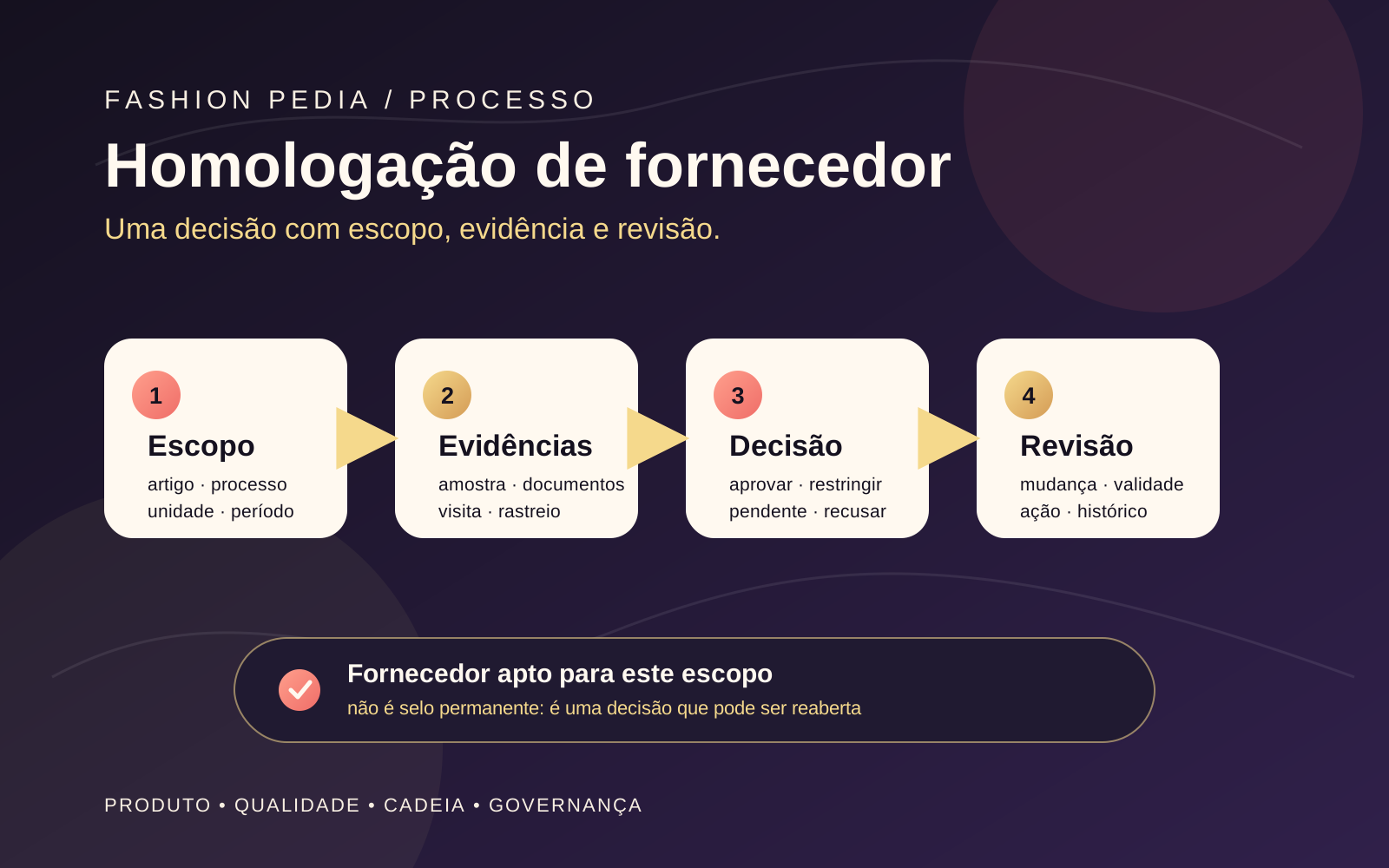
Fashion supplier qualification is the process of deciding, for a defined scope, whether a company can be used with explicit requirements, evidence, responsibilities and review points. In fashion, the decision should connect development, quality, purchasing, production and traceability without confusing a vendor record, a certificate or a single order with permanent approval.

Fashion PLM: data, product, and lifecycle
Fashion PLM is the structured management of the data, decisions, and workflows that follow a product and a collection from concept through post-launch. It connects tech packs, materials, costs, samples, approvals, suppliers, and versions so that every function works from a traceable product definition.
Sources
Want to apply this to your operation?