Fashion product manager
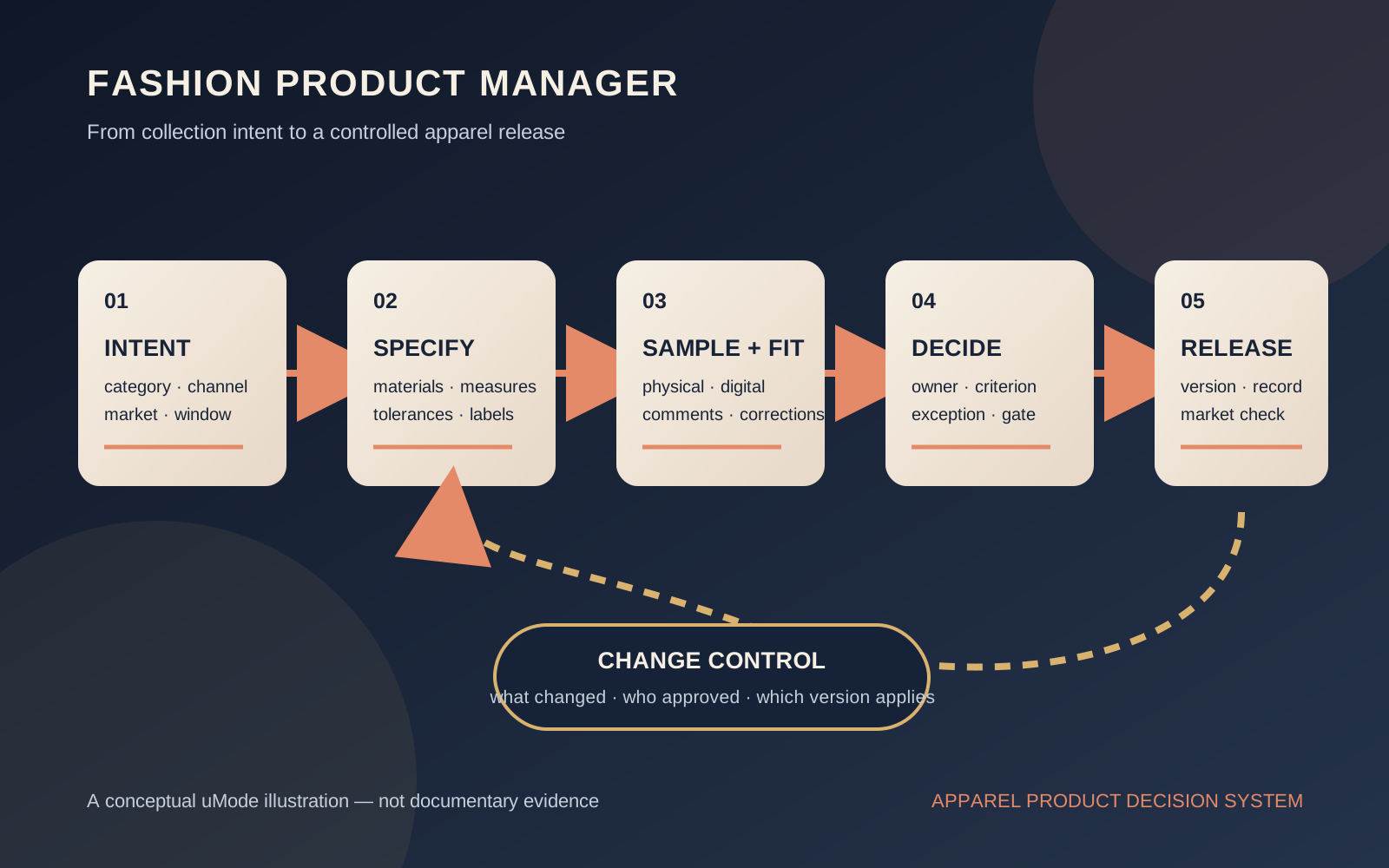
A fashion product manager steers apparel decisions from collection intent to a version that can be specified, sampled, fitted and released. The role connects product priorities with technical requirements, market compliance and change control, while specialist teams retain their own technical authority.
On this page
What is Fashion product manager?
A fashion product manager steers an apparel decision from collection intent to a version that can be specified, sampled, fitted and released. The title is not automatically equivalent to a fashion designer, pattern cutter, buyer or project manager: it is a product-coordination role whose authority depends on the company and on each specialist gate. The work becomes easier to place beside apparel product development, collection management and the tech pack.
The starting point is an explicit decision: which reference, category, channel, market and delivery window are involved? The manager then frames the question, assigns owners and identifies the next gate. Rather than assuming that the role always owns cost, margin, assortment or supplier selection, the manager records who has that authority and which constraints still need confirmation.
What are the role’s technical deliverables?
The central deliverable is a product described in verifiable terms. A tech pack can bring together working drawings, measurements, materials, tolerances, finishing requirements and label information. This places the manager close to technical specification, pattern cutting, pilot samples and quality control, without replacing the specialist judgement of those teams.
Version control should carry tracking, review notes and product history. An approved sample should not circulate only as an image or message: the decision should identify the reference, the resolved comment, the owner and the version that now applies. If seam type, stitch, tolerance or finish changes, the change should return to the relevant technical record.
Measurements require a useful boundary. Grading and a garment measurement table should remain identifiable and separate from any body reference used by the company. The manager should ask for an identifiable base size, points of measure, tolerances and approval criteria.
How are sampling, fit and release managed?
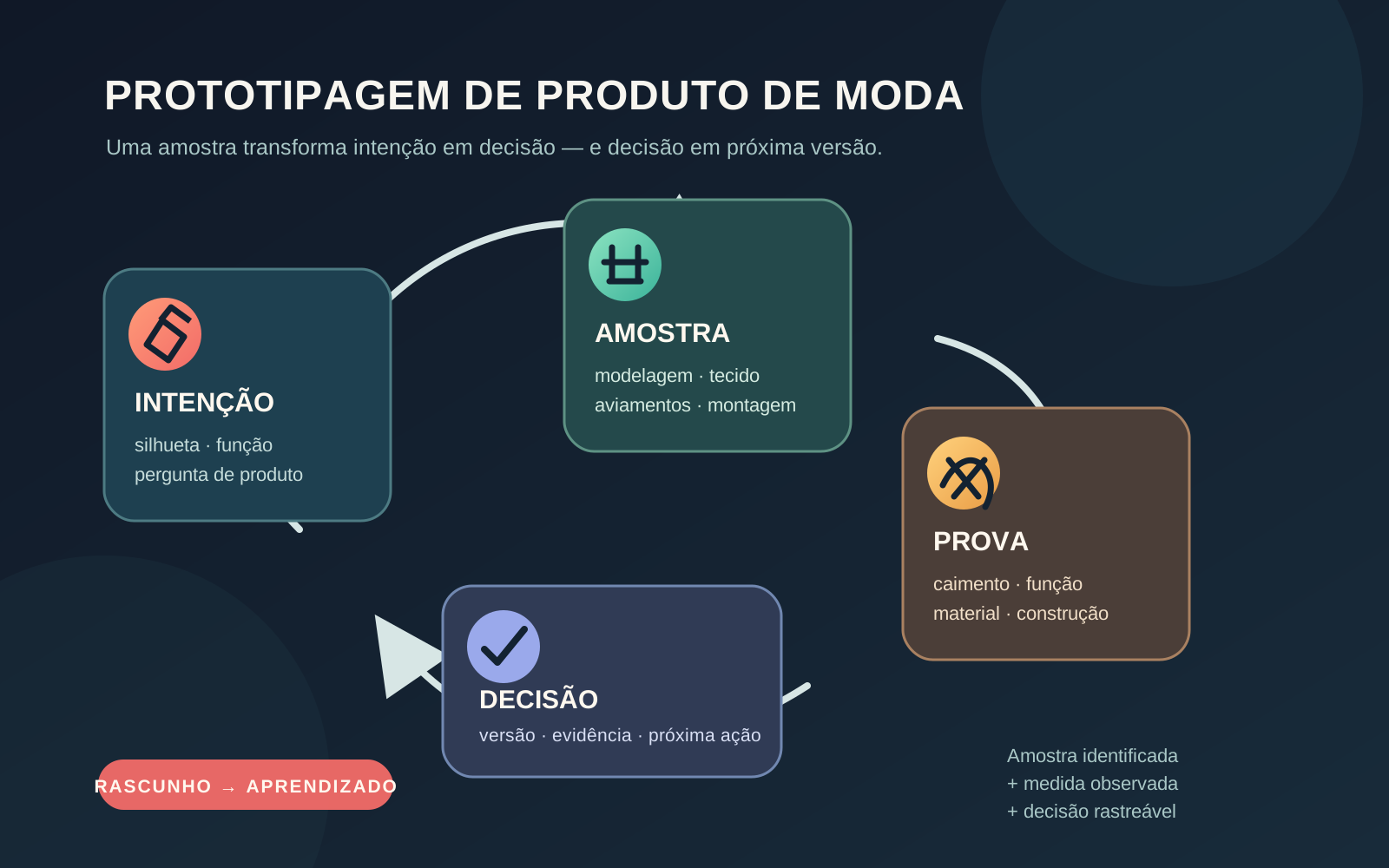
Sampling should be handled as a sequence of decisions, not one generic “approved” status. Organize each round to compare the physical garment, fit comments and, when available, a three-dimensional digital sample; then record the correction to construction, measurement or material. The manager keeps the critical path visible, while a pattern cutter, product technologist, quality specialist or supplier owns the technical decision when that authority is required.
For each gate, record the input, output and exception: brief received; specification complete; sample requested; fitting held; corrections applied; market requirement confirmed; release to the next step. This keeps a change to material, colour, label or measurement from being treated as an isolated detail with no downstream effect.
Compliance belongs in the flow early. For sale in Brazil, mandatory textile information must be permanent, visible and presented in Portuguese. A product sold with incorrect mandatory information is irregular and may be subject to penalties provided by law. The manager does not certify alone; the manager ensures that the requirement has an owner, evidence and a verification point before release.
Where does the responsibility end?
The role ends where an authority has not been delegated. Buying may negotiate terms; quality may assess conformity; pattern cutting may alter construction and measurements; and collection management may set portfolio priorities. The manager integrates these decisions, makes dependencies explicit and keeps changes recoverable.
The useful result is not a full spreadsheet or a particular system. It is an intelligible chain between intent, requirement, sample, criterion, decision and released version. When the process differs by brand, category or market, the flow should show that difference rather than impose a universal model.
Verified facts
- A fashion and textiles product-technology occupational standard lists specifications, working drawings, measurements, labelling, quality standards, tolerances and materials in product technical packs.
Source: skillsengland.education.gov.uk ↗ - In the same standard, product history, review notes and tracking belong to technical recordkeeping, whose incorrect completion has consequences.
Source: skillsengland.education.gov.uk ↗ - The standard connects production quality with explicit construction and acceptance fields for seams, stitches, tolerances and finishes.
Source: skillsengland.education.gov.uk ↗ - In Brazil, textile products for sale must provide responsible-party, origin, fibre-composition, care and, where applicable, size or dimension information permanently, visibly and in Portuguese.
Source: gov.br ↗ - In Brazil, a textile product sold with incorrect mandatory information is irregular and subject to the penalties provided by Law 9.933/1999.
Source: gov.br ↗ - The FTC care-labelling rule requires manufacturers or importers to have a reasonable basis for care information disclosed before sale.
Source: ftc.gov ↗
Related entries
Fashion product development
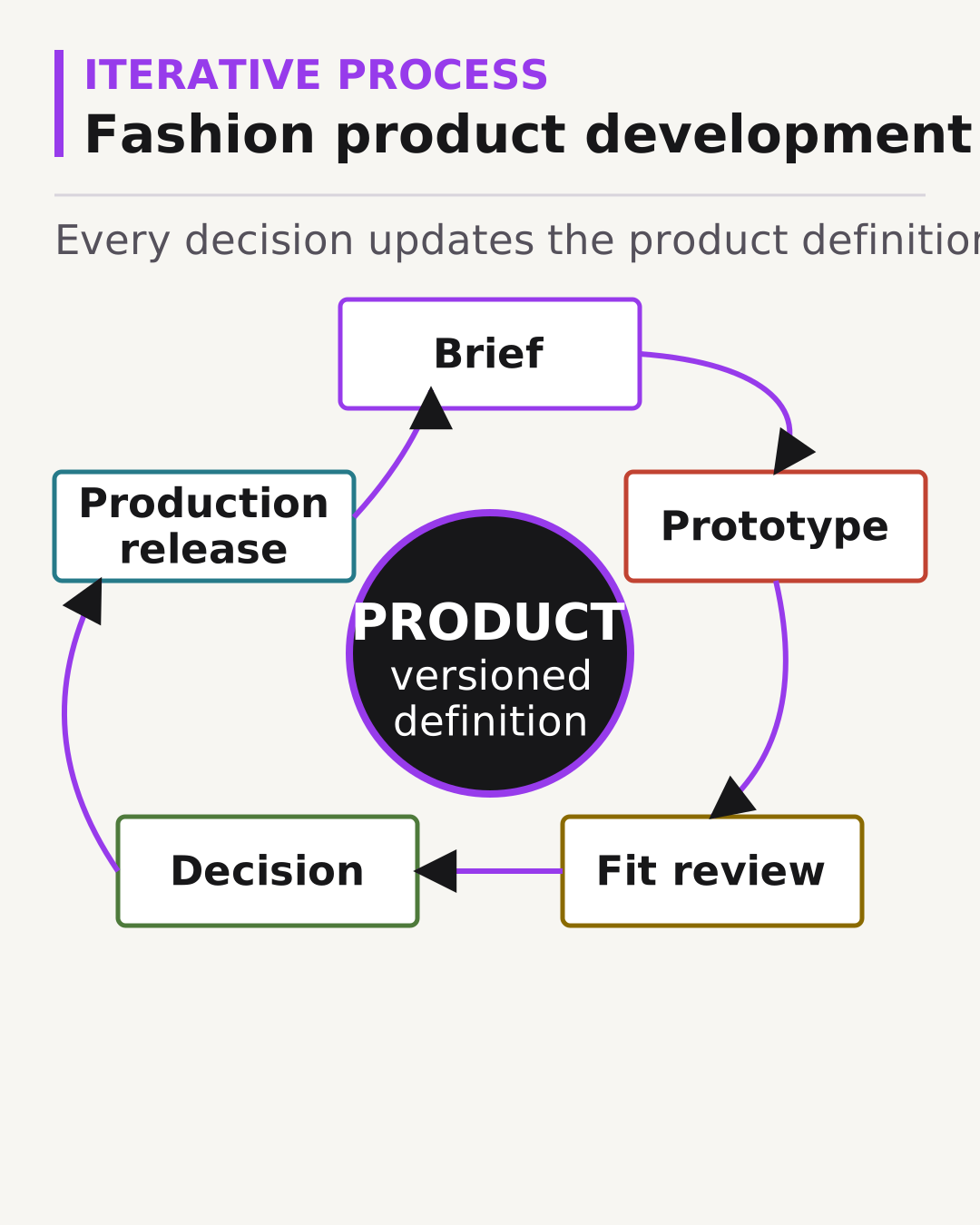
Fashion product development is the process that turns an opportunity or brief into a product specified and approved for manufacturing. It coordinates concept, assortment, materials, patternmaking, samples, fit, cost, quality, compliance and timing through decision cycles rather than an isolated creative sequence.

Fashion product technical specification
A technical specification is the controlled information set that translates an approved fashion product into verifiable sampling and manufacturing requirements. It brings together drawings, materials, measurements, construction, tolerances, identification, labelling, comments and revision history; its content varies by category, company, market and stage.

Collection management
Collection management coordinates a fashion line's journey from idea through production, service and disposal by connecting people, product data, processes, decisions, versions and events across teams and partners.
Sources
- https://skillsengland.education.gov.uk/media/2305/st0540_fashion-textiles-product-technologist-epa_for_publication_2-october-2018.pdf
- https://www.gov.br/inmetro/pt-br/acesso-a-informacao/perguntas-frequentes/avaliacao-da-conformidade/produtos-texteis/o-que-a-medida-regulatoria-para-produtos-texteis-estabelece
- https://www.gov.br/inmetro/pt-br/acesso-a-informacao/perguntas-frequentes/avaliacao-da-conformidade/produtos-texteis/se-um-produto-textil-possui-informacoes-incorretas-e-esta-sendo-comercializado-em-territorio-nacional-ele-esta-irregular
- https://www.ftc.gov/legal-library/browse/rules/care-labeling-textile-wearing-apparel-certain-piece-goods-text
Want to apply this to your operation?