Fashion Product Prototyping
Fashion product prototyping is the process of building and evaluating samples that turn a design intention into a specified, fitted and manufacturable product. It connects design, patternmaking, materials, construction, fit and revision records before a production decision.
On this page
What is Fashion Product Prototyping?
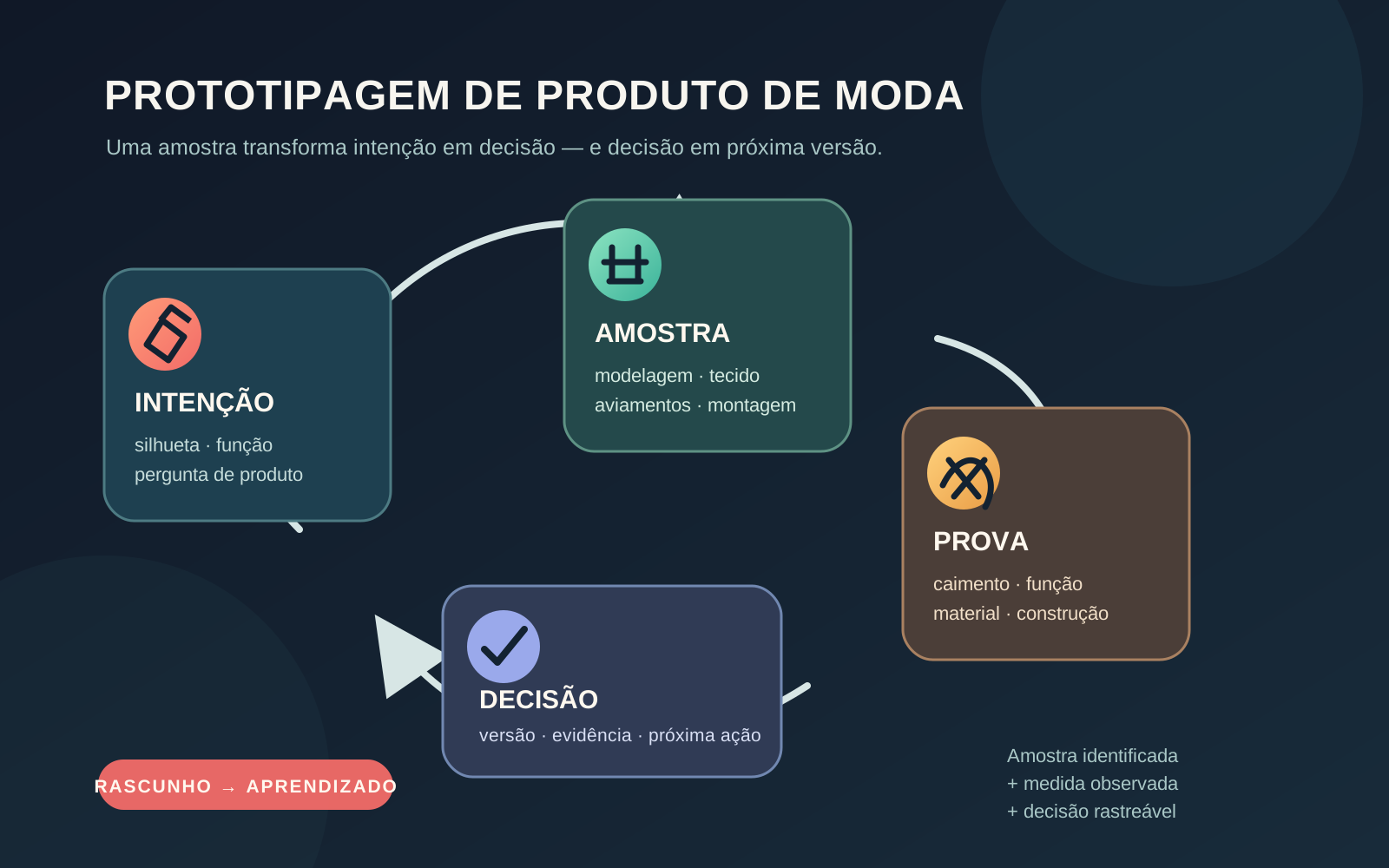
Fashion product prototyping must turn a design intention into a sample that can be examined for form, function, material, construction and manufacturability. The product-development occupation standard places technical work between design and manufacturing: approved samples, specifications, instructions and production patterns need to exist before production starts. Prototyping is therefore not simply “making a garment”; it makes the decision supported by the sample explicit.
For each round, record the input drawing or reference, the pattern used, fabric, trims, construction method, measurement base and evaluation question. A sample may answer “does the silhouette work?”, “does the fabric support this construction?” or “can the finish be repeated?”. It should not be forced to answer every question at once when the team cannot yet observe each variable.
How is a fashion sample built and evaluated?
A fashion sample combines drawing, patternmaking, fabric, trims and construction; the occupational source also includes analysis of raw-material properties and behaviour and suitability tests related to design and function. The wider production process covers pattern production, cutting, manufacturing and quality checking. The technical sheet should therefore travel with the sample, carrying measurements, materials, instructions and changes instead of remaining separate from the piece being examined.
Separate observation from preference. In a fit session, mark where fit diverges from intent: shoulder, neckline, ease, length, mobility or balance. In piloting, observe whether construction, finishing and the operation sequence can be repeated. When the material changes, do not treat the previous approval as automatically valid: fabric and trim behaviour is part of the product behaviour.
NIST offers a useful record-keeping lens: a product should be followed through its function, form and behaviour. In fashion, this prevents approving only the visual design while the garment still fails in wear, washing, movement or construction. The version history should connect the comment, observed measurement, decision, owner and next sample.
When is a prototyping round ready for the next decision?
A round is ready to move forward when its defined question has been answered with enough evidence for the next decision, not when the sample merely looks “good”. Collection management needs the examined version, open issues and exit condition; manufacturing needs a specification that does not depend on oral memory. NIST describes traceability as part of the value of contextualizing data across the lifecycle, so the record is not clerical baggage: it connects a change to the reason it was made.
Design Council’s Double Diamond helps order the conversation: Discover the problem, Define the challenge, Develop responses and Deliver a tested solution. In apparel development, that can mean investigating a fit failure, formulating an adjustment, making a new sample and testing it at small scale. The process is non-linear; a poor result can reopen the initial question. The exit criterion should say whether the next action is to correct the pattern, change the material, revise construction, repeat the fit or hand the item toward production.
Prototyping connects to product development, but it does not replace final quality approval or guarantee performance across an entire production run. It reduces uncertainty about one defined version. The clearer the evidence—identified sample, measurement, test condition and decision—the safer the handoff to the next stage, without turning a local approval into a universal promise.
Connections
technical sheet · patternmaking · fit session · piloting · product development · collection management
Verified facts
- The Skills England occupational standard describes the product technologist as providing technical support through development, with approved samples, specifications, production instructions and production patterns in place before manufacturing begins.
Source: skillsengland.education.gov.uk ↗ - Typical product-technologist duties include evaluating new product designs and supporting the production of sewn-product samples.
Source: skillsengland.education.gov.uk ↗ - The same standard includes sample review, evaluation and approval, as well as producing product specifications and production instructions.
Source: skillsengland.education.gov.uk ↗ - Skills England includes raw-material properties and behaviour, fabric and trim analysis, and tests for suitability in relation to design and function.
Source: skillsengland.education.gov.uk ↗ - The production process described by Skills England covers pattern production, cutting, manufacturing, quality checking, packing and distribution.
Source: skillsengland.education.gov.uk ↗ - Product Lifecycle Management systems organize product and process data throughout the lifecycle so that the right information reaches the right systems at the right time.
Source: nist.gov ↗ - NIST connects manufacturing-data contextualization with understanding system behaviour and satisfying traceability requirements.
Source: nist.gov ↗ - NIST's Core Product Model gives equal status to a product or artefact's function, form and behaviour.
Source: nist.gov ↗ - Design Council's Double Diamond describes four movements: Discover, Define, Develop and Deliver.
Source: designcouncil.org.uk ↗ - In the Double Diamond's Deliver stage, solutions are tested at small scale; those that do not work are rejected and those that do work are improved.
Source: designcouncil.org.uk ↗ - Design Council describes the process as non-linear: feedback can send a team back to the beginning, and products and services are improved iteratively.
Source: designcouncil.org.uk ↗ - One Design Council principle is to test in order to spot errors early, avoid risk and build confidence in ideas.
Source: designcouncil.org.uk ↗
Related entries
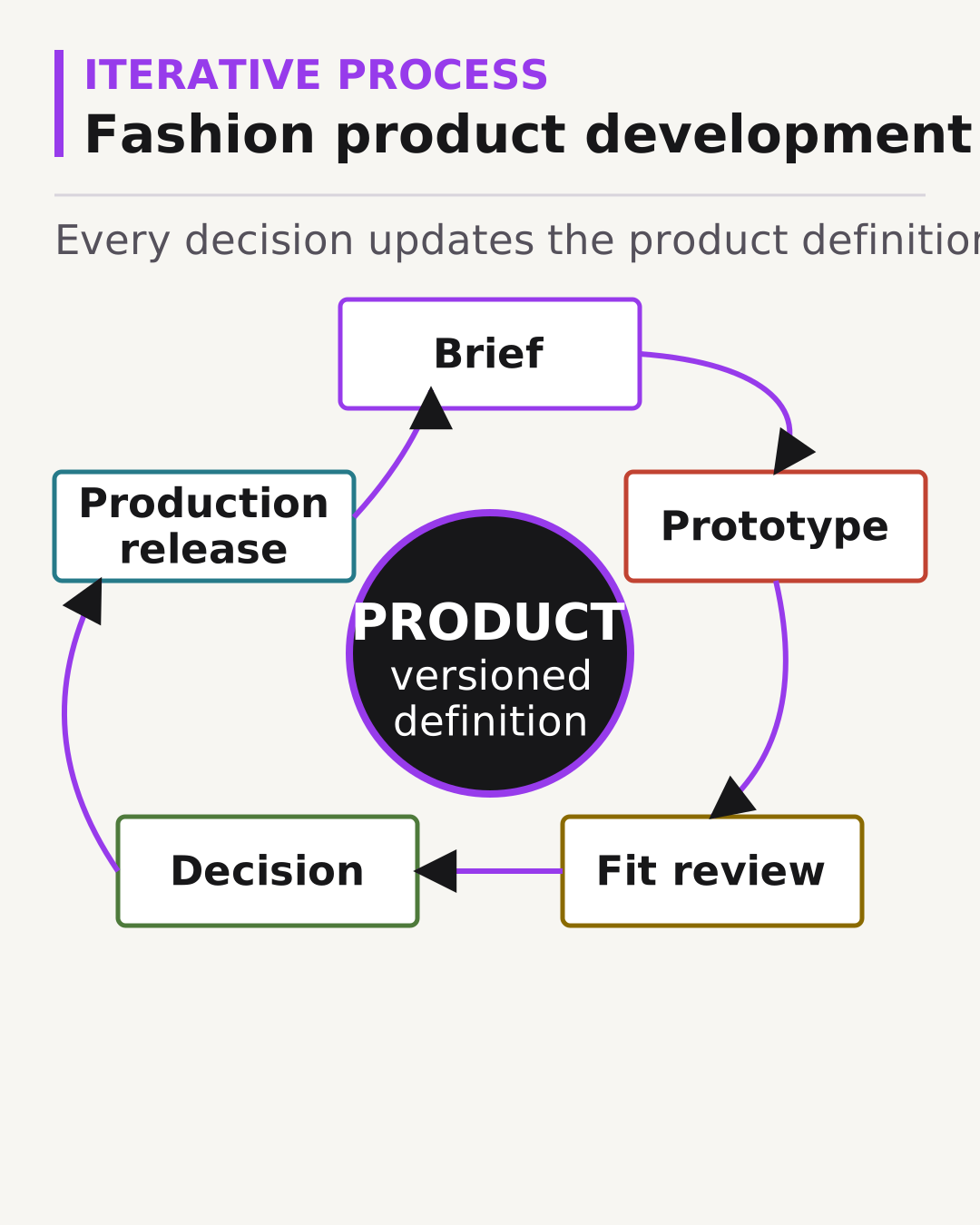
Fashion product development
Fashion product development is the process that turns an opportunity or brief into a product specified and approved for manufacturing. It coordinates concept, assortment, materials, patternmaking, samples, fit, cost, quality, compliance and timing through decision cycles rather than an isolated creative sequence.

Fashion product technical specification
A technical specification is the controlled information set that translates an approved fashion product into verifiable sampling and manufacturing requirements. It brings together drawings, materials, measurements, construction, tolerances, identification, labelling, comments and revision history; its content varies by category, company, market and stage.
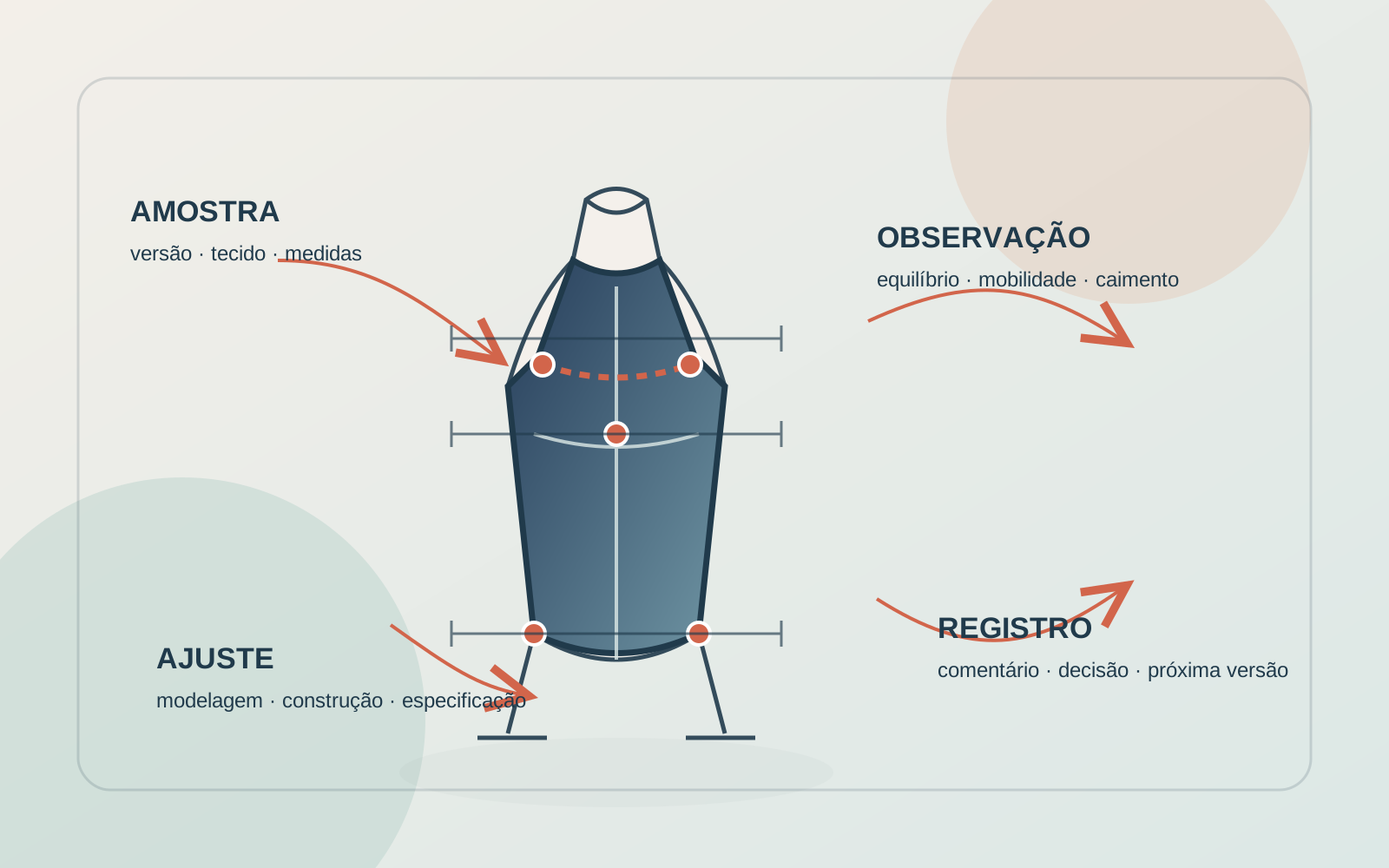
Garment fitting
Garment fitting is the process of comparing a dressed sample with a style's design, specifications, and intent. The team observes fit, balance, movement, and construction, records decisions, and sends changes into the next version.
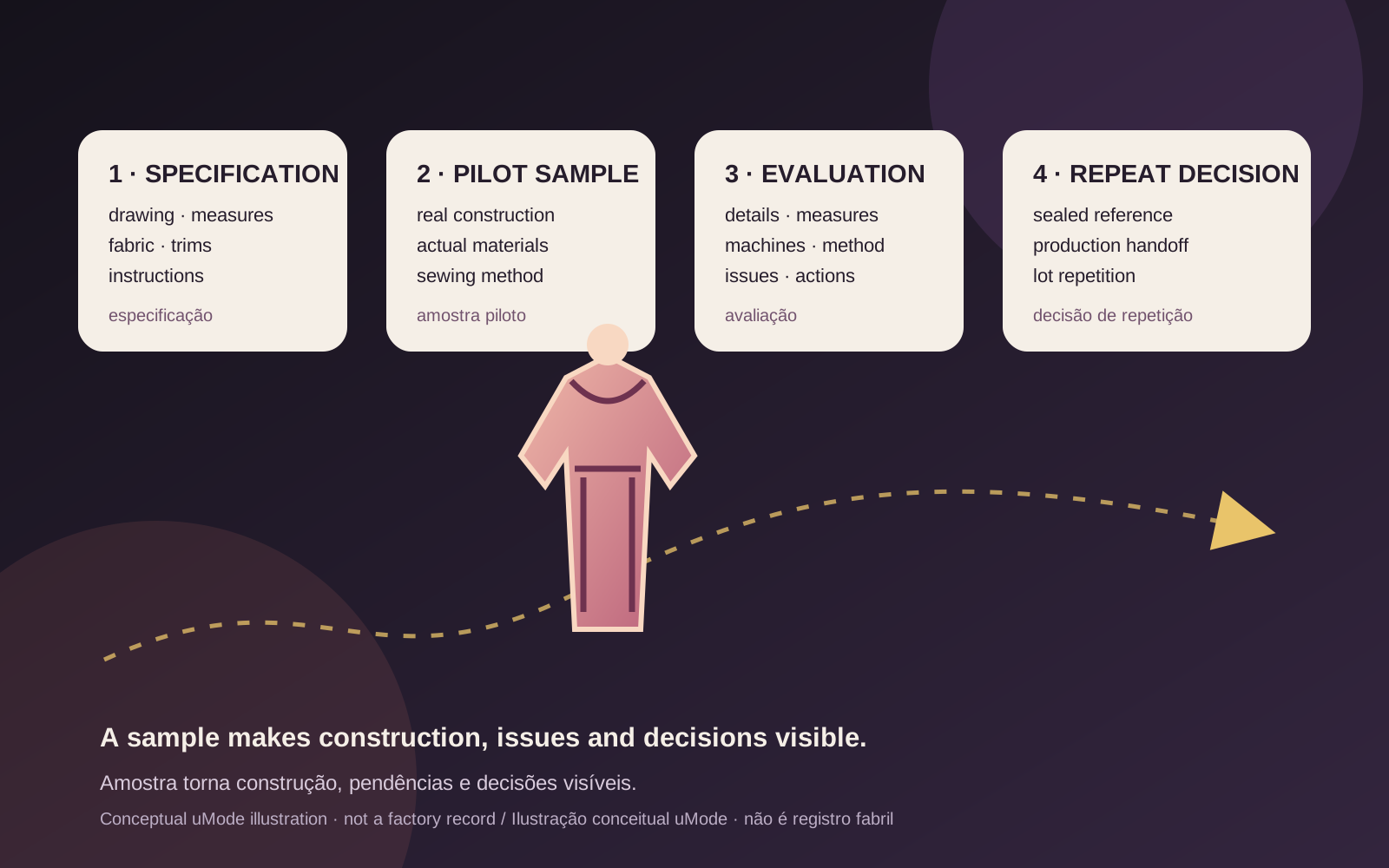
Garment production pilot sample
Garment production pilot sample. A garment production pilot is the development, review and approval of a product sample under product-making conditions. It connects the technical pack, materials, measurements, tests, construction and decision-making before the garment is repeated in production.
Sources
Want to apply this to your operation?