Fashion price architecture
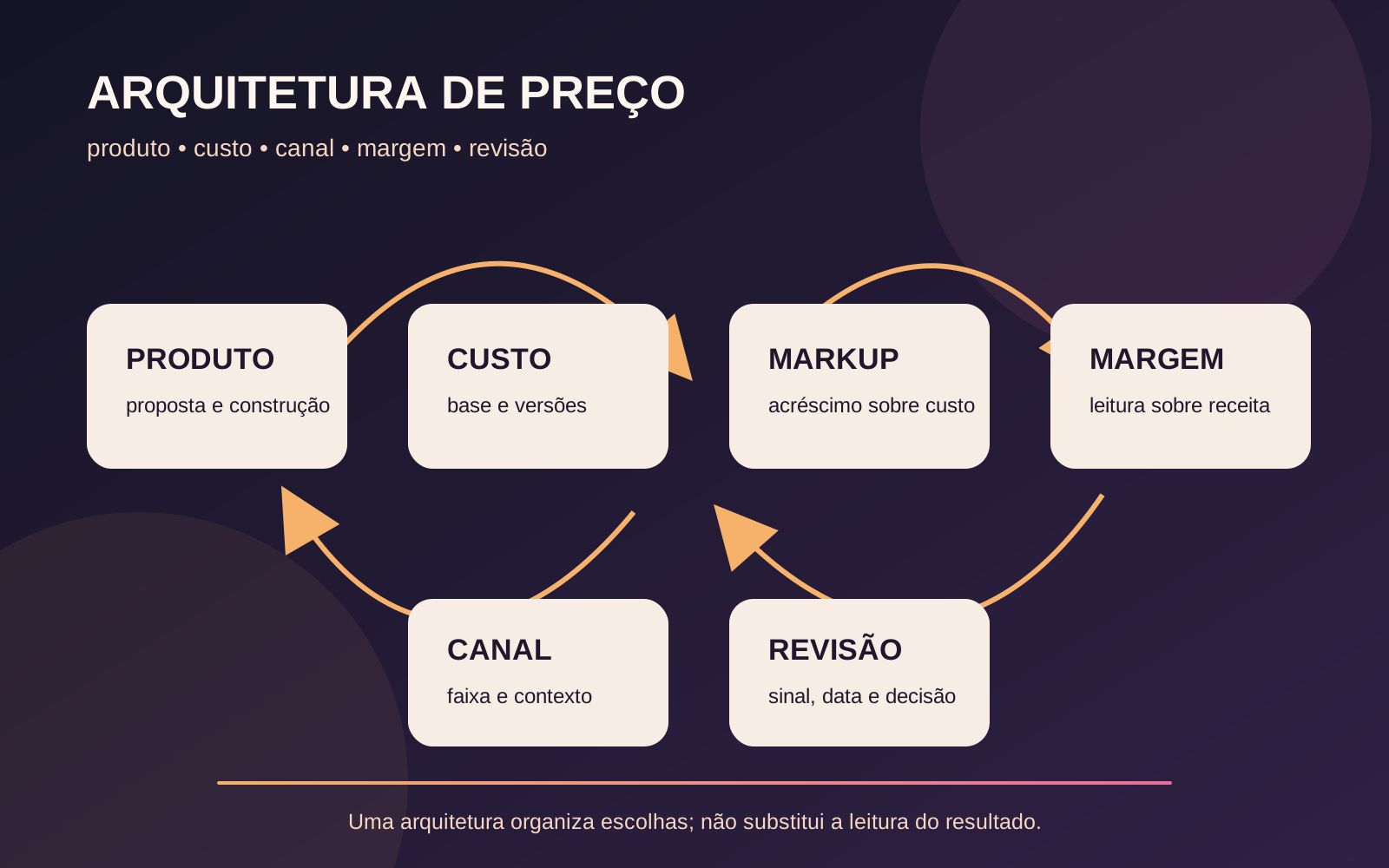
Fashion price architecture is the process of organizing costs, markup, margin, channels, and price bands so a collection intention can become comparable decisions. It connects product development with commercial review without treating one percentage as proof of profitability.
On this page
What is Fashion price architecture?
Fashion price architecture is a way to organize economic decisions across collection development. The starting point is to name the product, channel, unit of analysis, cost basis, markup, intended margin, and review moment. The product mix and line plan give the assortment its shape; the architecture records how each item should occupy a band and which conditions can move it.
The term does not mean choosing one multiplier and applying it without context. FIT places fashion product development between concept and pre-production and lists costing, sourcing, construction, quality, and marketing within that field. A pricing decision should therefore travel with the product path instead of appearing only when a garment is ready to sell.
How do markup and margin enter the process?
Markup and margin answer different questions. Markup starts from cost and adds an amount to reach a price; margin asks what share of selling price remains after costs and expenses. Because Sebrae describes different bases for the two terms, one percentage should not be read as if it were both markup and margin at once.
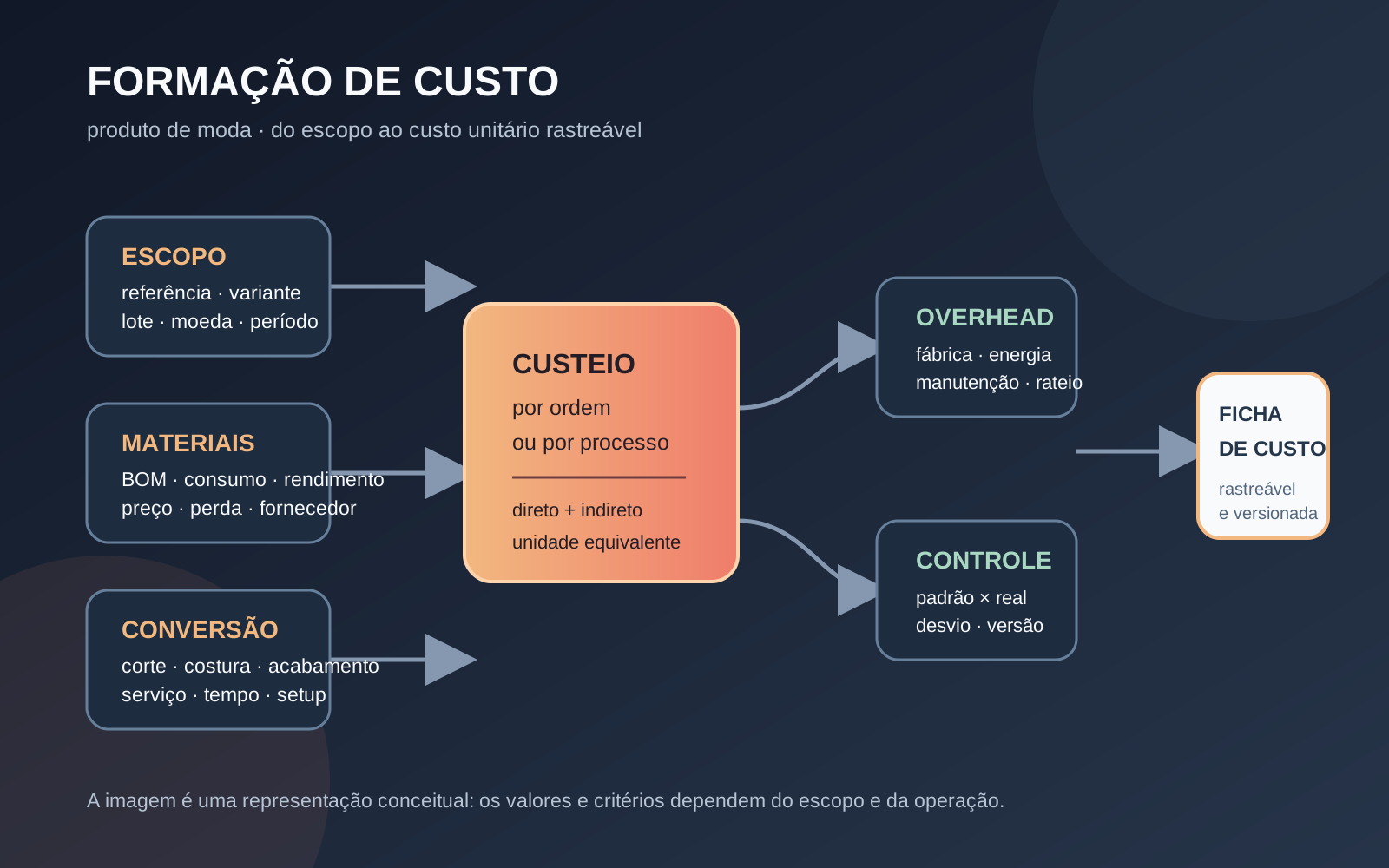
A price sheet can separate production cost, fixed and variable expenses, taxes, planned discounts, and desired margin. That breakdown keeps one number from hiding the decision. It also lets product costs and the technical sheet speak to one another: a change in material, construction, or finish may require a new cost reading before a band is retained.
The operational rule is to record the chosen formula and its base. If selling price is compared with cost, the team is reading markup; if the result is compared with selling revenue, it is reading margin. The record should name the measure, currency, channel, and period. Without those references, comparisons between items or collections can look precise without being equivalent.
How can a collection be organized into price bands?
Start with an item matrix rather than a table of percentages. For each family, record product proposition, channel, available cost, intended price, band, owner, and review date. Then compare nearby items: the architecture should make clear why products with different functions or constructions occupy different price points.
FIT describes contemporary fashion development as relying on technology, process control, and resource management. In practice, this supports keeping cost and price versions as the product advances. A decision made at concept stage may change at sampling, sourcing negotiation, or pre-production; preserving the earlier version makes the change legible without automatically calling it an error.
Markup may be standard or adjusted by product, as AccountingTools notes. A common rule can organize a first pass, but item-level review is useful when cost, channel, expected volume, or position in fashion retail are not equal. Adjustment does not mean chasing any external price; it means recording the reason and testing whether the choice still fits the defined cost and margin.
How should the architecture be reviewed after launch?
Review should compare plan with outcome and preserve exceptions. AccountingTools suggests looking at planned markups and actual gross margins, as well as discounts, returns, write-downs, sales volume, customer response, and competitor prices. For a collection, this can become a routine linked to demand planning: record the observed signal, the hypothesis that was in force, and the decision taken.
A sale below plan does not identify its cause by itself. Before changing a band, check whether the unit is still the same, whether a discount was included, whether returns or write-downs occurred, and whether the observed channel matches the plan. The analysis can then separate a cost issue, a price choice, a channel change, and an execution issue. This is a method recommendation, not a promise that architecture will remove uncertainty.
The architecture also needs explicit boundaries. Markup is not margin; a competitor price is not internal cost; and a collection band is not a guarantee of an outcome. To keep the process auditable, close each review with formula, version, date, owner, and reason. Then the product mix can be reconsidered without erasing history, while line plan, technical sheet, and product costs remain connected to the economic decision.
Verified facts
- The Fashion Institute of Technology describes product development as being at the core of every fashion brand.
Source: fitnyc.edu ↗ - The FIT product-development path runs from concept development through pre-production.
Source: fitnyc.edu ↗ - FIT links success in fashion product development to a strong working knowledge of all aspects of the process.
Source: fitnyc.edu ↗ - FIT describes current fashion development as relying on new technologies, process control, and resource management to optimize development resources and reduce the product-development time cycle.
Source: fitnyc.edu ↗ - FIT's Product Development certificate includes concentrations in PLM, costing development, product construction, quality assurance, sustainable sourcing, and marketing development.
Source: fitnyc.edu ↗ - Sebrae defines markup as the difference between a product or service selling price and its production cost.
Source: blog.rn.sebrae.com.br ↗ - Sebrae states that markup is expressed as a percentage of production cost.
Source: blog.rn.sebrae.com.br ↗ - Sebrae distinguishes markup, applied to cost to determine selling price, from profit margin, the percentage of selling price left as profit after costs and expenses.
Source: blog.rn.sebrae.com.br ↗ - Sebrae states that markup calculation considers production costs, fixed and variable expenses, taxes, and the desired profit margin.
Source: blog.rn.sebrae.com.br ↗ - AccountingTools describes markup as an increase in a product's cost used to arrive at its selling price.
Source: accountingtools.com ↗ - AccountingTools records that a markup may be standard across products or adjusted for each product so the resulting price matches what competitors offer.
Source: accountingtools.com ↗ - AccountingTools recommends comparing planned markups with actual gross margins and tracking discounts, returns, write-downs, and changes in sales volume.
Source: accountingtools.com ↗
Related entries
Product mix
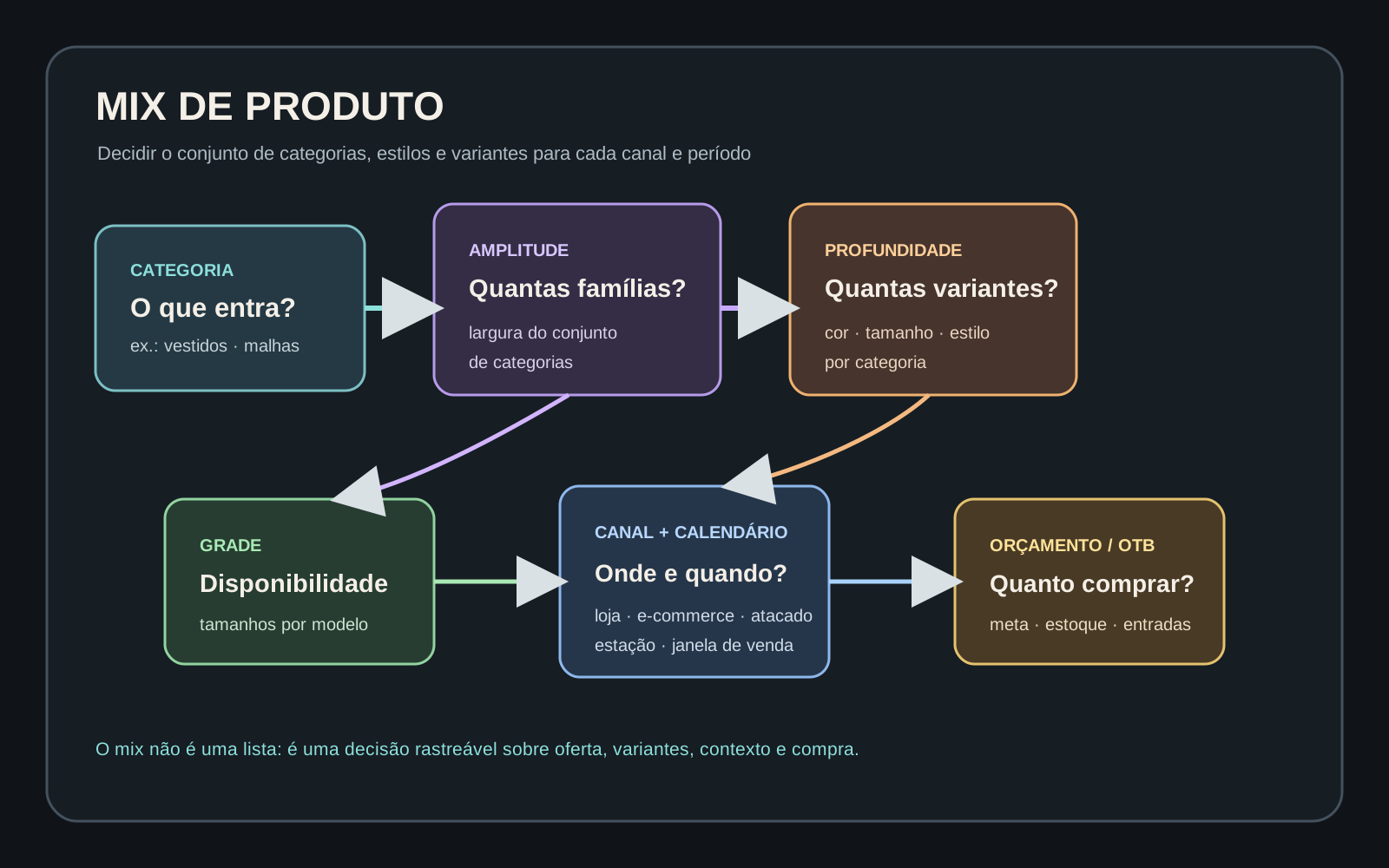
A product mix is the decision about which categories, styles, and variants a fashion operation offers in each channel and period. The process separates breadth, depth, size range, demand, and buying so a collection intention becomes a checkable offer.
Collection line plan
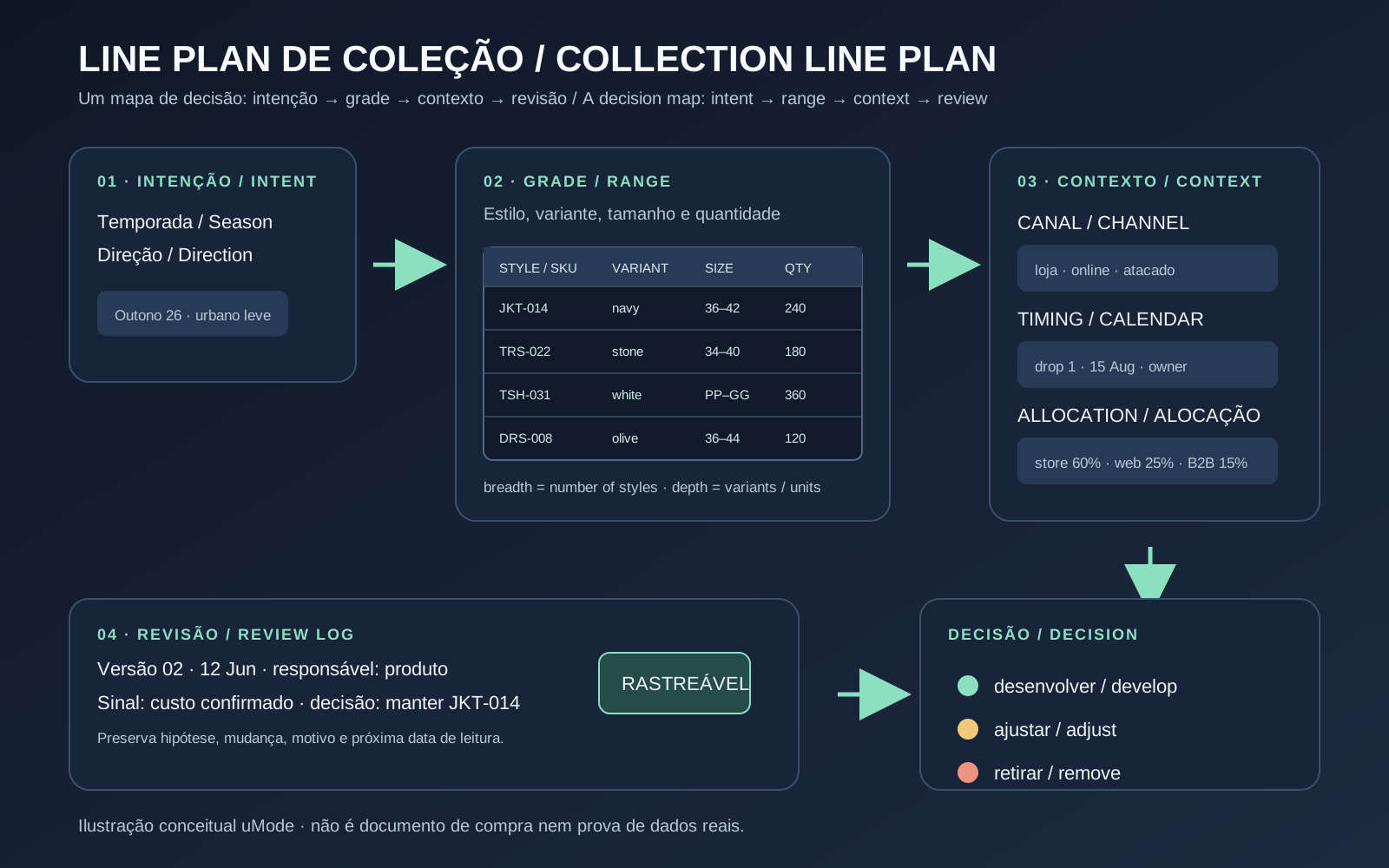
A collection line plan is the operating record that turns collection direction into a grid of styles, variants, sizes, channels, quantities and decision milestones. It defines what is planned for development or buying without replacing a tech pack, budget, forecast or product validation.
Demand planning in fashion
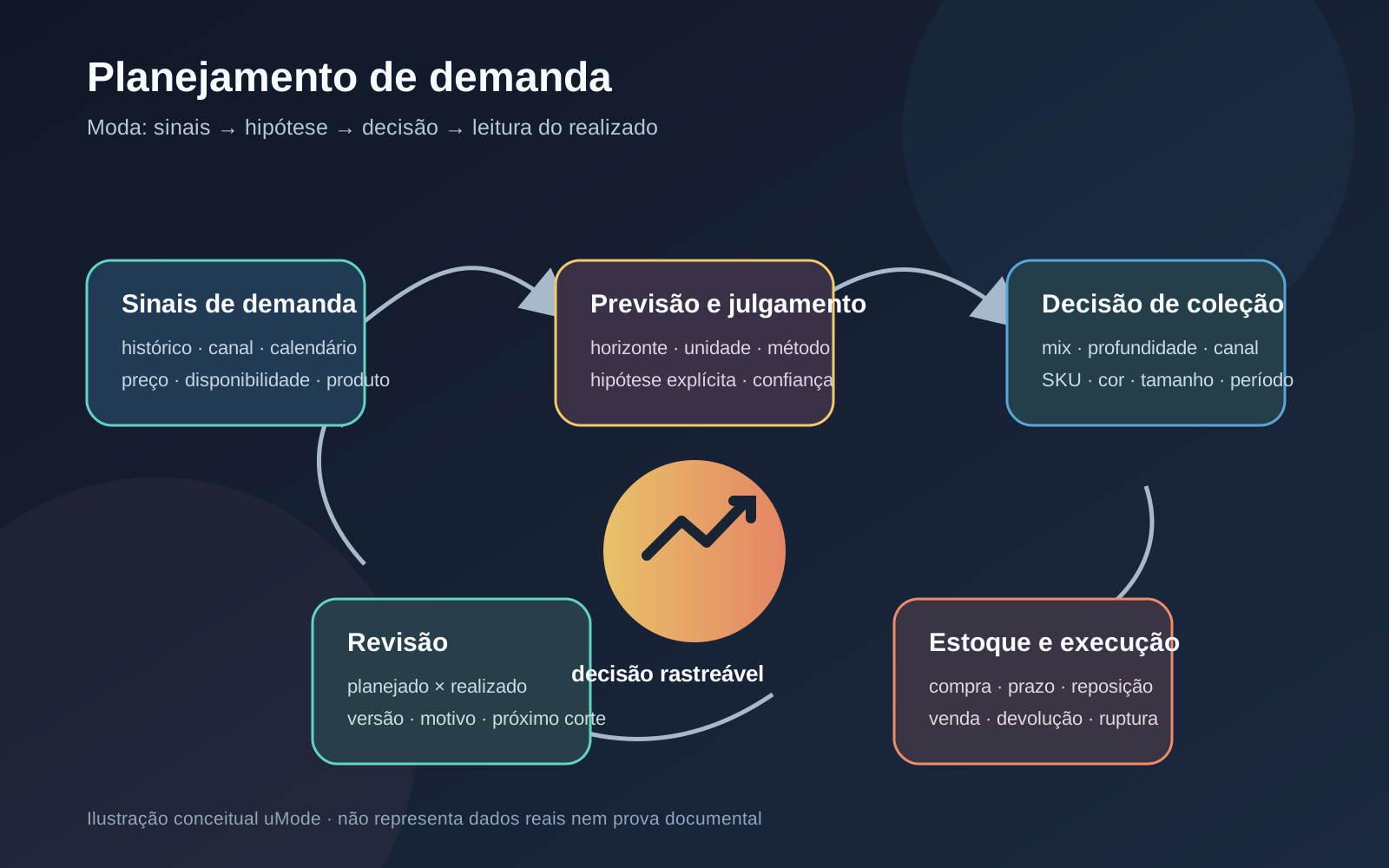
Demand planning in fashion turns demand signals, history, calendar context and judgement into explicit decisions about assortment, volume, channel and review. It combines forecasting with governance: every hypothesis needs a horizon, unit, owner and rule for revision when the collection or market changes.

Fashion product technical specification
A technical specification is the controlled information set that translates an approved fashion product into verifiable sampling and manufacturing requirements. It brings together drawings, materials, measurements, construction, tolerances, identification, labelling, comments and revision history; its content varies by category, company, market and stage.
Sources
Want to apply this to your operation?