Governing fashion context
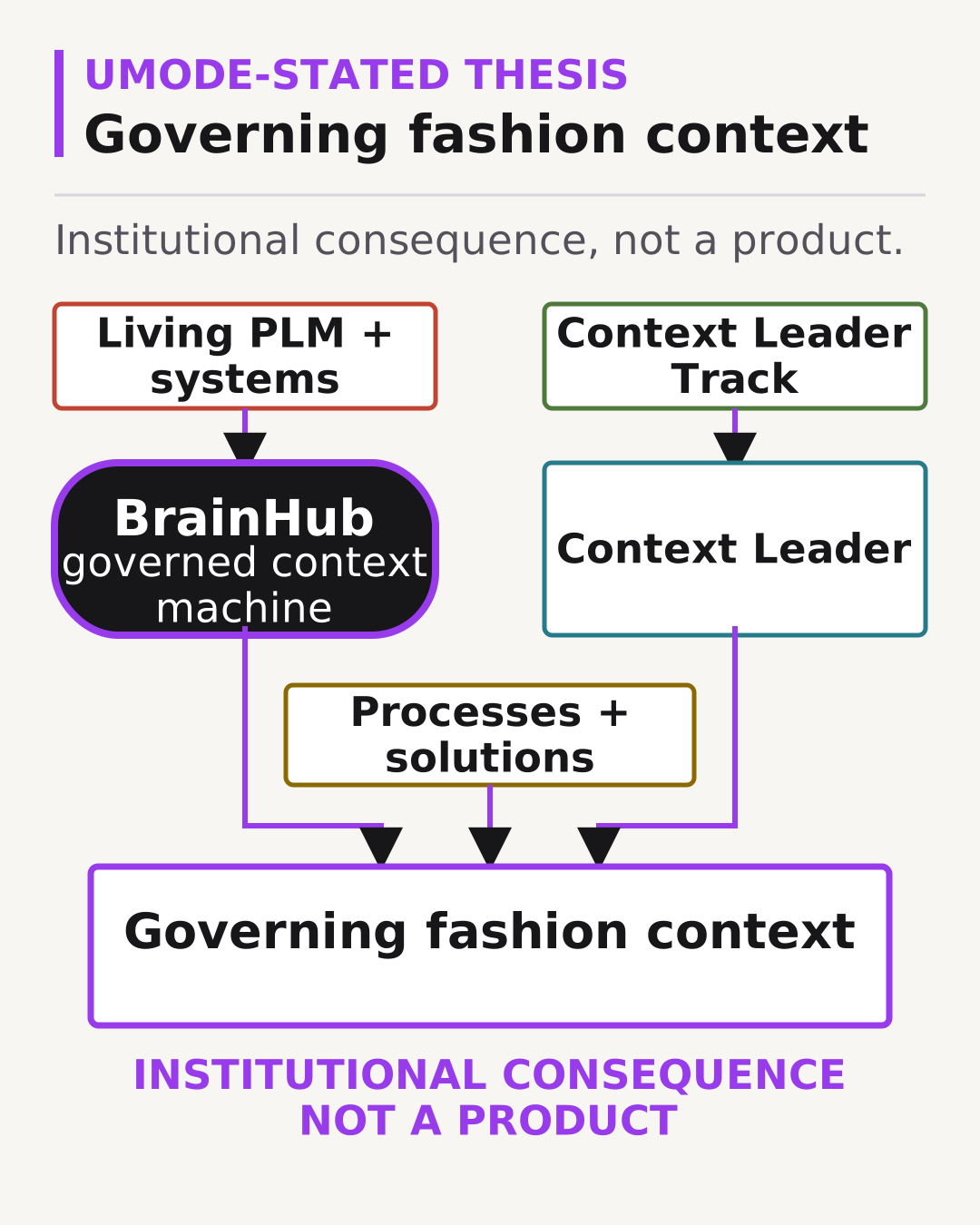
Governing fashion context is uMode's name for a proposed relationship among systems of record, BrainHub, governance, and the Context Leader Track. The expression is not a product, technical standard, or recognized industry category, and no independent validation of its outcomes has been published.
On this page
What does uMode call governing fashion context?
Governing fashion context is proprietary vocabulary uMode uses for a proposal about organizing company context in fashion. The expression names a thesis, not an application, a technical specification, or a sellable product. The public formulation links systems of record, a layer called BrainHub, governance practices, and the Context Leader Track.
No independent source establishes governing fashion context as a recognized industry category or validates the combination as a deployed architecture. The term should therefore be read as uMode's stated thesis. The external references in this content help compare its components with existing concepts; they do not certify the name, the design, or its outcomes.
Which elements does the proposal combine?
In uMode's representation, systems of record retain product, transaction, and document data; PLM remains responsible for product and collection records; collection governance defines authority and change; and BrainHub is presented as a layer for retrieving context with provenance, version, and permission. The model also relates the Context Leader Track to the development of people uMode calls Context Leaders.
These relationships are institutional propositions. They do not demonstrate that all data should live in one database, that integrations already exist, or that agents can decide without review. A company evaluating the proposal would still need to define responsible sources, access rules, validity criteria, and how a decision returns to the appropriate record.
What do the independent references actually support?
The independent references support adjacent problems and practices, not the thesis of governing fashion context as a whole. ISO 30401 addresses knowledge management systems and describes knowledge as understanding situated in context. The NIST AI RMF recommends documenting purpose, users, limitations, roles, and lines of communication for AI systems. Those points can help examine governance and accountability, but they do not validate uMode's brand or proposed arrangement.
Similarly, Retrieval-Augmented Generation combines source retrieval with language-model generation. This describes one possible mechanism for consulting current or specialized information; it does not prove that retrieved content is current, authorized, or complete. Metadata, curation, citation, and evaluation remain separate concerns.
What cannot be concluded from the thesis?
Governing fashion context cannot be treated as a market standard, a technically certified architecture, or an end-to-end system already deployed. The listed sources also provide no evidence of cost reduction, faster delivery, or risk mitigation attributable to the model. The diagram on this page illustrates relationships asserted by uMode; it is neither a working interface nor proof of integration.
BrainHub, Context Leader Track, and Context Leader are names in the organization's public vocabulary. The first names the proposed company layer; the second, a development pathway; the third, a professional destination. This taxonomy can be analyzed, compared, and tested, but it should not be confused with universal fashion-industry terminology.
How can a company evaluate the proposal?
A responsible evaluation begins with verifiable questions: which systems are official sources; who may access each class of information; how version conflicts are resolved; which decisions require an accountable person; and which records allow an AI answer to be audited. A tech pack, for example, only participates in decision context when its version, approval, and relationship to the product are clear.
uMode does not present PLM as a finished or obsolete technology. Within the thesis, PLM remains a system of record and interacts with contextual mechanisms and AI applied to fashion. That is uMode's institutional position on PLM evolution, not a forecast proven for the industry as a whole.
Verified facts
- ISO 30401 sets requirements and guidelines for establishing, implementing, maintaining, reviewing, and improving a knowledge management system.
Source: iso.org ↗ - ISO 30401 requirements apply to organizations of any type or size, regardless of the products and services they provide.
Source: iso.org ↗ - ISO's technical group for knowledge management defines knowledge as understanding that enables effective context-specific decisions and action.
Source: committee.iso.org ↗ - According to the same ISO group, knowledge exists within and between individuals, teams, and organizations and changes with time, relationships, and external events.
Source: committee.iso.org ↗ - The ISO group describes knowledge management as processes for different forms of knowledge combined with the development of a culture that enables those processes.
Source: committee.iso.org ↗ - Retrieval-Augmented Generation combines information retrieval from sources such as search and databases with the generation capabilities of large language models.
Source: cloud.google.com ↗ - Google Cloud documentation notes that language models are limited to their pre-training data and that RAG can provide up-to-date information.
Source: cloud.google.com ↗ - The NIST AI RMF Map function calls for an AI system's context, purpose, users, laws, norms, expectations, impacts, and limitations to be understood and documented.
Source: airc.nist.gov ↗ - The NIST AI RMF recommends that AI-risk roles, responsibilities, and lines of communication be documented and clear across teams and individuals.
Source: airc.nist.gov ↗ - NIST describes lifecycle data contextualization as necessary to understand system behavior and satisfy traceability requirements.
Source: nist.gov ↗ - The public uMode BrainHub page describes uMode products, ERP, PLM, e-commerce, files and conversations as sources that enter with provenance and are transformed into governed context with human approval.
Source: umode.brainhub - The public uMode Context Leader Track page states that personal context does not belong to the company, while policies, data, decisions and protected knowledge remain in the organization.
Source: umode.hic - uMode publicly defines the Context Leader Track as a development method, Context Leader as the professional destination, and governing fashion context as the institutional consequence of combining that professional with BrainHub, processes and solutions that preserve context.
Source: umode.lider-de-contexto
Related entries

Fashion PLM: data, product, and lifecycle
Fashion PLM is the structured management of the data, decisions, and workflows that follow a product and a collection from concept through post-launch. It connects tech packs, materials, costs, samples, approvals, suppliers, and versions so that every function works from a traceable product definition.
Collection governance: roles, gates, and evidence
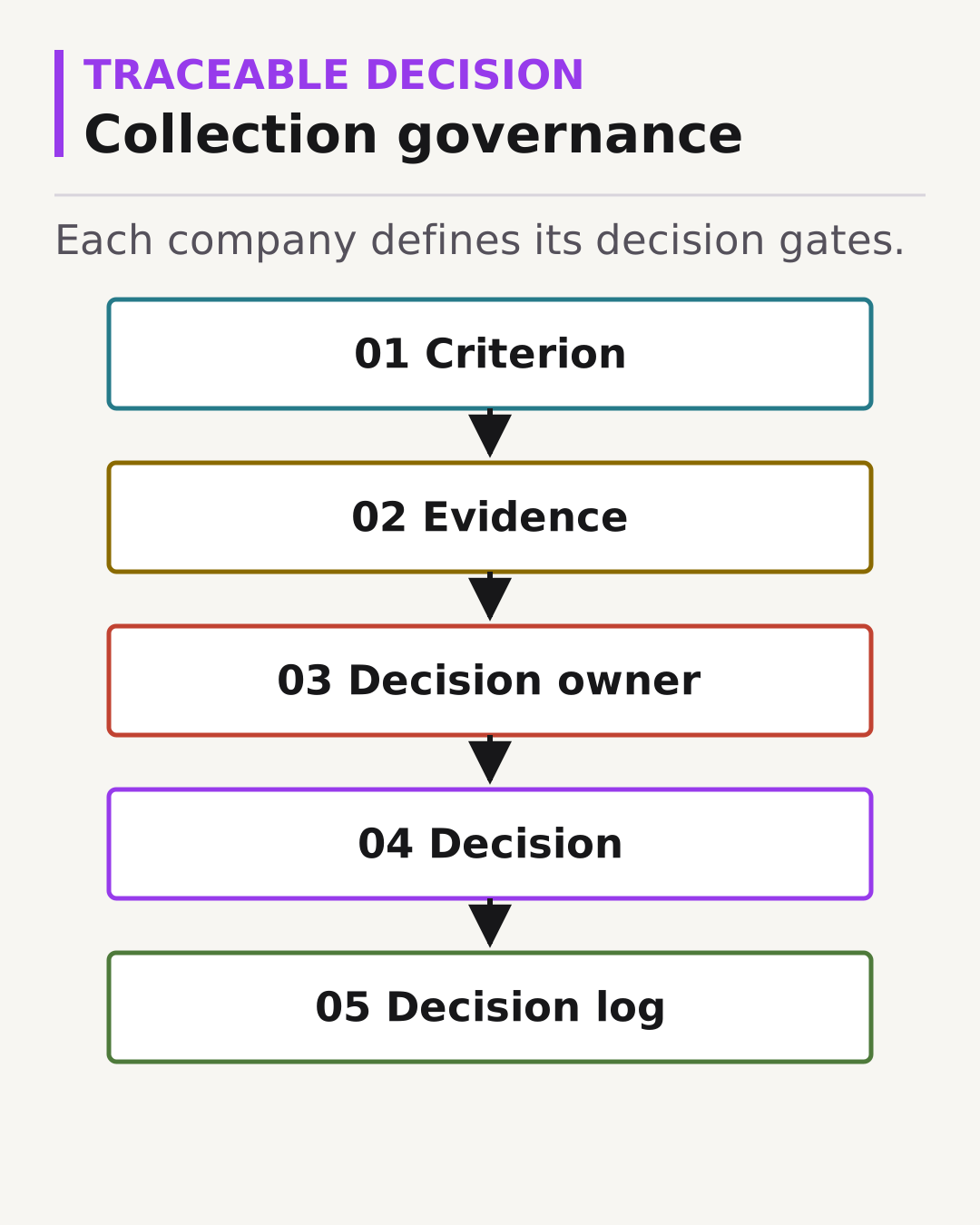
Collection governance describes the practice of making roles, criteria, evidence, decisions, and exceptions explicit in fashion development. The term does not designate one industry standard; it synthesizes principles of process management, evidence-based decisions, due diligence, and traceability.
AI in fashion: applications and limits
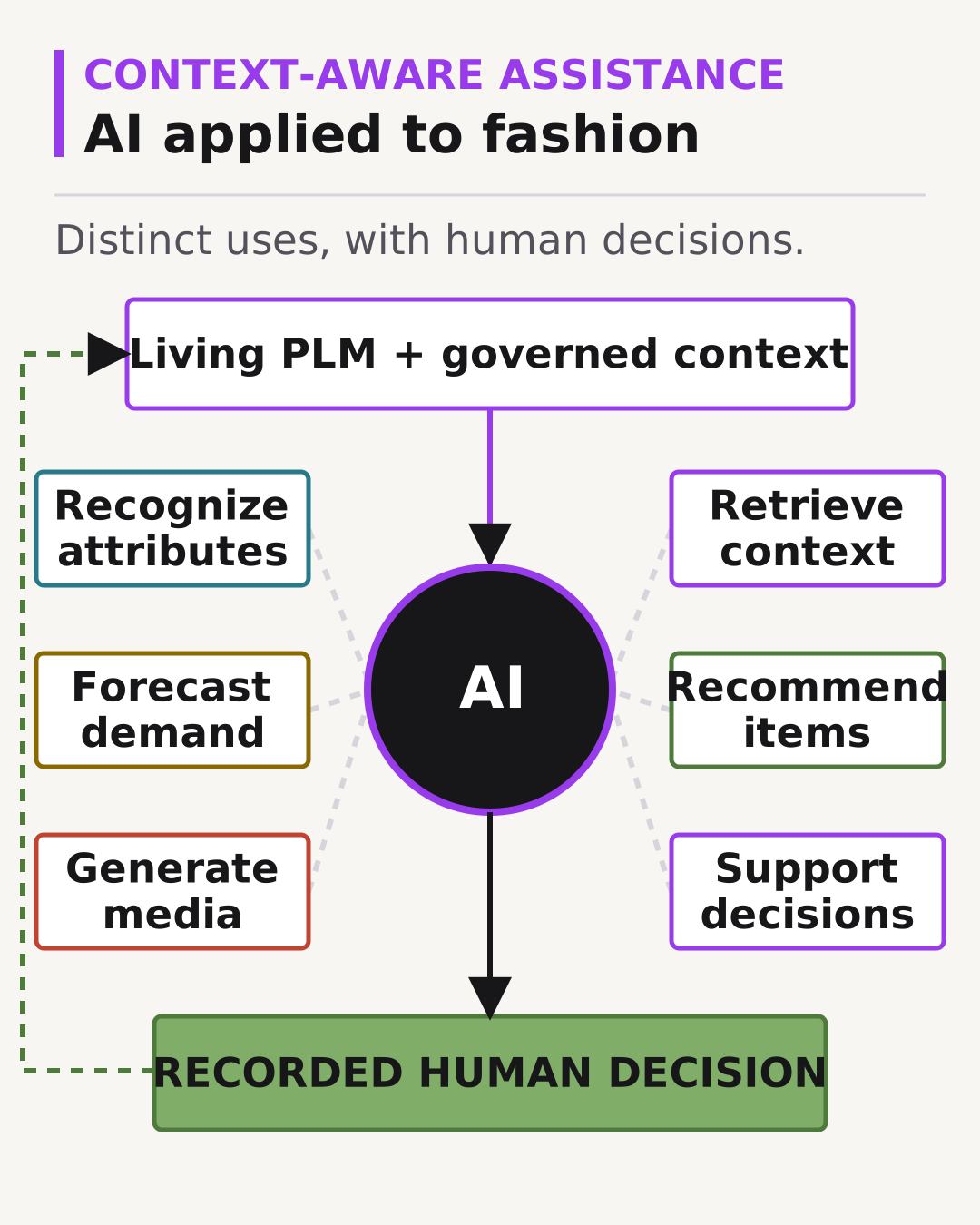
Applications of AI in fashion use computational models to recognize attributes, retrieve knowledge, generate visualizations, and support decisions across creation, development, and commercialization. Their limits depend on the data, use context, evaluation, human oversight, and integration with the product workflow.

Fashion product technical specification
A technical specification is the controlled information set that translates an approved fashion product into verifiable sampling and manufacturing requirements. It brings together drawings, materials, measurements, construction, tolerances, identification, labelling, comments and revision history; its content varies by category, company, market and stage.
Sources
- https://www.iso.org/standard/68683.html?browse=tc
- https://committee.iso.org/sites/tc260/home/projects.html
- https://cloud.google.com/use-cases/retrieval-augmented-generation?hl=en
- https://airc.nist.gov/airmf-resources/airmf/5-sec-core/
- https://www.nist.gov/publications/contextualizing-manufacturing-data-lifecycle-decision-making
Want to apply this to your operation?