Critical path in collection development
Critical path in collection development is a scheduling method that organizes dependent activities, durations, and milestones to reveal the sequence that sets the shortest possible project duration. In apparel, it can position sample gates without treating the critical path as a simple list of approvals.
On this page
What is Critical path in collection development?
Critical path answers a timing question: which dependent activities must finish along the longest sequence for a collection to reach its final milestone? Rather than turning a calendar into a queue of tasks, the method maps links between decisions, samples, approvals, and production. For collection management, this creates a concrete conversation about precedence: what must finish first, what can move in parallel, and which wait threatens the delivery date.
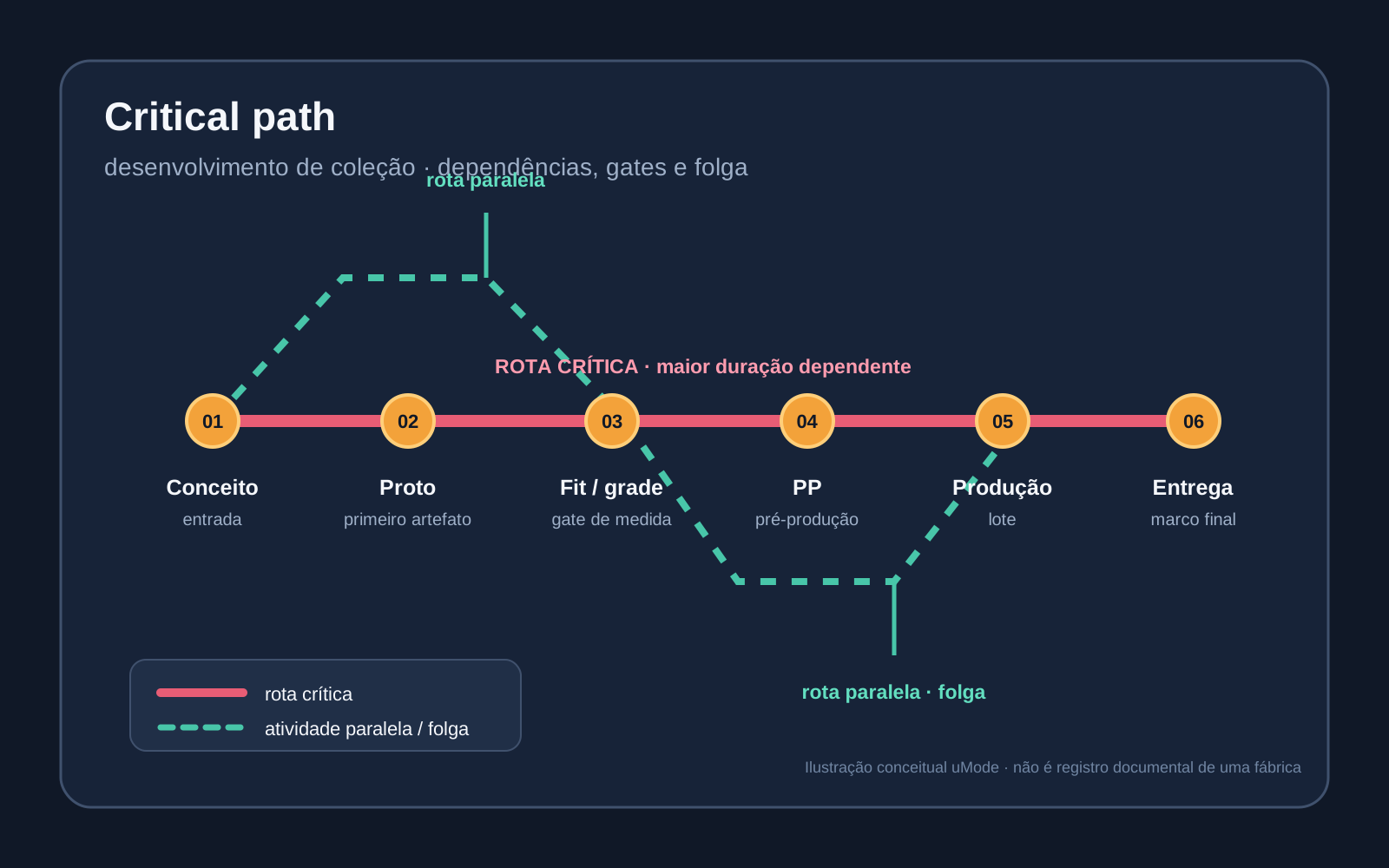
The method is an algorithm for scheduling project activities. In apparel, the network may use concept, proto, fit, size set, PP, and production as nodes. These labels do not form a universal flow: each company defines its own milestones, criteria, and returns. The value of the map is to make the logic the team already manages visible, not to impose one sequence on every product.
How do you build a collection critical-path network?
Build the network by listing each activity, estimating its duration, recording dependencies, and naming milestones or deliverables. A collection plan becomes more useful when every node has an observable exit condition, an owner, and a next action. An approval without an acceptance criterion is only a calendar point; it is not yet a well-defined operational dependency.
The sample chain provides a concrete example. The proto starts from the design or concept. The fit sample checks fit on a dress form or human model. The size set checks multiple sizes and grading; when that gate is approved, the supplier can develop the PP sample. The PP uses actual fabric, trims, and accessories before bulk production, and the buyer cross-checks details and workmanship before approval. In product development, these transitions can become predecessors and successors in the schedule.
The network should preserve revisions. If a team returns a sample for correction, show the return link as rework instead of hiding it inside an optimistic duration. For every stage, record the input reviewed, the decision made, the open issue, and the person responsible for releasing the next activity. This keeps the tech pack close to the calendar without making the document a substitute for physical fitting.
How do you separate critical path, float, and approval?
The critical path is the longest stretch of dependent activities and sets the shortest possible project duration. CPM calculates earliest and latest starts and finishes; an activity with zero total float cannot slip without lengthening the project. Therefore, an approval sequence is critical only when its duration and dependencies place it on the network's longest route, not simply because it contains important decisions.
The network may also contain parallel near-critical paths and activities with free or total float. In practice, scheduling material research in parallel with pattern work may reveal a wait that does not change the final date—or show that a revision has already consumed the available float. The lead image is a conceptual representation of this difference: the highlighted line shows the longest route; dashed lines show parallel work and room to maneuver. It does not document a factory or replace a real schedule.
The PP milestone should not be confused with TOP. The PP is a sample made before bulk production and submitted for review and approval. TOP is picked randomly from the output of the first production run; in the schedule, treat that collection as an explicit quality-check point. This distinction places pilotage and garment fitting at different points in the network: a construction or fit decision can come before verification of a production run.
How can the map avoid an artificial promise of speed?
Use critical path as a decision tool, not as an automatic promise. Start with the milestone that cannot move, work backward through its dependencies, and mark activities that can run in parallel. Then update duration and status when a sample returns, an approval changes, or a stage consumes its float. The recurring question is straightforward: which change altered the longest route, and what action reduces risk without hiding the open issue?
A useful map also separates input, decision, output, and waiting time. This prevents every task from being called an “approval” and keeps the boundaries visible between concept, fit, grading, pre-production, and first-run quality checking. For collection management, the result is a traceable decision chain; for product development, it is a way to prioritize the next response. The method does not remove iteration: it makes clearer where an iteration threatens the final milestone and where float still exists.
Connections
Fashion Pedia · collection management · product development · tech pack · collection planning · pilotage · garment fitting
Verified facts
- The critical path method is an algorithm for scheduling a set of project activities.
Source: en.wikipedia.org ↗ - The critical path is determined by the longest stretch of dependent activities and the time needed to complete it from start to finish.
Source: en.wikipedia.org ↗ - CPM calculates earliest and latest starts and finishes without lengthening the project and identifies activities with zero total float, whose delay lengthens the project.
Source: en.wikipedia.org ↗ - A project network can contain parallel near-critical paths and activities with free float or total float.
Source: en.wikipedia.org ↗ - In an apparel sample chain, the proto is developed from the design or concept.
Source: onlineclothingstudy.com ↗ - The fit sample checks fit on a dress form or human model.
Source: onlineclothingstudy.com ↗ - The size-set sample checks fit across multiple sizes and grading; after size-set approval, the supplier can develop the PP sample.
Source: onlineclothingstudy.com ↗ - The PP sample is made with actual fabric, trims, and accessories before bulk production.
Source: onlineclothingstudy.com ↗ - The buyer cross-checks the PP sample's details and workmanship before approval.
Source: onlineclothingstudy.com ↗ - A TOP sample is picked randomly from the output of the first production run.
Source: onlineclothingstudy.com ↗
Related entries

Fashion product technical specification
A technical specification is the controlled information set that translates an approved fashion product into verifiable sampling and manufacturing requirements. It brings together drawings, materials, measurements, construction, tolerances, identification, labelling, comments and revision history; its content varies by category, company, market and stage.
Garment production pilot sample
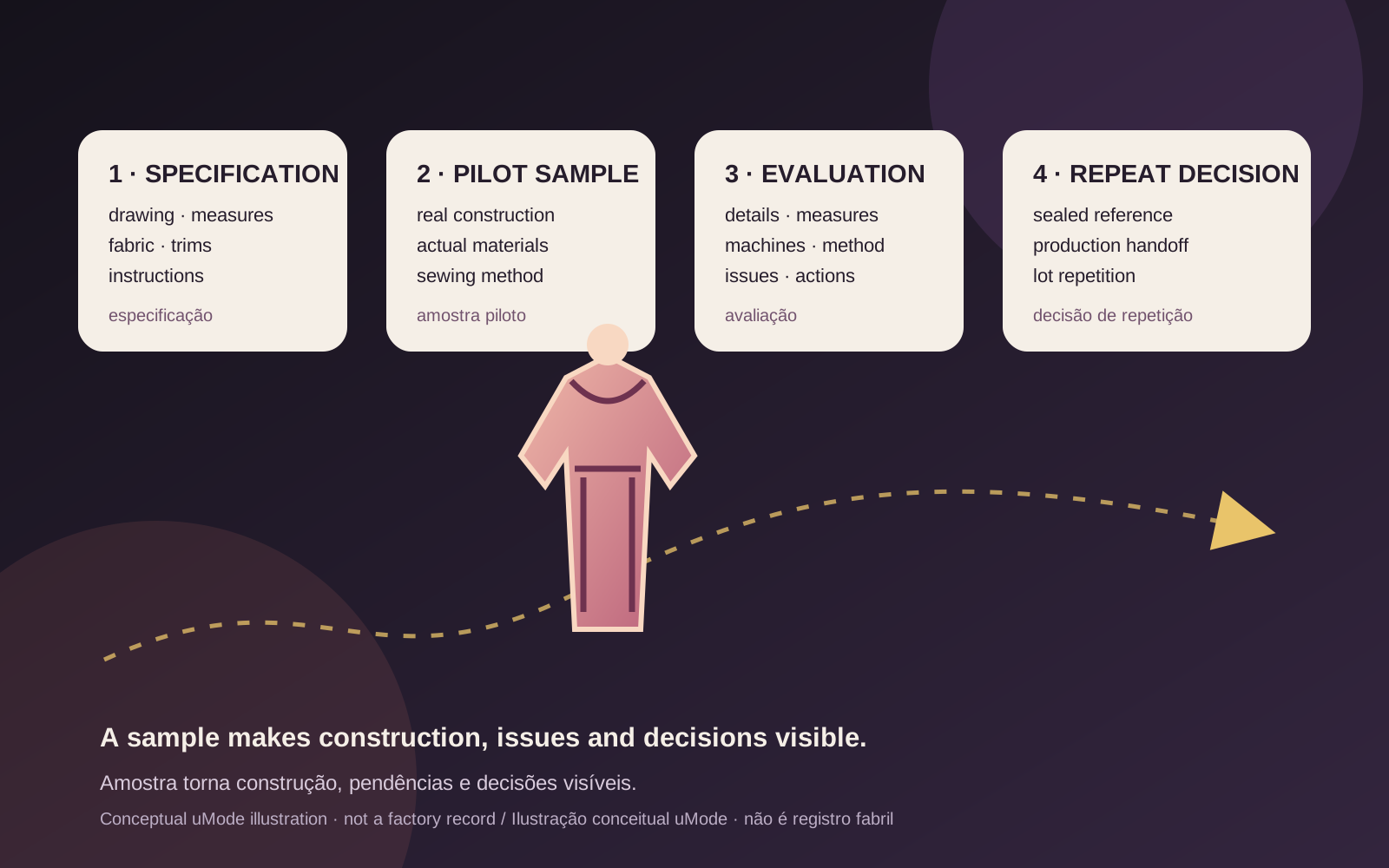
Garment production pilot sample. A garment production pilot is the development, review and approval of a product sample under product-making conditions. It connects the technical pack, materials, measurements, tests, construction and decision-making before the garment is repeated in production.
Garment fitting
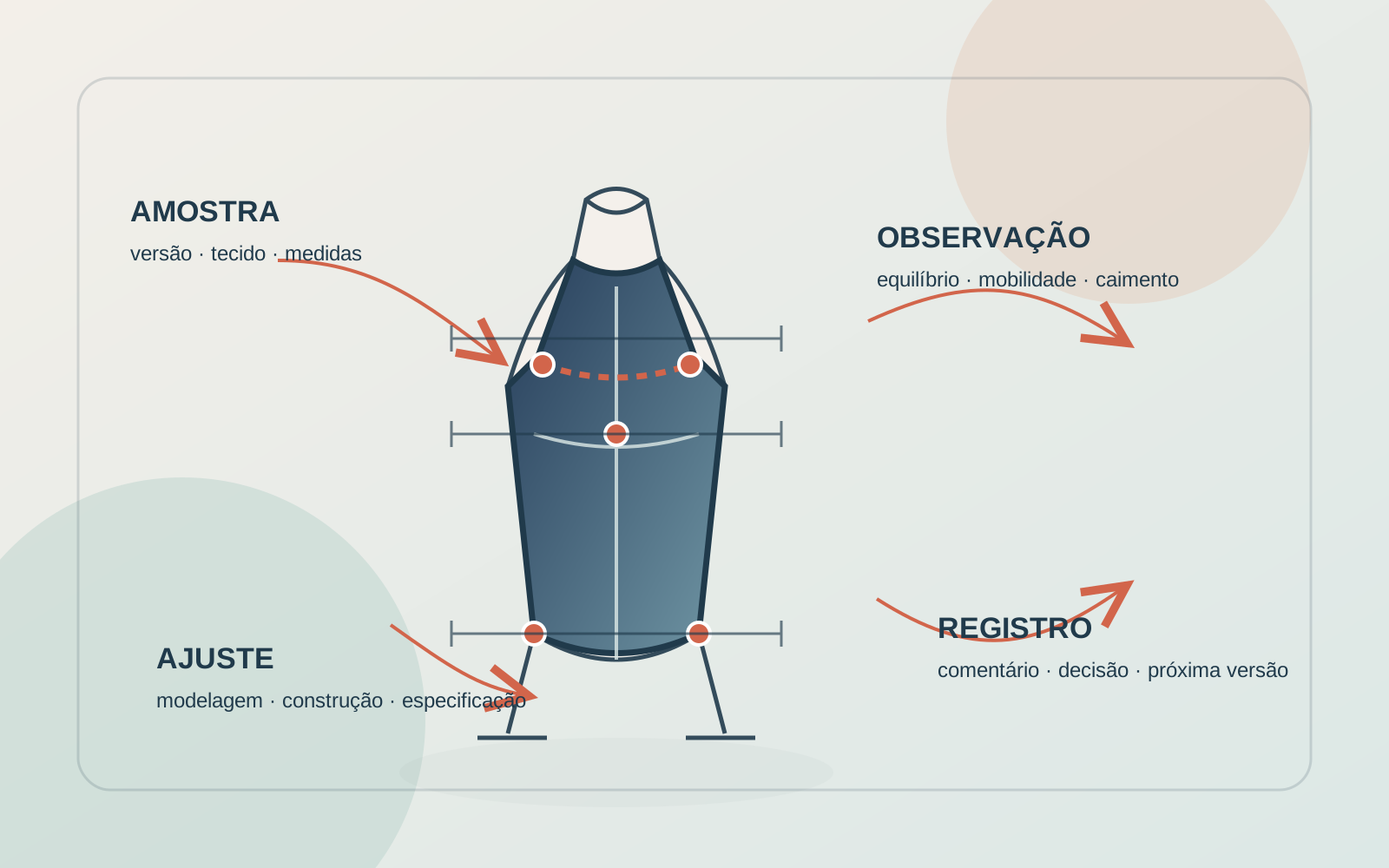
Garment fitting is the process of comparing a dressed sample with a style's design, specifications, and intent. The team observes fit, balance, movement, and construction, records decisions, and sends changes into the next version.
Sources
Want to apply this to your operation?