Artificial intelligence applied to fashion
Artificial intelligence applied to fashion uses models to interpret images, attributes, and product decisions across development and operations. The process is more dependable when the fashion object, use context, evaluation criteria, and human review are made explicit.
On this page
What is Artificial intelligence applied to fashion?
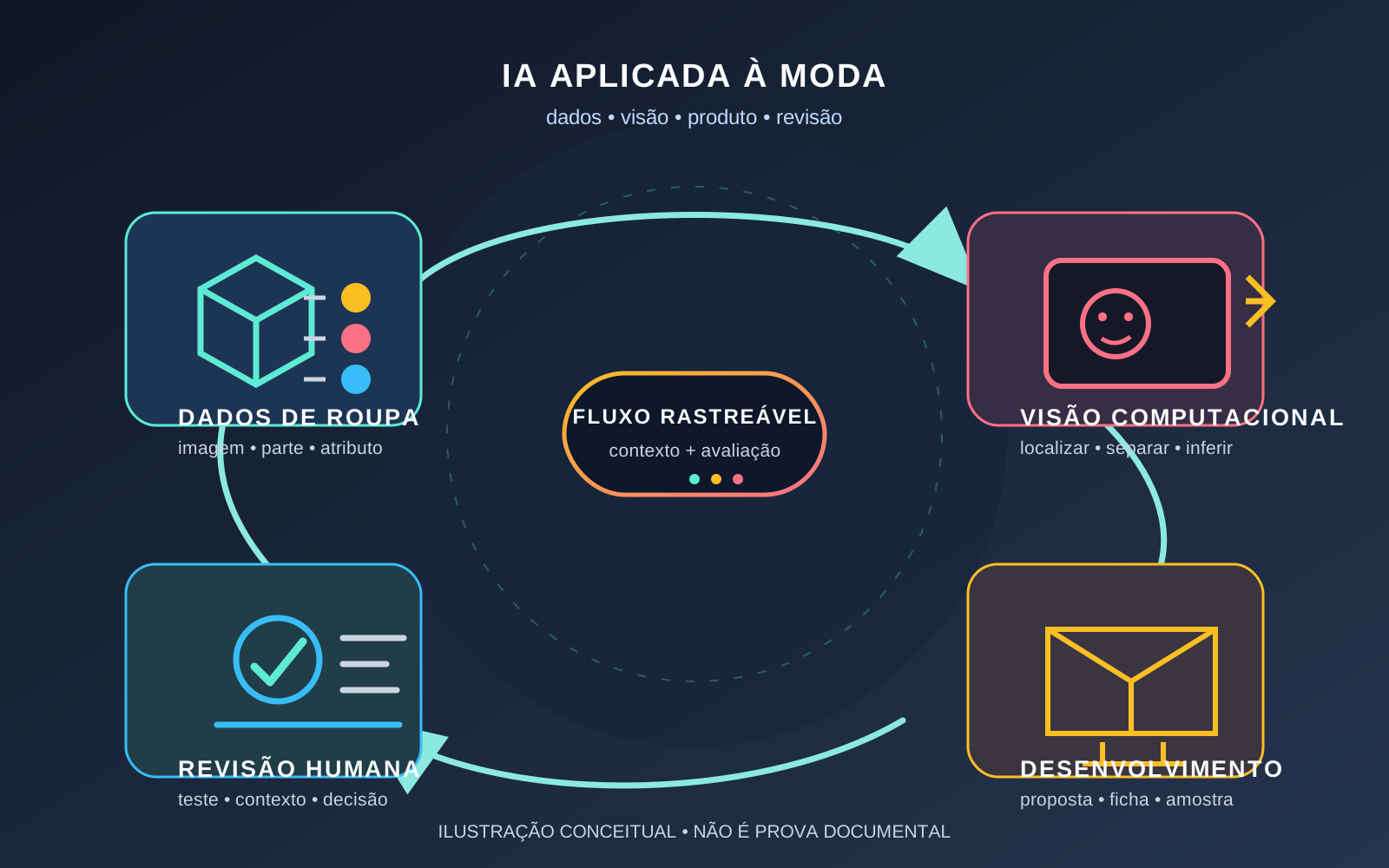
Artificial intelligence applied to fashion is a process that turns images, attributes, and product context into support for product development, technical packs, and operations. Fashionpedia shows why representation matters: its ontology was built by fashion experts and organizes categories, apparel parts, and attributes, while its image dataset uses segmentation masks associated with fine-grained attributes. This makes computer vision closer to product language than a generic image classifier.
The task can be split into locating a garment, separating its parts, and naming observable attributes. Fashionpedia itself combines instance detection and attribute classification; a production workflow should therefore distinguish what the model located, the attribute it inferred, and what still requires review by a product specialist.
Where does AI enter garment development?
In fashion, AI enters development when the problem is described by object, stage, and verifiable output: a reference image, garment part, attribute, visual alternative, specification, or review decision. In vision and virtual try-on research, TryOnDiffusion is an example whose experimental results are reported qualitatively and quantitatively; that does not turn a generated image into an approved sample or replace fitting, measurement, or patternmaking judgment.
A useful flow separates four layers: product data; visual interpretation; proposal or simulation; approval. For data, record the image version and its link to collection, style, and material. For vision, compare the predicted attribute with the reference. For the proposal, mark what is generation and what is specification. For approval, preserve the product-development decision and the reason for the change in fashion PLM. This separation prevents a plausible output from being treated as evidence of fit, composition, or performance.
How should an AI workflow in fashion be governed?
Governing an AI workflow in fashion means defining context, risk, testing, responsibility, and response before expanding its use. NIST presents the AI RMF as voluntary guidance for incorporating trustworthiness into the design, development, use, and evaluation of AI systems; its Core organizes the work as govern, map, measure, and manage. Governance cuts across the other functions, and risk management follows the system lifecycle.
For a technical-pack pilot, start with map: describe the user, purpose, data, limits, and impacts, then make an initial go/no-go decision. Next, use measure to define tests, uncertainty, a comparison benchmark, and documentation. The result should be repeatable enough for review, not merely persuasive in a demonstration. Then record in the fashion context who may accept, correct, interrupt, or reject the output.
The European AI Act adds a risk-based regulatory layer tied to specific uses. For applications classified as high risk, the European list includes assessment and mitigation, data quality, logs, documentation, human oversight, robustness, cybersecurity, and accuracy. In fashion, that requires an explicit use map: visual inspiration, catalog support, recommendation, quality control, and decisions about people are not the same problem. AI may accelerate reading and exploration; authority over measurement, construction, compliance, and launch still needs an identifiable approval criterion.
Verified facts
- The Fashionpedia project combines an ontology built by fashion experts, with 27 main apparel categories, 19 apparel parts, and 294 fine-grained attributes, with an image dataset annotated with segmentation masks and per-mask attributes.
Source: fashionpedia.github.io ↗ - Fashionpedia also presents a task that combines instance detection and attribute classification.
Source: fashionpedia.github.io ↗ - The Google Research page records that TryOnDiffusion's experimental results achieve state-of-the-art performance both qualitatively and quantitatively.
Source: research.google ↗ - NIST defines the AI Risk Management Framework as voluntary guidance for incorporating trustworthiness considerations into the design, development, use, and evaluation of AI products, services, and systems.
Source: nist.gov ↗ - The AI RMF Core organizes risk-management activity into four functions: govern, map, measure, and manage.
Source: airc.nist.gov ↗ - In the AI RMF, governance is a cross-cutting function that informs and is infused throughout the other three functions.
Source: airc.nist.gov ↗ - The AI RMF says risk management should be continuous, timely, and performed throughout the dimensions of an AI system's lifecycle.
Source: airc.nist.gov ↗ - The AI RMF map function provides contextual knowledge for an initial decision about whether to proceed with designing, developing, or deploying an AI system.
Source: airc.nist.gov ↗ - The AI RMF measure function calls for software testing and performance assessment with measures of uncertainty, comparisons to performance benchmarks, and documented results.
Source: airc.nist.gov ↗ - The European AI Act sets risk-based rules for AI developers and deployers according to specific uses.
Source: digital-strategy.ec.europa.eu ↗ - For high-risk AI systems, the European Commission lists risk assessment and mitigation, high-quality data, activity logs, documentation, human oversight, robustness, cybersecurity, and accuracy among the strict obligations.
Source: digital-strategy.ec.europa.eu ↗
Related entries
Fashion product development
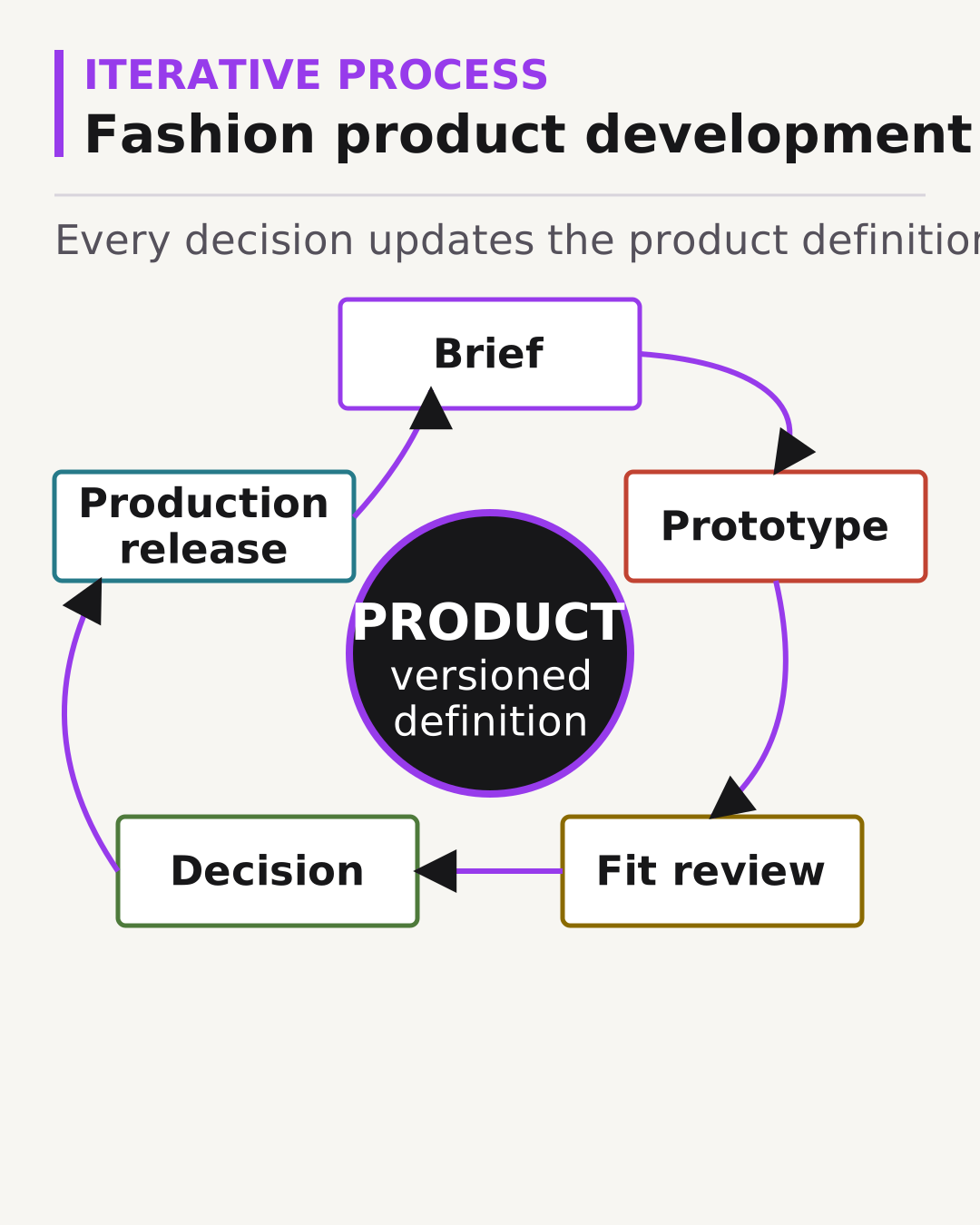
Fashion product development is the process that turns an opportunity or brief into a product specified and approved for manufacturing. It coordinates concept, assortment, materials, patternmaking, samples, fit, cost, quality, compliance and timing through decision cycles rather than an isolated creative sequence.

Fashion product technical specification
A technical specification is the controlled information set that translates an approved fashion product into verifiable sampling and manufacturing requirements. It brings together drawings, materials, measurements, construction, tolerances, identification, labelling, comments and revision history; its content varies by category, company, market and stage.

Fashion PLM: data, product, and lifecycle
Fashion PLM is the structured management of the data, decisions, and workflows that follow a product and a collection from concept through post-launch. It connects tech packs, materials, costs, samples, approvals, suppliers, and versions so that every function works from a traceable product definition.
Governing fashion context
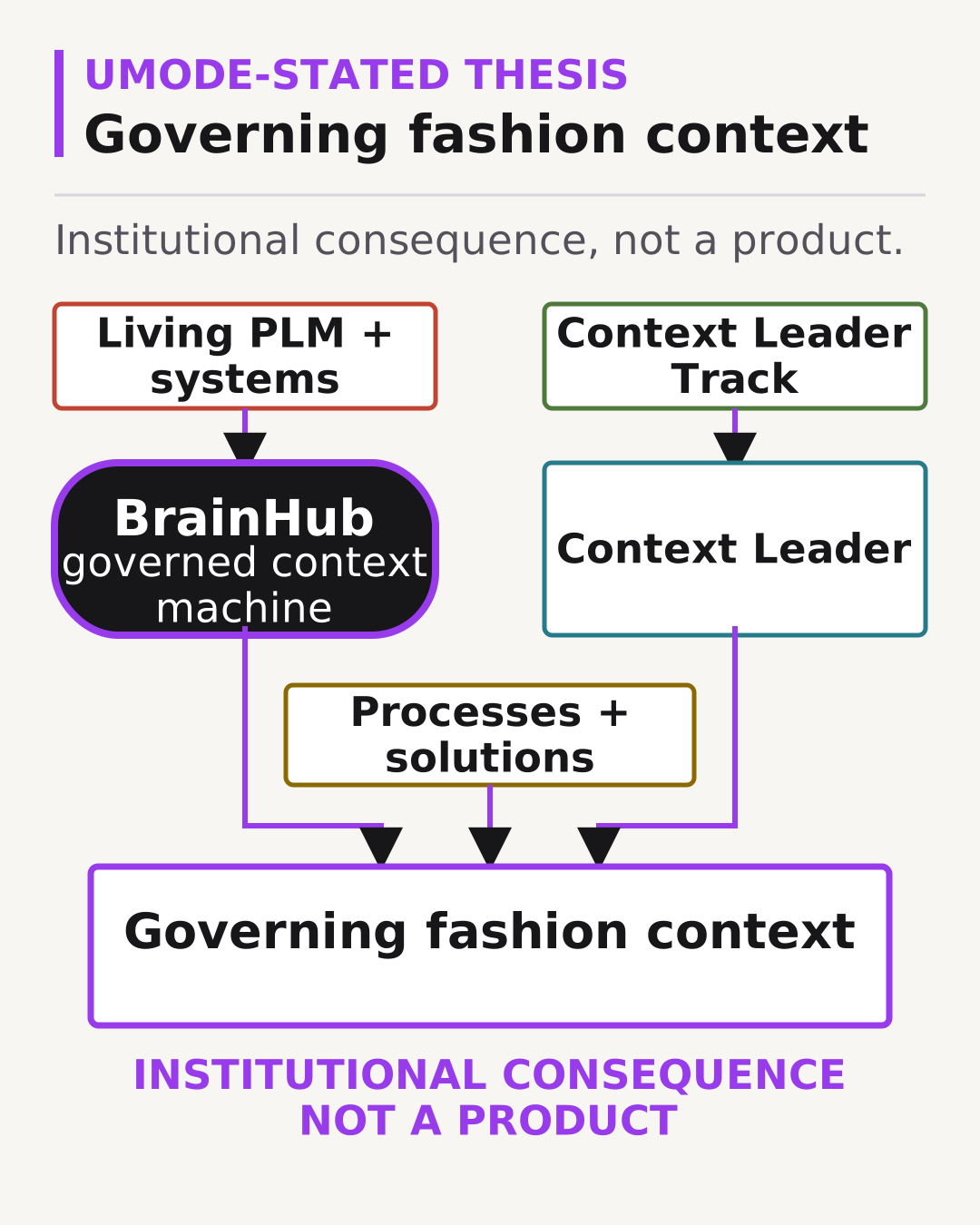
Governing fashion context is uMode's name for a proposed relationship among systems of record, BrainHub, governance, and the Context Leader Track. The expression is not a product, technical standard, or recognized industry category, and no independent validation of its outcomes has been published.
Sources
Want to apply this to your operation?