Modal
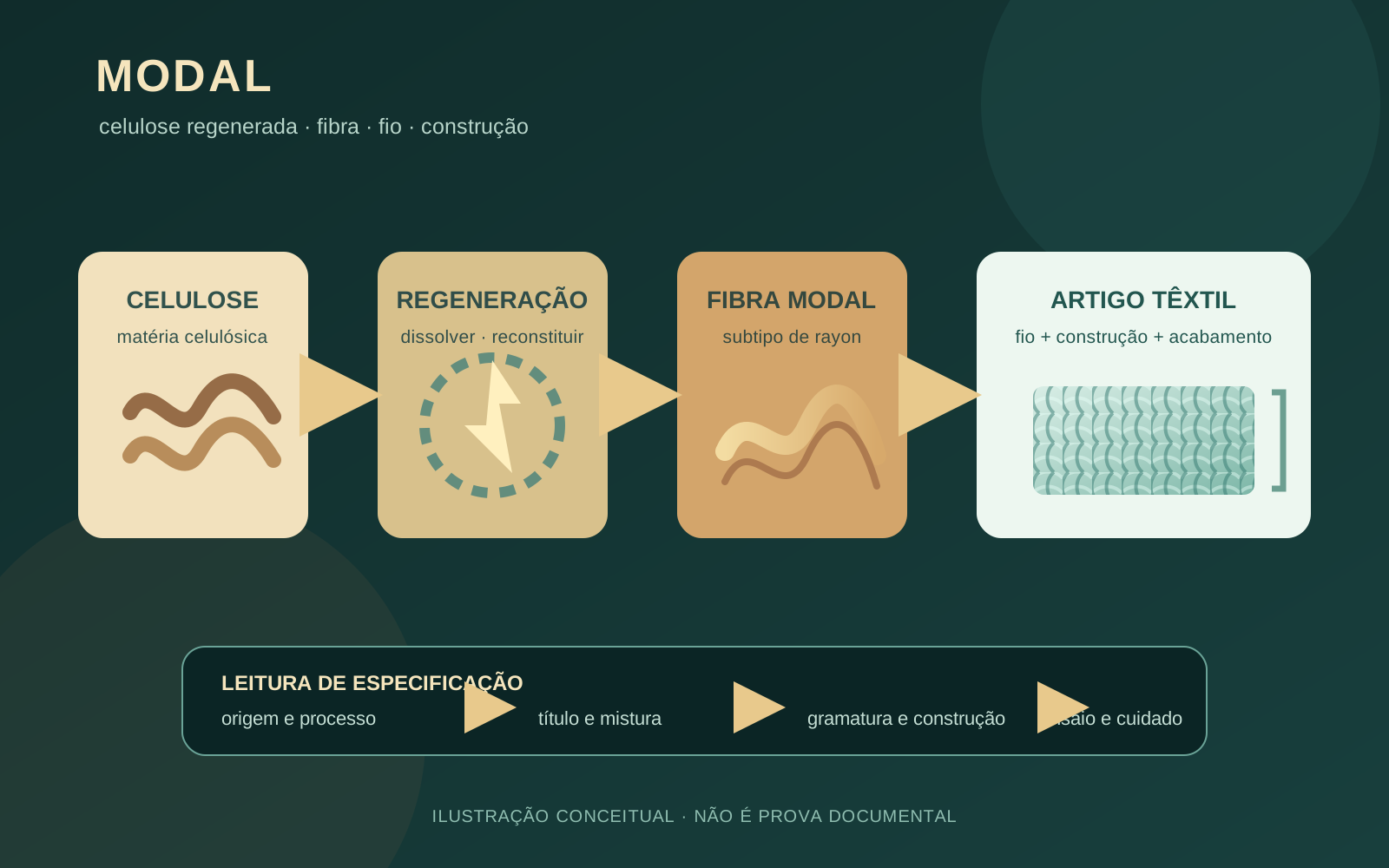
Modal is a manufactured regenerated-cellulose fibre in the rayon group. Its high-wet-modulus and polynosic forms are relevant when a product brief needs more controlled wet behaviour; the final decision still belongs to the specified fibre, yarn, construction and care context.
On this page
What is Modal?
Modal is a regenerated-cellulose textile material described within the broader rayon field. That does not make “modal”, “viscose”, “rayon” and “lyocell” interchangeable labels. The useful fashion distinction starts with the fibre and its process: modal refers to a form of viscose rayon associated with stretching during manufacture, while lyocell has a separate generic description in the cited regulation.
For product development, treat the name as a starting point rather than a complete specification. Record the declared fibre content, fibre form, yarn count, fabric construction and supplier-stated finish. If the purchase is a blend, keep the proportion of cotton or elastane visible in the specification; “modal” alone does not describe the blend.
Naming conventions also matter. The regulation consulted incorporates ISO 2076:2013(E) for generic names of manufactured fibres. When comparing suppliers, use the published fibre description together with the stated composition instead of inferring equivalence from a similar hand feel.
What changes between HWM, polynosic and other modal forms?
The most useful technical distinction concerns wet behaviour. The cited description presents HWM as a modified version of viscose that is stronger when wet and identifies polynosic and HWM forms in the modal section. For knitwear development, that leads to the right sourcing question: which fibre form was specified, and what performance was measured on the finished article?
Polynosic fibres are described as dimensionally stable when wet, with less tendency to shrink or lose shape than many rayons. This wording is not a universal promise for every fabric sold as modal. Construction, blend, dyeing, finishing, pattern shape and laundering can change the observed result; the fabric sample therefore needs assessment as an article, not only as an isolated fibre.
A useful technical sheet separates four layers: fibre identity; yarn parameters; fabric construction and weight; and finish and care. For sleepwear, towels or next-to-skin apparel, add the desired appearance, dimensional recovery and the care routine that the test sample must represent. These are product-decision criteria, not automatic properties of the word modal.
How should modal be specified for a collection?
Modal is used alone or combined with other fibres in clothing and household items. That range explains why a sourcing question should not stop at “is this fabric modal?”. Ask which blend, construction, width and finish will actually be delivered. Connect the answer to the technical specification, product development and quality control workflow.
Care must be treated as a requirement of the received article. The consulted source describes modal as suitable for tumble-drying without damage, but that statement should be read alongside the composition, construction and supplier instructions for the specific sample. Do not turn a general description into an automatic care label for every blend or finish.
Environmental language belongs in a separate evidence lane from fibre identity. In the European context, textile policy seeks to reduce waste and increase textile life cycle and recycling; that makes it relevant to ask about full composition, finish and end-of-life route without assigning an isolated environmental conclusion to the name modal. Document each claim with its scope and supporting evidence.
Common limits and confusions
Modal is not one fabric and is not a guarantee of hand, strength, dimensional stability or environmental impact. It is a fibre designation within the rayon field, used in articles that can differ in yarns, blends, constructions and finishes. Cellulose fibres, viscose and lyocell are useful graph connections, but each entry answers a different question.
Relations across the fashion chain
The decision unit is the specified article: fibre, yarn, construction, finish, care and testing need to stay legible across fashion supplier, technical specification and quality control handoffs. That separation helps a team buy a measurable behaviour rather than a commercial name alone.
Verified facts
- Rayon is a manufactured fiber composed of regenerated cellulose; when cellulose is precipitated from an organic solution without substitution of hydroxyl groups or formation of chemical intermediates, lyocell may be used as a generic description.
Source: law.cornell.edu ↗ - Modal is used for viscose rayon stretched during manufacture, aligning molecules along the fibres; polynosic and high-wet-modulus (HWM) forms are available.
Source: en.wikipedia.org ↗ - High-wet-modulus rayon is a modified version of viscose that is stronger when wet.
Source: en.wikipedia.org ↗ - The cited description associates the polynosic form with dimensional stability in wet conditions.
Source: en.wikipedia.org ↗ - Modal is used alone or with other fibres, often cotton or spandex, in clothing and household items.
Source: en.wikipedia.org ↗ - The US description of manufactured-fibre generic names incorporates ISO 2076:2013(E), which covers generic names for man-made fibres.
Source: law.cornell.edu ↗ - European textile policy includes reducing waste and increasing the life cycle and recycling of textiles.
Source: europarl.europa.eu ↗ - Modal can be tumble-dried without damage, according to the cited description of the material.
Source: en.wikipedia.org ↗
Related entries
Viscose
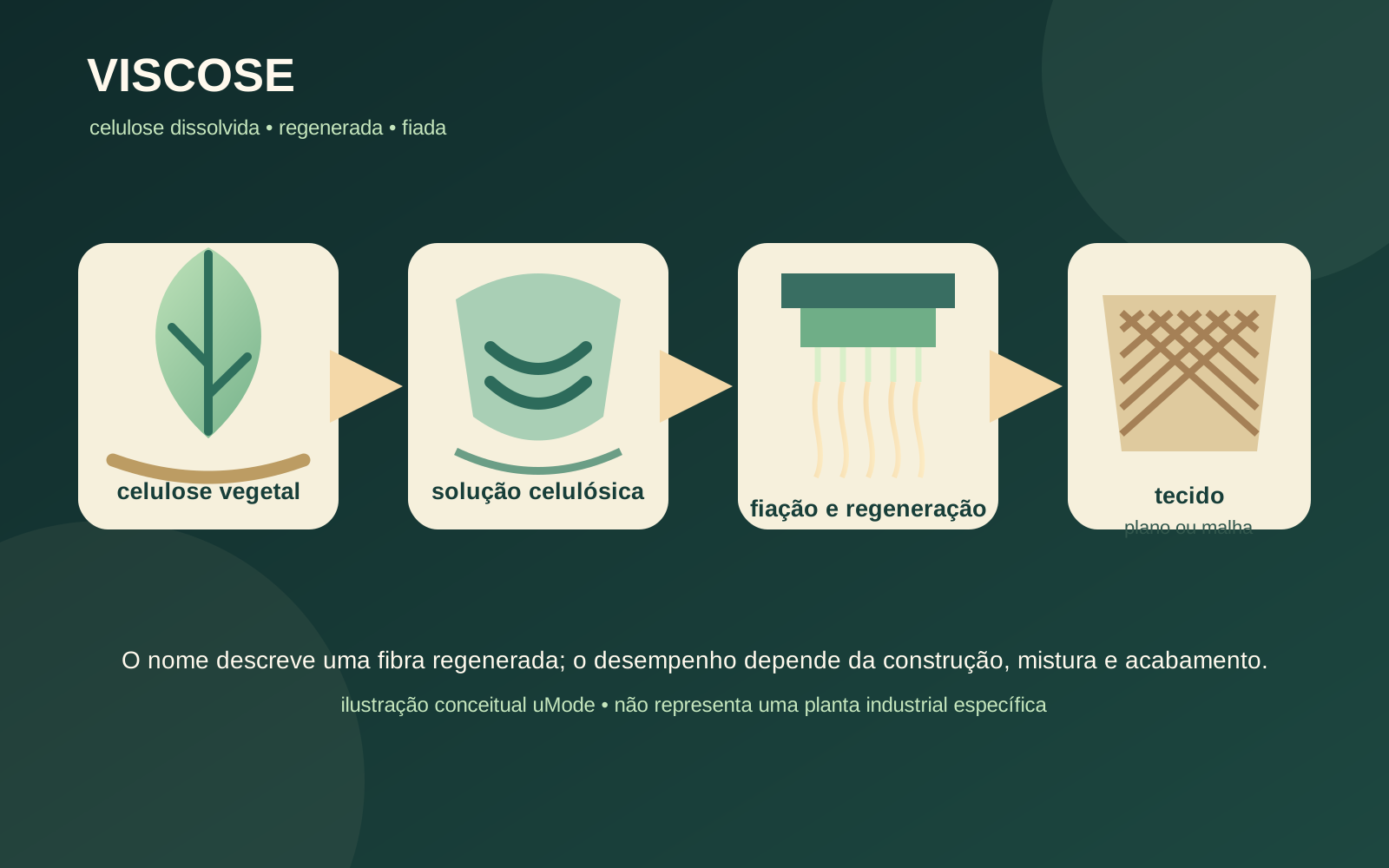
Viscose is a regenerated cellulosic fibre made by the viscose process and used as a textile material in yarns and fabrics. The name identifies the fibre, not one fixed appearance: construction, blends, finishing and wet-state behaviour must be assessed on the finished article.
Lyocell
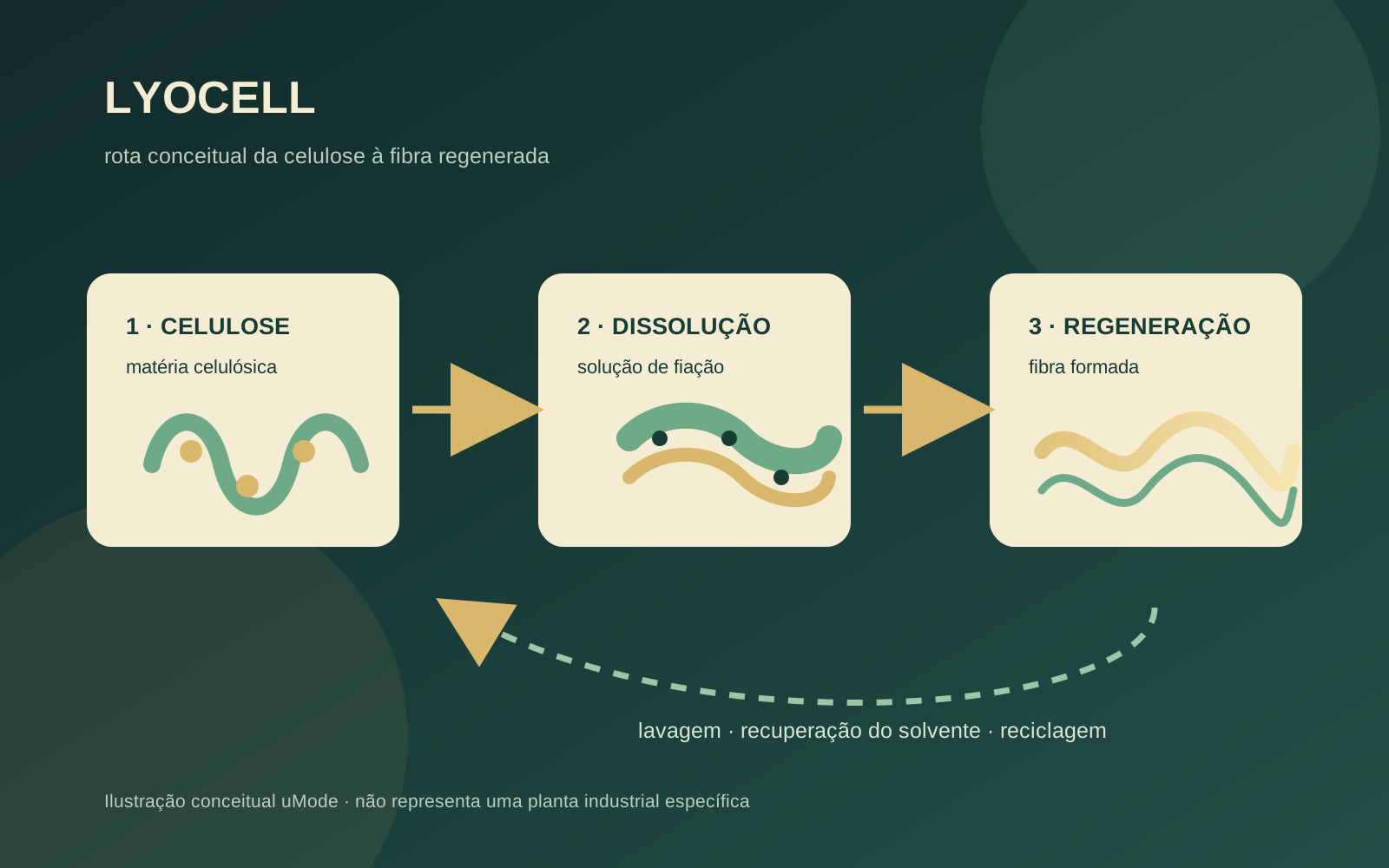
Lyocell is a regenerated cellulose fibre made by dissolving cellulose in an organic solvent and spinning the solution without forming cellulose derivatives. In fashion, it is a fibre input whose performance also depends on yarn, construction, and finishing.
Sources
Want to apply this to your operation?