Polyester
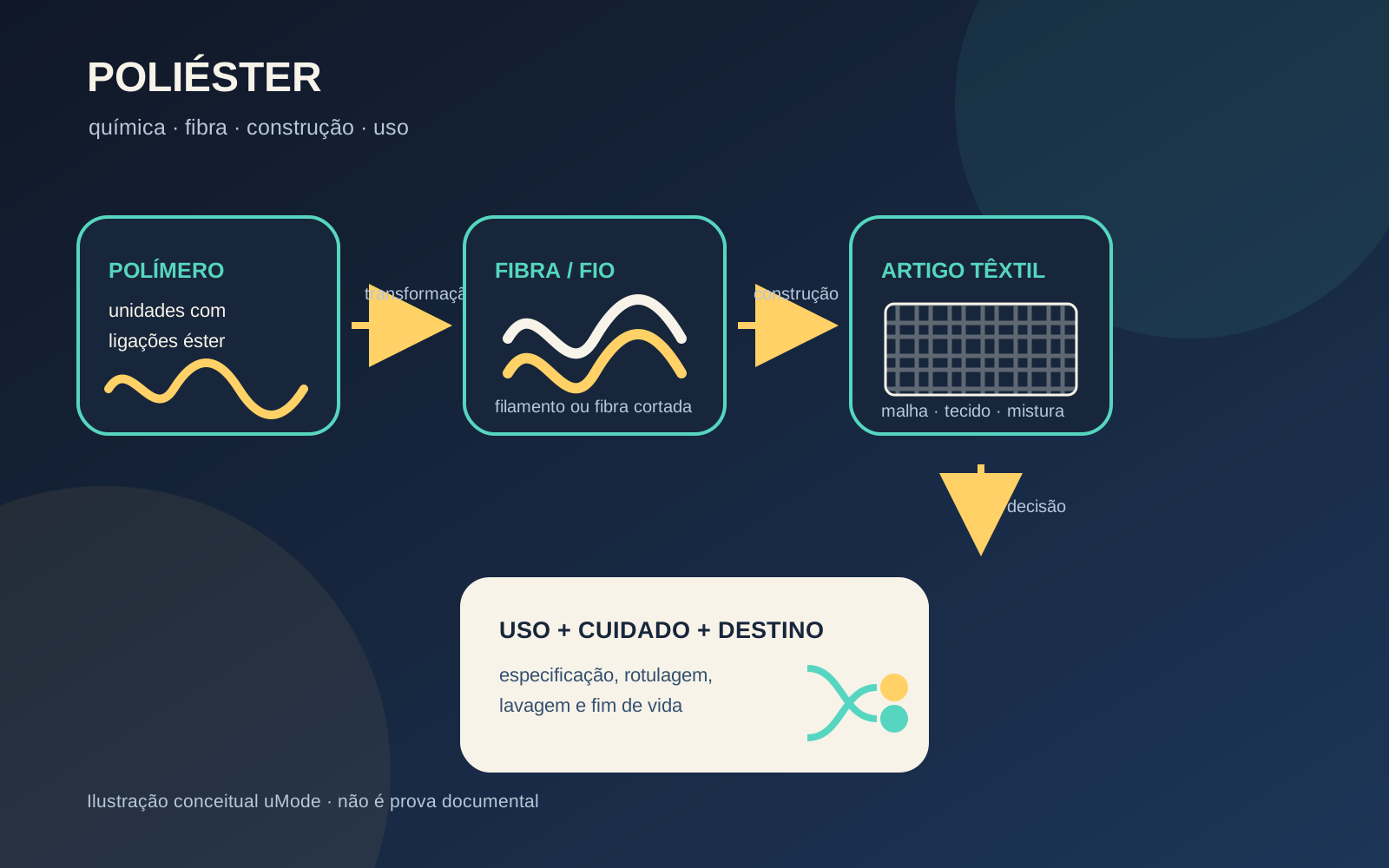
Polyester is a family of polymers with ester linkages; in fashion, the name most often refers to textile fibers and products based on PET. The result still depends on fiber, yarn, construction, and the rules that govern fiber composition and care.
On this page
What is Polyester?
Polyester is a category of polymers containing ester linkages in the main chain. As a specific material, the term most commonly points to polyethylene terephthalate (PET), while the category itself covers more than one textile implementation. In fashion, that puts polyester at the level of a synthetic fiber, before a decision about yarn, fabric, or garment.
The name does not describe a finished article by itself. Synthetic polyester fibers are used extensively in clothing and can be spun with natural fibers to produce cloth with blended properties. Fabrics woven or knitted from polyester thread or yarn are used in apparel and home furnishings. A technical specification should therefore keep fiber, yarn, construction, blend, and finish distinct rather than treating them as synonyms.
How does polyester behave in a textile article?
The most common polyesters are thermoplastics, and thermoplastic polyesters may change shape after heat is applied. Polyester fibers are also described as having high tenacity, low water absorption, and minimal shrinkage in comparison with other industrial fibers. These statements do not create a universal promise for every knit or woven article: the article still needs to be assessed against its construction and intended use.
In product development, the useful question is which requirement will be checked: stability, hand, drape, resistance, appearance, or care. A team can connect the material decision to product development, patternmaking, and quality control, recording the sample, declared composition, acceptance criteria, and result. This is an operating discipline, not a substitute for testing or for identifying the actual article.
What do composition and use require?
The European Commission defines microplastics as small pieces of plastic, usually less than 5 mm, and describes them as persistent, very mobile, and hard to remove from nature. The same policy page addresses intentionally added and unintentional releases. It is therefore too broad to reduce the subject to a word such as “sustainable”: the discussion needs a source, a stage, and a defined scope.
Composition labelling is another part of the decision. Regulation (EU) No 1007/2011 harmonises textile fibre names and indications of fiber composition on labels, markings, and documents; within its scope, fibre-composition labelling is compulsory to provide correct and uniform information to consumers. For a textile materials record, state the relevant jurisdiction and keep the naming consistent with the marketed article.
Polyester, recycled polyester, polyamide, and synthetic fibers are useful relations, not automatic equivalents. The editorial and technical decision should say whether it is discussing the chemical family, the fiber, the yarn, the construction, or the final composition. That boundary prevents a property of one variant, blend, or finish from being assigned to the material name as a whole.
How should the choice be documented?
A useful specification starts with the product requirement and ends with an acceptance criterion. Identify the article, composition, construction, sample, supplier, and intended care; then record what was observed and what still needs verification. The link to technical specification, fabric, and quality control turns “polyester” from a broad label into a traceable fashion decision.
Verified facts
- Polyester is a category of polymers that contain one or two ester linkages in every repeat unit of their main chain.
Source: en.wikipedia.org ↗ - As a specific material, polyester most commonly refers to polyethylene terephthalate (PET).
Source: en.wikipedia.org ↗ - Synthetic polyester fibers are used extensively in clothing.
Source: en.wikipedia.org ↗ - Polyester fibers can be spun together with natural fibers to produce cloth with blended properties.
Source: en.wikipedia.org ↗ - Fabrics woven or knitted from polyester thread or yarn are used in apparel and home furnishings.
Source: en.wikipedia.org ↗ - The most common polyesters are thermoplastics, and thermoplastic polyesters may change shape after the application of heat.
Source: en.wikipedia.org ↗ - Polyester fibers have high tenacity, low water absorption, and minimal shrinkage in comparison with other industrial fibers.
Source: en.wikipedia.org ↗ - Microplastics are small pieces of plastic, usually less than 5 mm, that are persistent, very mobile, and hard to remove from nature.
Source: environment.ec.europa.eu ↗ - The European Commission addresses both intentionally added and unintentional releases of microplastics.
Source: environment.ec.europa.eu ↗ - Regulation (EU) No 1007/2011 harmonises textile fibre names and indications of fibre composition on labels, markings, and documents.
Source: eur-lex.europa.eu ↗ - The European regulation makes fibre-composition labelling compulsory to provide correct and uniform information to consumers.
Source: eur-lex.europa.eu ↗
Related entries
Recycled polyester
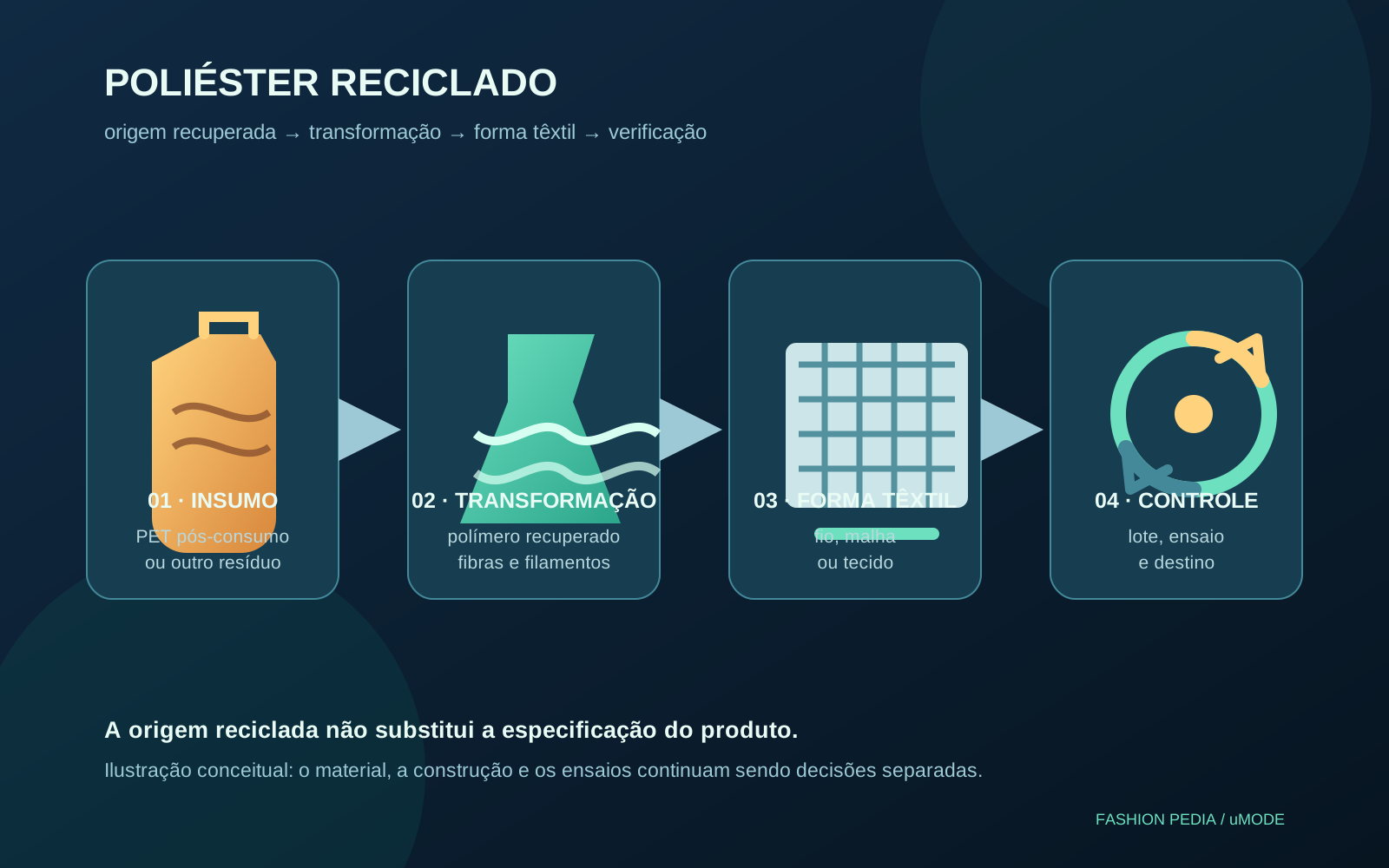
Recycled polyester is a textile material made when recovered polyester, including post-consumer PET in some products, is transformed into fibre or fabric. Recycled origin does not determine performance by itself: a useful specification separates feedstock, construction, lot, testing and the scope of any environmental claim.
Polyamide
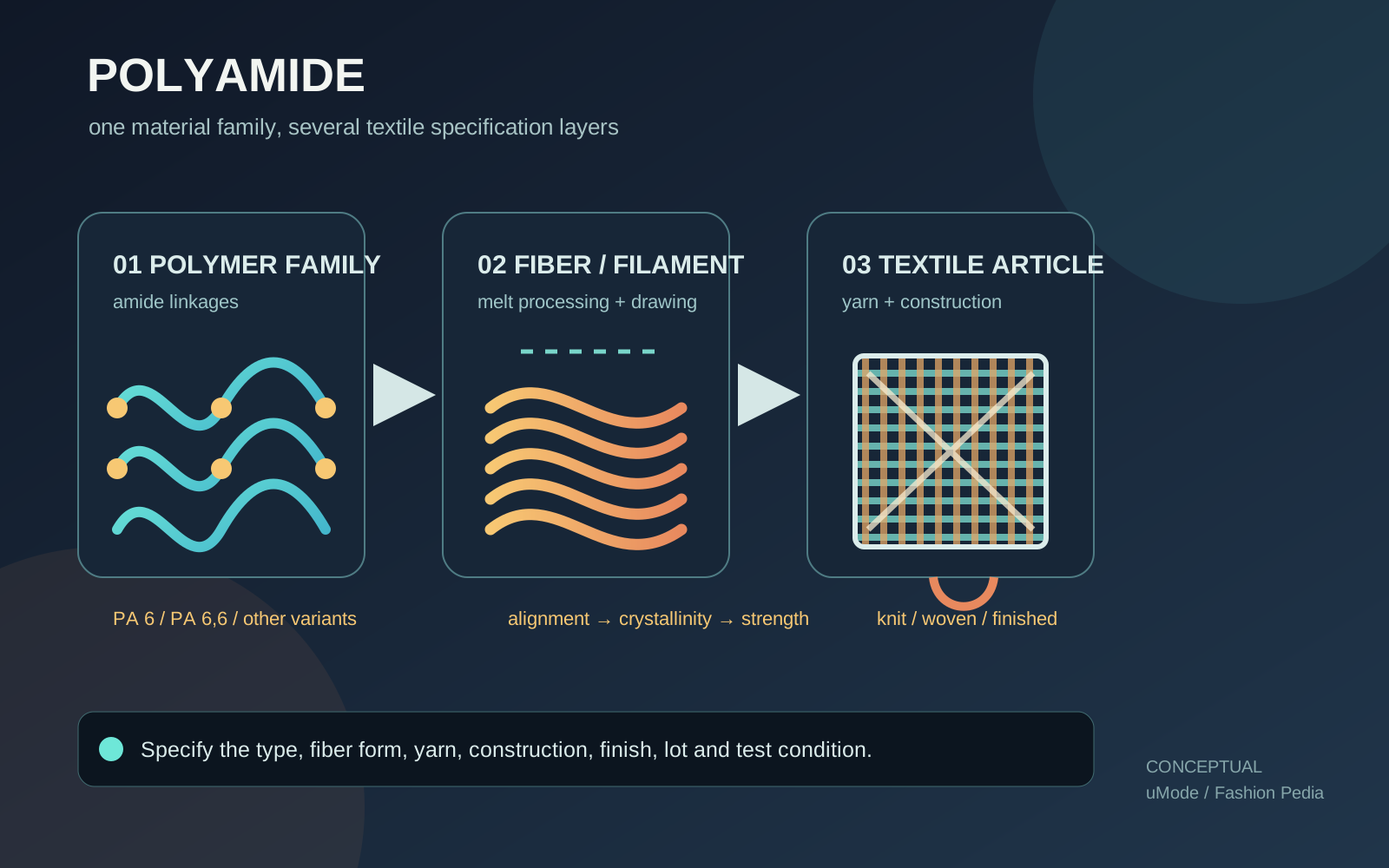
Polyamide is a family of polymers with amide linkages; in textiles, nylon is the familiar name for several synthetic polyamides. A sound specification separates chemical type, fiber or filament, yarn, construction and finish before assigning behavior to the finished article.
Industrial knitting
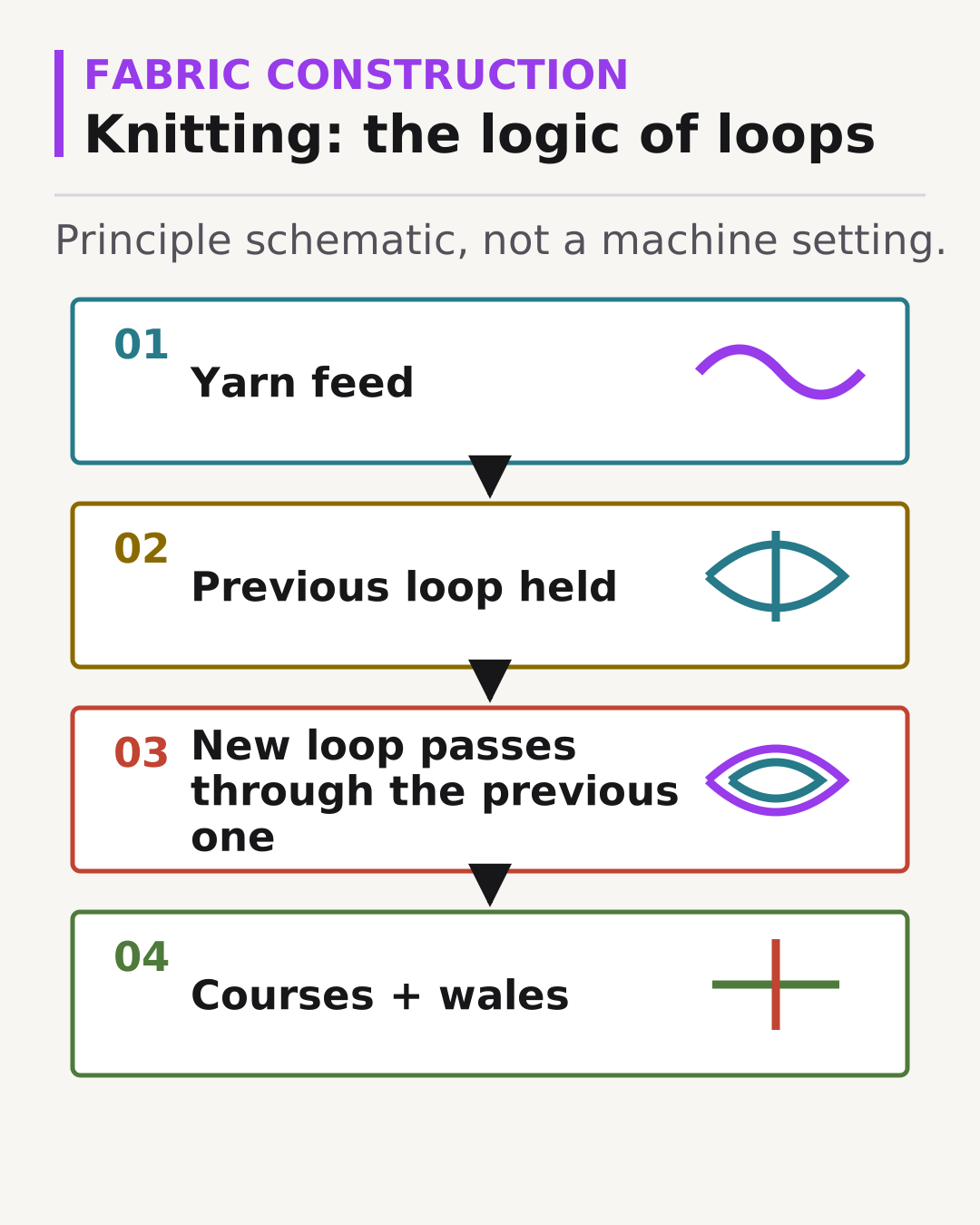
Knitting is the process of forming fabric through series of intermeshed loops. It divides into weft knitting, in which yarn travels across the width and needles form loops in sequence, and warp knitting, in which parallel yarns feed needles that work simultaneously along the fabric length.

Industrial weaving
Weaving is the process of forming fabric by regularly interlacing two yarn systems: warp in the lengthwise direction and weft across the width. The construction results from warp preparation, shed formation, weft insertion and beat-up, and control of yarn delivery and fabric take-up.

Fashion product technical specification
A technical specification is the controlled information set that translates an approved fashion product into verifiable sampling and manufacturing requirements. It brings together drawings, materials, measurements, construction, tolerances, identification, labelling, comments and revision history; its content varies by category, company, market and stage.
Sources
Want to apply this to your operation?