Polyamide
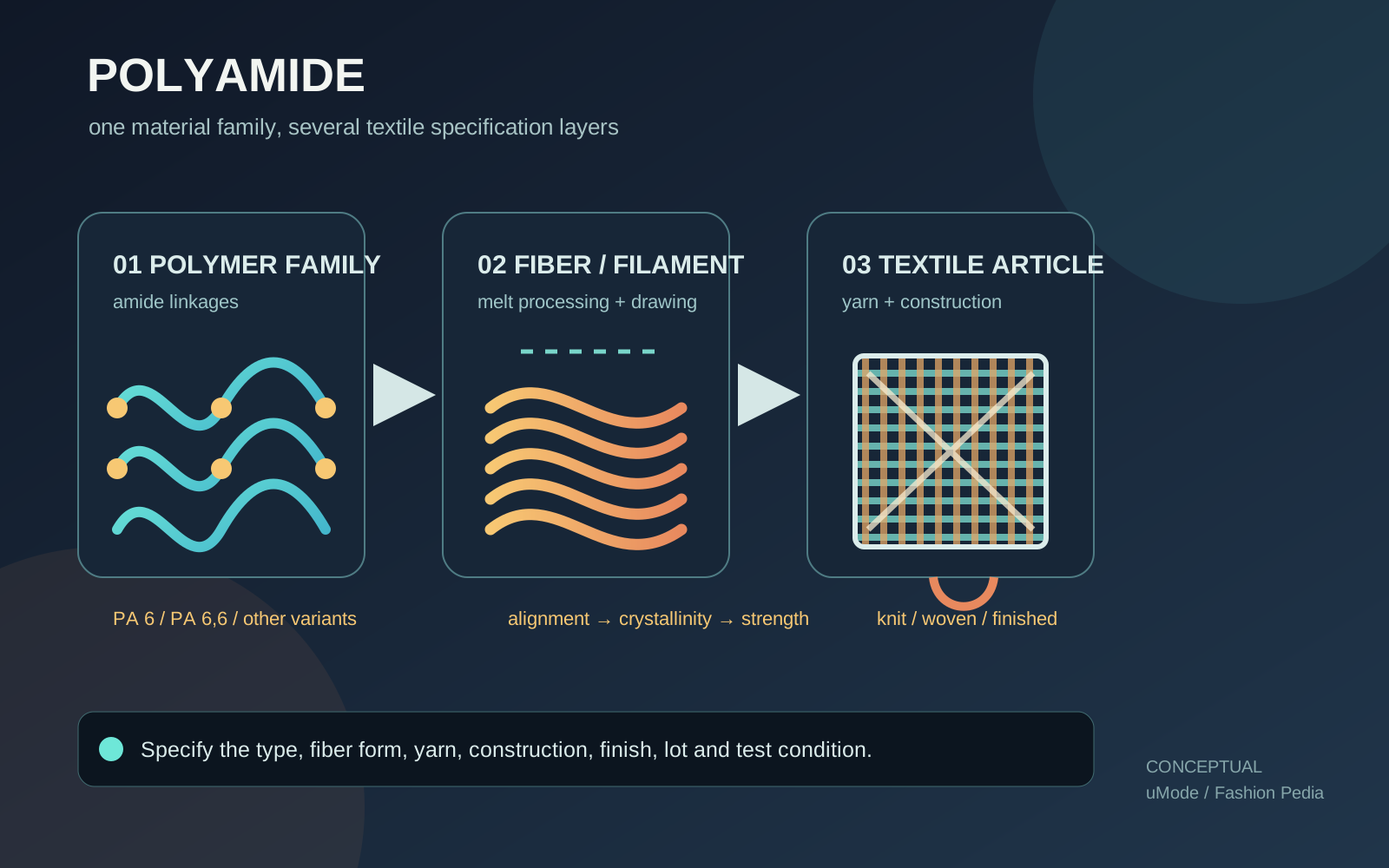
Polyamide is a family of polymers with amide linkages; in textiles, nylon is the familiar name for several synthetic polyamides. A sound specification separates chemical type, fiber or filament, yarn, construction and finish before assigning behavior to the finished article.
On this page
What is Polyamide?
Polyamide is a family of synthetic polymers characterized by amide linkages connecting aliphatic or semi-aromatic groups. In fashion, the name often appears beside synthetic fibers and the word nylon, but the chemical family is not a finished fabric. The first line of a useful technical sheet should identify whether it describes the polymer, the fiber, the filament, the yarn, or the article.
Nylons are thermoplastics that can be melt-processed into fibers, films, and diverse shapes. That is why one family can enter the fashion supply chain as continuous filament, staple fiber, or another form without those forms being interchangeable. The nylon-XY nomenclature identifies a family derived from a diamine and a dicarboxylic acid whose chains contain X and Y carbon atoms, respectively. This code says more than using “nylon” alone in a specification.
How do nylon 6 and nylon 6,6 differ?
Nylon 6 is formed from ε-caprolactam by ring-opening polymerization; nylon 6,6 is a condensation polymer formed from equal parts of a diamine and a dicarboxylic acid. The melting point of nylon 6 is 220 °C, while the melting point of nylon 6,6 is 265 °C. The distinction is therefore not a spelling variation: it identifies different chemical routes and thermal parameters.
The structure still has to be read at the fiber level. In polyamides, amorphous regions contribute elasticity and crystalline regions contribute strength and stiffness. When extruded and then cold-drawn, nylon fibers increase chain alignment, crystallinity, and tensile strength. For product development, this is a reason not to assign a measurement from one variant to every polyamide textile fiber.
Nylons are hygroscopic: they absorb or desorb moisture according to ambient humidity, and water changes some material properties. That makes universal claims about comfort, drying, or stability unreliable. When comparing samples, record the polyamide type, fiber form, yarn, knit or woven construction, finish, and test condition.
How does polyamide enter the textile chain?
Nylon 6 and nylon 6,6 fibers are used in carpet manufacture, while the same material vocabulary can also appear in apparel, accessories, and technical articles. End use is not determined by the name alone: connect the selection to product development, the specific article, and an acceptance criterion. “Polyamide” in purchasing is a starting point; composition, yarn count, construction, finish, and lot complete the article identity.
Certification is a separate layer. OEKO-TEX STANDARD 100 is a label for textiles tested for harmful substances, from yarn to finished product. It is not an intrinsic property of polyamide and does not, by itself, prove mechanical performance, renewable origin, or environmental impact. The indication of textile fiber composition should be compulsory to ensure that correct and uniform information is made available to consumers in the European Union; the relevant jurisdiction and rule belong in the commercial record.
For a traceable decision, keep yarn, fabric, finishing, and quality control distinct from the base material. A sample can show appearance and hand, but the specification should retain chemical type, article, supplier, lot, comparison method, and what has not yet been tested. In that form, “polyamide” names one level of the textile chain instead of acting as a shortcut for every property of the finished product.
Verified facts
- Polyamide is a family of synthetic polymers characterized by amide linkages connecting aliphatic or semi-aromatic groups.
Source: en.wikipedia.org ↗ - Nylons are thermoplastics that can be melt-processed into fibers, films, and diverse shapes.
Source: en.wikipedia.org ↗ - The nylon-XY nomenclature identifies a family derived from a diamine and a dicarboxylic acid whose chains contain X and Y carbon atoms, respectively.
Source: en.wikipedia.org ↗ - Nylon 6 is formed from ε-caprolactam by ring-opening polymerization.
Source: en.wikipedia.org ↗ - Nylon 6,6 is a condensation polymer formed from equal parts of a diamine and a dicarboxylic acid.
Source: en.wikipedia.org ↗ - The melting point of nylon 6 is 220 °C, while the melting point of nylon 6,6 is 265 °C.
Source: en.wikipedia.org ↗ - In polyamides, amorphous regions contribute elasticity and crystalline regions contribute strength and stiffness.
Source: en.wikipedia.org ↗ - When extruded and then cold-drawn, nylon fibers increase chain alignment, crystallinity, and tensile strength.
Source: en.wikipedia.org ↗ - Nylons are hygroscopic: they absorb or desorb moisture according to ambient humidity, and water changes some material properties.
Source: en.wikipedia.org ↗ - Nylon 6 and nylon 6,6 fibers are used in carpet manufacture.
Source: en.wikipedia.org ↗ - OEKO-TEX STANDARD 100 is a label for textiles tested for harmful substances, from yarn to finished product.
Source: oeko-tex.com ↗ - The indication of textile fiber composition should be compulsory to ensure that correct and uniform information is made available to consumers in the European Union.
Source: eur-lex.europa.eu ↗
Related entries
Industrial knitting
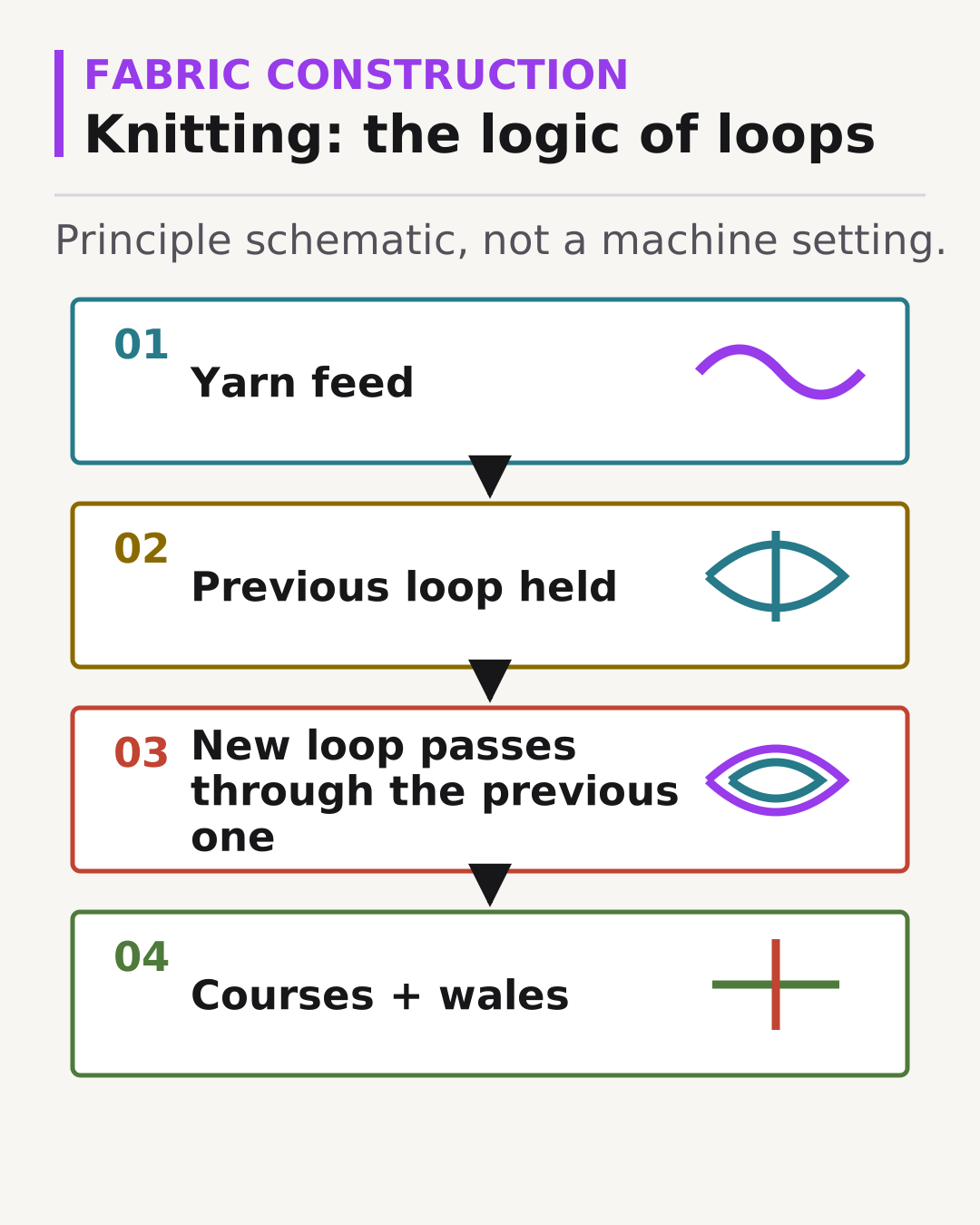
Knitting is the process of forming fabric through series of intermeshed loops. It divides into weft knitting, in which yarn travels across the width and needles form loops in sequence, and warp knitting, in which parallel yarns feed needles that work simultaneously along the fabric length.

Industrial weaving
Weaving is the process of forming fabric by regularly interlacing two yarn systems: warp in the lengthwise direction and weft across the width. The construction results from warp preparation, shed formation, weft insertion and beat-up, and control of yarn delivery and fabric take-up.

Fashion product technical specification
A technical specification is the controlled information set that translates an approved fashion product into verifiable sampling and manufacturing requirements. It brings together drawings, materials, measurements, construction, tolerances, identification, labelling, comments and revision history; its content varies by category, company, market and stage.
Sources
Want to apply this to your operation?