Lace
Lace is an ornamental openwork textile made by hand or machine, in which threads form motifs and open spaces without necessarily depending on a pre-existing fabric. Its construction is read through technique, thread and pattern, so the name alone does not establish composition, origin or use.

On this page
What is Lace?
Lace is an ornamental openwork textile made by hand or machine, in which threads form motifs and open spaces without necessarily depending on a pre-existing fabric. The term can cover different constructions: techniques are classified by how the design is formed, and lace can embellish clothing or household linens. A technical sheet should therefore pair the name with construction, composition and finish.
Its history does not point to one place of origin. The Lace Guild records that lace developed from several techniques and that the second half of the sixteenth century saw its rapid development as openwork made with a needle and single thread or with multiple threads. The same source identifies Venice as a centre for circulating lace knowledge and publishing pattern books. These facts explain why historical names, techniques and production centres appear together without making every article equivalent.
How is lace constructed?
Needle lace builds the surface with a needle, thread and hundreds of small stitches; guiding threads may first be secured to a temporary support. Bobbin lace works lengths of thread wound on bobbins, holding the interlacing with pins in a lace pillow. These routes separate technique from fibre: the same commercial label may conceal different decisions about thread, motif scale, density and support. Spinning describes the thread; weaving is a neighbouring technique, not a synonym for lace.
Bobbin lace evolved from braids and trimmings worked in sixteenth-century Italy. In the history of needle lace, cutwork and drawn-thread work contributed to openwork development; later, foundation threads attached to a temporary support allowed designs to move beyond the geometry imposed by woven cloth. The result is a family of structures rather than a single recipe.
Mechanisation adds another distinction. The Lace Guild dates the first machine lace to the end of the eighteenth century and describes a profound change in handmade production. Industrial manufacture does not erase hand technique, but it changes how a product’s origin, method and finish expectations should be recorded. In a technical sheet, state whether the article is handmade, machine-made, or combines a base with an applied element.
How should lace be selected for fashion?
Selection starts with the relationship between motif, open area, thread and construction, not with a generic promise attached to the word lace. Record the declared composition, width, elasticity where relevant, transparency, pattern direction, presence of a ground or lining, and finish. Then observe the sample in the product: patternmaking and fitting help check scale, joins, tension and the reading of the motif.
The material may serve as an ornamental application, a layer over another material, or an open-pattern surface. The final use needs to suit the stress on the area, skin contact, cutting and sewing method, and expected care. These are specification guidelines rather than universal properties of lace and must be checked against the actual article.
The Textile Museum of Canada describes bobbin lace as a handcraft that lost attention when industrialisation offered more efficient ways to create lace, but later regained interest and appreciation as a handcraft. That observation helps separate the social history of a technique from a current purchasing decision. Finishing and quality control come afterward to document changes in appearance, stability and finish observed in the sample.
Limits and common confusions
Lace is not synonymous with a fibre, tulle, embroidery, or openwork made on a pre-existing ground. Classification depends on how the article was constructed; composition depends on the threads or fibres used; and application depends on the product. When a design is applied to net or another ground, describe the layers instead of reducing the object to a commercial name.
It is also unsafe to infer origin, durability, comfort or care requirements from appearance alone. Historical evidence records cotton, linen, silk, gold, silver and synthetic fibres in lace articles; that variety is a reason to identify the specific version. An identified sample and a supplier record keep technique, material and finish distinct.
Quality control can compare the received article with the criteria defined for the product, while fitting shows behaviour in the garment context. They answer different questions. Documentation should preserve that distinction so that an attractive motif is not treated as proof of technical suitability.
Relations to other entries
Lace connects to technical sheets, spinning, weaving, finishing, patternmaking, quality control and fitting. These are navigation links across material, construction, application and verification; they do not mean that the concepts are equivalent.
Verified facts
- Lace is an ornamental openwork textile with designs formed by open spaces, made by hand or machine.
Source: en.wikipedia.org ↗ - Lace can be made with different techniques, and each technique forms its own category.
Source: en.wikipedia.org ↗ - Lace can be used as an embellishment for clothing and household linens.
Source: en.wikipedia.org ↗ - Early examples of lace are from sixteenth-century Italy, although the material’s origin is uncertain.
Source: en.wikipedia.org ↗ - Lace may use cotton, linen, silk, gold, silver or synthetic-fibre threads, depending on the article.
Source: en.wikipedia.org ↗ - Needle lace uses a needle and thread to build hundreds of small stitches that form the lace itself.
Source: en.wikipedia.org ↗ - Bobbin lace braids and twists lengths of thread wound on bobbins, with pins set in a lace pillow.
Source: en.wikipedia.org ↗ - Bobbin lace is one of the two major categories of handmade lace; the other is needle lace.
Source: en.wikipedia.org ↗ - Bobbin lace evolved from braids and trimmings worked in sixteenth-century Italy.
Source: en.wikipedia.org ↗ - Lace developed from several techniques, so its origin cannot be assigned to one place.
Source: laceguild.org ↗ - In the second half of the sixteenth century, lace developed as openwork made with a needle and single thread or multiple threads.
Source: laceguild.org ↗ - In the sixteenth century, Venice acted as a centre for circulating lace knowledge and publishing pattern books.
Source: laceguild.org ↗ - The first machine lace appeared at the end of the eighteenth century, and mechanisation profoundly changed handmade production.
Source: laceguild.org ↗ - The Textile Museum of Canada describes bobbin lace as a handcraft that lost attention with industrialisation and later regained interest.
Source: textilemuseum.ca ↗
Related entries

Fashion product technical specification
A technical specification is the controlled information set that translates an approved fashion product into verifiable sampling and manufacturing requirements. It brings together drawings, materials, measurements, construction, tolerances, identification, labelling, comments and revision history; its content varies by category, company, market and stage.

Industrial weaving
Weaving is the process of forming fabric by regularly interlacing two yarn systems: warp in the lengthwise direction and weft across the width. The construction results from warp preparation, shed formation, weft insertion and beat-up, and control of yarn delivery and fabric take-up.
Garment patternmaking
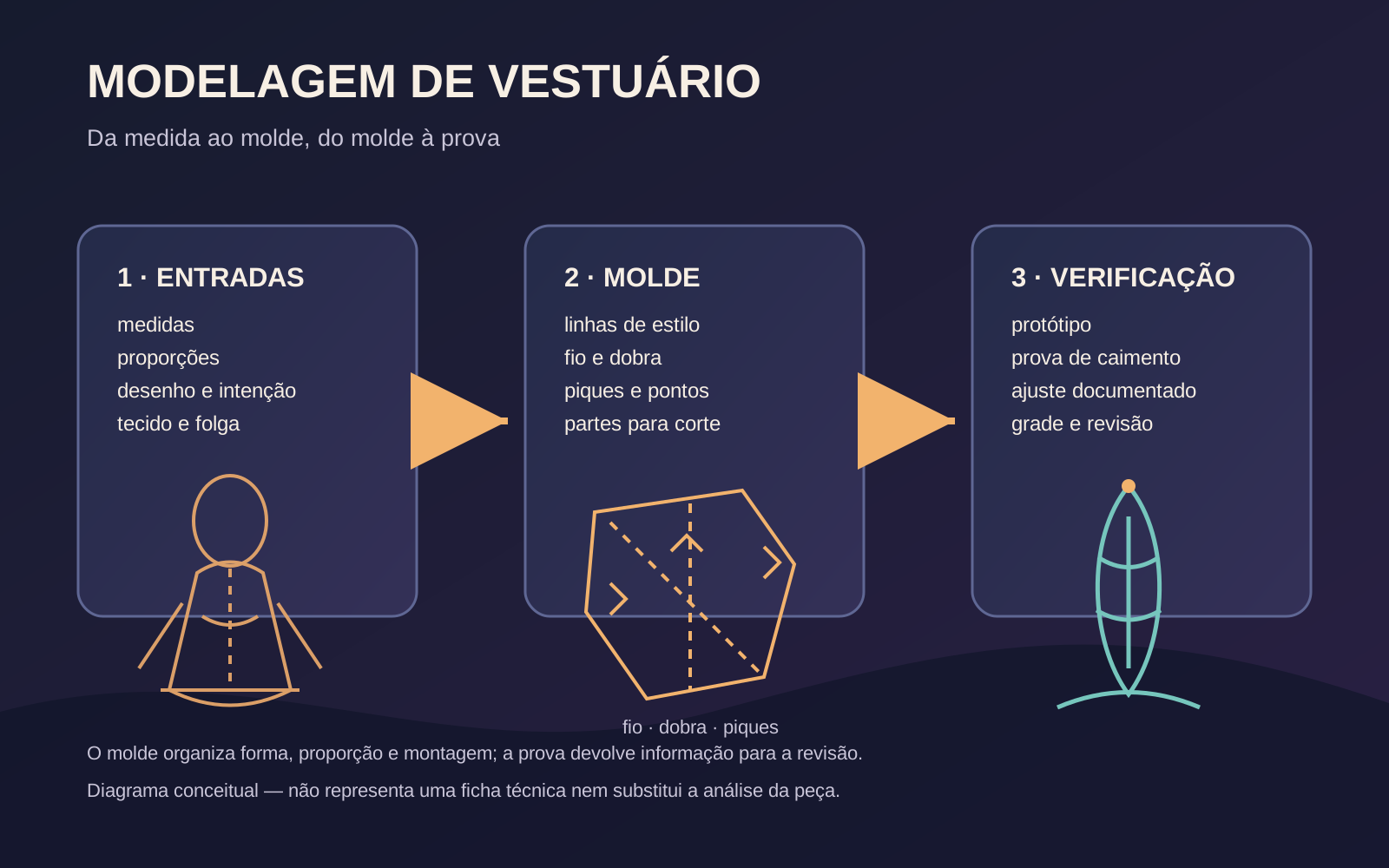
Garment patternmaking is the technique of turning measurements, proportions, and design intent into patterns used to cut and assemble a garment. It connects a block, flat pattern construction or draping with fabric information, production markings, fitting, alterations, and grading; the result is a testable development basis, not an automatic guarantee of fit.

Apparel quality control
Apparel quality control combines specifications, inspection, and testing to check whether fabrics, trims, and garments meet the expected performance for a product and end use. The process can examine color, drape, hand, durability, conformance, defects, fit, seam integrity, shrinkage, and drying performance. Quality decisions depend on the product and its intended use.
Garment fitting
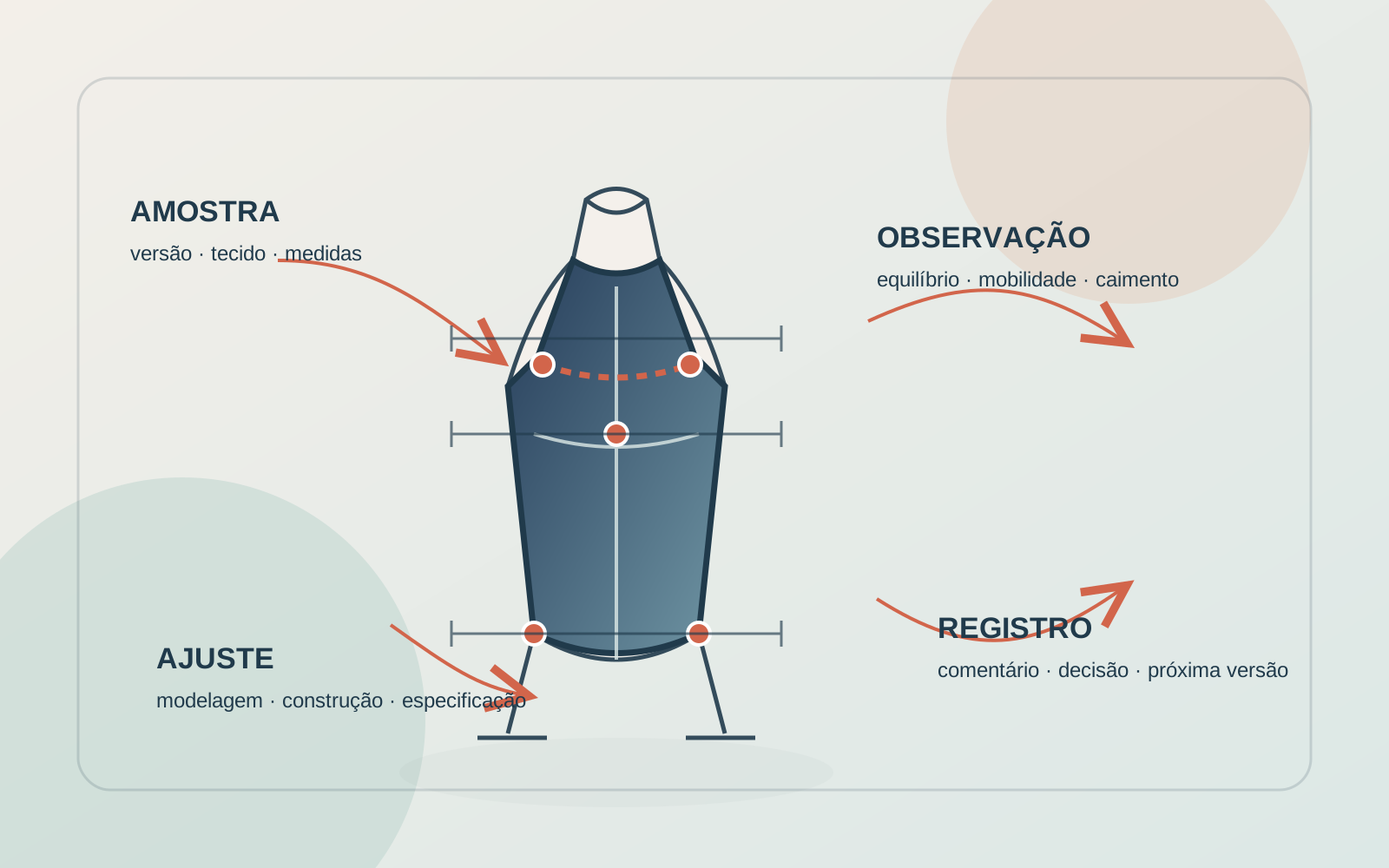
Garment fitting is the process of comparing a dressed sample with a style's design, specifications, and intent. The team observes fit, balance, movement, and construction, records decisions, and sends changes into the next version.
Sources
Want to apply this to your operation?