Gabardine
Gabardine is a twill fabric with a firm, compact construction and subtle diagonal lines on the surface. Its specification should separate construction, fibre content, finish, application and care: the name identifies a family of articles, but it does not replace the fabric sample or its documentation.
On this page
What is Gabardine?
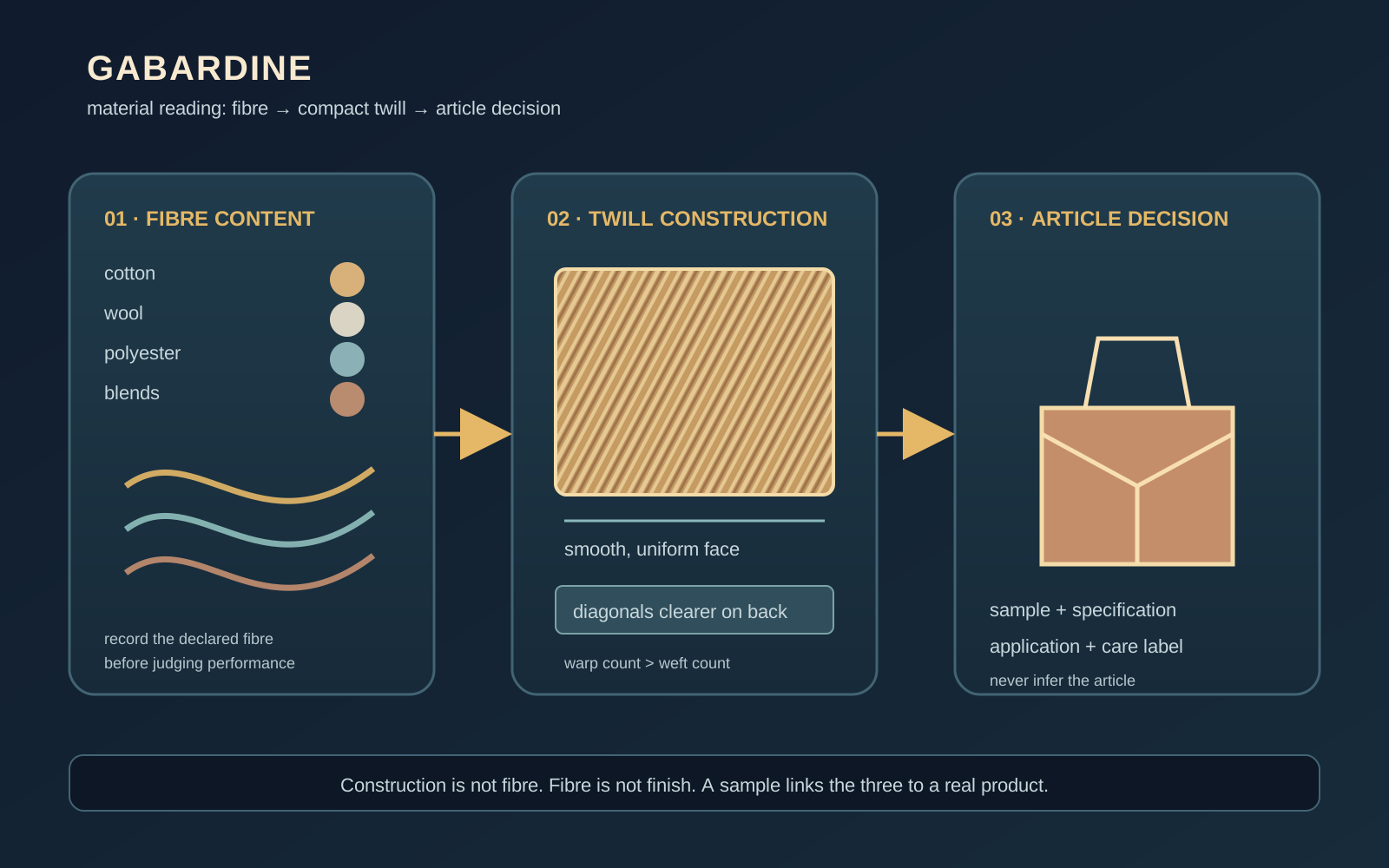
Gabardine is a twill fabric with a firm, compact construction and subtle diagonal lines on its surface. That answers the core question, but it does not complete a specification: fibre content, observed construction and finish must be recorded separately. The commercial name should not be used as a shortcut for promising drape, durability, comfort or easy care.
Start by reading the face and back. The consulted description reports a significantly higher number of warp yarns than weft yarns; that relationship contributes to a smooth, uniform face while the diagonals appear more clearly on the back. When a sample arrives, record direction, appearance under different light and perceived firmness before comparing articles.
Fibre is another layer. Gabardine can be produced from cotton, wool, polyester and blends, and fibre content influences behaviour, hand and intended purpose. Therefore, fibre content is not the same thing as construction. A useful technical sheet identifies declared fibres, the received article and the document accompanying the lot, without turning one variant into a general rule.
How should construction and fibre content be specified?
Specifying gabardine means turning design intent into fields that can be checked against the sample and the product. Relate construction, fibre content, weight, width, colour, finish, stretch, transparency, dimensional stability and cutting direction only when those fields matter to the garment. The technical sheet should distinguish what was observed from what depends on a test, tolerance or supplier confirmation.
The sample should also identify face and back, article code, supplier, colour and lot. Compare the surface under similar light and handling conditions, then record approval, pending status or deviation. Weaving explains the organisation of the structure, while spinning helps locate information about the yarn. Finishing is reserved for later interventions and should not be confused with the twill itself.
This separation prevents a common error: assigning to all gabardine a characteristic that belongs only to one fibre or finish. If the article is wool gabardine, wool information must remain conditional. Woolmark describes qualities of Merino wool garments, but that does not authorise transferring them to cotton, polyester or blended articles. The acceptance criterion must follow the variant that will actually be purchased.
Where is gabardine used, and how should care be handled?
Gabardine is used in tailored trousers, corporate uniforms, blazers and overcoats. These are use references, not automatic approval for every pattern. Before cutting, compare the sample's hand and structure with the silhouette, lining, sewing method, skin contact and expected strain in the article. Product development and fitting help observe the choice in the real product.
Care information must follow the actual article and its label. GINETEX describes the care label as an element that guides consumers; therefore, do not replace the supplied instruction with a generic rule based only on the name gabardine. When fibre content or finish changes, review the instruction and reference sample. Care symbols and quality control are verification tools, not universal guarantees.
For fashion teams, the value of this entry lies in keeping the layers legible: fibre, construction, finish, application and care. A documented decision can answer which gabardine was approved, for which article and under which conditions. That discipline reduces confusion between appearance and performance without turning one fabric into a formula for every product.
Connections in the graph
Fashion Pedia · technical sheet · weaving · quality control
Verified facts
- Gabardine construction combines a twill weave, a firm compact structure and discreet diagonal lines on the surface.
Source: texteis.com.br ↗ - In gabardine, the number of warp yarns is significantly greater than the number of weft yarns, creating a smooth, uniform face and more visible diagonals on the back.
Source: texteis.com.br ↗ - Gabardine can be produced from different fibres, including cotton, wool, polyester and blends.
Source: texteis.com.br ↗ - Fibre content influences gabardine's behaviour, hand and intended purpose.
Source: texteis.com.br ↗ - Gabardine is used in tailored trousers, corporate uniforms, blazers and overcoats.
Source: texteis.com.br ↗ - A care label is an important element for guiding consumers on how to care for their clothes.
Source: ginetex.net ↗ - Merino wool garments are naturally odour resistant and therefore require less washing than other fibres.
Source: woolmark.com ↗
Related entries

Fashion product technical specification
A technical specification is the controlled information set that translates an approved fashion product into verifiable sampling and manufacturing requirements. It brings together drawings, materials, measurements, construction, tolerances, identification, labelling, comments and revision history; its content varies by category, company, market and stage.

Industrial weaving
Weaving is the process of forming fabric by regularly interlacing two yarn systems: warp in the lengthwise direction and weft across the width. The construction results from warp preparation, shed formation, weft insertion and beat-up, and control of yarn delivery and fabric take-up.

Apparel quality control
Apparel quality control combines specifications, inspection, and testing to check whether fabrics, trims, and garments meet the expected performance for a product and end use. The process can examine color, drape, hand, durability, conformance, defects, fit, seam integrity, shrinkage, and drying performance. Quality decisions depend on the product and its intended use.
Garment fitting
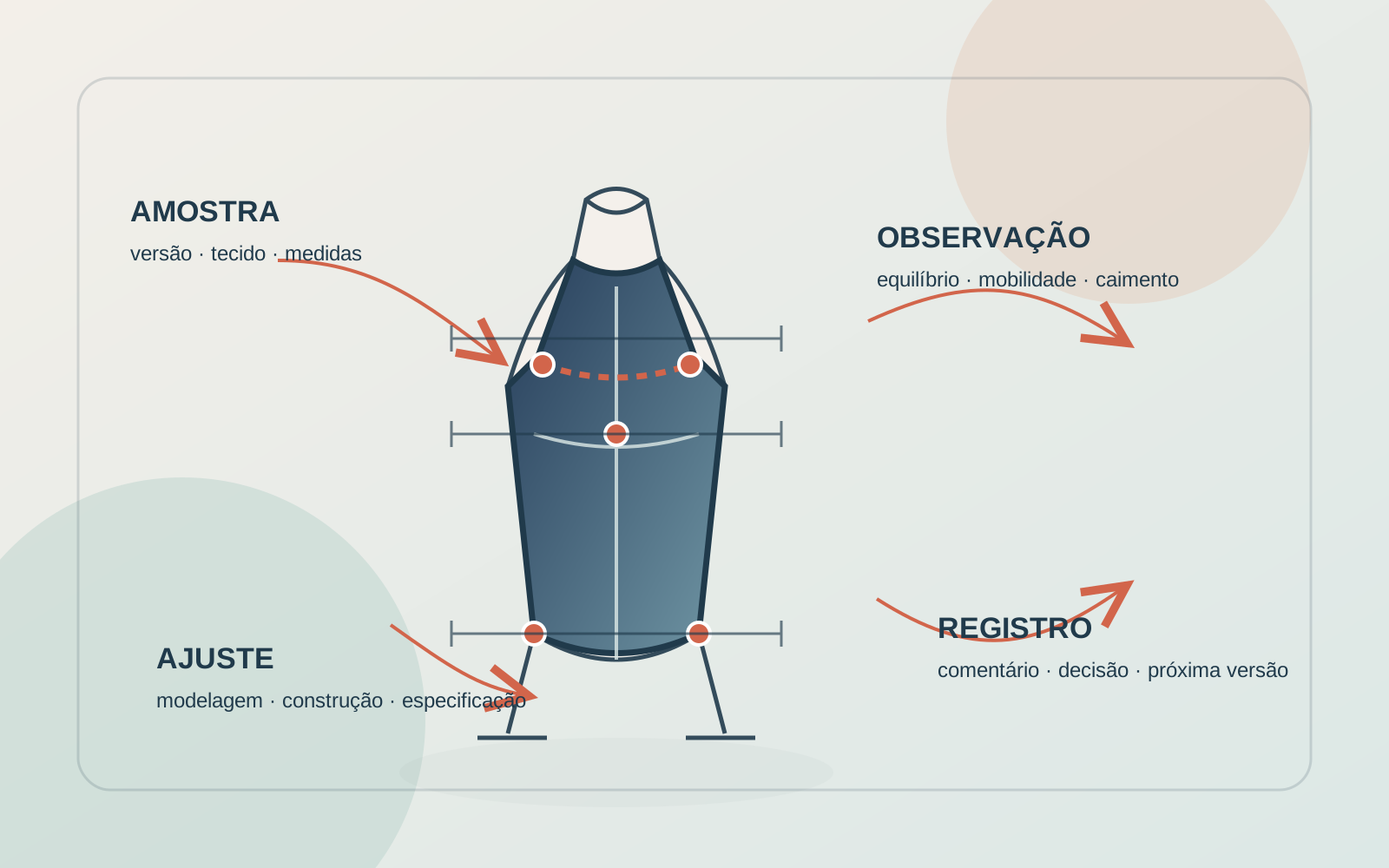
Garment fitting is the process of comparing a dressed sample with a style's design, specifications, and intent. The team observes fit, balance, movement, and construction, records decisions, and sends changes into the next version.
Sources
Want to apply this to your operation?