Jacquard
Jacquard refers to a weaving mechanism and, by extension, to fabrics or constructions in which controlled warp selection helps form a design. Joseph-Marie Jacquard patented the invention in 1804; in apparel development, a Jacquard specification must separate construction, fiber content, motif scale, and observed behavior.
On this page
What is Jacquard?
Jacquard names a weaving mechanism and, by extension, fabrics or constructions in which controlled warp selection helps form a design. The machine is fitted to a loom to simplify complex patterns, while “Jacquard” does not identify one specific loom: it identifies the control mechanism added to the system. That distinction is the starting point for a usable material specification.
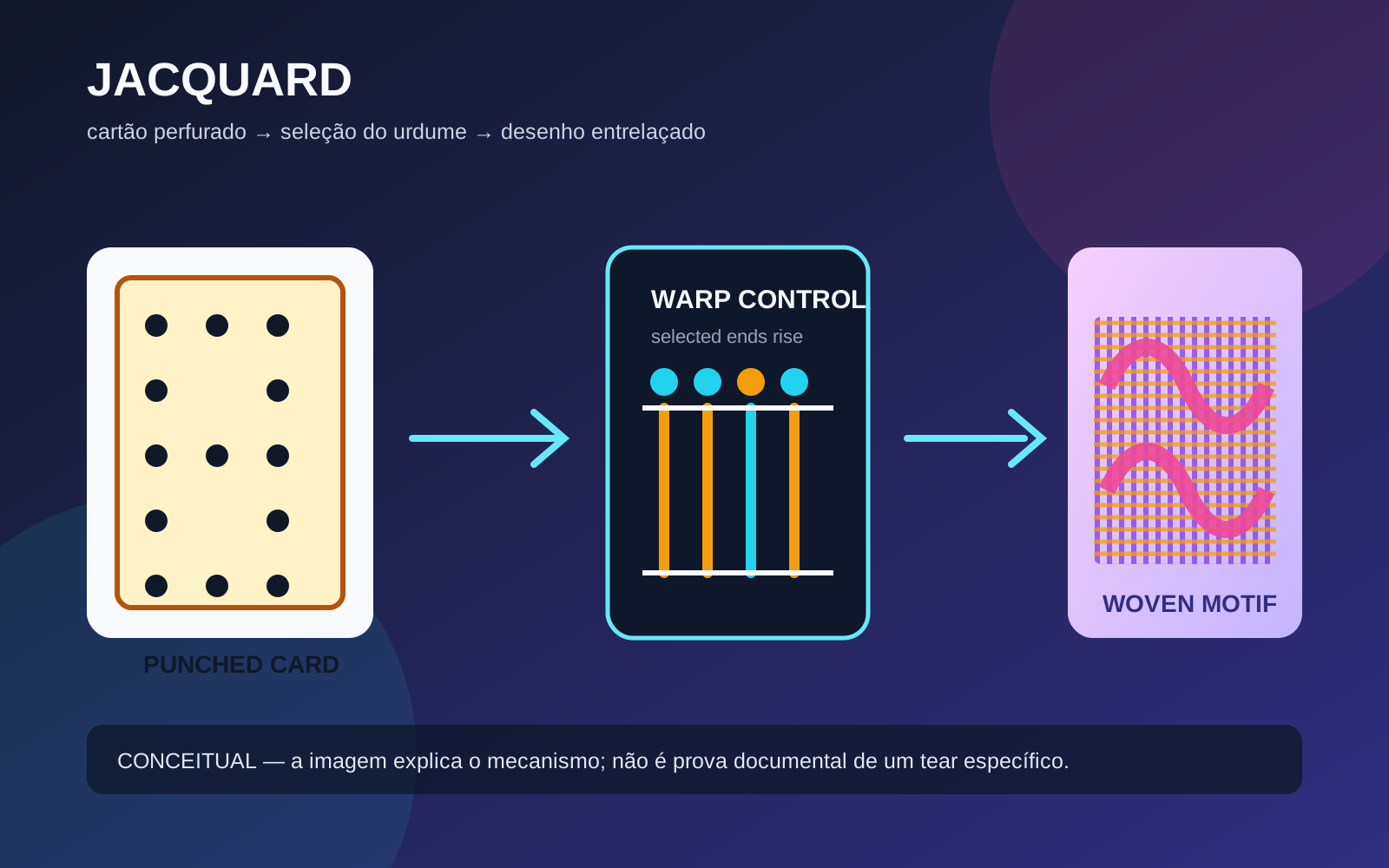
Joseph-Marie Jacquard patented the invention in 1804. Punched cards move the motif instruction into a sequence that can be changed and repeated. In operation, one card represents a row of the design; its holes guide which warp threads rise, opening the path for the weft. The result is not simply a surface print applied afterward: it is an interlacing decision recorded during weaving.
How is the design formed?
Cloth is formed by two systems: the weft passes over and under the warp at right angles. The order of those crossings determines the pattern. In the Jacquard system, interchangeable cards with small holes carry the instructions; once fed into the mechanism, they control which warp threads are raised. The useful unit of analysis is therefore not only the visible image, but the relation between card, warp selection, weft passage, and repeat.
For weaving development, record the motif as construction rather than color alone. A specification can separate scale, grain direction, face and reverse, repeat, usable width, and seam areas. These are practical instructions for the actual sample; they do not replace testing or turn the Jacquard name into a promise of drape, strength, or comfort.
How should Jacquard be specified for fashion?
Start with the fiber content and blend actually present in the article. Jacquard weaving can use different fibers and fiber blends and serve diverse end uses, so the material name does not contain all the information needed for sourcing or approval. The record should connect article, supplier, colorway, width, weight, finish, and approved sample. A technical specification and quality control have different roles: one describes requirements; the other checks the received material against them.
The choice can also be read alongside silk and knitwear. The Metropolitan Museum records a Jacquard-woven picture made of silk around 1890; that object documents one combination of technique, fiber, and date, not a rule for every Jacquard. The encyclopedic source also records that the process can appear in patterned knitwear, including jerseys. Compare articles by their documented variant rather than by the commercial name alone.
What should be checked in the sample?
View the motif under different lights and check face and reverse. Mark grain direction, repeat, cutting zones, seam positions, and behavior under pressing and sewing. When a garment requires lining, mobility, or direct skin contact, turn that requirement into an approval criterion. Yarn and finishing help locate adjacent decisions, but neither is synonymous with Jacquard.
Approval should preserve the link between the sample and the received lot. If fiber content, blend, finish, or motif scale changes, reopen the comparison. The fabric may still be called Jacquard, but the use decision now depends on the documented variant. This keeps the material specific: design, warp control, construction, and application remain connected without confusing mechanism with performance.
Verified facts
- A Jacquard machine is a device fitted to a loom that simplifies manufacturing textiles with complex patterns such as brocade, damask, and matelassé.
Source: en.wikipedia.org ↗ - Joseph-Marie Jacquard patented his invention in 1804.
Source: scienceandindustrymuseum.org.uk ↗ - The Jacquard mechanism uses a chain of punched cards, with one complete card corresponding to one row of the design.
Source: en.wikipedia.org ↗ - In weaving, the weft passes over and under the warp; interlacing these threads at right angles forms cloth.
Source: scienceandindustrymuseum.org.uk ↗ - The order in which the weft passes over and under the warp threads determines the woven pattern.
Source: scienceandindustrymuseum.org.uk ↗ - Interchangeable cards have small holes that hold instructions for weaving a pattern.
Source: scienceandindustrymuseum.org.uk ↗ - When fed into the Jacquard mechanism, the cards control which warp threads are raised to allow the weft to pass.
Source: scienceandindustrymuseum.org.uk ↗ - The cards allow a pattern to be reproduced quickly and replicated.
Source: scienceandindustrymuseum.org.uk ↗ - Jacquard does not identify a specific loom, but the added control mechanism that automates patterning.
Source: en.wikipedia.org ↗ - Among the applications cited for Jacquard beyond weaving are patterned knitwear and machine-knitted textiles, including jerseys.
Source: en.wikipedia.org ↗ - Jacquard weaving uses different fibers and fiber blends and serves diverse end uses.
Source: en.wikipedia.org ↗ - The Metropolitan Museum records a Jacquard-woven picture made of silk and produced around 1890.
Source: collectionapi.metmuseum.org ↗
Related entries

Industrial weaving
Weaving is the process of forming fabric by regularly interlacing two yarn systems: warp in the lengthwise direction and weft across the width. The construction results from warp preparation, shed formation, weft insertion and beat-up, and control of yarn delivery and fabric take-up.
Industrial knitting
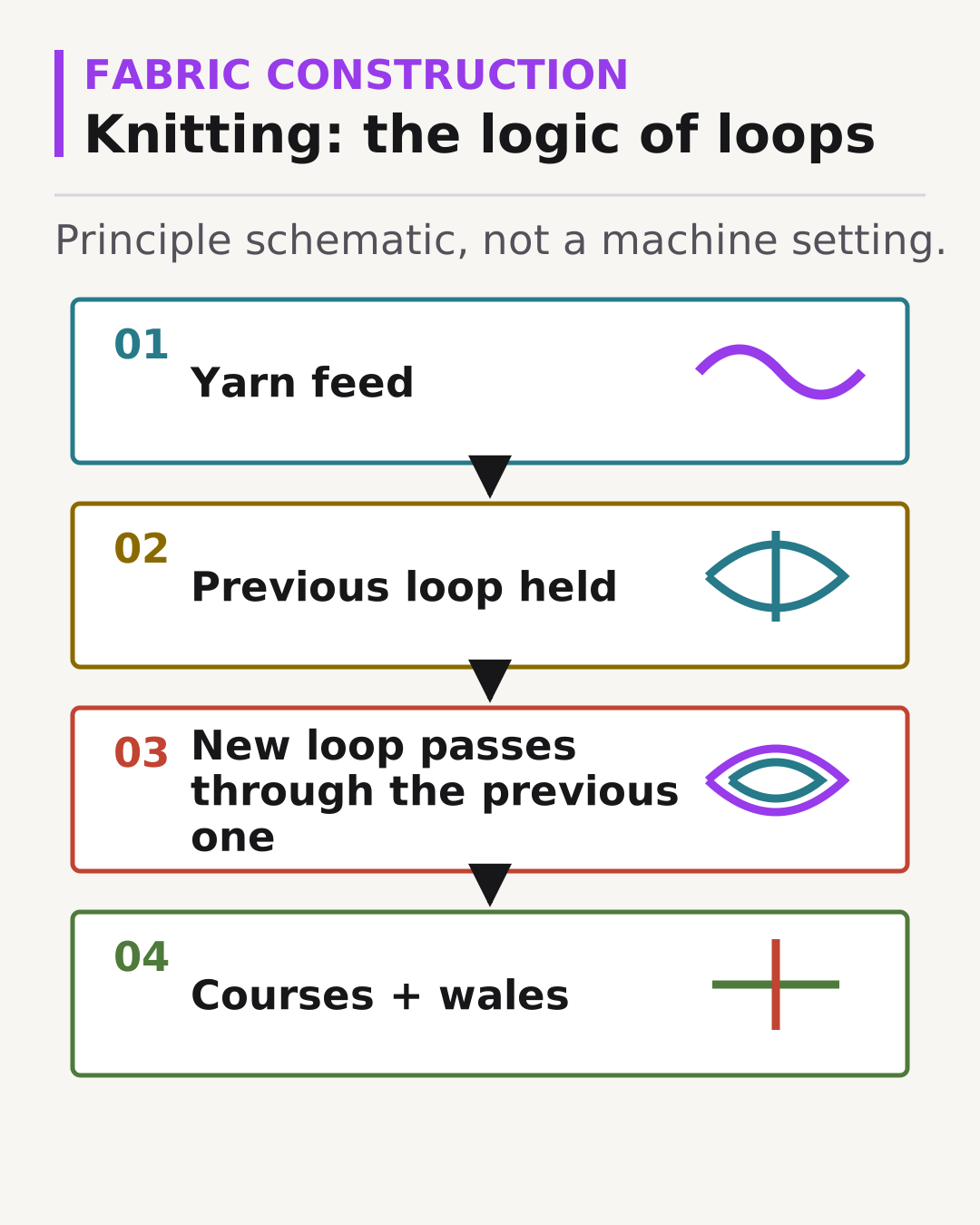
Knitting is the process of forming fabric through series of intermeshed loops. It divides into weft knitting, in which yarn travels across the width and needles form loops in sequence, and warp knitting, in which parallel yarns feed needles that work simultaneously along the fabric length.

Fashion product technical specification
A technical specification is the controlled information set that translates an approved fashion product into verifiable sampling and manufacturing requirements. It brings together drawings, materials, measurements, construction, tolerances, identification, labelling, comments and revision history; its content varies by category, company, market and stage.

Apparel quality control
Apparel quality control combines specifications, inspection, and testing to check whether fabrics, trims, and garments meet the expected performance for a product and end use. The process can examine color, drape, hand, durability, conformance, defects, fit, seam integrity, shrinkage, and drying performance. Quality decisions depend on the product and its intended use.
Sources
Want to apply this to your operation?