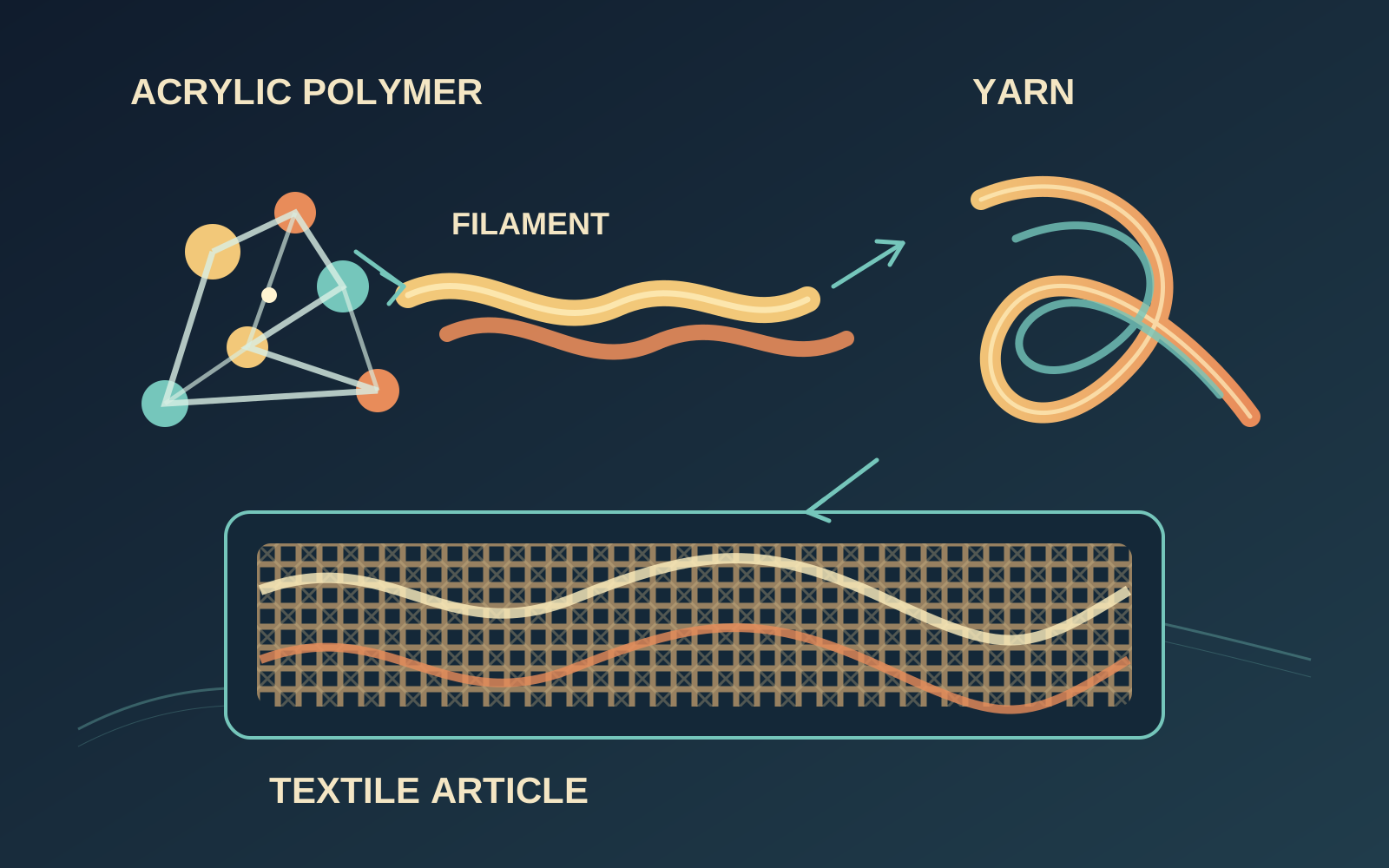
Acetate fiber
Acetate fiber is a manufactured fiber whose fiber-forming substance is cellulose acetate. In fashion, specifying it means separating fiber, yarn, fabric construction, and finish while checking drape, sheen, care requirements, and the labeling rules that apply to the finished article.
On this page
What is Acetate fiber?
Acetate fiber is a manufactured fiber whose fiber-forming substance is cellulose acetate. For fashion work, the definition becomes useful when four levels stay separate: fiber matter, yarn, fabric construction, and finish. That boundary prevents a result belonging to the article from being assigned to the material alone. Read it alongside cellulosic fibers, textile yarn, and fabric, but do not treat those terms as interchangeable.
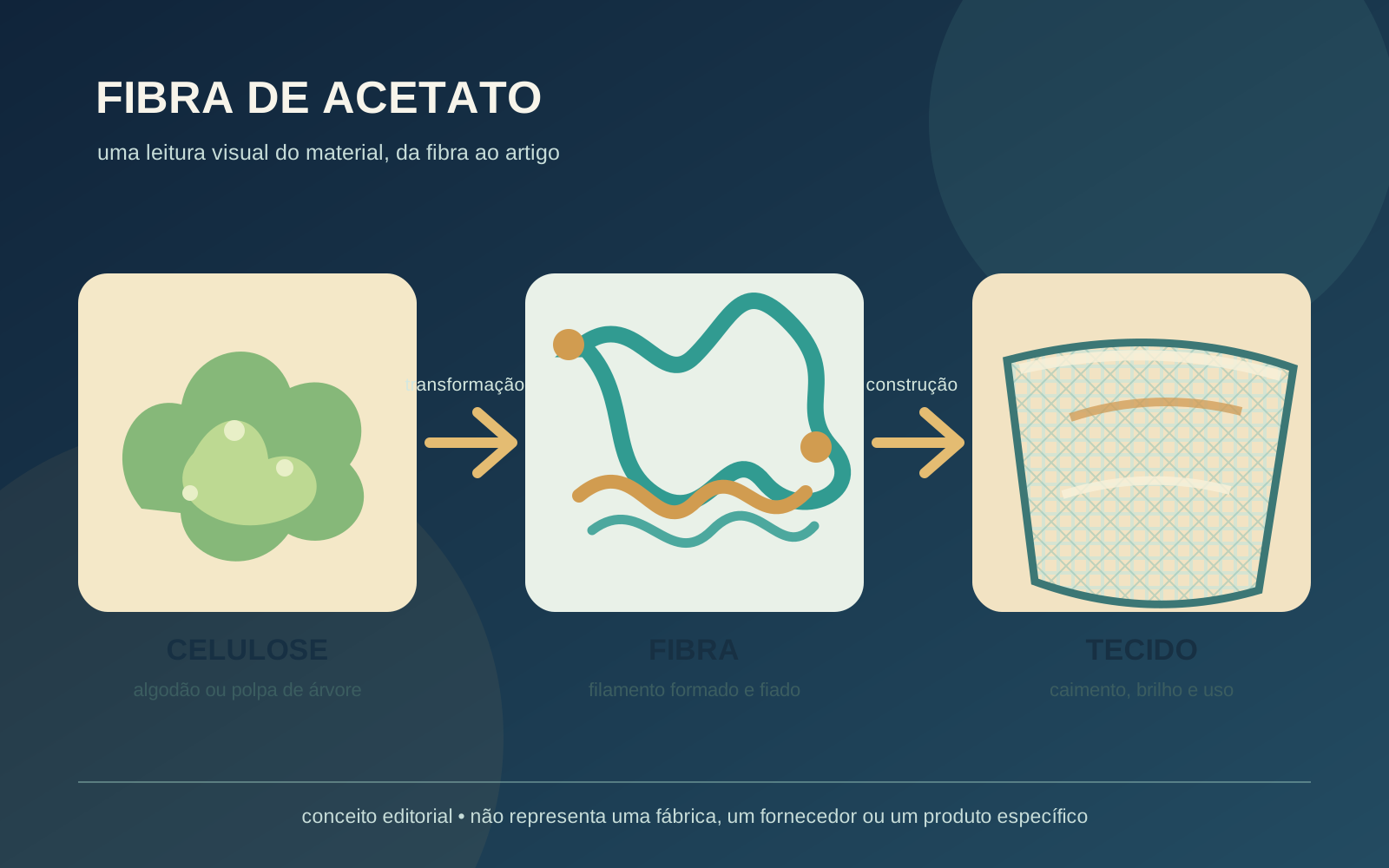
Cellulose acetate fiber is based on cotton or tree-pulp cellulose. The material’s described manufacture uses acetic acid, acetic anhydride, and sulfuric acid; cellulose acetate is then dissolved in acetone and passed through spinnerets. Evaporation of the solvent in warm air forms filaments through dry spinning. This sequence is why “natural” is too imprecise as a description: a cellulosic feedstock does not remove the chemical transformation or the filament-forming stage.
How does the fiber become a fashion article?
The fiber reaches product development through a yarn and a construction. Acetate is blended with silk, cotton, wool, and nylon; the cited results for those blends include wrinkle recovery, drape, and dimensional stability. A specification should still identify composition, yarn, fabric, finish, and intended use. A fiber name cannot replace an identified sample or an acceptance criterion in the technical specification.
Visual behavior is one reason to investigate the material. Acetate fabric has a lustrous sheen and smooth, satiny texture, while the fabric’s breathable nature suits it for use as a lining. These characteristics help formulate a use hypothesis, not a guarantee for every article. Lining, finishing, and patternmaking answer different questions: one concerns the garment’s inner function, one the article’s alteration, and one its wearable form.
Care must also be recorded. Rayon resists heat while acetate is prone to melting; the associated care direction for acetate is careful laundering, by hand washing or dry cleaning. In product work, that limit belongs in the care specification and must be checked against the received construction, finish, and intended use. A material characteristic should not become a universal instruction without checking the actual article.
How are acetate, triacetate, and rayon distinguished?
Acetate and triacetate are not simply interchangeable names. Under the United States regulatory definition, triacetate may be used as a generic description when at least 92 percent of hydroxyl groups are acetylated. This is a naming criterion, not a promise about hand or drape. For labeling, record the jurisdiction and keep the stated composition consistent with the product documentation.
Rayon needs a clear boundary as well: acetate differs from rayon through the use of acetic acid in production, and the two must be listed distinctly on garment labels in the United States. When comparing materials, state which level is being compared—chemistry, fiber, yarn, fabric, or finish—and do not use “cellulosic” as if it answered the whole question. Viscose, textile labeling, and quality control help preserve that distinction.
Why does environmental context enter the specification?
A cellulosic feedstock does not settle the environmental assessment of a finished article. The European Parliament cites the textile sector as the third largest source of water degradation and land use in 2020, and records an estimate that textile production is responsible for about 20 percent of global clean-water pollution, mainly from dyeing. These figures do not measure one acetate fiber in isolation; they define the context in which a material choice should be investigated.
The decision should therefore request verifiable information about processing, dyeing, energy, durability, care, and end of use, without turning feedstock origin into an environmental certificate. Textile materials, product development, and circularity are working connections: they help formulate questions, but they do not replace article-specific supplier documentation.
What belongs in the technical specification?
Record declared composition, blend, article, supplier, construction, finish, intended use, care, and acceptance criteria. If the aim is sheen, drape, or lining use, state how each requirement will be observed. If labeling is regulated, note the applicable jurisdiction. This makes a choice of acetate fiber comparable with other cellulosic fibers without erasing differences in process and article.
Verified facts
- Acetate fiber is a manufactured fiber whose fiber-forming substance is cellulose acetate.
Source: en.wikipedia.org ↗ - Cellulose acetate fiber is based on cotton or tree-pulp cellulose.
Source: en.wikipedia.org ↗ - Acetate production involves reacting cellulose with acetic acid and acetic anhydride in the presence of sulfuric acid.
Source: en.wikipedia.org ↗ - Once formed, cellulose acetate is dissolved in acetone and extruded through spinnerets; the solvent evaporates in warm air during dry spinning.
Source: en.wikipedia.org ↗ - Acetate is blended with silk, cotton, wool, and nylon to make fabrics with wrinkle recovery, drape, and dimensional stability.
Source: en.wikipedia.org ↗ - The breathable nature of acetate fabric suits it for use as a lining.
Source: en.wikipedia.org ↗ - Acetate fabric has a lustrous sheen and smooth, satiny texture, making it an alternative to silk.
Source: en.wikipedia.org ↗ - Under the United States regulatory definition, triacetate may be used as a generic description when at least 92 percent of hydroxyl groups are acetylated.
Source: law.cornell.edu ↗ - Acetate differs from rayon through the use of acetic acid in production, and the two must be listed distinctly on garment labels in the United States.
Source: en.wikipedia.org ↗ - Rayon resists heat while acetate is prone to melting; acetate requires careful laundering by hand washing or dry cleaning.
Source: en.wikipedia.org ↗ - The textile sector was the third largest source of water degradation and land use in 2020, according to a report cited by the European Parliament.
Source: europarl.europa.eu ↗ - Textile production is estimated to be responsible for about 20 percent of global clean-water pollution, mainly from dyeing.
Source: europarl.europa.eu ↗
Related entries
Viscose
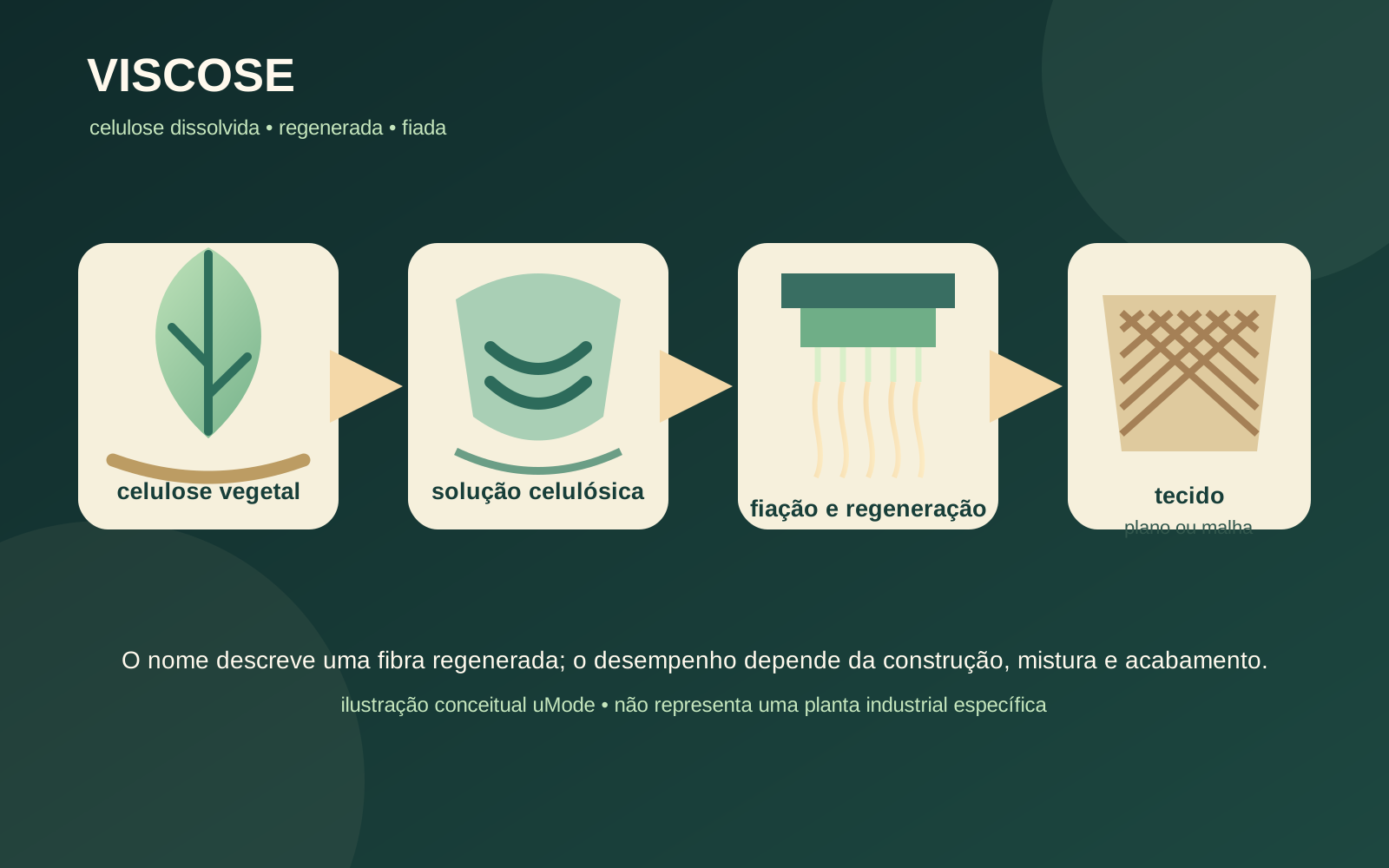
Viscose is a regenerated cellulosic fibre made by the viscose process and used as a textile material in yarns and fabrics. The name identifies the fibre, not one fixed appearance: construction, blends, finishing and wet-state behaviour must be assessed on the finished article.

Fashion product technical specification
A technical specification is the controlled information set that translates an approved fashion product into verifiable sampling and manufacturing requirements. It brings together drawings, materials, measurements, construction, tolerances, identification, labelling, comments and revision history; its content varies by category, company, market and stage.
Sources
Want to apply this to your operation?