Acrylic fiber
Acrylic fiber is a manufactured fiber formed from a long-chain polymer with at least 85% acrylonitrile units under the US regulatory definition. In fashion, it must be read across composition, yarn formation, fabric construction and finishing: handle, recovery, dyeing and flammability can change with formulation and treatment.
On this page
What is Acrylic fiber?
Acrylic fiber is a manufactured fiber made from a long-chain polymer containing at least 85% acrylonitrile units under the US regulatory definition. The same rule calls fibers with 35% or more but less than 85% acrylonitrile modacrylic. This is a composition and naming boundary, not a promise of handle, durability or safety. In the fashion chain, synthetic fibers, yarn and fabric are connected levels, not interchangeable terms.
Acrylic is often investigated for a wool-like handle, low water absorption, tolerance to ultraviolet exposure and resistance to several chemicals. The technical review also reports rapid deterioration under strong alkalis at high temperature. These properties help define a use hypothesis, but the sample still needs identification by article, formulation and finish. An acrylic knit is not an isolated property of the fiber: construction, blending and finishing shape the result.
How does acrylic become yarn and a textile article?
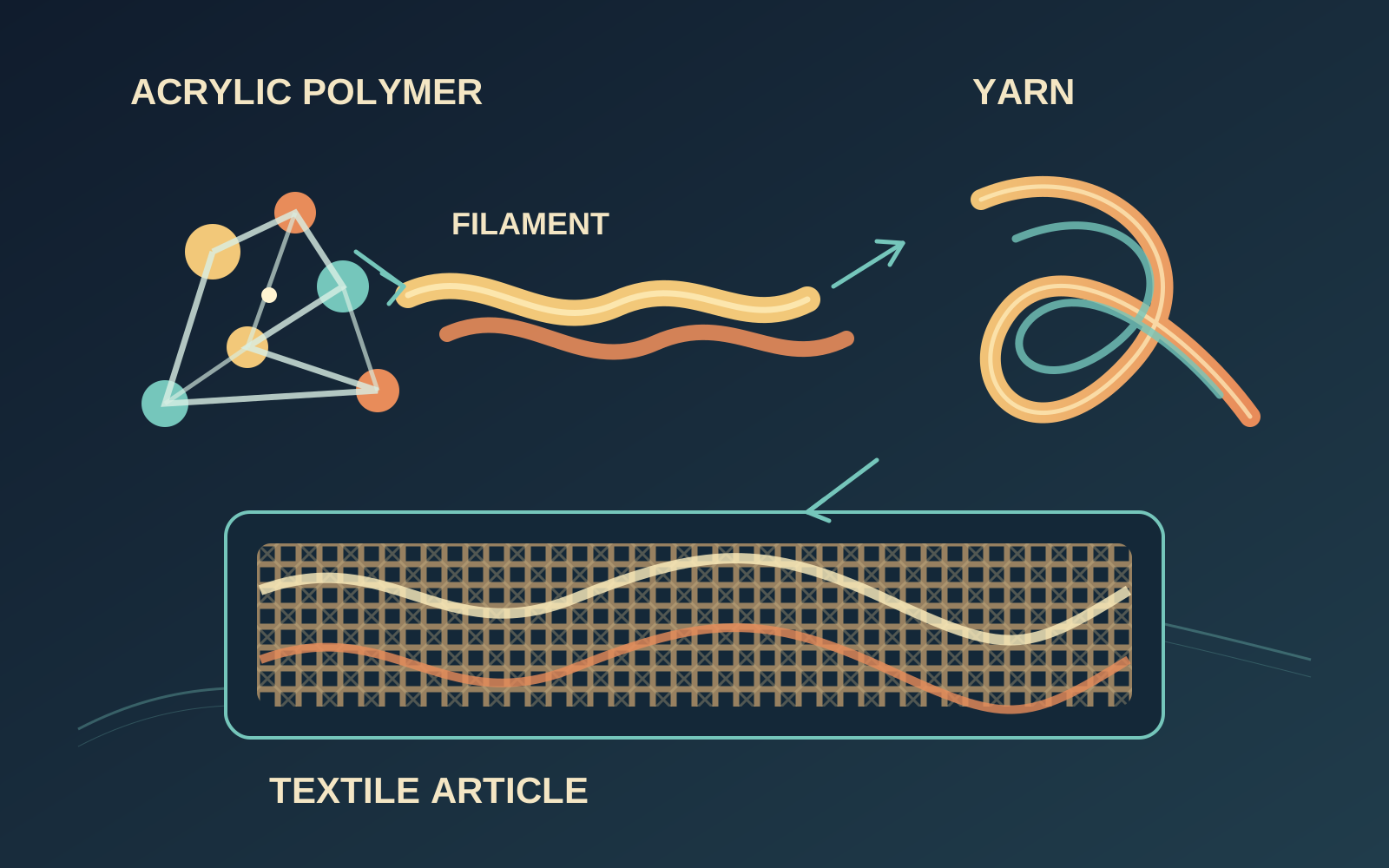
Acrylic fiber can be produced through wet or dry spinning. In the wet route, a polymer solution is extruded through small spinneret orifices into a coagulation bath; the bath removes solvent and solidifies the filaments, which are then gathered. The lead image represents this sequence conceptually rather than documenting it. In product development, the filament or staple fiber moves into yarn formation, and yarn enters knitting or weaving to form the article.
The specification should separate fiber identity from the construction received. Record composition, fiber form, yarn count where relevant, construction, color, finish, lot, care and acceptance criterion in the technical specification. This prevents a finish characteristic from being assigned to all acrylic and makes articles comparable without mixing fiber, yarn and fabric.
Which limits matter in development?
Recovery depends on deformation: the technical review records 99% recovery at 2% elongation but 50–95% at 5%. It also records 1.5–2% moisture regain at 25 °C and 65% relative humidity, together with electrical and heat-insulation properties. These figures belong to the fiber described by the source; they are not guaranteed results for every yarn, knit, fabric or garment. Testing should use the article and method that represent the intended requirement.
Dyeing also needs process control. In the reviewed source, temperatures above 110 °C should be avoided in the described procedure because of the risk of excessive shrinkage. That does not turn 110 °C into a universal care instruction: the specification must identify the article, finish and applicable method. For finishing and quality control, record temperature, time, bath, dimensional change and color result.
Flammability is another specific limit: untreated acrylic is described with a limiting oxygen index of 18 and as highly flammable. Finishes can add fire resistance, water repellency, conductivity, antimicrobial activity or ultraviolet protection, but these functions are modifications of the structure or surface. Performance from a modified fiber must not be transferred to conventional fiber, and the word acrylic is not a safety certificate.
How should an acrylic-fiber choice be documented?
Start with an observable requirement: handle, bulk, recovery, dimensional stability, color, protection or fire behavior. Then compare the identified sample with the defined criterion and retain the method, lot and finish. Quality control checks the article received; product development decides whether it suits the intended use. This chain keeps material, process and product distinct and reduces confusion with other synthetic fibers.
Verified facts
- Under the US regulatory definition, acrylic fiber is a manufactured fiber whose fiber-forming polymer contains at least 85% acrylonitrile units.
Source: law.cornell.edu ↗ - Under the same definition, fibers with less than 85% and at least 35% acrylonitrile units are classified as modacrylic.
Source: law.cornell.edu ↗ - Acrylic fibers have a wool-like handle, low water absorption, tolerance to ultraviolet exposure and resistance to several chemicals; strong alkalis at high temperature can rapidly deteriorate them.
Source: ebi.ac.uk ↗ - Acrylic-fiber recovery changes with deformation: the reviewed technical article records 99% recovery at 2% elongation and 50–95% at 5%.
Source: ebi.ac.uk ↗ - Acrylic fiber has a moisture regain of 1.5–2% at 25 °C and 65% relative humidity, along with electrical and heat-insulation properties.
Source: ebi.ac.uk ↗ - Acrylic spinning can be wet or dry; in wet spinning, a polymer solution passes through spinneret orifices into a coagulation bath that removes the solvent and solidifies the filaments.
Source: ebi.ac.uk ↗ - Acrylic-fiber chemistry can be modified through finishing to add properties such as water repellency, fire resistance, conductivity, antimicrobial activity or ultraviolet protection.
Source: ebi.ac.uk ↗ - In acrylic-fiber dyeing, temperatures above 110 °C should be avoided in the described procedure because of the risk of excessive shrinkage.
Source: ebi.ac.uk ↗ - Acrylic fibers are described as highly flammable, with a limiting oxygen index of 18 for the untreated material.
Source: ebi.ac.uk ↗
Related entries
Industrial knitting
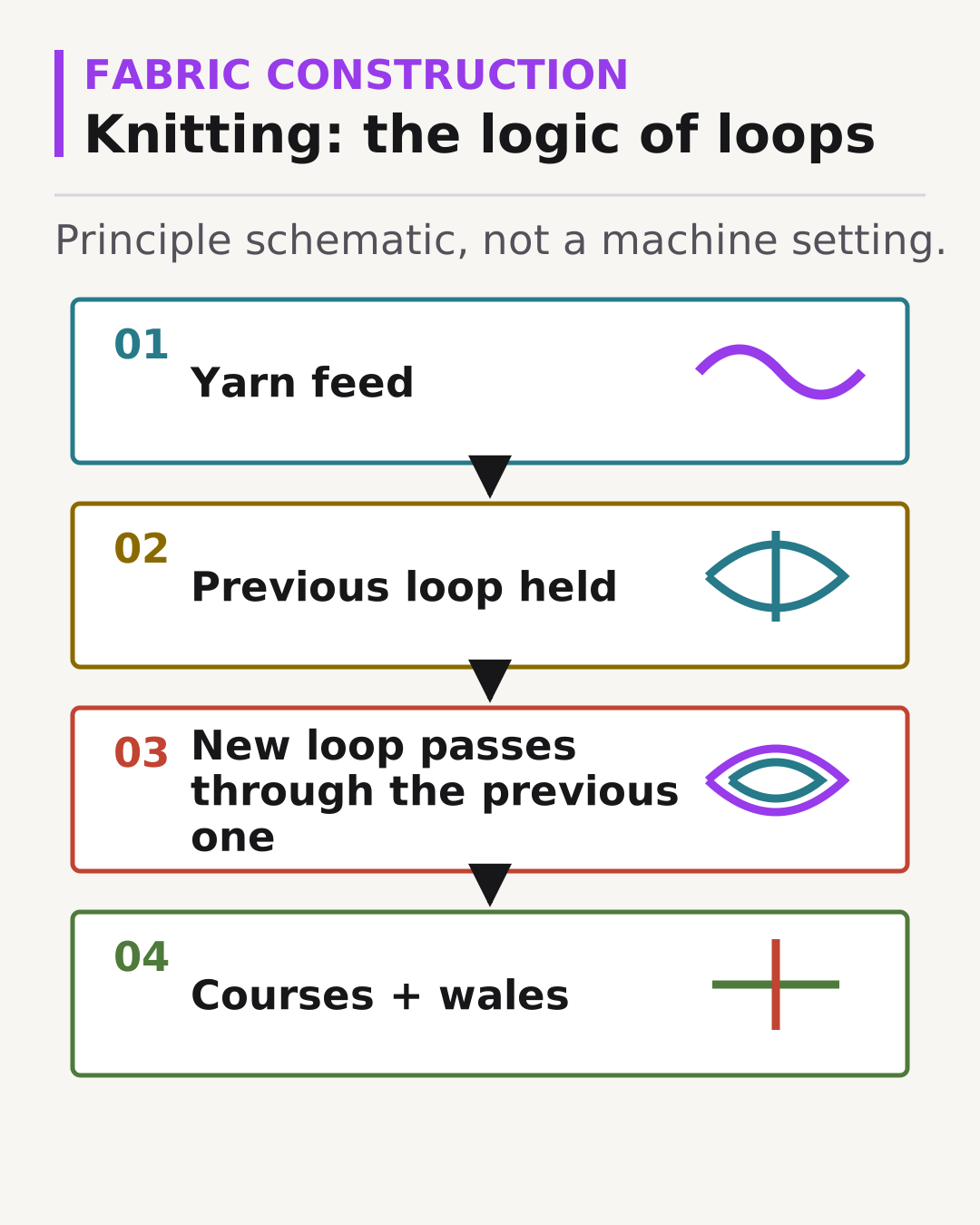
Knitting is the process of forming fabric through series of intermeshed loops. It divides into weft knitting, in which yarn travels across the width and needles form loops in sequence, and warp knitting, in which parallel yarns feed needles that work simultaneously along the fabric length.

Fashion product technical specification
A technical specification is the controlled information set that translates an approved fashion product into verifiable sampling and manufacturing requirements. It brings together drawings, materials, measurements, construction, tolerances, identification, labelling, comments and revision history; its content varies by category, company, market and stage.
Sources
Want to apply this to your operation?