Industrial embroidery
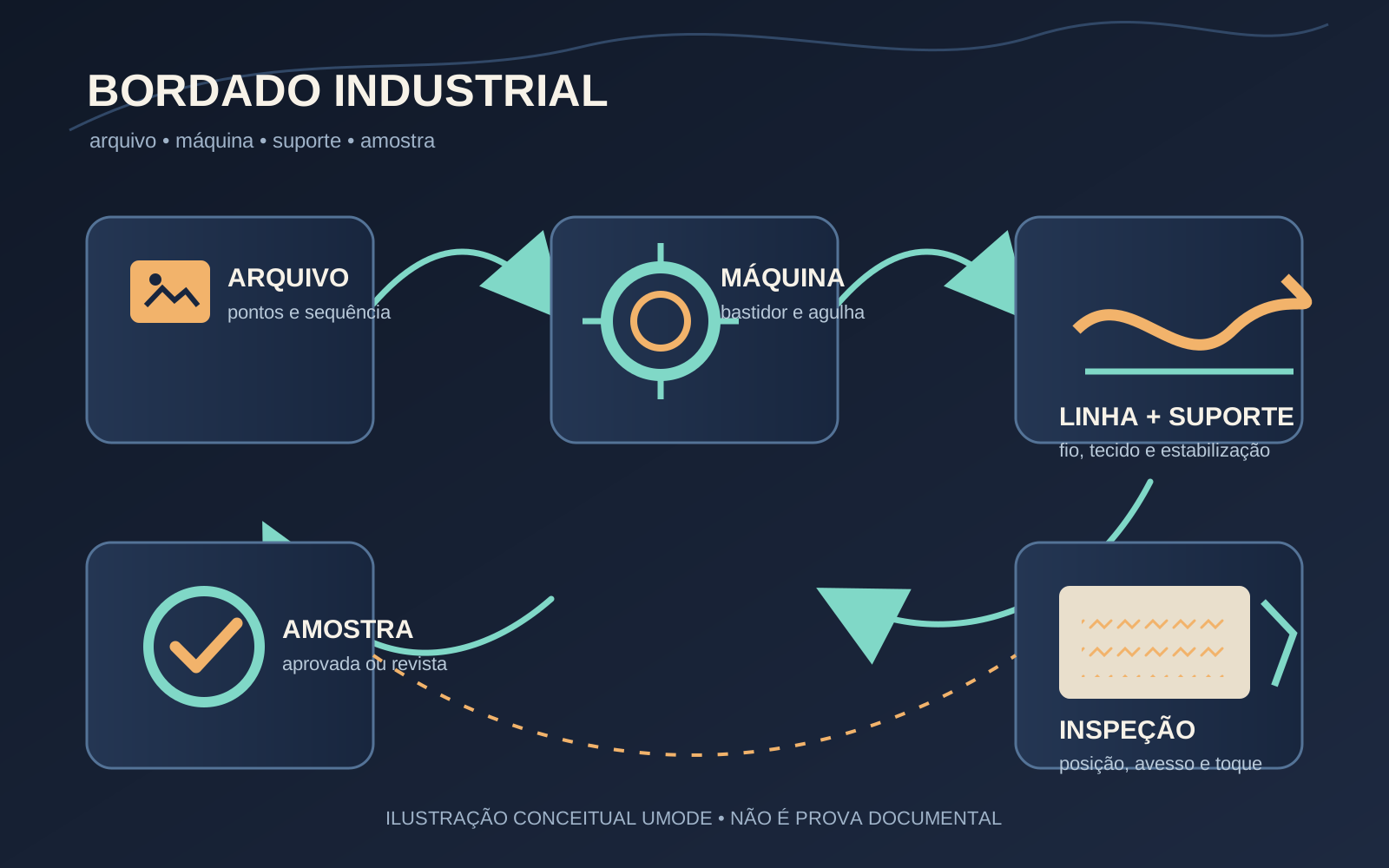
Industrial embroidery is the programmed execution of thread stitches on a textile substrate, with a digital file, machine, hoop, thread and sample inspection treated as one production system. In fashion, it turns a drawing into a repeatable surface, but the substrate, reverse side and thread behavior still have to be validated before production is released.
On this page
What is Industrial embroidery?
Industrial embroidery is the programmed execution of thread stitches on a textile substrate. The basic definition of embroidery is decorating fabric or another material with a needle, thread or yarn; the industrial qualifier shifts attention to files, repeatability, preparation and series control. Mass-produced machine embroidery emerged in the early twentieth century as the craft moved from personalized work toward mechanical output.
In fashion development, an illustration is not enough. The design must become a digitized pattern and then be tested on the material that will receive it. The first sample should show scale, placement, reverse side, colour changes and surface appearance. Embroidery is not the same as appliqué: appliqué adds or secures an element, while embroidery builds the marking with thread stitches.
How does a file become a surface?
Contemporary machine embroidery uses a computerized embroidery machine and patterns digitized with embroidery software. The file organizes the needle path and the sequence the equipment will execute, so the development decision does not end on screen. The operator needs to inspect the sample on the real substrate, comparing coverage, outline, scale, registration and reverse-side comfort.
The technical system can be read as four linked decisions: artwork and digitization; hoop and substrate preparation; thread and needle selection; sample inspection. Material changes how the stitch reads: knit, woven cloth, denim, leather and laminated surfaces do not respond identically. Rather than promising a universal setting, the tech pack should retain file version, dimensions, placement, thread, substrate, approved sample and tolerances defined by the team.
Thread is part of both visual and operational performance. Innovation in Textiles describes a polyester embroidery thread with a trilobal structure, brighter relative appearance and five thicknesses; the article also records 480 colour options for that specific line. Those numbers describe the named product, not every embroidery thread. Rayon is most typical for machine embroidery, polyester can also be used, and cotton is prone to breaking according to the consulted encyclopedic reference; the final choice still depends on the substrate, appearance and supplier test.
Where does the technique enter the fashion chain?
Machine embroidery is used to add logos and monograms to shirts, jackets and team apparel, while the same logic supports lettering, badges, figurative drawings and ornamental surfaces. The technique enters after the motif is defined and before production approval, in dialogue with finishing, patternmaking and sewing. Placement may be marked on the pattern, cut piece or a template; that choice belongs in the production order to prevent displacement.
For a pilot, separate three questions: is the motif correct; is the embroidery stable on the substrate; does the assembled product remain usable? In products worn directly against the skin, the reverse side and loose thread ends deserve specific inspection. On stretch garments, observe the sample both stretched and relaxed. In every case, aesthetic approval does not replace the article-specific checks for comfort, laundering or resistance.
How can quality be controlled without confusing causes?
Quality control begins with observable criteria: placement, dimensions, colour, coverage, registration, loose threads, holes, distortion and reverse-side finish. AATCC presents textile evaluation through standardized methods and procedures and includes appearance and physical properties among its programs; that offers a framework for choosing tests, not an automatic result for every embroidery.
The inspection sheet should distinguish file failure, thread failure, substrate displacement and assembly problems. If the thread changes, the fabric changes or the file is revised, the sample needs reassessment. Quality control becomes actionable when the team records the approved sample, file version and criterion that determined the decision. This documentation connects the ornament to product development without reducing the technique to a decorative image.
Connections
embroidery · appliqué · finishing · tech pack · quality control · sewing thread
Verified facts
- Embroidery decorates fabric or other materials with a needle that stitches thread or yarn.
Source: en.wikipedia.org ↗ - Mass-produced machine embroidery emerged in the early twentieth century as the craft moved from personalized work toward mechanical output.
Source: en.wikipedia.org ↗ - Contemporary machine embroidery uses a computerized embroidery machine and patterns digitized with embroidery software.
Source: en.wikipedia.org ↗ - Machine embroidery is used to add logos and monograms to shirts, jackets and team apparel.
Source: en.wikipedia.org ↗ - Rayon is most typical for machine embroidery; polyester can also be used, while cotton is prone to breaking.
Source: en.wikipedia.org ↗ - The Poly-Soft thread described by Innovation in Textiles is produced from 100% polyester raw materials.
Source: innovationintextiles.com ↗ - The trilobal structure of Poly-Soft threads reflects more light and gives a brighter appearance than the compared threads in the article.
Source: innovationintextiles.com ↗ - Poly-Soft threads are offered in five thicknesses and can be supplied in 480 colour options.
Source: innovationintextiles.com ↗ - AATCC describes its textile evaluation methods and procedures as international standards cited by governments, industry and companies.
Source: aatcc.org ↗ - AATCC proficiency testing programs support laboratory certification and continuous improvement initiatives.
Source: aatcc.org ↗ - AATCC says its proficiency samples are selected for consistent results across a meaningful range for each method.
Source: aatcc.org ↗ - AATCC includes appearance and physical properties evaluation among its textile proficiency programs.
Source: aatcc.org ↗
Related entries

Fashion product technical specification
A technical specification is the controlled information set that translates an approved fashion product into verifiable sampling and manufacturing requirements. It brings together drawings, materials, measurements, construction, tolerances, identification, labelling, comments and revision history; its content varies by category, company, market and stage.

Apparel quality control
Apparel quality control combines specifications, inspection, and testing to check whether fabrics, trims, and garments meet the expected performance for a product and end use. The process can examine color, drape, hand, durability, conformance, defects, fit, seam integrity, shrinkage, and drying performance. Quality decisions depend on the product and its intended use.
Sources
Want to apply this to your operation?