Circular knitting
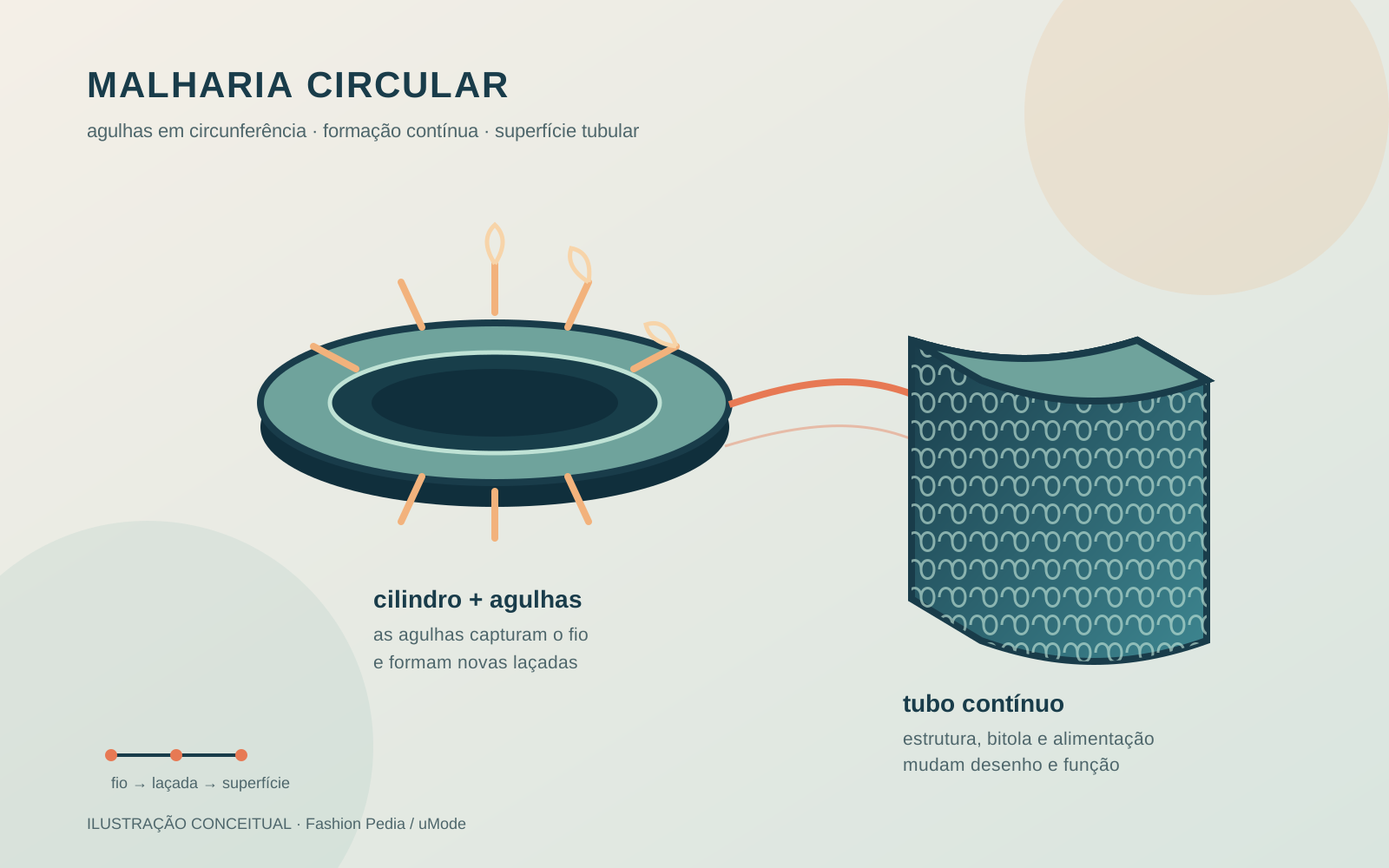
Circular knitting is a fabric-forming technique in which needles arranged on a circular bed produce a continuous tubular knitted structure. The result depends on the interaction of yarn, needles, cylinder, feeding, structure and gauge; the same machine logic can serve open fabrics, separated pieces or seamless constructions.
On this page
What is Circular knitting?
Circular knitting is a technique for forming a textile surface from loops on a circular bed of needles. Knitting in the broader sense forms fabric through series of intermeshed loops, which are the structure’s building blocks. Because the technique is divided into weft knitting and warp knitting, “circular” here designates the equipment and tubular geometry of weft knitting, not every stretchy fabric.
The logic differs from weaving: the recurring element here is the loop, while knitting names the wider process family. Knitted fabrics are generally described as more stretchable than woven fabrics; that does not promise a fixed level of stretch for every article. Yarn, structure, needle and settings remain variables in the result.
How do the cylinder and needles form the fabric?
In a circular weft-knitting machine, the cylinder carrying the needles rotates continuously and creates the movement needed to form loops. The circular arrangement turns successive formation into a tubular construction; Groz-Beckert’s technical page describes the output as continuous tubular fabric produced by circular knitting needles.
The needle is the machine element that forms the loop. The technical classification includes latch, bearded and compound needles, selected according to the machine type. This distinction matters in a technical specification: writing only “circular knit” does not record the equipment architecture, needle type or intended structure. Spinning supplies the yarn, while circular knitting organises that yarn into a surface through formation cycles.
Which structures and applications are in scope?
Weft knitting forms loops across the fabric width and can be made from a single supply package. Warp knitting forms loops along the fabric length and receives a sheet of parallel yarns from one or more warp beams; this is a difference in principle, not only a visual difference in fabric shape.
Circular technology is described for apparel such as undershirts, T-shirts and sportswear. Different structures and gauges are connected with a wide range of designs and functions. Therefore jersey and rib knit are useful graph relations, but they should not be treated as automatic names for every fabric produced on a circular machine. An article’s performance should also not be inferred solely from its tubular construction.
Santoni’s SMDJ-2T, an electronic double-knit circular machine, illustrates a specific industrial scope: seamless garments in continuous tubular fabric and/or separated pieces. The machine also provides needle-by-needle selection in the cylinder and dial for different rib types and links structures. This places flat knitting and elastane as research connections, not equivalents of the technique.
Why does the technique matter in fashion development?
Circular knitting matters because it connects a machine architecture with concrete decisions about surface, shape and construction. For development work, a quality control record can specify the intended structure, gauge, yarn, feeding and fabric or garment destination; these are specification orientations, not results guaranteed by the technique. The scope also helps distinguish continuous tubular fabric, separated pieces and seamless construction before samples are compared.
The technical scope explains circular knitted-fabric formation and its variants, without asserting superiority, savings, sustainability or universal suitability. A machine or application description remains tied to the scope in which it is presented.
Verified facts
- Knitting is the process of forming fabric by producing series of intermeshed loops, which are the building blocks of knitted fabrics.
Source: archive.nptel.ac.in ↗ - In general, knitted fabrics are more stretchable than woven fabrics.
Source: archive.nptel.ac.in ↗ - Commercial knitting processes are broadly divided, in principle, into weft knitting and warp knitting.
Source: archive.nptel.ac.in ↗ - In weft knitting, loops are formed across the width of the fabric, and the structure can be made from a single supply package.
Source: archive.nptel.ac.in ↗ - In a circular weft-knitting machine, the cylinder carrying the needles rotates continuously to cause the needle movement used in loop formation.
Source: archive.nptel.ac.in ↗ - In warp knitting, loops are formed along the length of the fabric and yarns are supplied as a sheet of parallel warp yarns from one or more warp beams.
Source: archive.nptel.ac.in ↗ - The machine element that forms the loop is called a needle; latch, bearded and compound needles are used depending on the knitting machine.
Source: archive.nptel.ac.in ↗ - Circular knitting produces continuous tubular fabric through circular knitting needles.
Source: groz-beckert.com ↗ - Groz-Beckert describes circular knitting as applicable to apparel including undershirts, T-shirts and sportswear.
Source: groz-beckert.com ↗ - Different structures and gauges expand the range of designs and functions possible in circular knitting technology.
Source: groz-beckert.com ↗ - Santoni describes its SMDJ-2T electronic circular machine as producing seamless garments in continuous tubular fabric and/or separated pieces.
Source: santoni.com ↗ - The SMDJ-2T can knit different rib types and links structures through needle-by-needle selection in the cylinder and dial.
Source: santoni.com ↗
Related entries
Industrial knitting
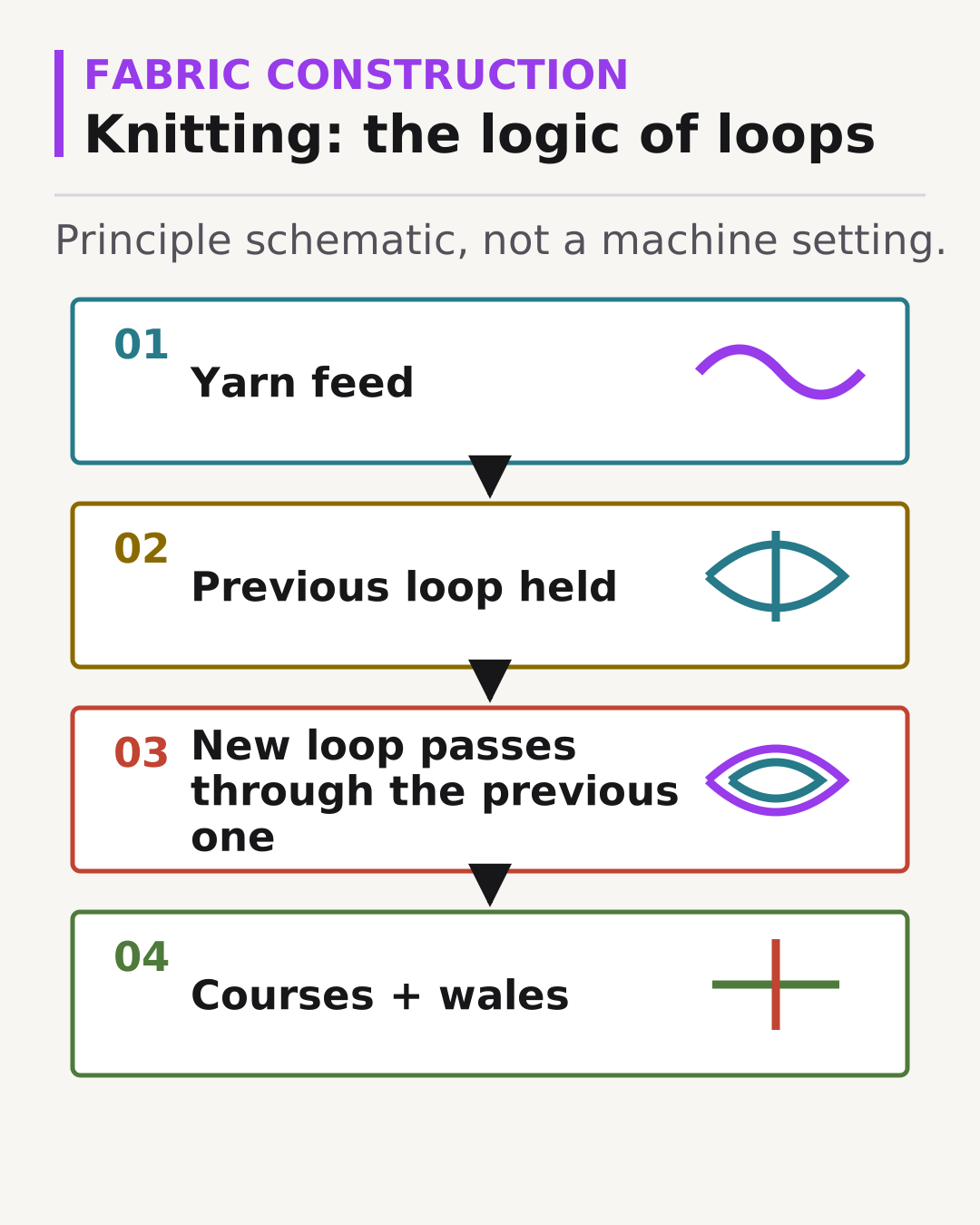
Knitting is the process of forming fabric through series of intermeshed loops. It divides into weft knitting, in which yarn travels across the width and needles form loops in sequence, and warp knitting, in which parallel yarns feed needles that work simultaneously along the fabric length.
Jersey
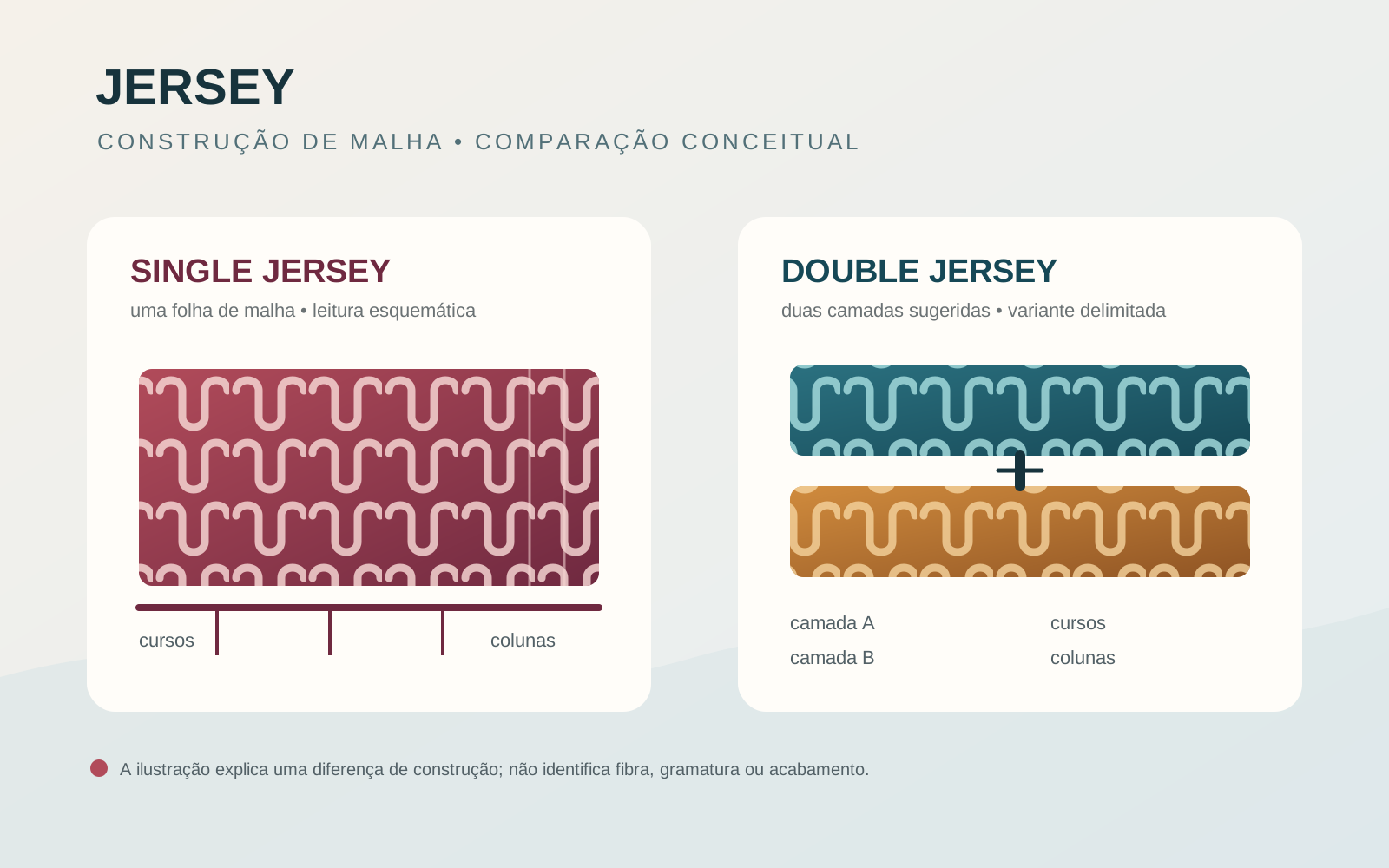
Jersey is a weft-knit material made through loop formation; the name does not identify a single fiber. The source distinguishes single jersey, a single sheet of knit fabric, from the specifically described double-jersey variant; fiber content and construction belong in separate specification fields.
Elastane
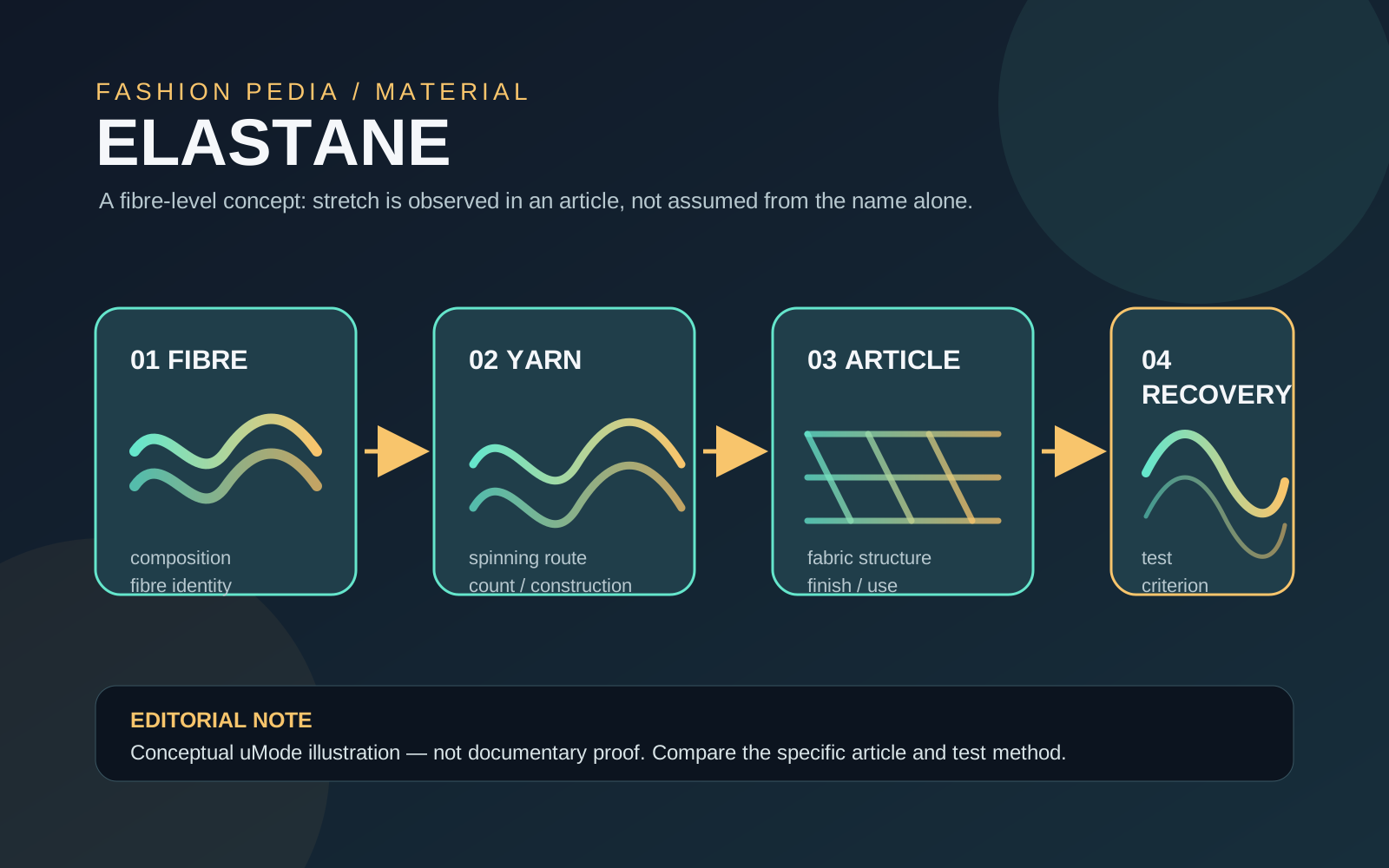
Elastane is a synthetic elastofibre defined in Regulation (EU) No 1007/2011 as containing at least 85% by mass of segmented polyurethane and recovering rapidly and substantially toward its initial length after being stretched to three times that length. In fashion, it should be treated as a fibre: the yarn, fabric and garment still require their own specification.
Textile spinning
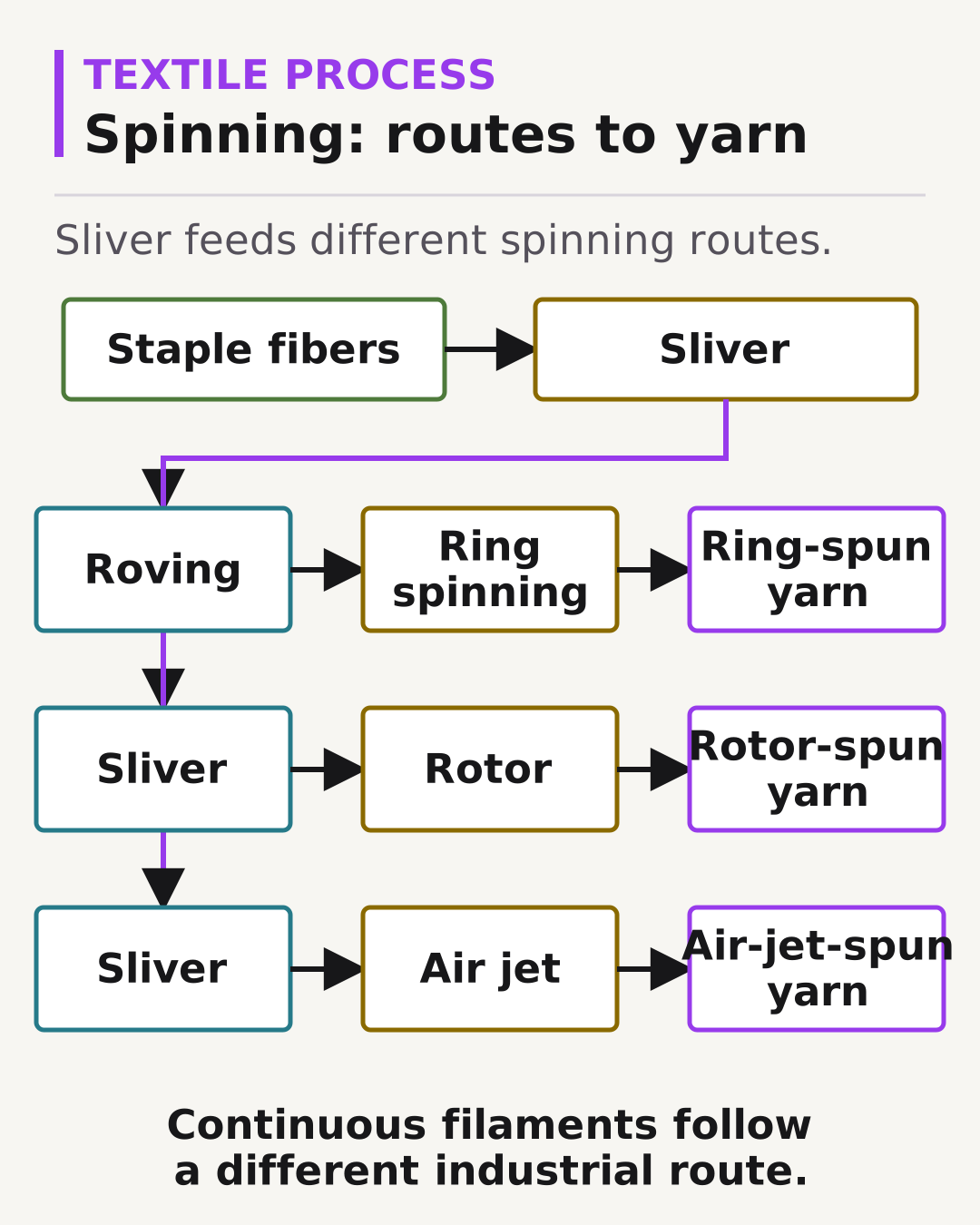
Yarn production follows two distinct technical routes: spinning turns staple textile fibers into yarn through preparation, alignment, attenuation, and consolidation, while continuous-filament processing assembles or transforms filaments without repeating the full preparation used for short fibers. These routes determine properties of yarn sent to weaving or knitting.

Fashion product technical specification
A technical specification is the controlled information set that translates an approved fashion product into verifiable sampling and manufacturing requirements. It brings together drawings, materials, measurements, construction, tolerances, identification, labelling, comments and revision history; its content varies by category, company, market and stage.
Sources
- https://archive.nptel.ac.in/content/storage2/courses/116102005/m1-introduction/l2-knitting.htm
- https://archive.nptel.ac.in/content/storage2/courses/116102008/introduction%20and%20basic%20concepts/basic%20concepts.html
- https://www.groz-beckert.com/en/products/knitting/
- https://santoni.com/en/products/seamless/smdj-2t
Want to apply this to your operation?