Elastane
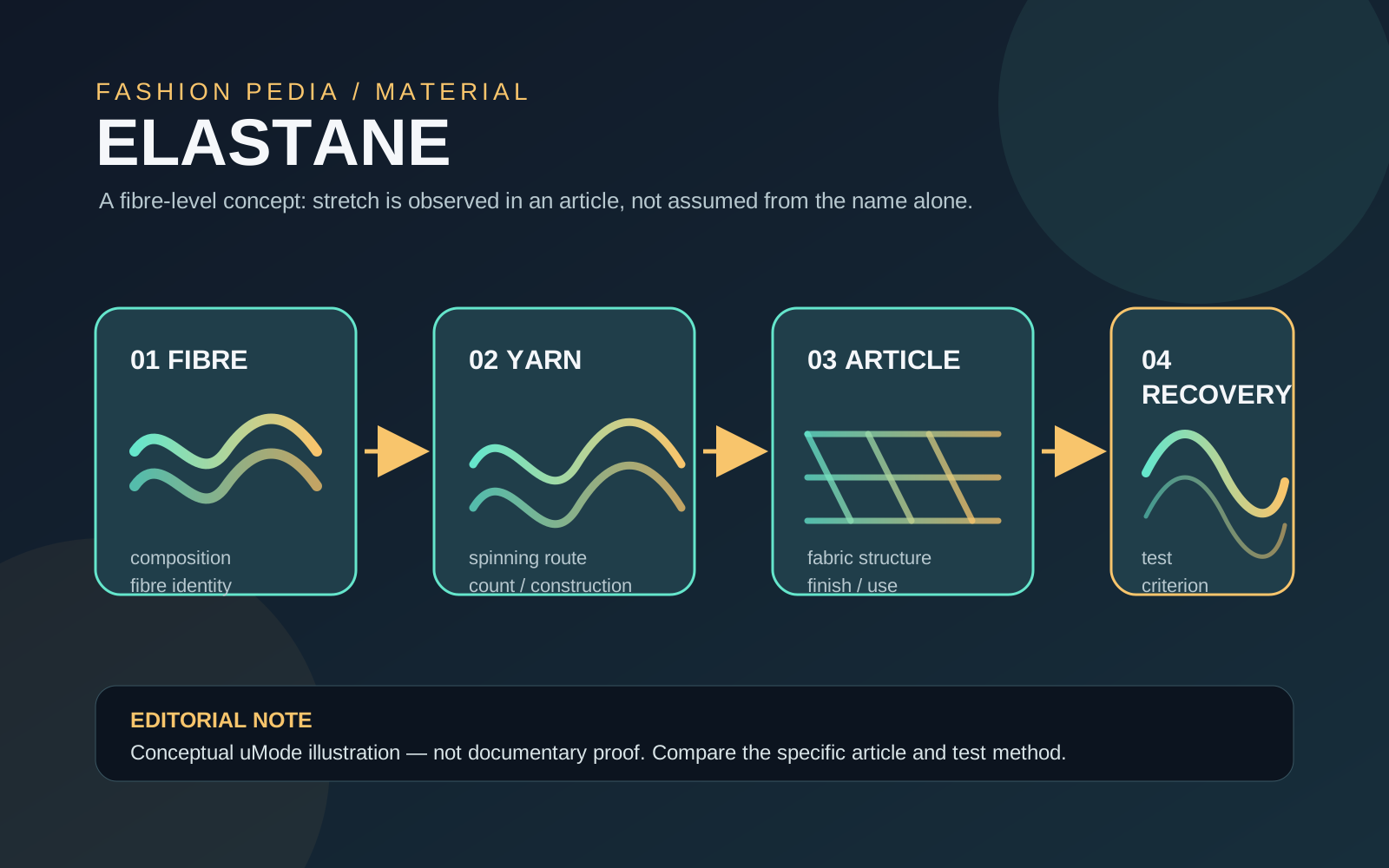
Elastane is a synthetic elastofibre defined in Regulation (EU) No 1007/2011 as containing at least 85% by mass of segmented polyurethane and recovering rapidly and substantially toward its initial length after being stretched to three times that length. In fashion, it should be treated as a fibre: the yarn, fabric and garment still require their own specification.
On this page
What is Elastane?
Elastane is a fibre, not the complete name of a yarn, fabric or garment. The European legal definition is narrow: it requires at least 85% by mass of segmented polyurethane and uses a stretch test to three times the original length, followed by observation of recovery. That definition belongs to the scope of the European regulation and should not be presented as a universal labelling rule. In the United States, the corresponding generic designation is “spandex”, also tied to at least 85% segmented polyurethane. The naming changes by market: “spandex” is preferred in North America, while variants of “elastane” are used in continental Europe.
This boundary prevents a recurring confusion around textile fibre: the material can be part of a textile yarn, which can in turn participate in a fabric or knit. Behaviour observed in a garment is not automatically an isolated property of the fibre.
How does elastane become yarn and respond to stretching?
One public production description covers drawing a concentrated polymer solution through spinnerets while the solvent evaporates; the same source records that several spinning technologies exist. This matters when reading a technical sheet: “elastane” identifies the fibre, but does not by itself say whether the yarn is bare, covered, wrapped, combined with another yarn, or made to a particular count or construction.
The European definition measures recovery after the fibre is stretched to three times its original length. Another public description reports stretching up to five times its length and returning to its original shape after stretching. These numbers should not be merged: they belong to different documented formulations and contexts. For development, record the specific article and test method before comparing samples. A technical sheet can separate composition, construction, tolerance and acceptance criterion; quality control can record the corresponding result.
Where does it enter fashion, and how should the choice be checked?
For clothing, the consulted source describes blends with cotton or polyester and a small percentage in the final fabric, which retains much of the appearance and feel of the other fibres. This explains why the presence of elastane does not determine the article’s appearance by itself. Construction, yarn, knitting, finishing and use should be treated as separate layers in product development.
The decision becomes more precise when the team separates four questions: which fibre was declared; which yarn was purchased; which fabric or article was built; and which behaviour was measured. The test should therefore be selected for the article requirement, not only for the fibre’s commercial name.
In documentation, treat “elastane” as a composition entry and relate it to the article that was actually approved. If the requirement is recovery, declare the cycle and criterion; if it is appearance or handle, record the article and finish; if it is labelling, apply the rule of the sales market. Finishing can be a separate stage from fibre identity, and fabric should not be used as a synonym for elastane.
Useful limits and distinctions
Elastane is not a general guarantee of comfort, service life or visual result. The evidence assembled here supports a fibre definition, a public spinning route, descriptions of stretching and recovery, a blending practice and the existence of testing categories; it does not support a universal durability period or identical performance in every article. For a comparable specification, keep fibre, yarn, construction, finish, care and test method separate. That separation connects synthetic fibres, textile yarn, technical sheet and quality control without turning a documented property into a shortcut for every product.
Verified facts
- Regulation (EU) No 1007/2011 defines elastane as an elastofibre composed of at least 85% by mass of segmented polyurethane that, when stretched to three times its original length and released, recovers rapidly and substantially to its initial length.
Source: eur-lex.europa.eu ↗ - In the United States, “spandex” is the generic name for a manufactured fibre whose fibre-forming substance is a long-chain synthetic polymer containing at least 85% segmented polyurethane.
Source: law.cornell.edu ↗ - “Spandex” is the preferred name in North America, while variants of “elastane” are used in continental Europe.
Source: en.wikipedia.org ↗ - Spandex production uses several spinning technologies; one publicly described route draws a concentrated polymer solution through spinnerets while the solvent evaporates.
Source: en.wikipedia.org ↗ - A public technical description reports that spandex can stretch up to five times its length and return to its original shape after stretching.
Source: en.wikipedia.org ↗ - In clothing, spandex is usually mixed with cotton or polyester and accounts for a small percentage of the final fabric, which retains much of the appearance and feel of the other fibres.
Source: en.wikipedia.org ↗ - Regulation (EU) No 1007/2011 covers textile fibre names and the labelling and marking of the fibre composition of textile products.
Source: eur-lex.europa.eu ↗ - The United States fibre-identification rule treats “spandex” as a generic description tied to the composition of a manufactured fibre, rather than the name of a garment or fabric.
Source: law.cornell.edu ↗
Related entries
Industrial knitting
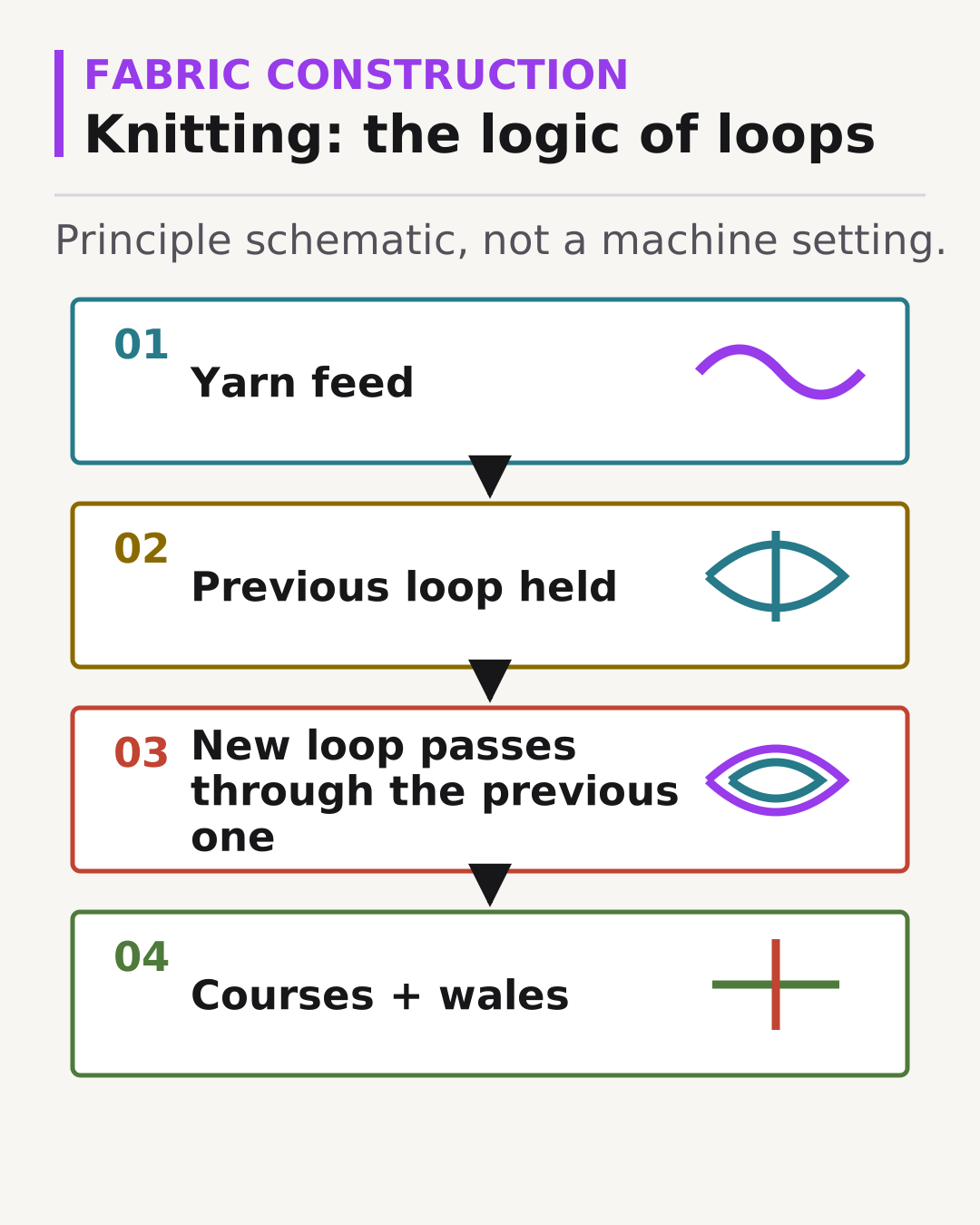
Knitting is the process of forming fabric through series of intermeshed loops. It divides into weft knitting, in which yarn travels across the width and needles form loops in sequence, and warp knitting, in which parallel yarns feed needles that work simultaneously along the fabric length.

Fashion product technical specification
A technical specification is the controlled information set that translates an approved fashion product into verifiable sampling and manufacturing requirements. It brings together drawings, materials, measurements, construction, tolerances, identification, labelling, comments and revision history; its content varies by category, company, market and stage.
Sources
Want to apply this to your operation?