Industrial weaving
Weaving is the process of forming fabric by regularly interlacing two yarn systems: warp in the lengthwise direction and weft across the width. The construction results from warp preparation, shed formation, weft insertion and beat-up, and control of yarn delivery and fabric take-up.

On this page
What is industrial weaving?
Weaving forms fabric by regularly interlacing two yarn systems. The warp runs along the fabric length and remains under tension on the loom; the weft crosses the width, entering successive openings formed between warp yarns. Yarn received from spinning must therefore function not only as a visual material but also as a mechanical element able to withstand tension, bending, and friction during production.
The three basic weaves are plain, twill, and satin. They describe the order in which yarns pass over and under one another and provide the basis for more complex constructions. Weave must not be confused with composition: cotton, wool, or polyester can be woven in different weaves, and the same weave can yield products with different mass, density, and performance.
How is the warp prepared?
Before the loom, the warp follows its own sequence. Warping organizes many parallel yarns into sections or onto a beam; when yarn and construction require additional protection, sizing applies a film to reduce hairiness, abrasion, and breaks; drawing-in leads each yarn through heddles and reed dents according to the weaving plan. When a new beam repeats the same construction, tying-in can connect new yarns to the previous warp and shorten preparation time.
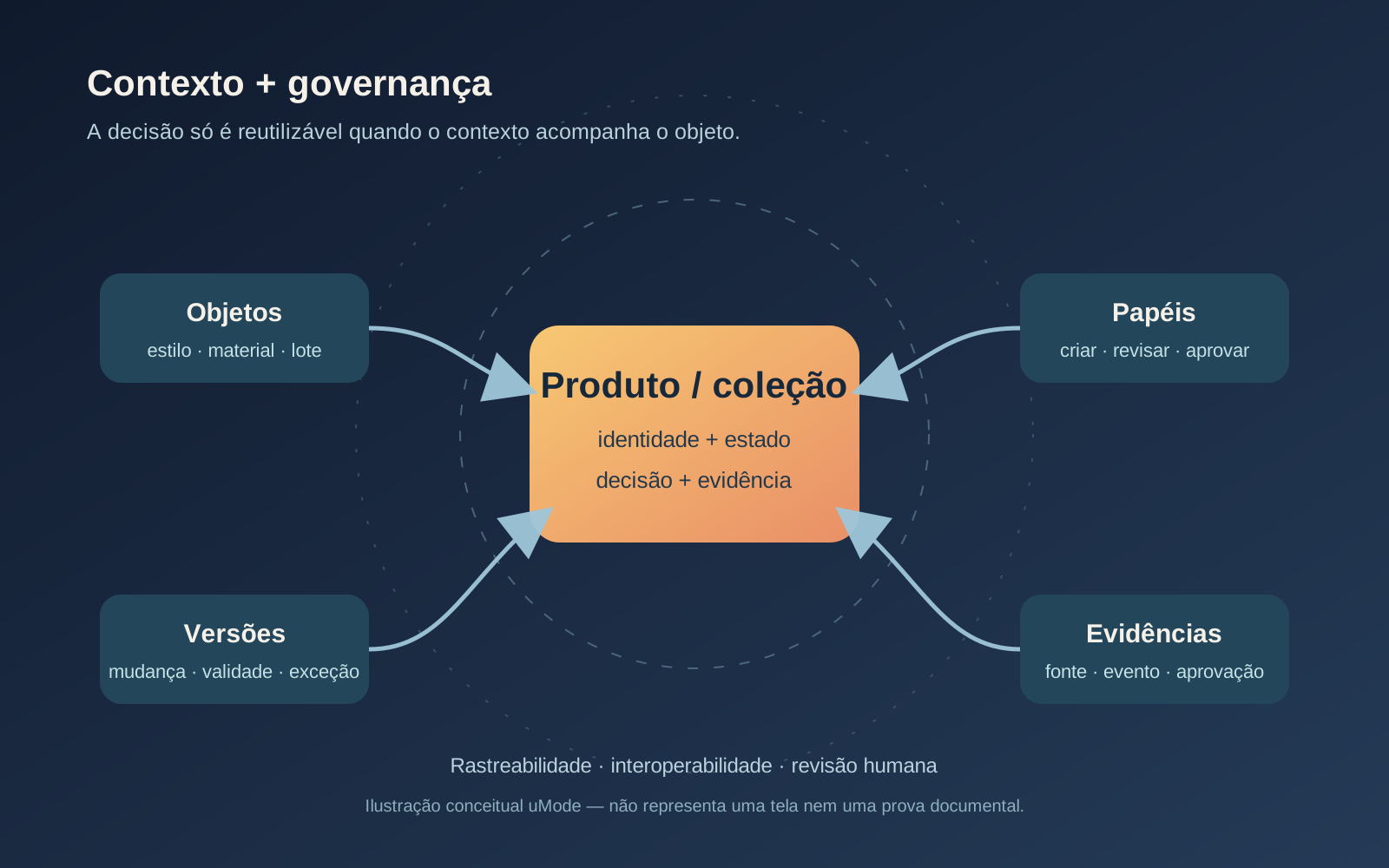
This stage translates the design into a physical arrangement. Yarn quantity, tension, drawing order, width, and density must remain consistent. If these data live in separate controls, an approved product change may fail to reach the loom or may arrive without version history.
What happens on the loom?
The loom performs three primary motions. Shedding separates warp yarns into groups and opens a passage; insertion carries weft from one edge to the other; beat-up pushes the newly inserted weft against the fabric already formed. Warp let-off and fabric take-up control progression and affect pick density. In Jacquard shedding, individual yarns or small groups can be controlled to create broad repeats and intricate designs.
Weft insertion may use a shuttle, rapier, projectile, air jet, or water jet. The method is not interchangeable for convenience: it depends on material, width, construction, and article requirements. In a denim specification, for example, weave, density, yarn count, and warp preparation must converge for the resulting fabric to match the approved sample.
How is construction measured and controlled?
Thread counts per unit length describe the structural density of woven fabric. To make the result reproducible, the record must state direction, method, and unit; an isolated number does not say whether it refers to warp or weft or how it was obtained.
Beyond count, control covers width, mass per area, evenness, defects, tension, and stability after finishing. These parameters make a sample reproducible and allow planned and actual results to be compared without reducing approval to a photograph or scattered comment.
Why does weaving matter in product development?
Weaving turns design decisions into a verifiable industrial sequence. Recording weave, warp plan, densities, insertion method, width, and tolerances in structured fields reduces technical-specification rework, improves handoff between development and suppliers, and gives visibility into sample and approval status.
This reading separates fabric structure, warp preparation, insertion method and process-related defects. "Woven fabric" stops being a generic label and points instead to a construction that can be measured, reproduced and compared.
Verified facts
- Weaving forms a textile structure by interlacing two yarn systems.
Source: cottonworks.com ↗ - Warp yarns run along the fabric length or machine direction, while weft yarns cross the fabric width.
Source: cottonworks.com ↗ - Warping organizes the warp yarns before drawing-in or tying-in prepares them to enter the loom.
Source: cottonworks.com ↗ - Plain, twill, and satin are the three basic weaves; more complex constructions derive from or combine them.
Source: cottonworks.com ↗ - The three primary loom motions are shedding, weft insertion, and beat-up.
Source: archive.nptel.ac.in ↗ - Shedding divides the warp sheet into two groups and opens a passage for the weft yarn or insertion device.
Source: archive.nptel.ac.in ↗ - Sizing applies a uniform film to warp yarns to reduce hairiness and abrasion; this protection lowers breakage during weaving.
Source: archive.nptel.ac.in ↗ - Shuttleless weft-insertion methods include rapier, projectile, air jet, and water jet.
Source: cottonworks.com ↗ - Air-jet looms insert weft with air, while water-jet looms use water.
Source: toyota-industries.com ↗ - In Jacquard shedding, cords connected to individual heddles or small heddle groups enable larger repeats and intricate designs.
Source: cottonworks.com ↗
Related entries
Textile spinning
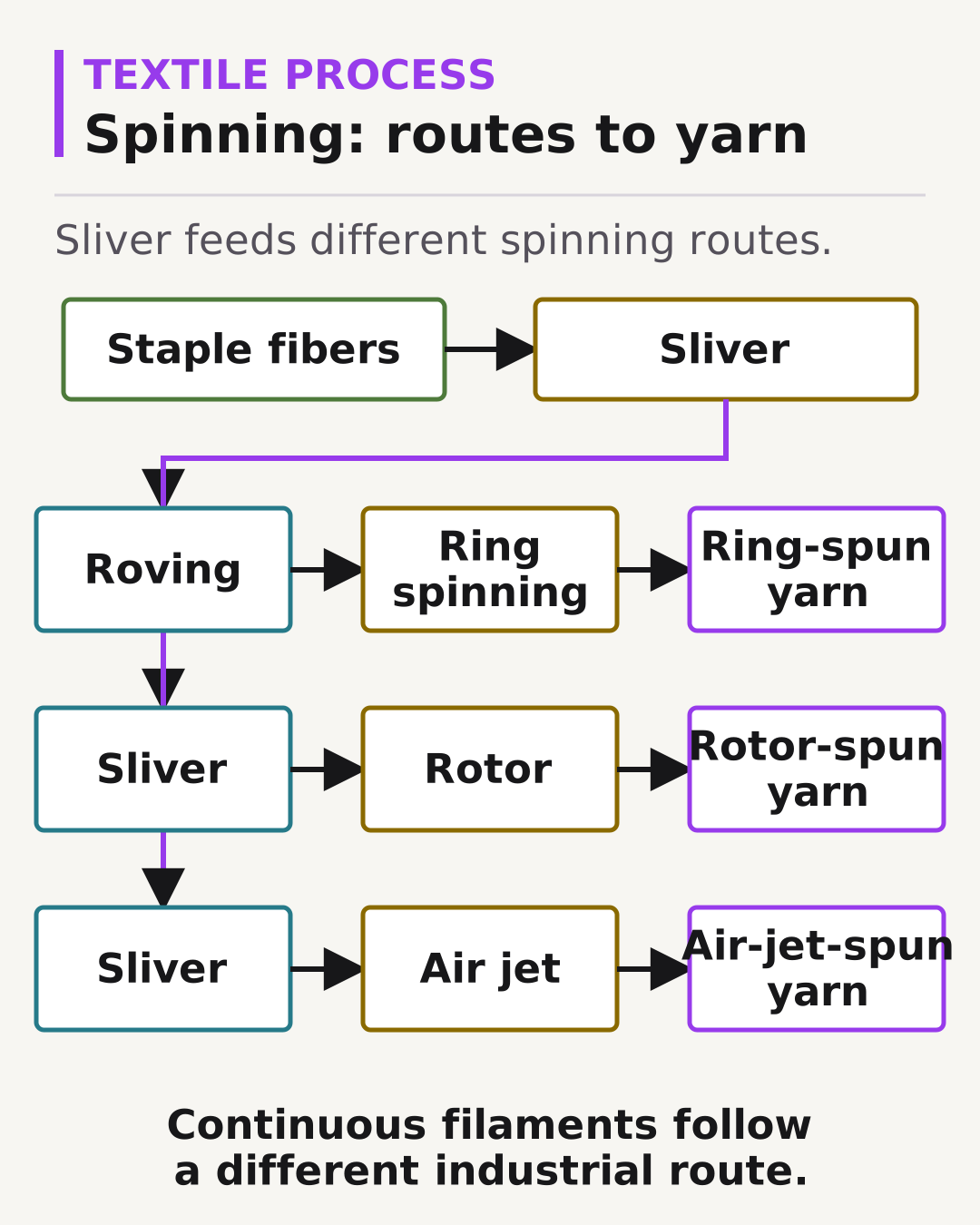
Yarn production follows two distinct technical routes: spinning turns staple textile fibers into yarn through preparation, alignment, attenuation, and consolidation, while continuous-filament processing assembles or transforms filaments without repeating the full preparation used for short fibers. These routes determine properties of yarn sent to weaving or knitting.
Twill
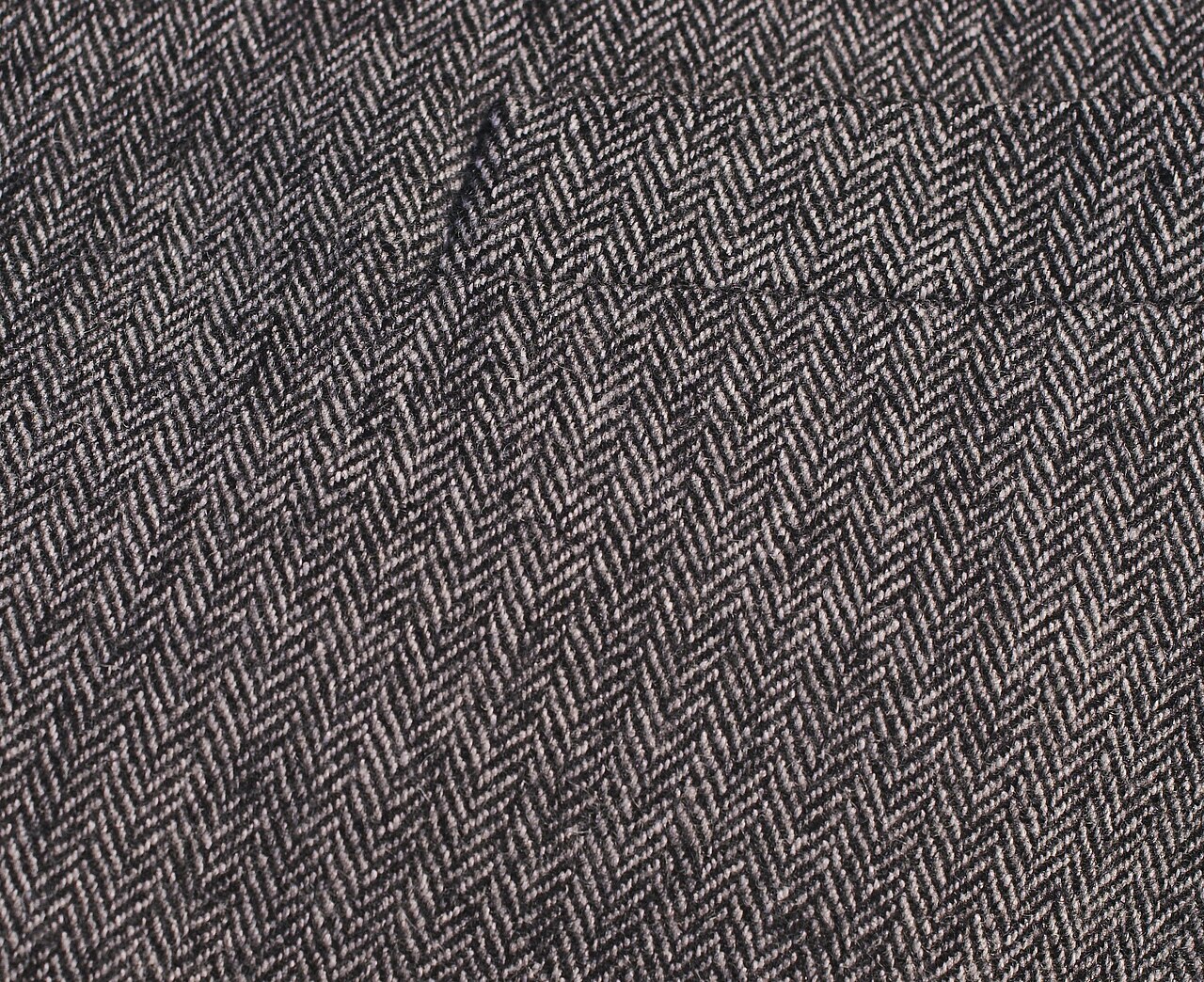
Twill is one of the three fundamental weave structures, recognizable by the diagonal ribs on its surface. Durable and substantial, it is the base structure behind denim, gabardine, and much of utilitarian apparel.
Satin
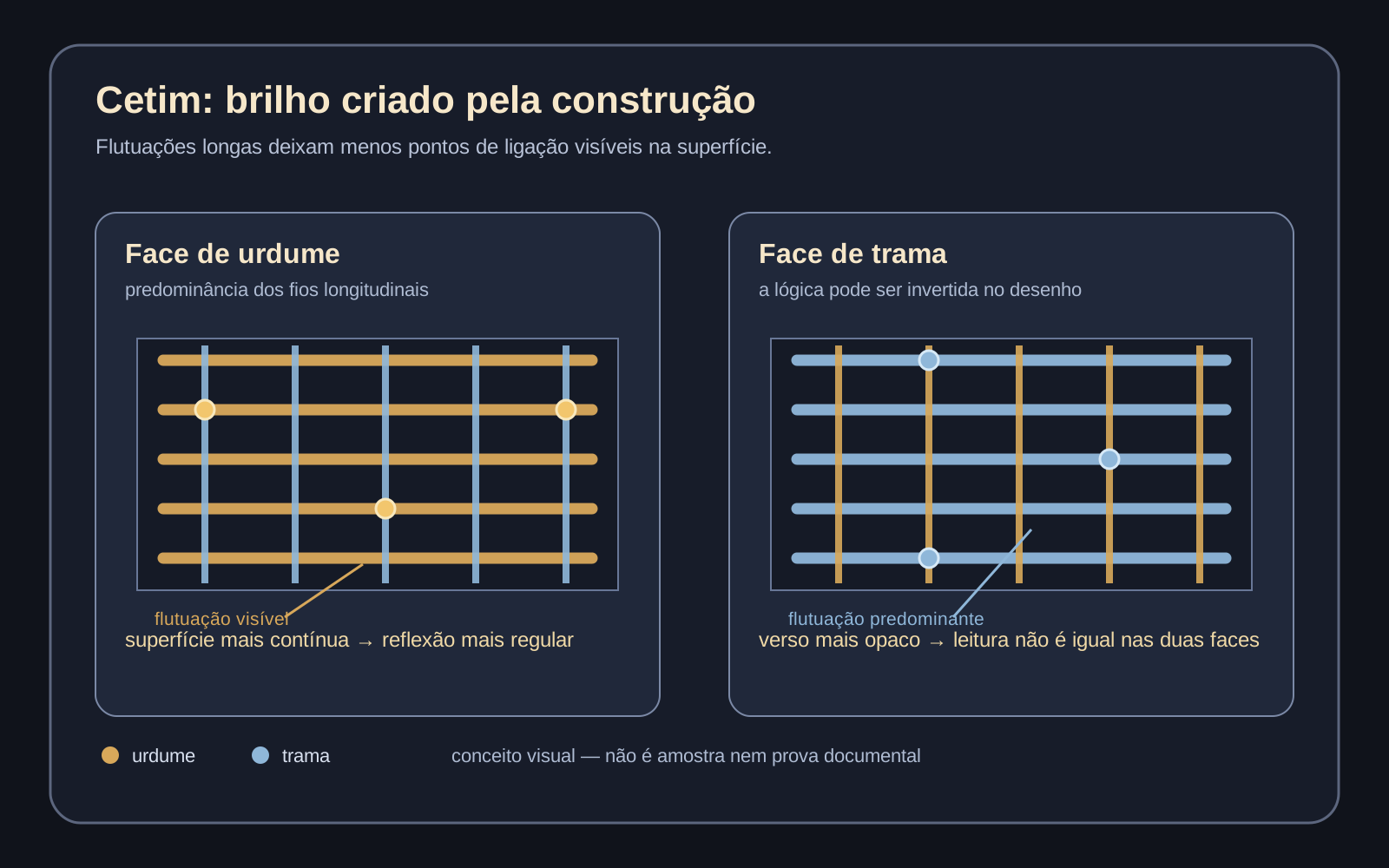
Satin is a weaving construction that creates a smooth, lustrous surface through long floats and widely spaced interlacements. The name does not identify a fibre by itself: filament constructions are commonly called satin, while short-staple articles are often called sateen.
Sources
- https://cottonworks.com/learning-hub/weaving/weaving-basics/
- https://archive.nptel.ac.in/content/storage2/courses/116102005/m1-introduction/l1-introduction.htm
- https://archive.nptel.ac.in/content/storage2/courses/116102005/m4-sizing/l15-objectives%20of%20sizing.htm
- https://www.toyota-industries.com/products/textile/weaving/
Want to apply this to your operation?