Taffeta
Taffeta is a plain-woven fabric with a smooth, crisp hand and a tendency to retain shape. It can be made from several fibres and can change substantially with the fibre, dyeing stage and variant, so the material name alone is not a complete specification for a real article.
On this page
What is Taffeta?
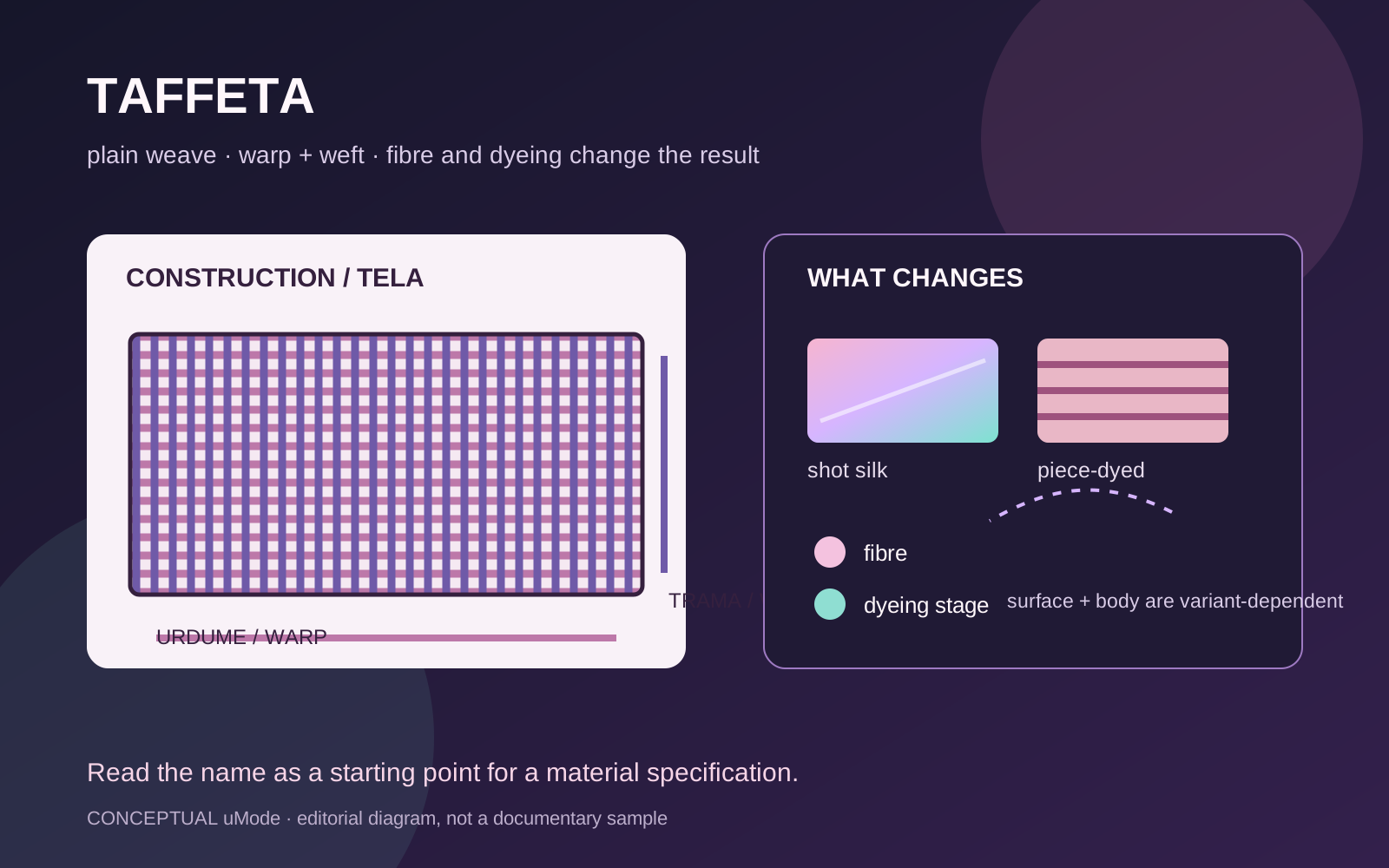
Taffeta is a smooth, plain-woven fabric associated with a crisp, firm hand; possible materials include silk, nylon, cuprammonium rayon, acetate and polyester. The word reached Middle English through French and Italian from Persian tāfta, but that etymology does not identify the fibre in a current article. Weaving is the structural layer: warp runs along the length and weft crosses the width.
The distinction between a variant and a generic name matters. Silk taffeta may be yarn-dyed or piece-dyed: the former is described as stiffer and often used in evening dresses, while the latter is often used for linings and is softer. In shot silk taffeta, differently coloured warp and weft threads create an iridescent appearance that changes with the viewing angle. A specification should therefore state fibre, dyeing variant and observed article rather than treating “taffeta” as a complete technical specification.
How does construction affect behaviour?
Plain weaving interlaces two yarn systems, and plain, twill and satin are presented as the three basic weave designs. For taffeta, this construction is associated with a smooth surface and a tendency to hold shape better than many fabrics that sag or drape. That helps explain its use in wedding dresses, ball gowns and corsets, but it does not guarantee identical results across compositions.
Warp stays under tension during loom work and can experience stress, strain and abrasion as it passes through loom elements. In product development, use this as a checkpoint: compare the approved sample with the received lot and observe direction, usable width, hand, body, transparency and sewing response. A technical specification should distinguish declared data from what was observed in the sample; weaving explains structure but does not replace article-specific testing.
Dyeing stage also changes how the material is read. Yarn dyeing occurs before weaving; piece dyeing occurs after the fabric is woven, and the piece-dyed variant is described as significantly softer than the yarn-dyed one. Record that stage with fibre and finish during development. This keeps a choice of polyester or silk connected to the construction that shapes the surface.
Why does taffeta matter in fashion?
Taffeta matters when a collection needs to connect a smooth surface, body and shape retention to a specific application. Public sources describe uses in ball gowns, wedding dresses, corsets, linings, curtains and wallcovering; a fashion decision should nevertheless remain specific to the piece, variant and care expected. For approval, record the sample, supplier, composition, width and acceptance criterion that will actually be checked.
Shot silk can be useful in a colour story that explores changing colour: differently coloured warp and weft create angle-dependent iridescence. A piece-dyed variant may instead be preferred when a project seeks a softer hand in a lining. These paths are not interchangeable; name the variant in the brief and purchasing document. Quality control should compare the received article with the approved sample without turning one lot’s observation into a universal promise.
Quick questions
Is taffeta always silk? No. The consulted sources list silk, nylon, rayon, acetate and polyester as possibilities. Is taffeta a fibre? No: here the term identifies a fabric and its construction/variant, not one fibre. What distinguishes shot silk? Differently coloured warp and weft, with angle-dependent iridescence. Is the name enough to buy it? No; record composition, variant, construction and sample observations in the technical specification.
Verified facts
- Taffeta is a smooth, plain-woven fabric that can be made from silk, nylon, cuprammonium rayons, acetate or polyester.
Source: en.wikipedia.org ↗ - Taffeta tends to yield a stiff cloth that holds its shape better than many other fabrics and does not sag or drape in the same way.
Source: en.wikipedia.org ↗ - Taffeta is used in ball gowns, wedding dresses, corsets, curtains and wallcovering.
Source: en.wikipedia.org ↗ - Silk taffeta can be yarn-dyed or piece-dyed; piece-dyed taffeta is often used in linings and is softer, while yarn-dyed taffeta is stiffer and often used in evening dresses.
Source: en.wikipedia.org ↗ - The word taffeta reached Middle English through Old French and Old Italian, which borrowed the Persian word tāfta.
Source: en.wikipedia.org ↗ - Weaving interlaces two sets of yarns: warp runs along the fabric length and weft runs across its width.
Source: cottonworks.com ↗ - Plain, twill and satin are the three basic weave designs presented by CottonWorks.
Source: cottonworks.com ↗ - Warp yarns are held under tension and experience stress, strain and abrasion as they move through loom elements.
Source: cottonworks.com ↗ - Modern taffeta was first woven in Italy and France.
Source: en.wikipedia.org ↗ - Shot silk taffeta was one of the most highly sought forms of Byzantine silk.
Source: en.wikipedia.org ↗ - In shot silk taffeta, differently coloured threads are used for weft and warp, producing an iridescent appearance that displays different colours from different angles.
Source: sewport.com ↗ - Today, most raw silk taffeta is produced in India and Pakistan.
Source: en.wikipedia.org ↗
Related entries

Industrial weaving
Weaving is the process of forming fabric by regularly interlacing two yarn systems: warp in the lengthwise direction and weft across the width. The construction results from warp preparation, shed formation, weft insertion and beat-up, and control of yarn delivery and fabric take-up.
Polyester
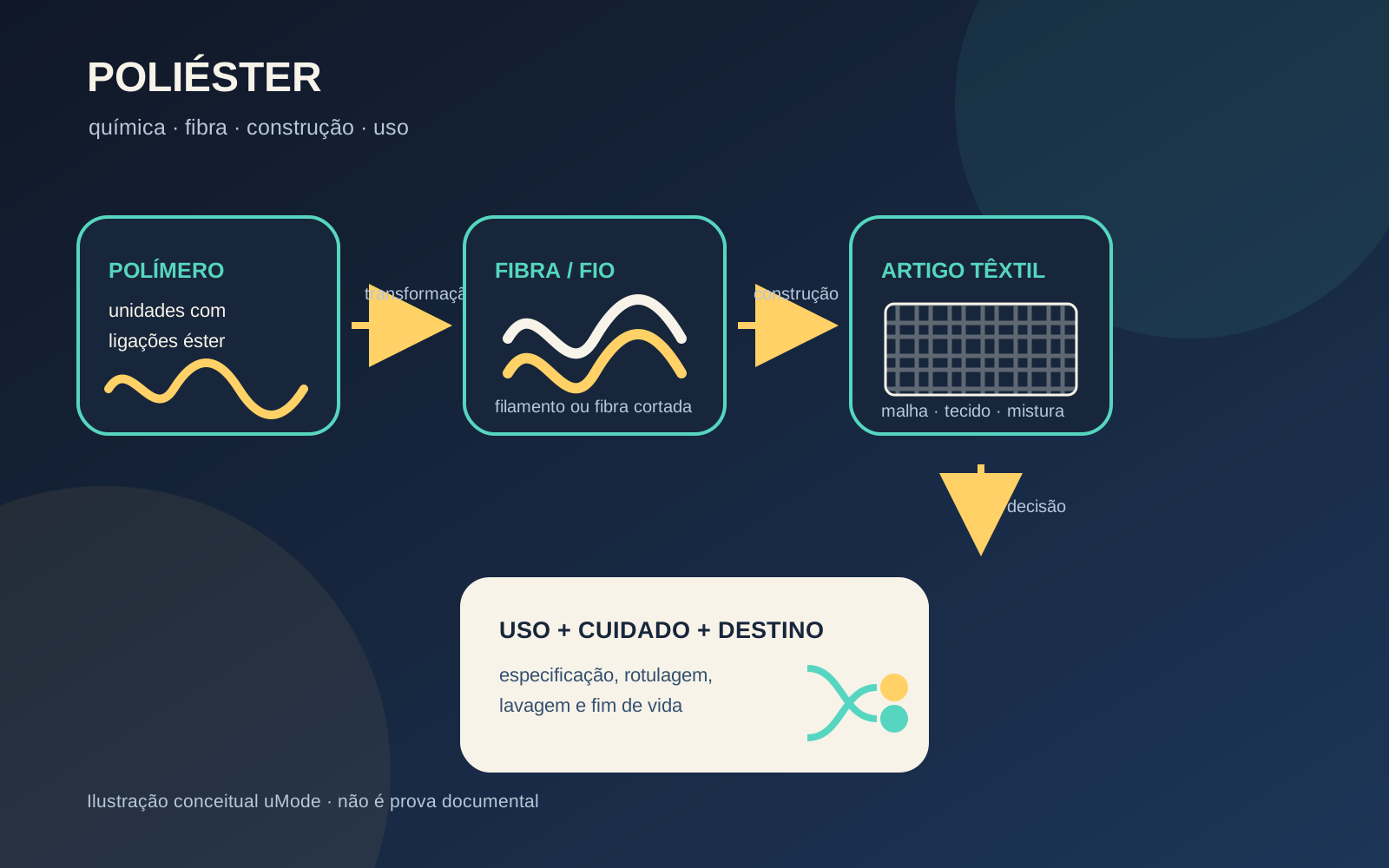
Polyester is a family of polymers with ester linkages; in fashion, the name most often refers to textile fibers and products based on PET. The result still depends on fiber, yarn, construction, and the rules that govern fiber composition and care.

Fashion product technical specification
A technical specification is the controlled information set that translates an approved fashion product into verifiable sampling and manufacturing requirements. It brings together drawings, materials, measurements, construction, tolerances, identification, labelling, comments and revision history; its content varies by category, company, market and stage.
Sources
Want to apply this to your operation?