Textile hemp
Textile hemp is the fibrous material obtained from hemp stalks, especially bast fibre, which can follow different separation and preparation routes before becoming yarn or a textile article. In fashion, the specification must keep fibre, yarn, construction, and labelled composition distinct.
On this page
What is Textile hemp?
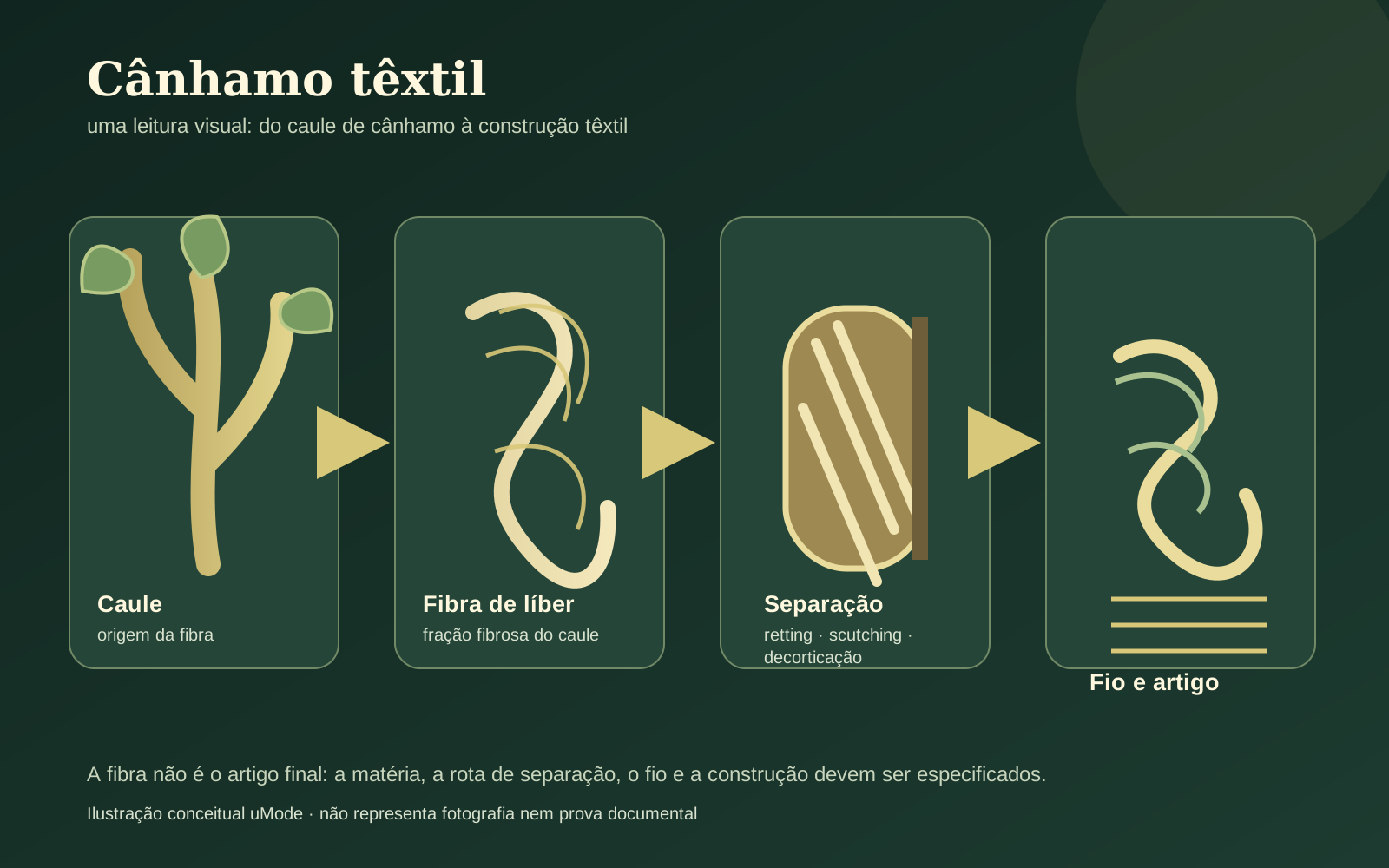
Textile hemp is the fibrous material obtained from hemp stalks. A useful working definition starts with bast fibre and shorter stalk fractions, not with the name of a finished garment. Those fractions can enter textiles and blended fabrics, but “hemp” alone does not identify the yarn, construction, or final composition. When reading alongside cellulosic fibres, keep the raw material separate from the article being assessed.
That distinction is practical: a specification may describe hemp fibre while the received sample is yarn, fabric, or a garment. This entry therefore covers the fibrous material and its movement through the chain without turning a fibre description into an automatic promise about every product.
How does the stalk become usable fibre?
The separation of the woody core and bast fibre is called decortication. In the traditional hemp preparation described, stalks were water-retted before the fibres were beaten away from the inner core by hand in scutching. These stages should not be collapsed: retting, mechanical separation, and later preparation are different operations, and a source describing one route does not prove that every mill uses the same route.
Mechanical routes are also described using crushing and brush rollers, or hammer-milling against a screen. For textile finishing and preparation, the useful control point is to record which route was used and which fraction it produced. That record makes lot comparisons more precise than treating “hemp fibre” as a complete technical specification.
How should the material be specified for a collection?
Start by identifying the stage: hemp fibre, yarn, fabric, or garment. Then record the chosen construction, such as weaving or knitting, and keep the product composition separate from the raw-material description. Hemp terms should not be treated as interchangeable: fibre-grade stalk materials must be separated from other product categories. The article actually received is therefore part of the decision, not an interchangeable detail.
For sourcing, development, and a technical specification, record the supplier, sample identity, declared composition, construction, finish, and acceptance criterion. If a commercial reference says only “hemp,” request the missing information before comparing handle, appearance, or behaviour across articles.
Fibre composition must be shown on the label and marking under the rule applicable to the market. Under Regulation (EU) No 1007/2011, composition is stated for the product and may be stated separately for components in situations set out in the regulation. When there is no uniform Union method of analysis, the laboratory must report the obtained composition, the method used, and its degree of accuracy. For quality control, this supports a simple distinction: a declaration, a test, and a sample each demonstrate what they actually document.
Limits and relations to adjacent materials
Textile hemp is not a synonym for linen, cotton, or a particular fabric. Linen appears here as the source’s texture comparison; cotton and other cellulosic fibres are navigation relations, not equivalences. The material name should also not be used alone as proof of sustainability, durability, comfort, or performance: the decision remains tied to the article, construction, composition, and verification method.
In product language, “hemp” identifies a fibrous material; a technical specification turns that identity into a record; quality control compares the sample with the criterion; and weaving or knitting describe possible constructions. Keeping these layers separate prevents a preparation route from being confused with the finished article.
Verified facts
- Hemp fibre is fibrous material from hemp stalks, including bast fibre and shorter fractions used in textiles.
Source: hemp.com ↗ - Hemp bast fibres are used in textiles and blended fabrics.
Source: en.wikipedia.org ↗ - The separation of the woody core and bast fibre is called decortication.
Source: en.wikipedia.org ↗ - In the traditional hemp preparation described, stalks were water-retted before the fibres were beaten away from the inner core by hand in scutching.
Source: en.wikipedia.org ↗ - Mechanical routes described for separating fibre from the core use crushing and brush rollers or hammer-milling against a screen.
Source: en.wikipedia.org ↗ - Hemp terms should not be treated as interchangeable; fibre-grade stalk materials must be separated from other product categories.
Source: hemp.com ↗ - The fibre composition of a textile product must be indicated on its label and marking under Regulation (EU) No 1007/2011.
Source: eur-lex.europa.eu ↗ - When there is no uniform Union method of analysis, the laboratory must state the obtained composition, the method used, and its degree of accuracy in the report.
Source: eur-lex.europa.eu ↗
Related entries
Cotton
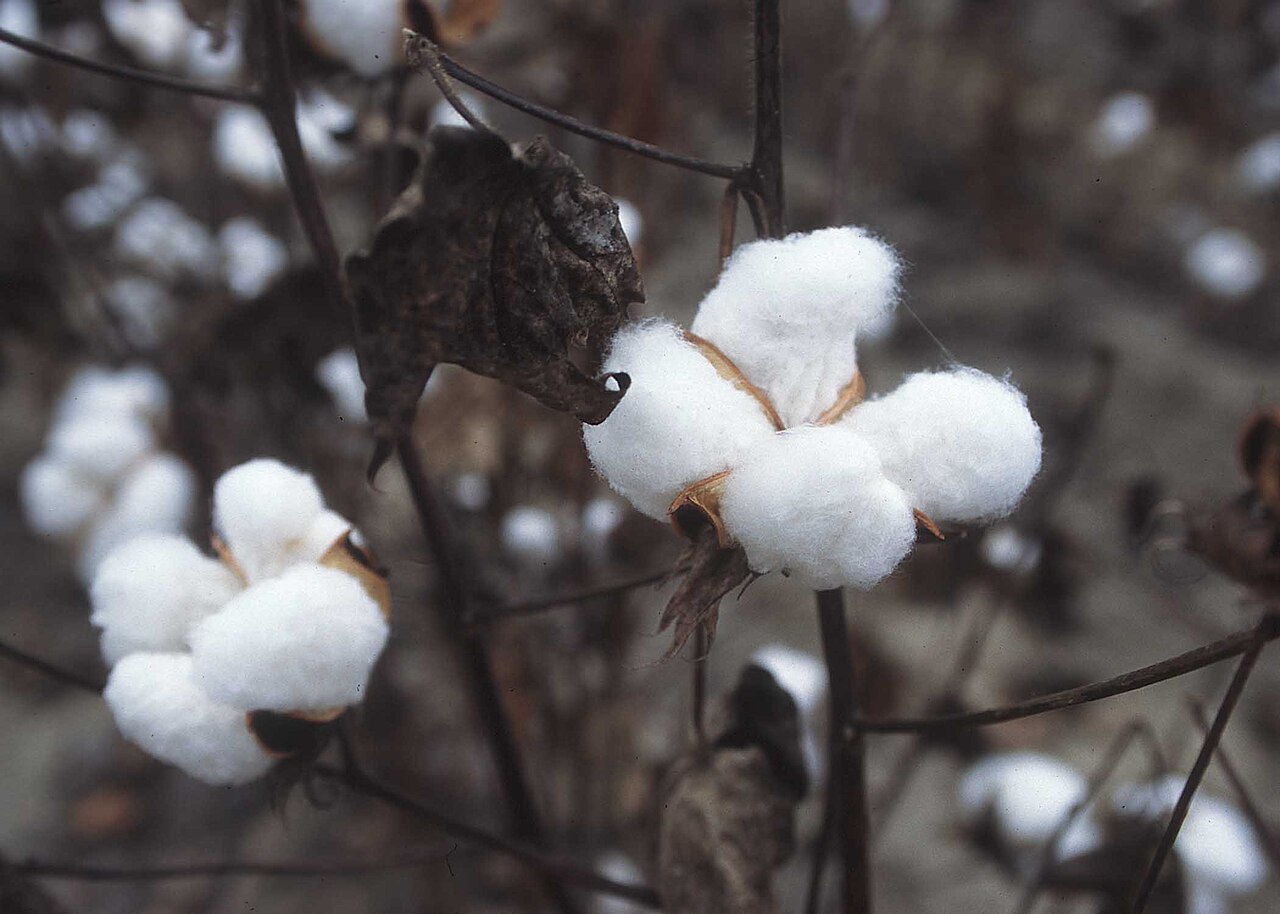
Cotton is the most widely used natural fiber in the global textile industry. Grown around the seeds of the cotton plant (Gossypium), it is prized for comfort, breathability and versatility in apparel.

Industrial weaving
Weaving is the process of forming fabric by regularly interlacing two yarn systems: warp in the lengthwise direction and weft across the width. The construction results from warp preparation, shed formation, weft insertion and beat-up, and control of yarn delivery and fabric take-up.
Industrial knitting
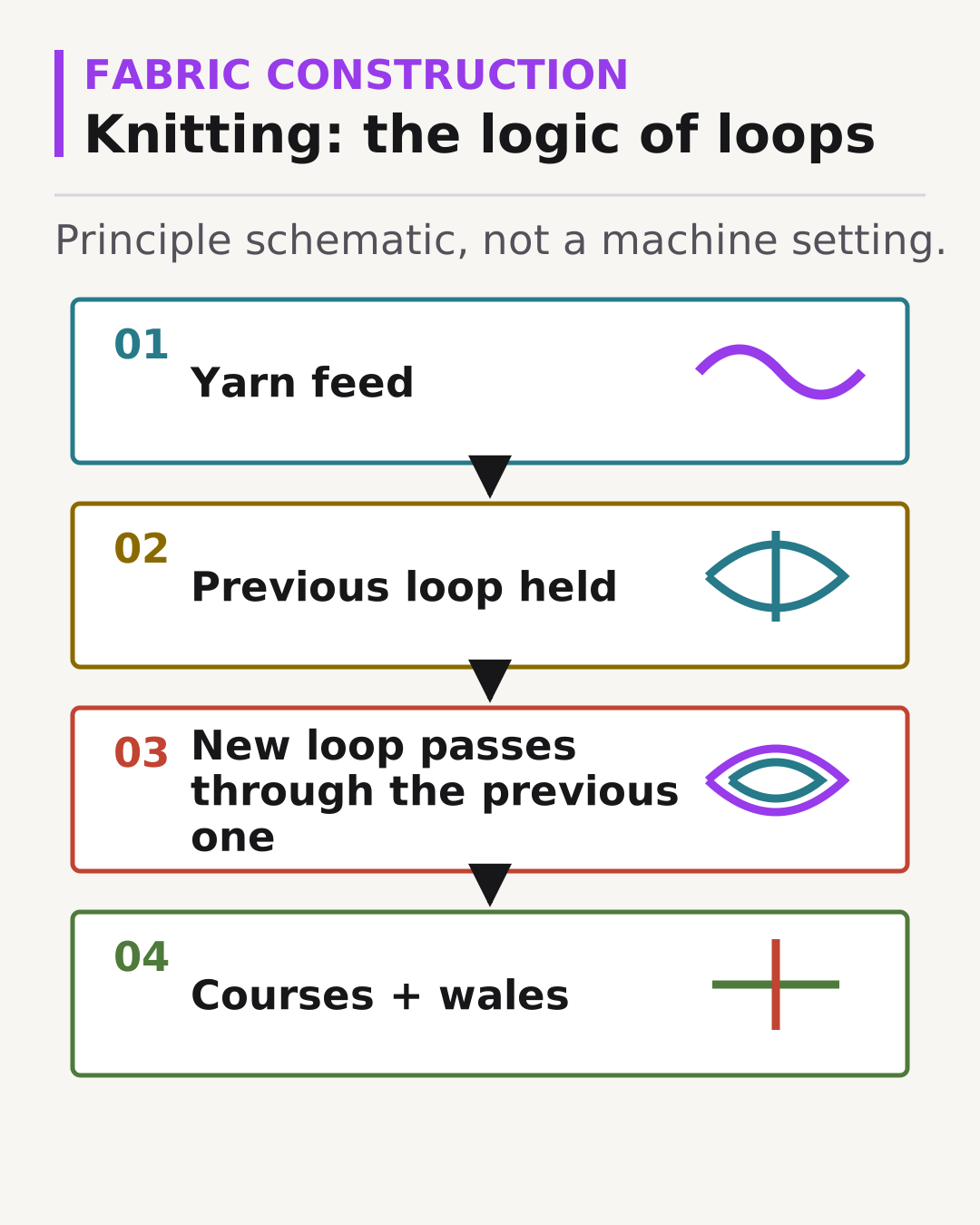
Knitting is the process of forming fabric through series of intermeshed loops. It divides into weft knitting, in which yarn travels across the width and needles form loops in sequence, and warp knitting, in which parallel yarns feed needles that work simultaneously along the fabric length.

Fashion product technical specification
A technical specification is the controlled information set that translates an approved fashion product into verifiable sampling and manufacturing requirements. It brings together drawings, materials, measurements, construction, tolerances, identification, labelling, comments and revision history; its content varies by category, company, market and stage.

Apparel quality control
Apparel quality control combines specifications, inspection, and testing to check whether fabrics, trims, and garments meet the expected performance for a product and end use. The process can examine color, drape, hand, durability, conformance, defects, fit, seam integrity, shrinkage, and drying performance. Quality decisions depend on the product and its intended use.
Sources
Want to apply this to your operation?