Nonwoven
Nonwoven is a material structure made by forming and consolidating a web of fibres or filaments rather than by the conventional construction of warp and weft or knitted loops. In fashion, the useful distinction is between construction, composition, finishing and verified performance.
On this page
What is Nonwoven?
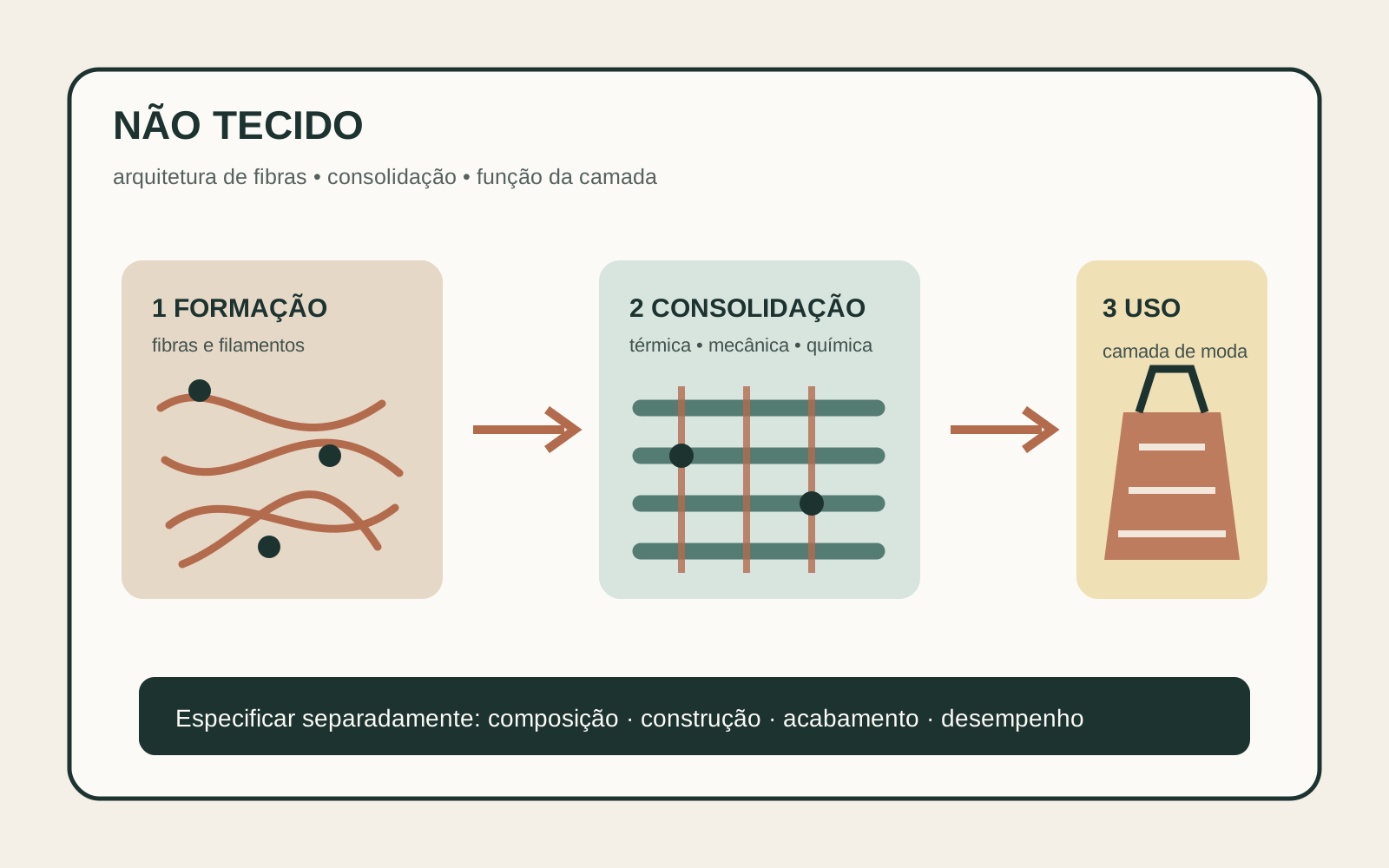
A nonwoven is a structure made by arranging and consolidating fibres or filaments into a sheet or web, without relying on the conventional construction of warp and weft or knitted loops. The term describes construction, not one particular fibre. Polyester, cellulose and other feedstocks may therefore appear in nonwoven articles, while composition must be recorded separately. A web should not be classified as woven fabric, knitwear or felt simply because its surface looks similar.
Manufacturing begins with web formation. The web may use staple fibres or filaments extruded from molten polymer granules. In carding, fibres are opened, blended, conveyed and combed into a web; the resulting distribution is a construction decision that should be related to the layer’s function. This distinction is useful in product data because “nonwoven” identifies a material architecture, while fibre, basis weight and finish describe other dimensions.
How is the web bonded and finished?
A newly formed web has limited initial strength and needs consolidation. EDANA groups the basic mechanisms as thermal, mechanical and chemical bonding. In thermal bonding, calendering applies heat and high pressure through rollers to weld the web; other systems use the thermoplastic behaviour of fibres. The selected method belongs in the article specification and should not be treated as a synonym for the whole category.
After consolidation, finishing treatments can change haptics and repellency. A nonwoven can also be made conductive, flame retardant, water repellent, porous, absorbent or breathable. These possibilities are not universal attributes: development work should record only the performance verified for the concrete construction, composition and finish. Lamination, printing or coating may add layers and functions that need separate entries in the technical specification.
How should fashion teams evaluate a nonwoven?
The practical question in fashion is not only “is it nonwoven?” but “what is this layer for, and how was it built?”. The material may serve as an interlining, reinforcement, lining, structural layer, footwear component or accessory part. That choice calls for a narrow specification: feedstock, web formation, bonding, finish, thickness, basis weight, width, colour and expected behaviour should be separated in product data.
Evaluation should follow the real process of cutting, sewing, bonding, pressing and laundering. For a shared testing language, use quality-control procedures: NWSP procedures are a global reference for testing, describing and communicating about nonwoven materials and related products, and they have been continuously reviewed since first publication in 2005. The selected procedure should match the property under examination, not merely the article’s trade name.
Origin and end of life cannot be inferred from the word “nonwoven”. The European Parliament reports that the European Union is adopting legislation to reduce textile waste and increase textile life cycle and recycling; this makes documentation of composition, layers and separability relevant to the decision without turning construction into automatic proof of sustainability. Materials, finishing and product development should remain connected, but not treated as equivalents.
Verified facts
- Nonwovens manufacturing starts by arranging fibres in a sheet or web.
Source: edana.org ↗ - The web may be formed from staple fibres or filaments extruded from molten polymer granules.
Source: edana.org ↗ - Carding opens and blends fibres, conveys them by air and combs them into a web.
Source: edana.org ↗ - A newly formed web has limited initial strength and therefore needs consolidation by a bonding mechanism.
Source: edana.org ↗ - EDANA describes thermal, mechanical and chemical bonding as the three basic bonding types.
Source: edana.org ↗ - Calendering uses heat and high pressure through rollers to weld fibre webs together.
Source: edana.org ↗ - Finishing treatments can change the haptics and repellency of a nonwoven.
Source: edana.org ↗ - Nonwovens can be made conductive, flame retardant, water repellent, porous, absorbent and breathable.
Source: edana.org ↗ - NWSP procedures are a global reference for testing, describing and communicating about nonwoven materials and related products.
Source: inda.org ↗ - NWSP procedures were first published in 2005 and are maintained through a continuous review process.
Source: inda.org ↗ - The European Parliament reports that the European Union is adopting legislation to reduce textile waste and increase textile life cycle and recycling.
Source: europarl.europa.eu ↗
Related entries

Industrial weaving
Weaving is the process of forming fabric by regularly interlacing two yarn systems: warp in the lengthwise direction and weft across the width. The construction results from warp preparation, shed formation, weft insertion and beat-up, and control of yarn delivery and fabric take-up.
Industrial knitting
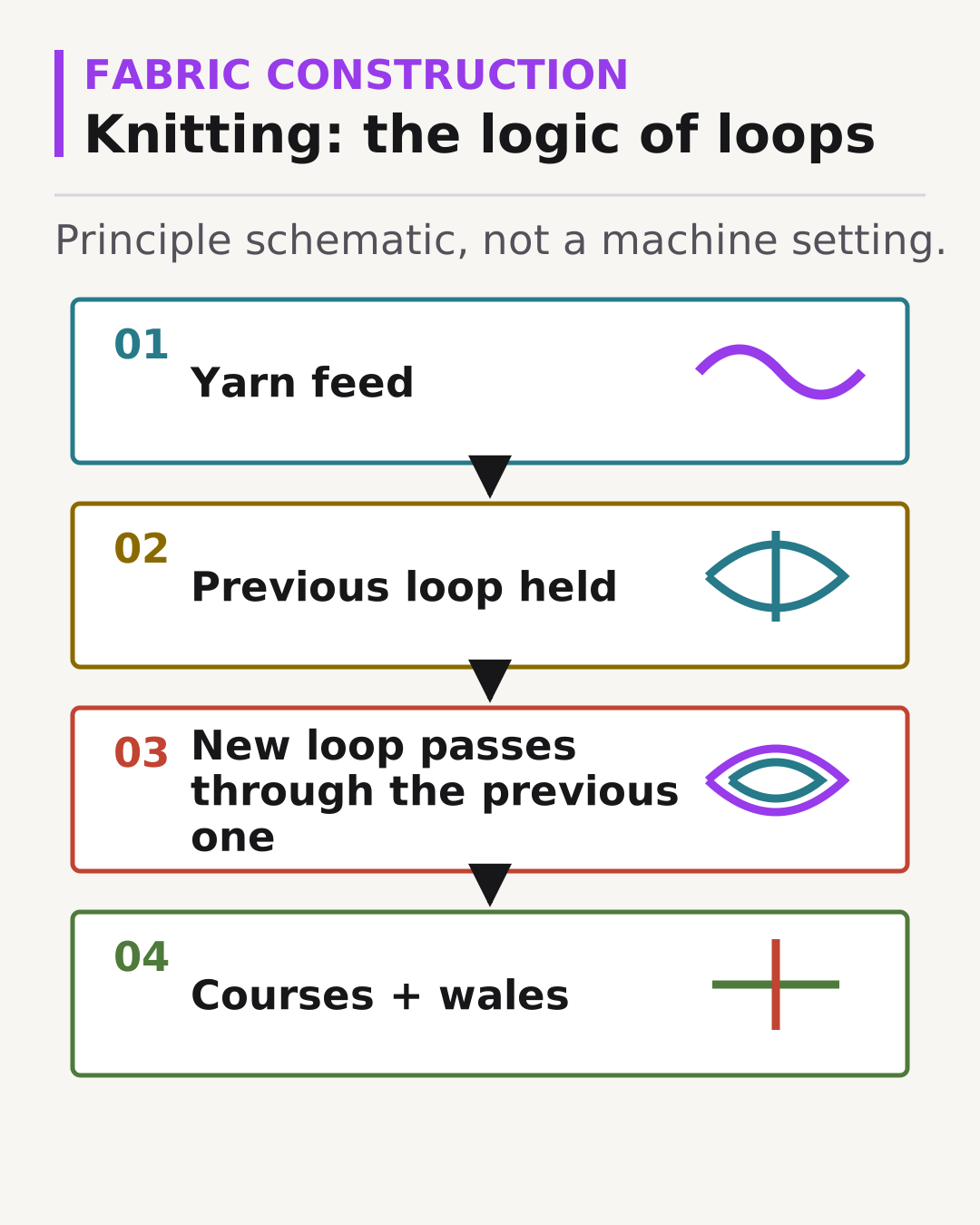
Knitting is the process of forming fabric through series of intermeshed loops. It divides into weft knitting, in which yarn travels across the width and needles form loops in sequence, and warp knitting, in which parallel yarns feed needles that work simultaneously along the fabric length.
Polyester
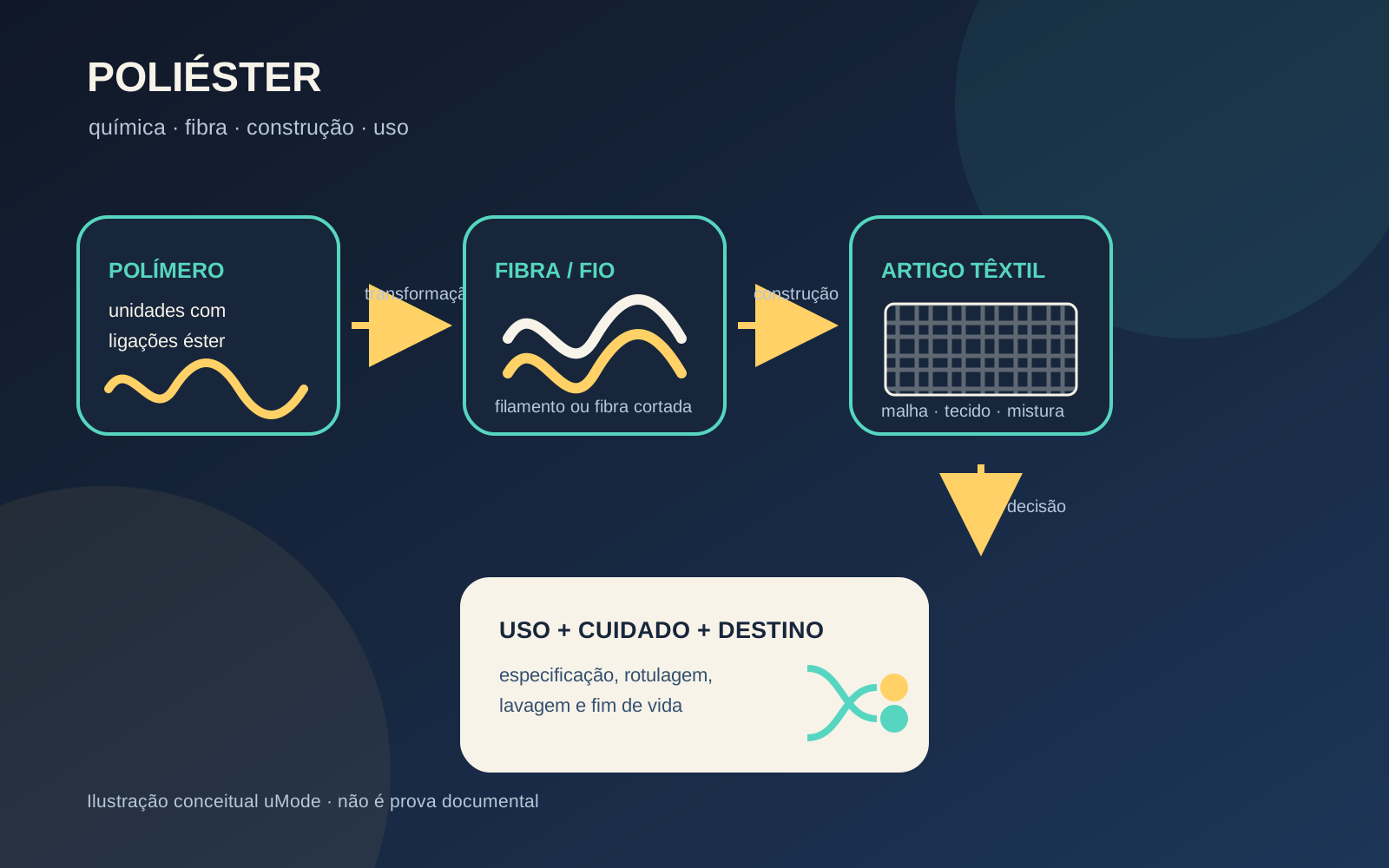
Polyester is a family of polymers with ester linkages; in fashion, the name most often refers to textile fibers and products based on PET. The result still depends on fiber, yarn, construction, and the rules that govern fiber composition and care.

Fashion product technical specification
A technical specification is the controlled information set that translates an approved fashion product into verifiable sampling and manufacturing requirements. It brings together drawings, materials, measurements, construction, tolerances, identification, labelling, comments and revision history; its content varies by category, company, market and stage.

Apparel quality control
Apparel quality control combines specifications, inspection, and testing to check whether fabrics, trims, and garments meet the expected performance for a product and end use. The process can examine color, drape, hand, durability, conformance, defects, fit, seam integrity, shrinkage, and drying performance. Quality decisions depend on the product and its intended use.
Sources
Want to apply this to your operation?