Cashmere
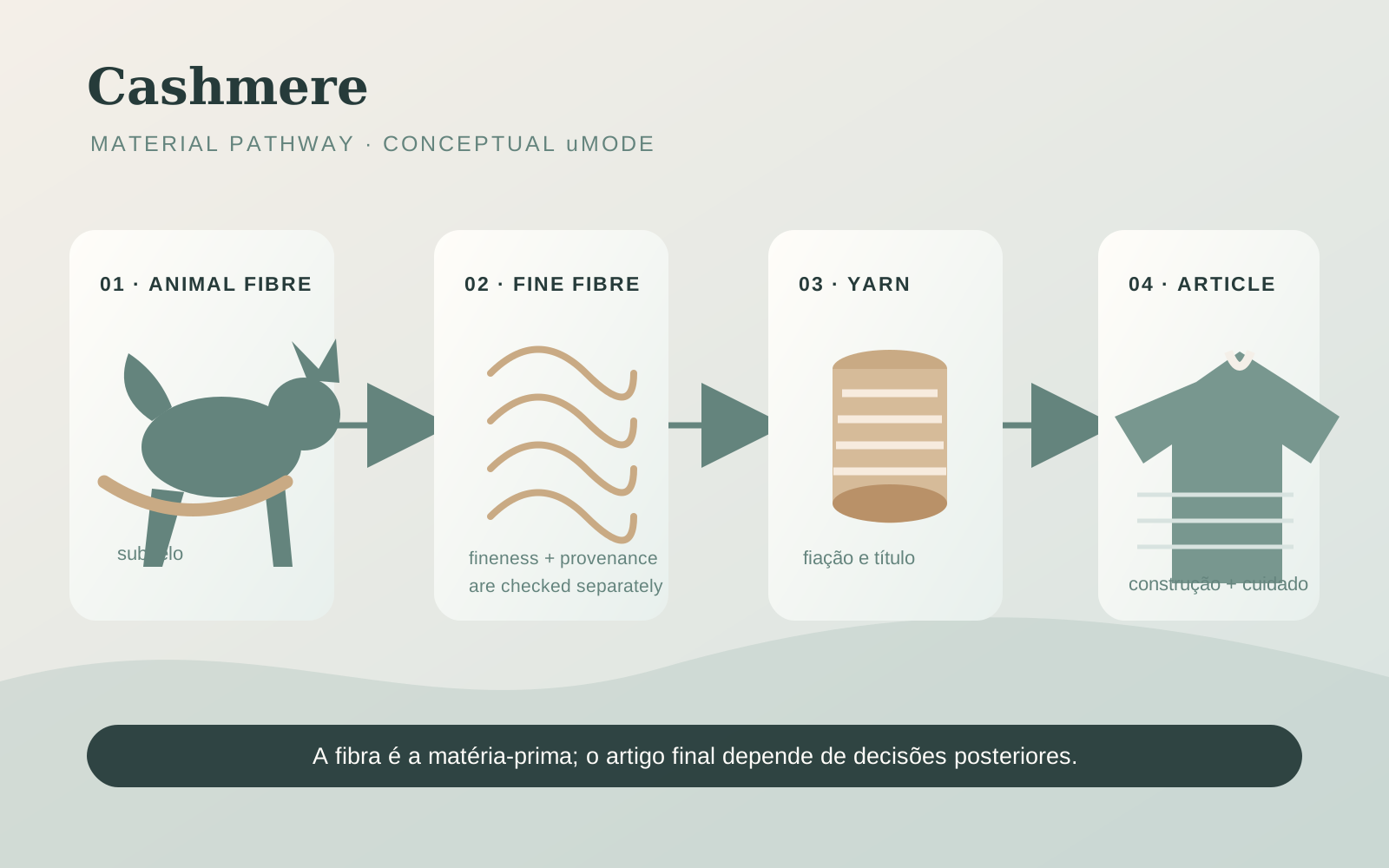
Cashmere is the hair of the cashmere goat, recognised as a textile-fibre name in the European Union. In fashion, the word identifies a raw material; the finished article still depends on fibre selection, spinning, construction, blending, finishing and care.
On this page
What is Cashmere?
Cashmere is the hair of the cashmere goat, recognised as a textile-fibre name in the European Union. In editorial and product work, that definition prevents “cashmere” from becoming a loose synonym for softness: the name points to a specific animal raw material, while the finished article depends on later decisions. The European list also separates a fibre name from the marking of a product’s composition, a useful distinction when reading a tech pack or a label.
The material is associated with Asia’s high plateaus. China, Mongolia, Afghanistan and Iran are listed as significant suppliers, while little cashmere is currently supplied by India’s Kashmir Province, from which the name is derived. Cashmere products from that area first attracted European attention in the early 1800s. This geography explains the history of the term; it does not prove the origin of a particular lot without specific documentation.
How should a collection evaluate the material?
The first decision is to separate fibre, yarn, construction and article. Worldwide cashmere raw-material production is approximately 1% that of sheep’s wool for apparel; CCMI therefore describes cashmere as a rare and expensive luxury fibre. Those facts provide context for availability and price, but they do not replace a declared composition, supplier specification or lot test.
During selection, record the cashmere percentage, other fibres in the blend, yarn count, article structure, finish and intended care. A label and hang tag should state the cashmere percentage for cashmere or cashmere-blend garments, and Regulation (EU) No 1007/2011 is among the rules CCMI cites in that context. Technical specification and quality control turn the information into a checkable criterion; hand feel alone does not identify composition.
What changes between fibre, yarn and garment?
Fibre is the raw material; spinning organises fibres into yarn; knitting or weaving defines construction; finishing and care influence the garment experience. This sequence prevents a texture created by another fibre or by an undisclosed blend from being called “cashmere.” It also prevents the assumption that every article with the same composition will behave identically.
Care should follow the label and the article’s construction. As a general wool reference, Woolmark says wool is naturally resistant to stains, odour and creasing and may require less washing than other fibres; it also recommends a neutral, mild wool detergent. That guidance does not replace the manufacturer’s specific instructions or become a universal guarantee for every cashmere article. Finishing and product development help document the decisions between fibre and garment.
Why does cashmere matter in fashion?
Cashmere matters because it connects raw material, product language and information control. Its relative rarity makes the declared percentage central to purchasing, labelling and comparing articles. For a team, the useful move is not to repeat “premium,” but to make composition, supplier, construction, care and checkable evidence explicit.
The boundary with wool and animal fibres should remain visible: these are related pages, not synonyms. Likewise, technical specification records the decision while quality control checks the received article. When those levels are collapsed, a tactile impression takes the place of composition information; when they are separated, cashmere remains a precise material category within apparel development.
Verified facts
- In the European list of textile-fibre names, cashmere is the hair of the kashmir goat.
Source: eur-lex.europa.eu ↗ - The same European list separates a fibre name from the marking of a textile product's fibre composition.
Source: eur-lex.europa.eu ↗ - Cashmere is associated with the high plateaus of Asia; China, Mongolia, Afghanistan and Iran are listed as significant supplier countries.
Source: cashmere.org ↗ - Little cashmere is currently supplied by India's Kashmir Province, from which the name is derived.
Source: cashmere.org ↗ - Cashmere products from the Kashmir area first attracted European attention in the early 1800s.
Source: cashmere.org ↗ - Worldwide cashmere raw-material production is approximately 1% that of sheep's wool for apparel.
Source: cashmere.org ↗ - CCMI describes cashmere as a rare and expensive luxury fibre.
Source: cashmere.org ↗ - A label and hang tag should state the cashmere percentage when a garment is cashmere or a cashmere blend.
Source: cashmere.org ↗ - CCMI's fraud page cites Regulation (EU) No 1007/2011 among rules related to fibre-content disclosure.
Source: cashmere.org ↗ - Woolmark says wool is naturally stain, odour and crease resistant, so it requires less washing than other fibres.
Source: woolmark.com ↗ - Woolmark recommends a neutral, mild wool detergent and says it helps prolong the lifespan of a wool sweater.
Source: woolmark.com ↗
Related entries
Wool
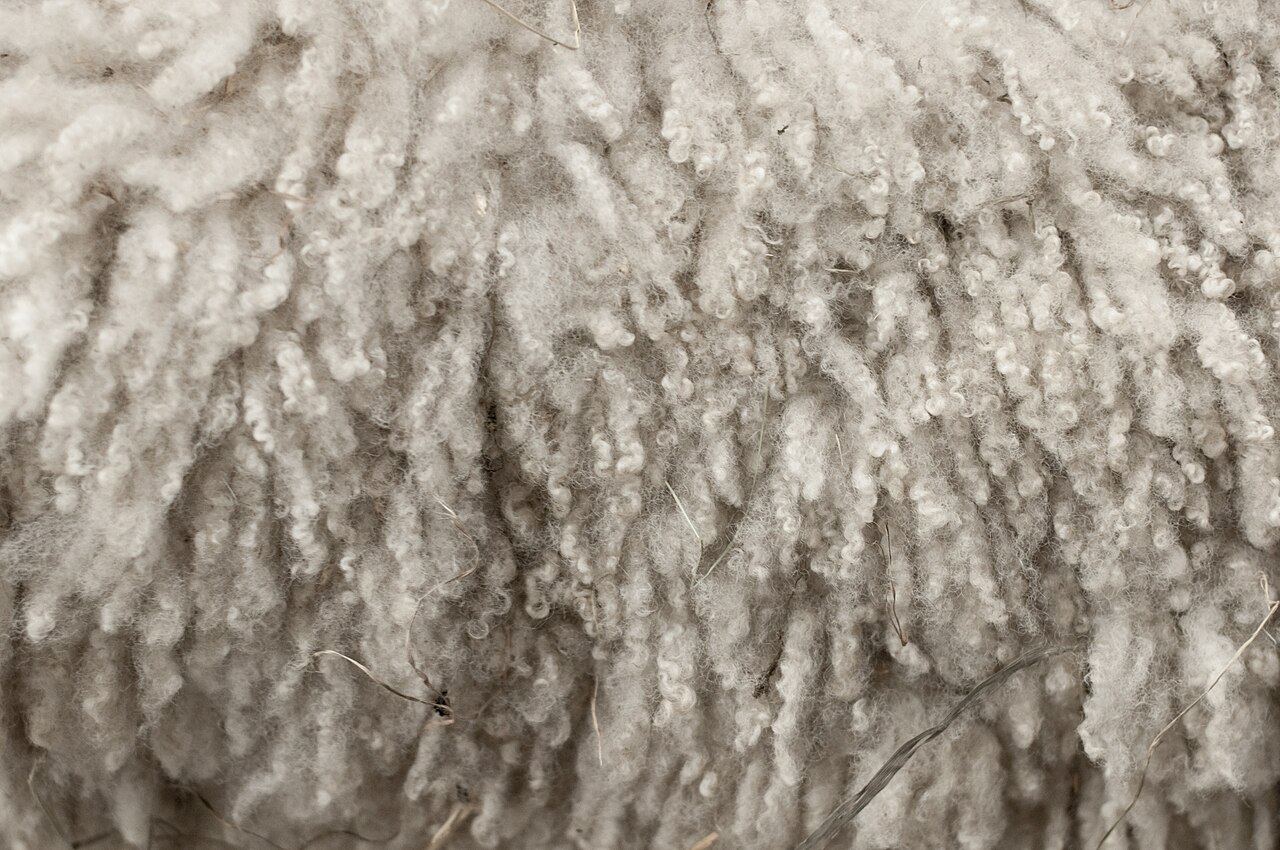
Wool is the textile fiber obtained from the fleece of sheep and other animals. Insulating and elastic, it is the basis of winter knitwear and tailoring.
Industrial knitting
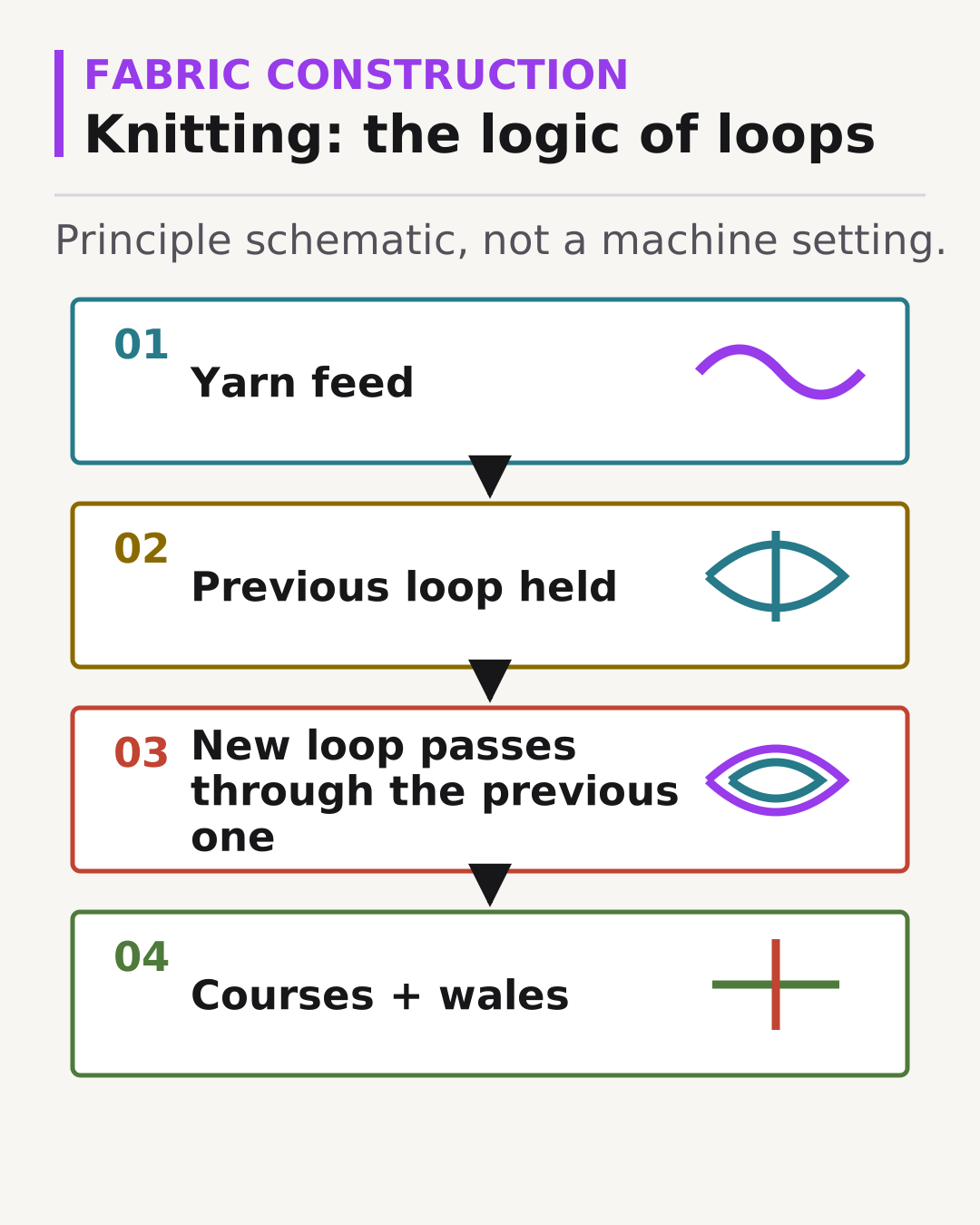
Knitting is the process of forming fabric through series of intermeshed loops. It divides into weft knitting, in which yarn travels across the width and needles form loops in sequence, and warp knitting, in which parallel yarns feed needles that work simultaneously along the fabric length.

Fashion product technical specification
A technical specification is the controlled information set that translates an approved fashion product into verifiable sampling and manufacturing requirements. It brings together drawings, materials, measurements, construction, tolerances, identification, labelling, comments and revision history; its content varies by category, company, market and stage.

Apparel quality control
Apparel quality control combines specifications, inspection, and testing to check whether fabrics, trims, and garments meet the expected performance for a product and end use. The process can examine color, drape, hand, durability, conformance, defects, fit, seam integrity, shrinkage, and drying performance. Quality decisions depend on the product and its intended use.
Sources
Want to apply this to your operation?