Chiffon
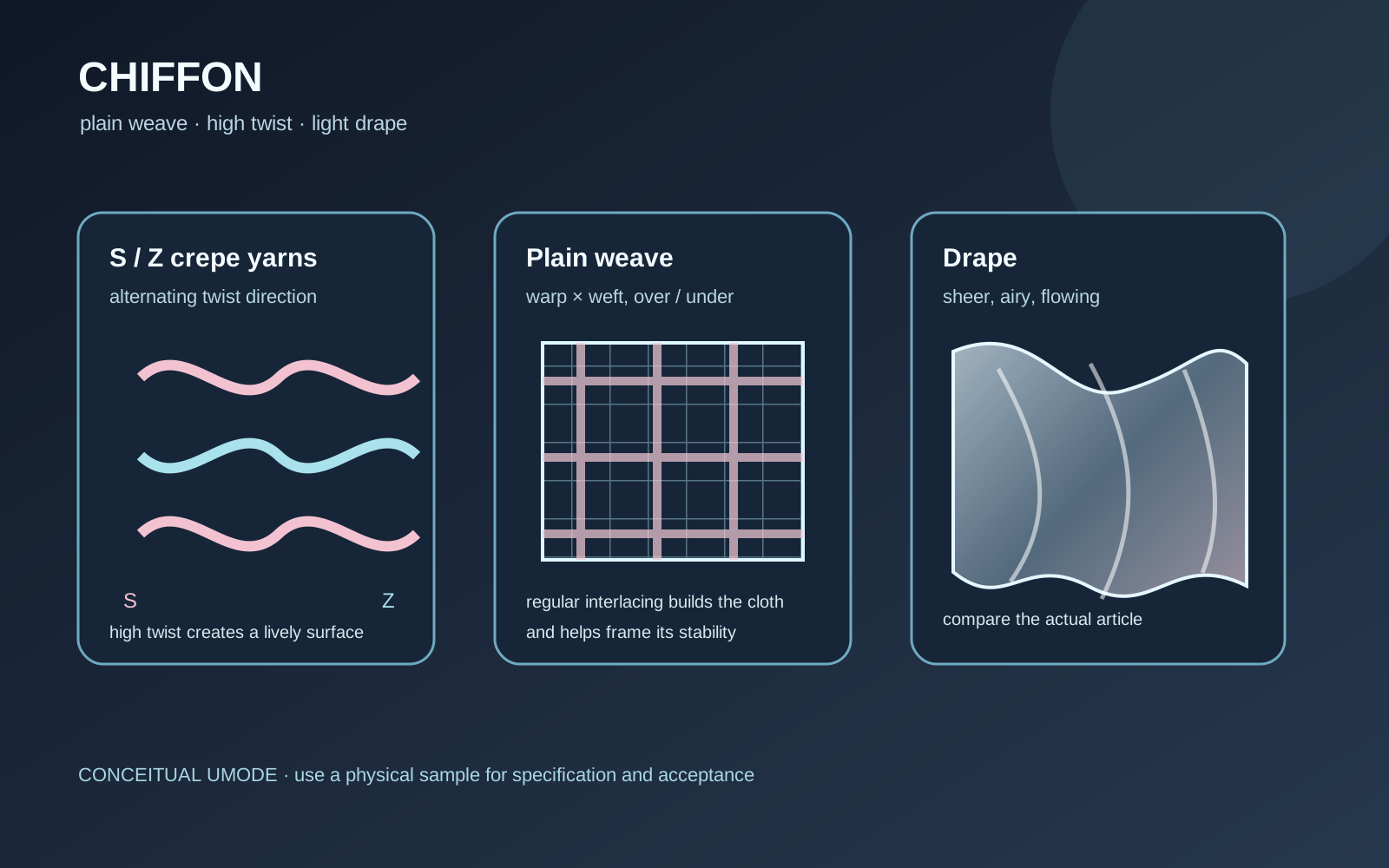
Chiffon is a lightweight, sheer, balanced plain-woven fabric made with alternating S- and Z-twist crepe yarns. The name describes a construction and visual behaviour rather than one fibre: an article may use natural or synthetic fibres, so a specification should separate fibre content, structure, drape and finish.
On this page
What is Chiffon?
Chiffon is a lightweight, sheer, balanced plain-woven fabric. Plain weave describes the regular interlacing of warp and weft; in chiffon, that base is made with alternating S- and Z-twist high-twist crepe yarns. The term should not be treated as a synonym for silk: it identifies a textile article whose appearance depends on construction, while fibre content may vary.
Twist is central to reading the material. Crepe yarn tends to be tighter than standard yarn and, after weaving, its twist creates slight puckering in both directions. The result combines sheerness, a subtly irregular surface and some apparent stretch. In development, inspect the sample open and draped; a flat photograph cannot describe the article’s behaviour by itself.
How should fibre, structure and behaviour be kept separate?
Fibre content should be recorded separately from structure. Chiffon can be made from natural or synthetic fibres, including nylon, polyester and rayon. Two samples called chiffon can therefore require their own comparisons of handle, lustre, stability and finish; the fabric name is not a performance guarantee.
Weaving helps explain the base: in plain weave, filling passes over and under successive warp threads, repeating the alternation in the next row. Structural firmness is linked to how frequently those threads interlace. For a tech pack, record at least the declared fibre content, supplier article, width, weight where available, finish, lot and reference sample. These are specification practices, not substitutes for checking the received fabric.
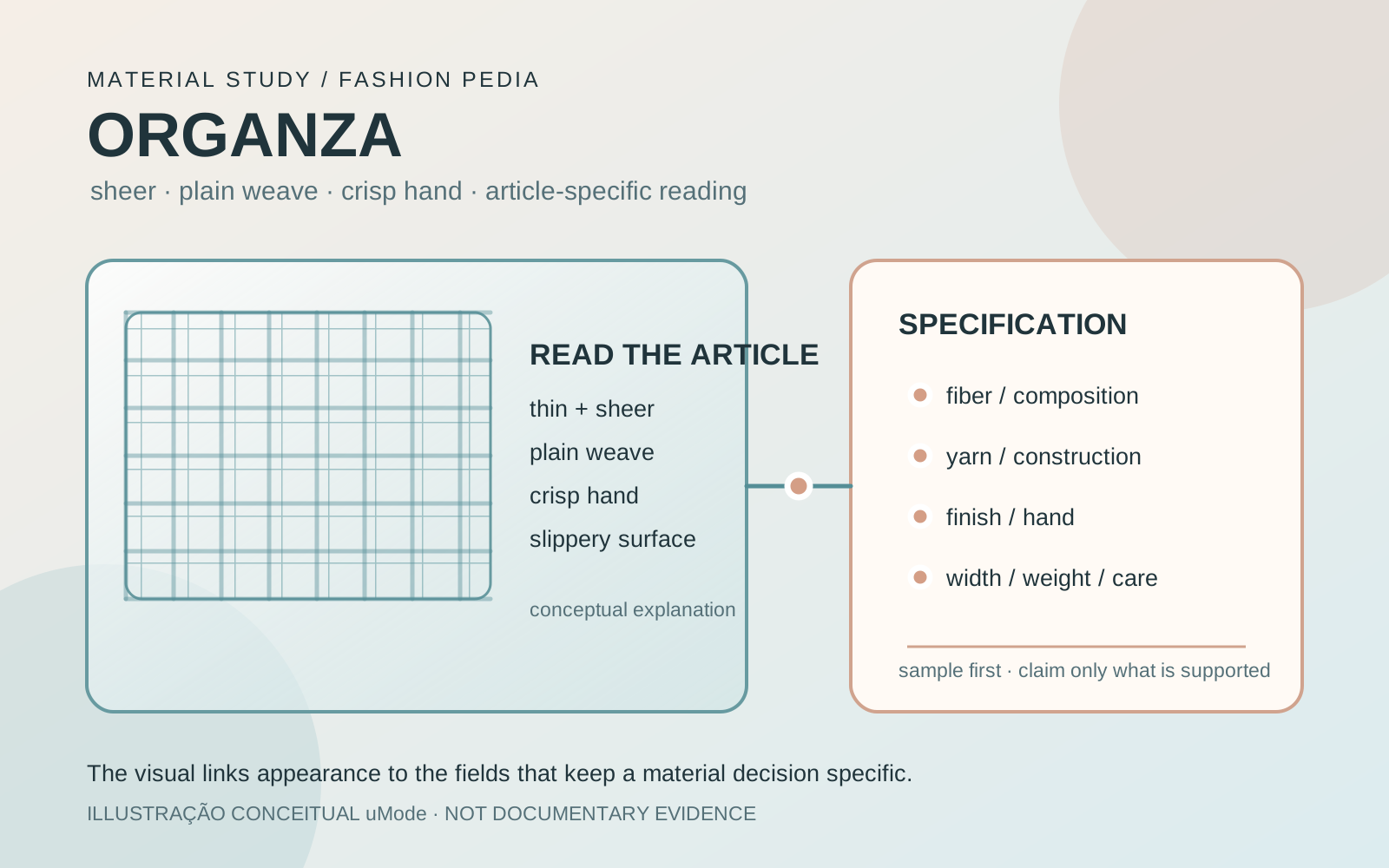
Drape is a decisive modelling variable. Chiffon is associated with a shimmery, sheer appearance and, under magnification, resembles a fine net or mesh. Compared with organza, it is more flowing and airy when draped, while organza is stiffer. Base the decision on the sample in the design and fitting, because the difference between visual intention and the received article appears in movement, coverage and volume.
Where does chiffon enter the product, and how is risk controlled?
In modern Western fashion, chiffon is most commonly used in evening wear, especially as an overlay. That use draws on its light, floating appearance, but it does not justify automatically expanding the list to every garment or market. Record the intended use in the specification and compare it with the approved sample.
Fraying is a construction risk: because chiffon is lightweight, it frays easily. The source specifies bound or French seams to stop the fabric from fraying. In a quality-control routine, inspect the cut edge, seam opening, transparency over the lining and drape in motion. Record the result by lot and compare it with the approved standard; a conceptual illustration or a nominal description is not physical proof of the article.
The boundary with a tech pack and patternmaking is operational. The tech pack names fibre content and construction; patternmaking determines lines, volume and coverage; fitting observes the article on the body. Product development brings those decisions together without confusing fibre, fabric, finish and purpose. Chiffon therefore remains a specific material entry, not an interchangeable label for every light or sheer fabric.
Quick questions about chiffon
Is chiffon a fibre? No: it describes a fabric, and its content may be natural or synthetic. Why does it drape fluidly? The combination of plain weave, high-twist crepe yarns, sheerness and slight puckering contributes to the observed behaviour, which should be confirmed in the sample. Are chiffon and organza the same? No; the source differentiates flowing, airy chiffon from stiffer organza. How can fraying be reduced? Plan bound or French seams and validate the solution on the specific article.
Verified facts
- Chiffon is a lightweight, sheer, balanced plain-woven fabric woven from alternate S- and Z-twist high-twist crepe yarns.
Source: en.wikipedia.org ↗ - In plain weave, texture varies with yarn counts and the relative density of the threads.
Source: textileschool.com ↗ - After weaving, crepe yarns pucker the fabric slightly in both directions.
Source: en.wikipedia.org ↗ - Chiffon drapes well and has a shimmery, sheer appearance; under magnification it resembles a fine net or mesh.
Source: en.wikipedia.org ↗ - Chiffon can be produced from natural or synthetic fibres, including nylon, polyester and rayon.
Source: en.wikipedia.org ↗ - Because it is lightweight and frays easily, chiffon requires bound or French seams to stop the fabric from fraying.
Source: en.wikipedia.org ↗ - In modern Western fashion, chiffon is most commonly used as an overlay in evening wear.
Source: en.wikipedia.org ↗ - When draped, chiffon is more flowing and airy than organza, which is stiffer.
Source: en.wikipedia.org ↗ - In plain weave, filling threads pass over and under successive warp threads and repeat the alternating pattern in the following row.
Source: textileschool.com ↗ - The firmness of a woven structure depends on the frequency of interlacing between warp and weft threads.
Source: textileschool.com ↗
Related entries
Sources
Want to apply this to your operation?