Riachuelo
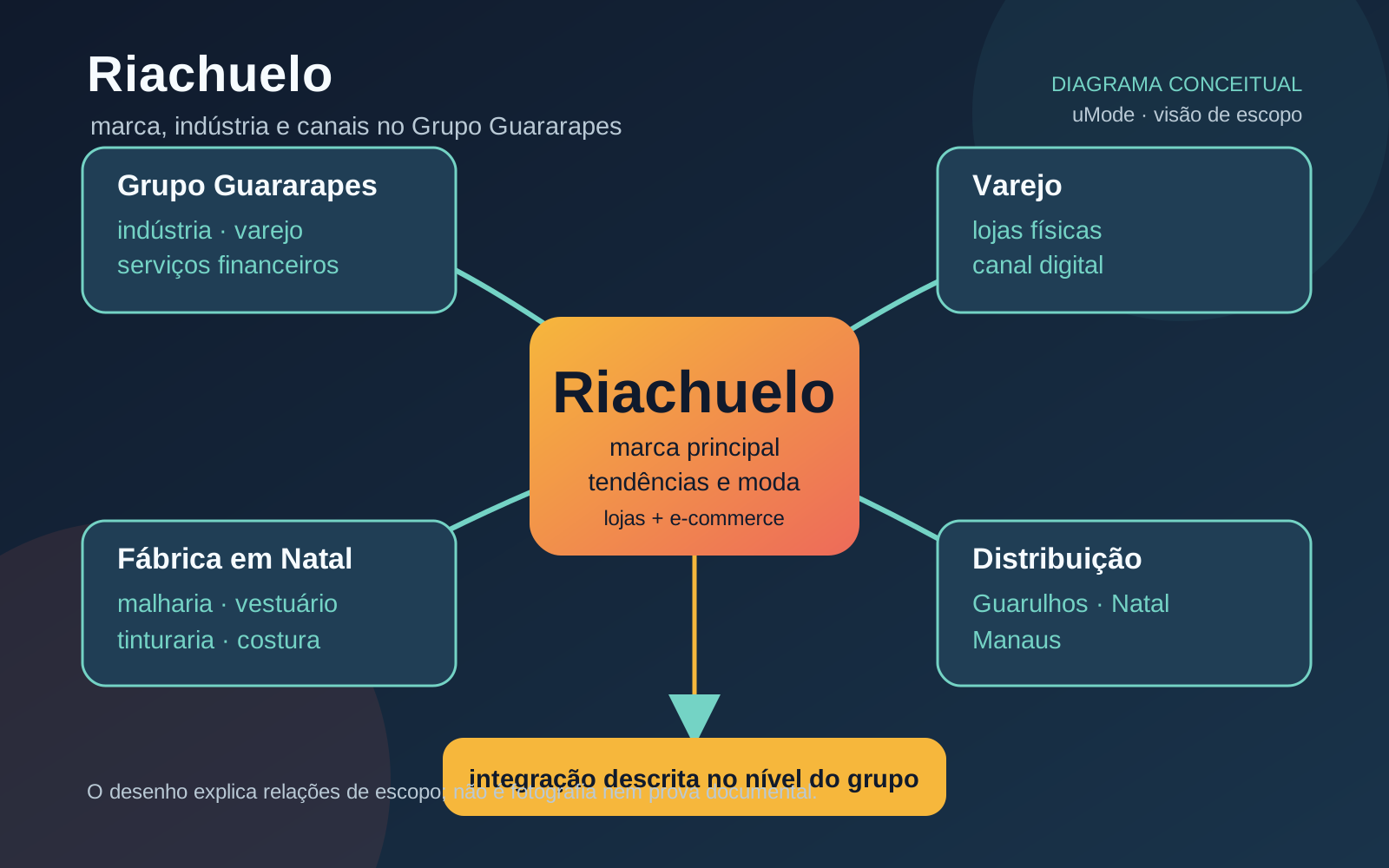
Riachuelo is the main brand of Grupo Guararapes, a Brazilian group that describes its business as vertically integrated across industry, retail, and financial services. The brand is tied to garment production, the Lojas Riachuelo store network, and e-commerce, without implying that every item sold is made in-house.
On this page
What is Riachuelo?
Riachuelo is Grupo Guararapes’ main brand, according to the investor-relations page, and connects merchandise development with stores and e-commerce. Keeping the entities separate matters: Riachuelo is the brand, while Grupo Guararapes is the group that describes integration across industry, retail, and financial services.
The institutional presentation positions Riachuelo as a brand focused on democratizing trends and aspirational fashion. That wording describes the role assigned to the brand by the company; it is not an independent measure of market share or consumer preference.
How does Riachuelo relate to Grupo Guararapes’ fashion chain?
The relationship is vertical at group level: the investor-relations source combines garment production with resale through the controlled Lojas Riachuelo network and e-commerce. The institutional operation also identifies a factory in Natal and distribution centers in Guarulhos, Natal, and Manaus. In supply-chain terms, this connects product development, garment manufacturing, distribution centers, and fashion retail without making “integration” a synonym for in-house production of every product.
The Guararapes Factory is described as participating in knitting, apparel, dyeing, laundry, sewing, and customization. These stages locate the industrial operation in the product flow; the evidence does not establish that every collection, fabric, or commercial item passes through all of them.
What is the company history associated with Riachuelo?
The institutional chronology begins in 1947, when Nevaldo and Newton Rocha opened the A Capital fabric store in Natal. This is the origin story told for the group connected to Riachuelo; it should not be read as the founding date of the retail brand in its current form.
The same documentation organizes the company around two operating axes: goods and financial services offered by Midway Financeira. In retail, the platform brings together Riachuelo, Casa Riachuelo, Carter’s, and FANLAB; the investor-relations source reports more than 440 physical stores in Brazil. The group’s institutional page, in turn, describes more than 400 physical addresses alongside e-commerce, a factory, the finance business, and three distribution centers. The difference belongs to the pages and their reporting frames; it need not be collapsed into one number.
Why does this structure matter in fashion?
Riachuelo is a useful case for understanding how a retail brand can be presented alongside industry, distribution, and financial services within one group. The institutional page states that the Group’s production is destined for Riachuelo’s physical and digital channels; this is a corporate description of the operation, not proof that the brand operates without external suppliers.
For scope comparisons, fashion sourcing covers source selection, collection management covers coordination of lines and decisions, and the textile chain covers the wider production path. Fashion retail locates the consumer-facing channel. These links help prevent functions and assets documented at Grupo Guararapes level from being attributed to the brand alone.
Connections
Grupo Guararapes · fashion retail · fashion sourcing · collection management · textile chain · garment manufacturing
Verified facts
- Grupo Guararapes describes its business model as fully integrated, bringing together industry, retail, and financial services.
Source: ri.riachuelo.com.br ↗ - The history of Grupo Guararapes began in 1947, when Nevaldo and Newton Rocha opened the A Capital fabric store in Natal, Rio Grande do Norte.
Source: ri.riachuelo.com.br ↗ - In the Goods segment, the company’s garment production is combined with resale through the controlled Lojas Riachuelo store network and e-commerce.
Source: ri.riachuelo.com.br ↗ - The Guararapes Factory in Natal is involved in stages including knitting, apparel, dyeing, laundry, sewing, and customization.
Source: ri.riachuelo.com.br ↗ - The Group’s retail platform brings together Riachuelo, Casa Riachuelo, Carter’s, and FANLAB and reports more than 440 physical stores in Brazil.
Source: ri.riachuelo.com.br ↗ - The investor-relations source presents Riachuelo as the Company’s main brand, focused on democratizing trends and aspirational fashion.
Source: ri.riachuelo.com.br ↗ - The group’s described operation includes the Riachuelo retail network, e-commerce, one factory in Natal, Midway Financeira, and three distribution centers in Guarulhos, Natal, and Manaus.
Source: riachuelo.com.br ↗ - The institutional page states that the Group’s production is destined for Riachuelo’s physical and digital sales channels.
Source: riachuelo.com.br ↗
Related entries
Lojas Renner
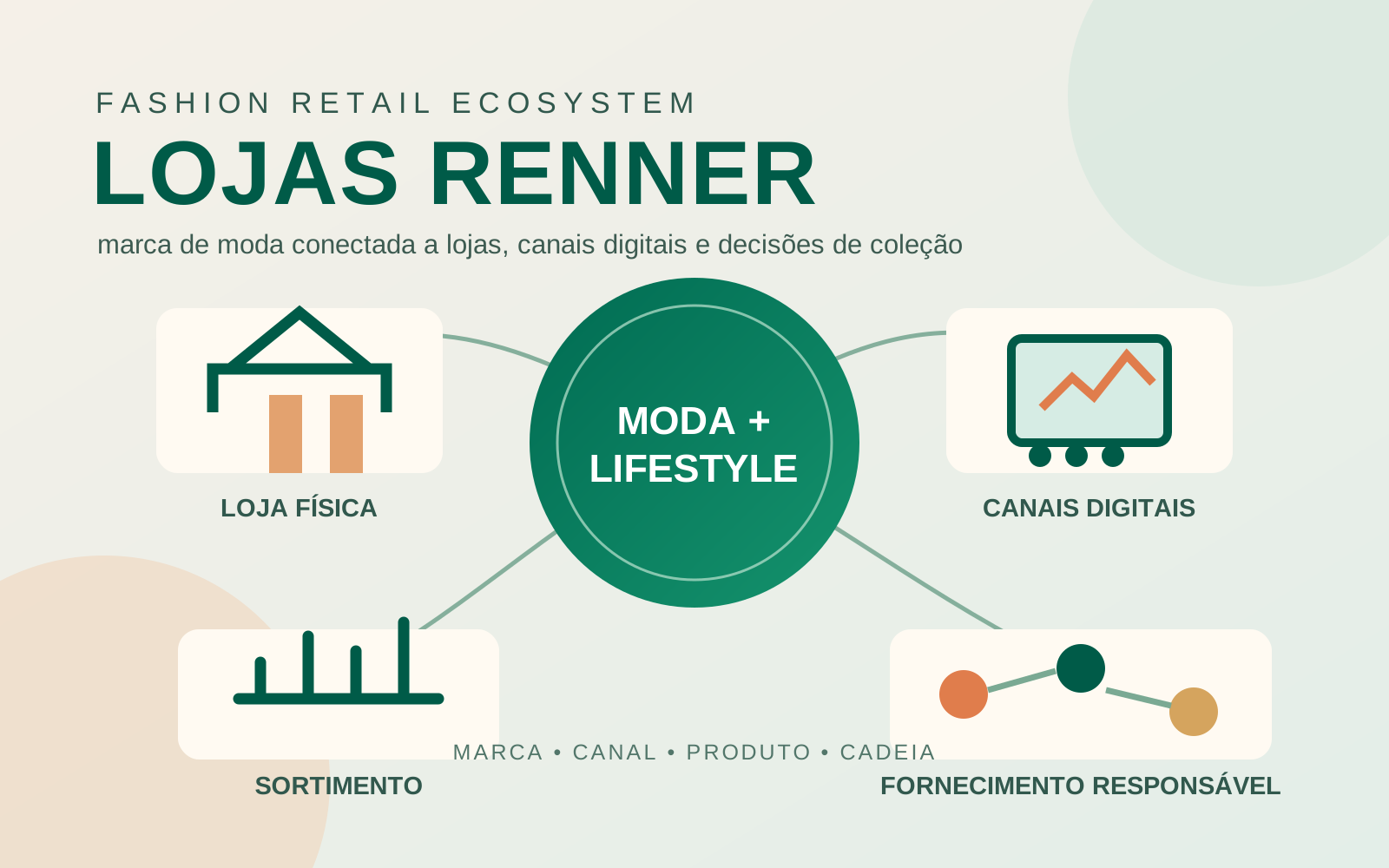
Lojas Renner is a fashion retail brand within the Lojas Renner S.A. ecosystem, a group that describes its operation through physical stores and digital channels in Brazil, Argentina and Uruguay. Its history combines fashion specialization, regional expansion, a multi-brand architecture and responsible-sourcing programs.
C&A Brazil
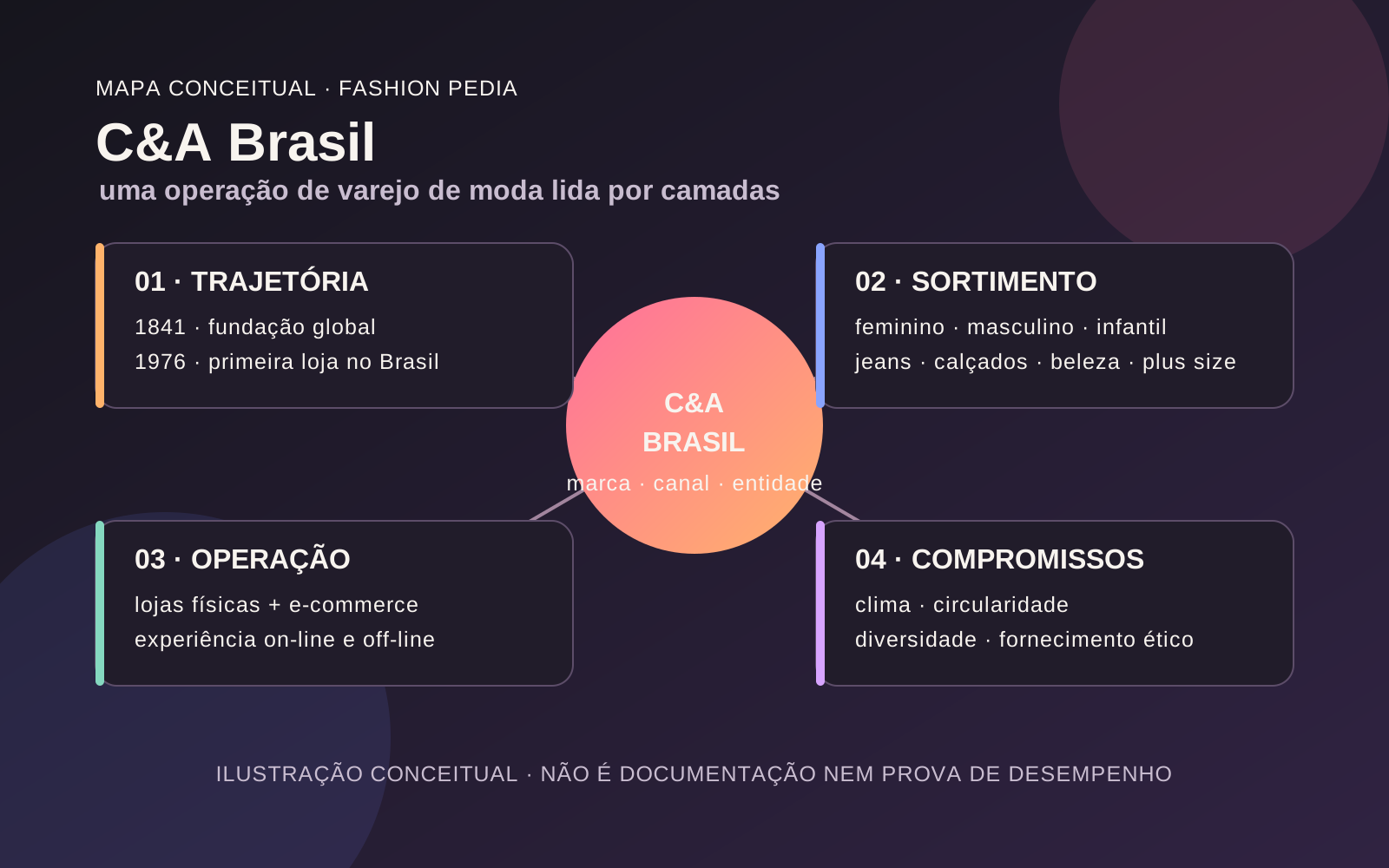
C&A Brazil is the Brazilian fashion-retail operation of C&A: an internationally rooted brand present in the country since 1976, with a public assortment organized around apparel, jeans, footwear, beauty and plus-size categories. The entry separates global history, Brazilian operation, observed catalogue architecture and stated commitments.
Hering
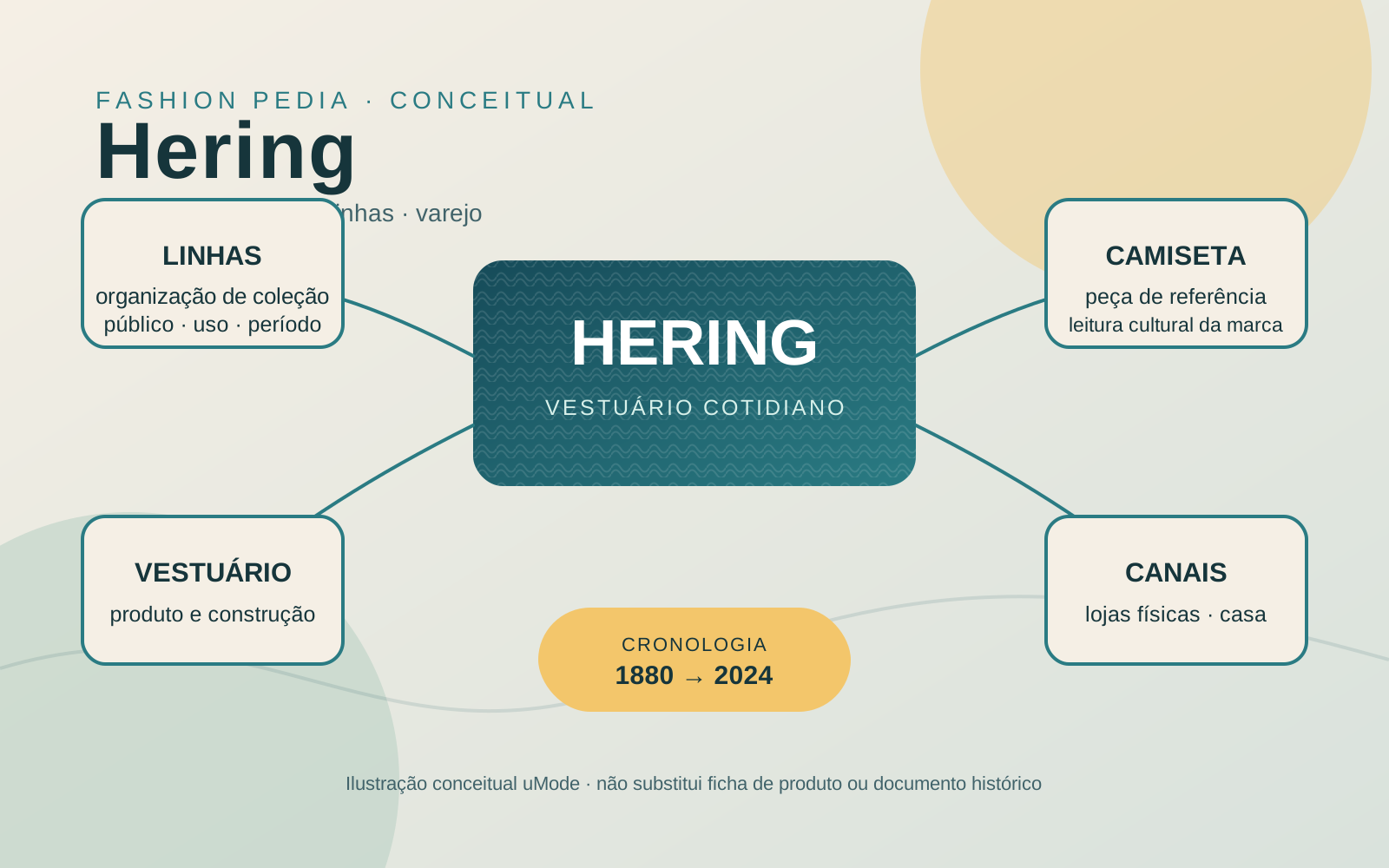
Hering is an apparel brand whose institutional timeline reaches back to 1880. Its public history combines the white T-shirt’s place in Brazilian culture with a corporate chronology that records its passage through Grupo SOMA and the formation of AZZAS 2154 in 2024.
Fashion sourcing
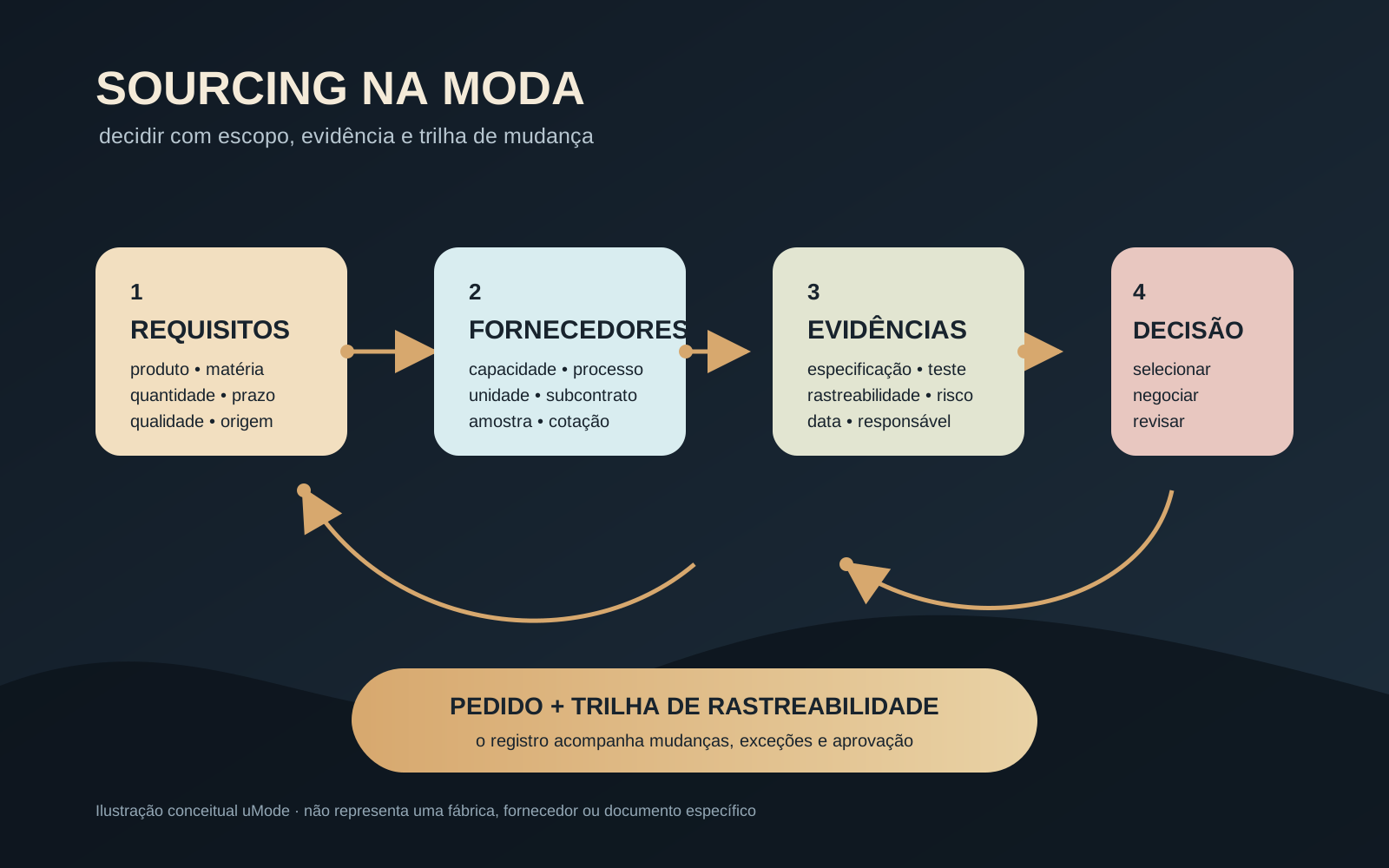
Fashion sourcing turns product requirements into a verifiable decision about materials, suppliers, capacity, cost, timing and risk. It connects samples, evidence and purchase orders without reducing supplier choice to the lowest price.

Collection management
Collection management coordinates a fashion line's journey from idea through production, service and disposal by connecting people, product data, processes, decisions, versions and events across teams and partners.
Sources
Want to apply this to your operation?