C&A Brazil
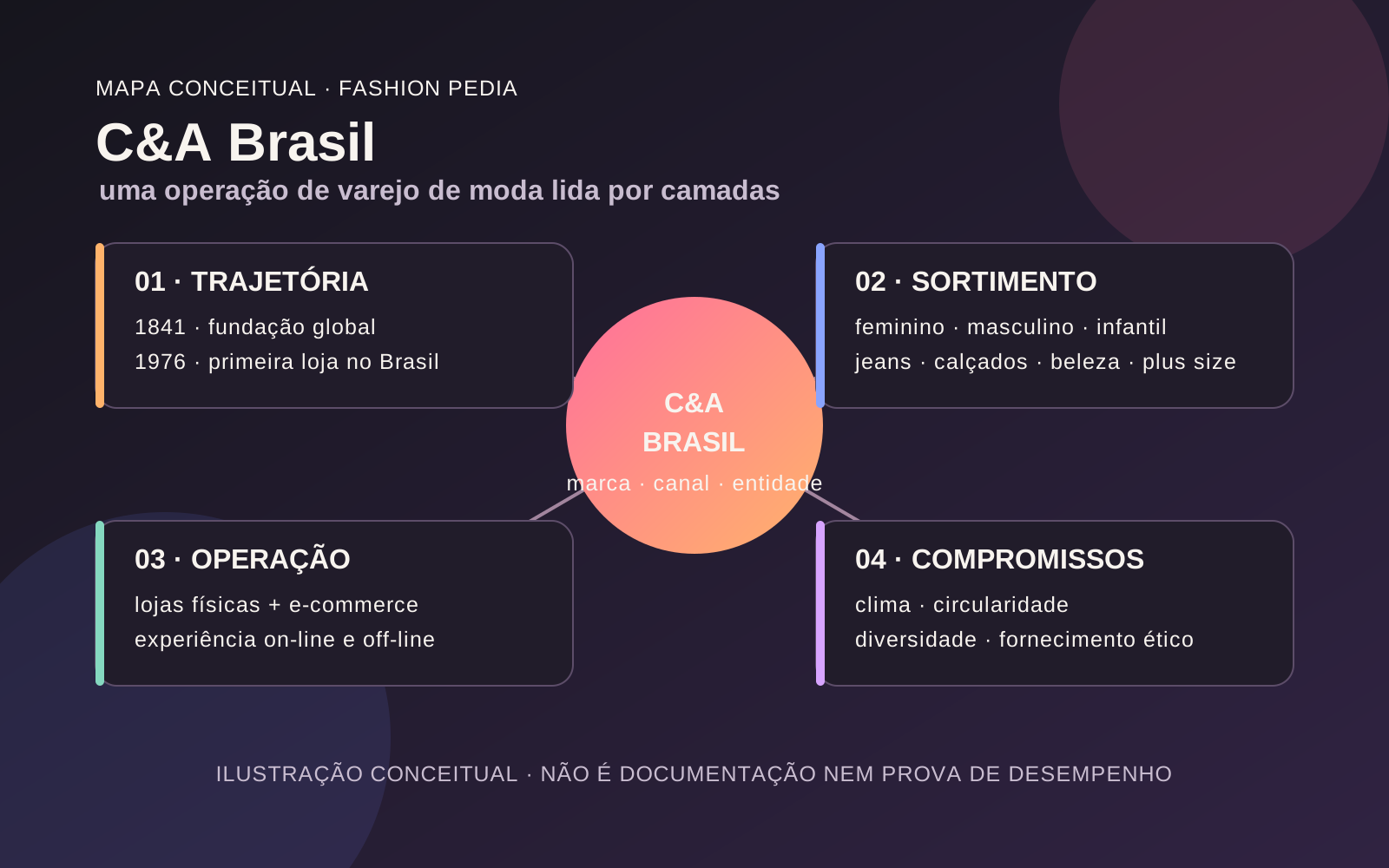
C&A Brazil is the Brazilian fashion-retail operation of C&A: an internationally rooted brand present in the country since 1976, with a public assortment organized around apparel, jeans, footwear, beauty and plus-size categories. The entry separates global history, Brazilian operation, observed catalogue architecture and stated commitments.
On this page
What is C&A Brazil?
C&A Brazil is the Brazilian operation of a fashion-retail brand whose global history begins in 1841 and whose presence in Brazil begins in 1976. The first Brazilian store opened at Shopping Ibirapuera in São Paulo. The history of origin should therefore not be confused with the Brazilian entry date: they are two layers of the same brand entity.
C&A communicates more than 300 stores in 125 cities and more than 15,000 employees in Brazil. On another institutional page, it communicates more than 330 stores nationwide, in addition to e-commerce. Because these figures belong to different institutional pages and may reflect different moments or counting criteria, a careful reading keeps the attribution and does not turn them into market share, leadership or performance.
In Brazil's public CVM register, C&A MODAS S.A. appears as an active company in the Textile and Apparel sector, with exchange-traded shares and Category A registration. This corporate layer helps distinguish the C&A Brazil brand from the legal entity and from investor-relations documents.
How is C&A Brazil's assortment organized?
The public offer architecture brings together women’s, men’s, children’s, footwear and plus-size departments. The channel also presents Beauty with hair, body, face, makeup and perfume categories, as well as jeans as a distinct category for women, men and children. This is a navigation record of the consulted catalogue, not a universal company taxonomy or proof of product performance.
To read the operation as fashion, ask what each department implies: collection management helps frame how lines and options may be organized; fashion product development shifts the analysis to the product; jeans opens a category-specific view; and textile materials opens the question of composition. None of these links should be used to attribute a process to C&A that the consulted source does not describe.
The institutional communication also places apparel, footwear, beauty, plus size and fashiontronics under the same brand offer. That means the brand name covers more than one product family; it does not describe the construction, fibre content or development method of every item. A collection analysis still needs its period, channel, line and product, because a storefront is not a substitute for a specification sheet or composition information.
What does C&A state about operations and sustainability?
The institutional communication defines the mission as growing as an omnichannel fashion business preferred by Brazilians, with continuous evolution of products, services and experiences. This is stated positioning: it is not an independent measurement of preference or an audit of omnichannel execution.
On its sustainability page, the company structures its strategy around four pillars: climate change, circularity, diversity and inclusion, and sustainable development of the supply network with ethical relationships. Among its stated 2030 objectives, it says that 80% of its main raw materials should come from sustainable sources. The wording describes a commitment and a target; it does not automatically certify every product, supplier or environmental outcome.
For a value-chain reading, fashion sourcing helps formulate questions about supply, while fashion retail locates the channel and Brazilian market frames the context. C&A Brazil matters to Fashion Pedia because it connects communicated scale, assortment architecture and institutional promise without treating any of them as a synonym for quality, leadership or proven impact.
Connections
Fashion Pedia · fashion retail · Brazilian market · collection management · fashion sourcing · jeans · footwear · textile materials · fashion product development
Verified facts
- C&A was founded in 1841 by the Dutch brothers Clemens and August, whose initials gave the brand its name.
Source: ri.cea.com.br ↗ - The Brazilian operation began in 1976, when the first store opened at Shopping Ibirapuera in São Paulo.
Source: ri.cea.com.br ↗ - C&A reports more than 300 stores in 125 cities and more than 15,000 employees in Brazil.
Source: ri.cea.com.br ↗ - C&A's institutional communication describes the Brazilian operation as present in more than 330 stores nationwide, in addition to e-commerce.
Source: cea.com.br ↗ - The Brazilian C&A site presents departments for women, men, children, footwear and plus size.
Source: cea.com.br ↗ - The Brazilian C&A site presents a Beauty section with hair, body, face, makeup and perfume categories.
Source: cea.com.br ↗ - The Brazilian C&A site lists jeans as a distinct category, with options for women, men and children.
Source: cea.com.br ↗ - The company's sustainability strategy is structured around four pillars: climate change, circularity, diversity and inclusion, and sustainable development of the supply network with ethical relationships.
Source: ri.cea.com.br ↗ - Among its stated 2030 objectives, the company reports that 80% of its main raw materials should come from sustainable sources.
Source: ri.cea.com.br ↗ - Brazil's CVM register identifies C&A MODAS S.A. as an active company in the Textile and Apparel sector, with exchange-traded shares and Category A registration.
Source: dados.cvm.gov.br ↗ - C&A's institutional communication defines its mission as growing as an omnichannel fashion business with continuous evolution of products, services and experiences.
Source: cea.com.br ↗ - C&A's institutional communication says that the Brazilian offer includes a fashiontronics line with mobile phones, smartphones and watches.
Source: cea.com.br ↗
Related entries

Collection management
Collection management coordinates a fashion line's journey from idea through production, service and disposal by connecting people, product data, processes, decisions, versions and events across teams and partners.
Fashion sourcing
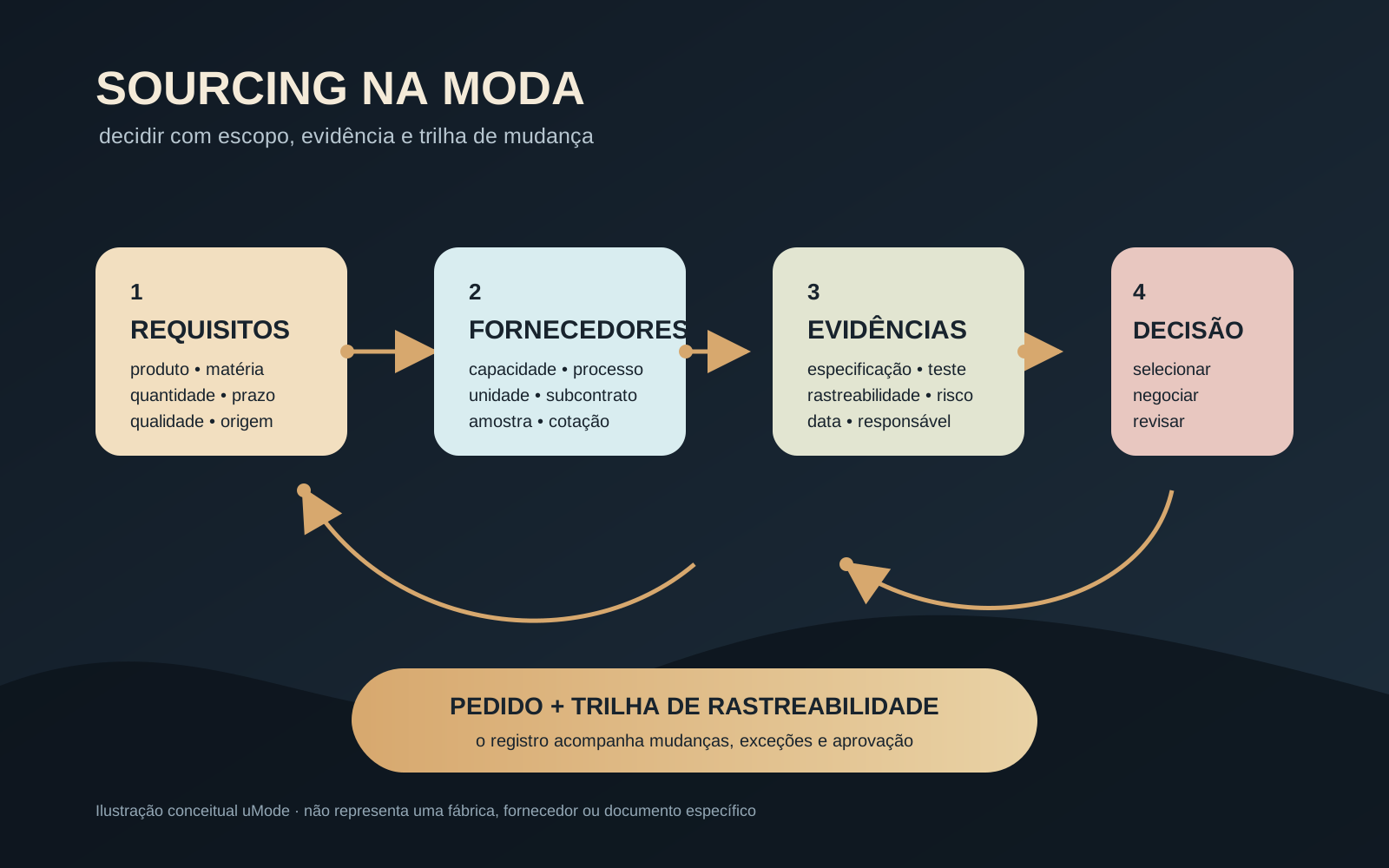
Fashion sourcing turns product requirements into a verifiable decision about materials, suppliers, capacity, cost, timing and risk. It connects samples, evidence and purchase orders without reducing supplier choice to the lowest price.
Jeans
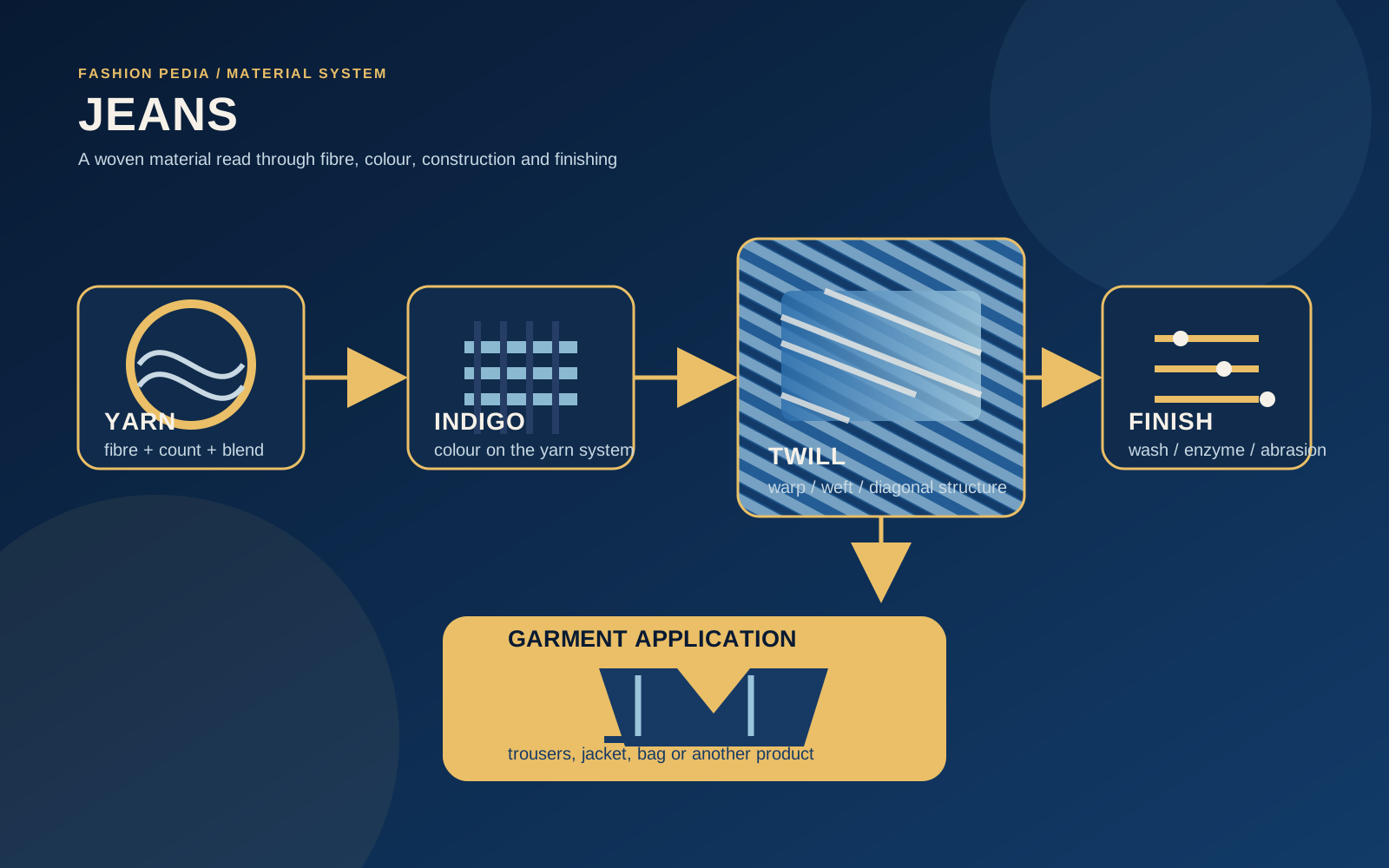
Jeans is a textile material based on denim, usually a woven twill in which yarn, indigo dye, construction and finishing shape the appearance and behaviour. Jeans names the material; trousers or a jacket are garments made from it.
Fashion product development
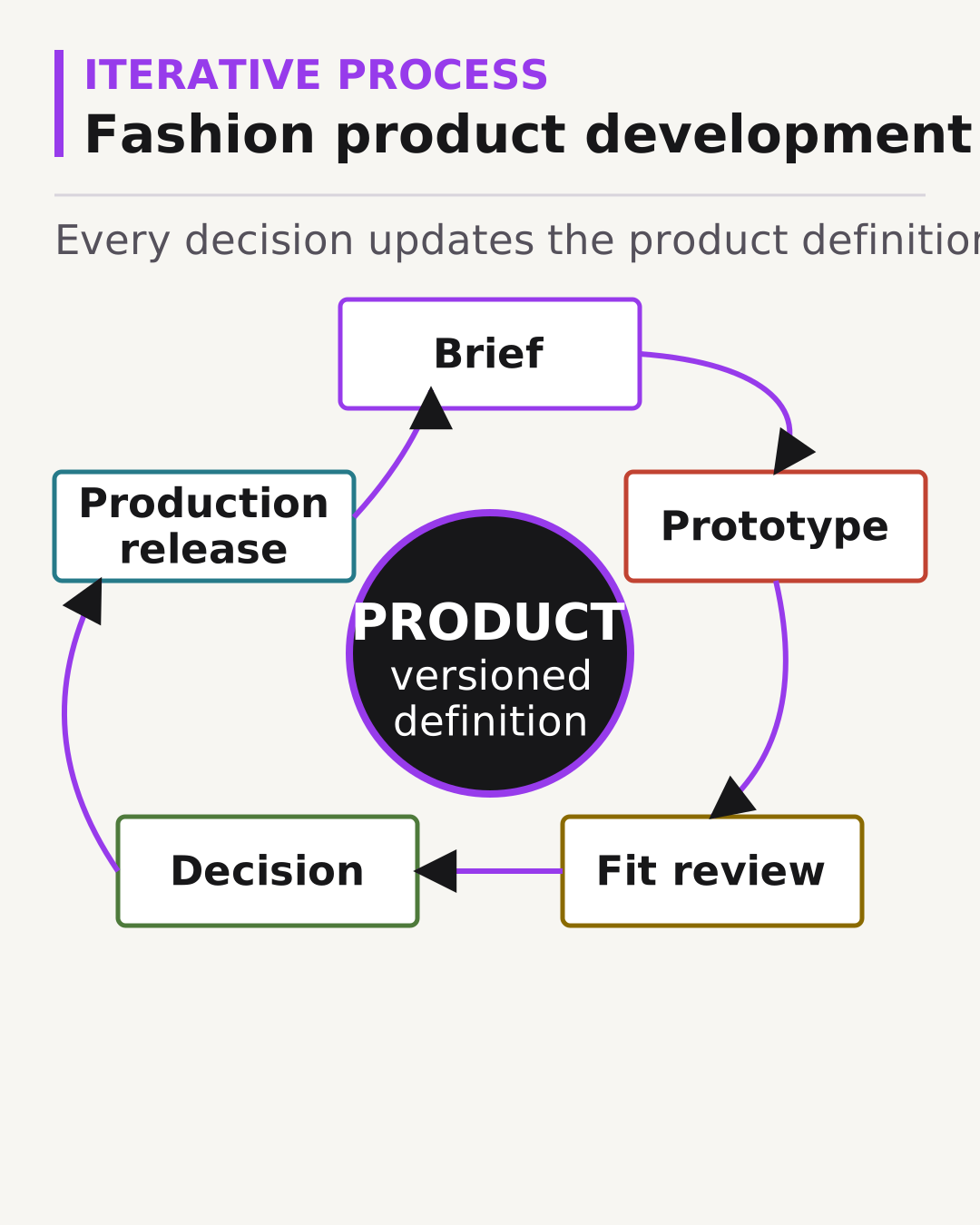
Fashion product development is the process that turns an opportunity or brief into a product specified and approved for manufacturing. It coordinates concept, assortment, materials, patternmaking, samples, fit, cost, quality, compliance and timing through decision cycles rather than an isolated creative sequence.
Sources
Want to apply this to your operation?