Hering
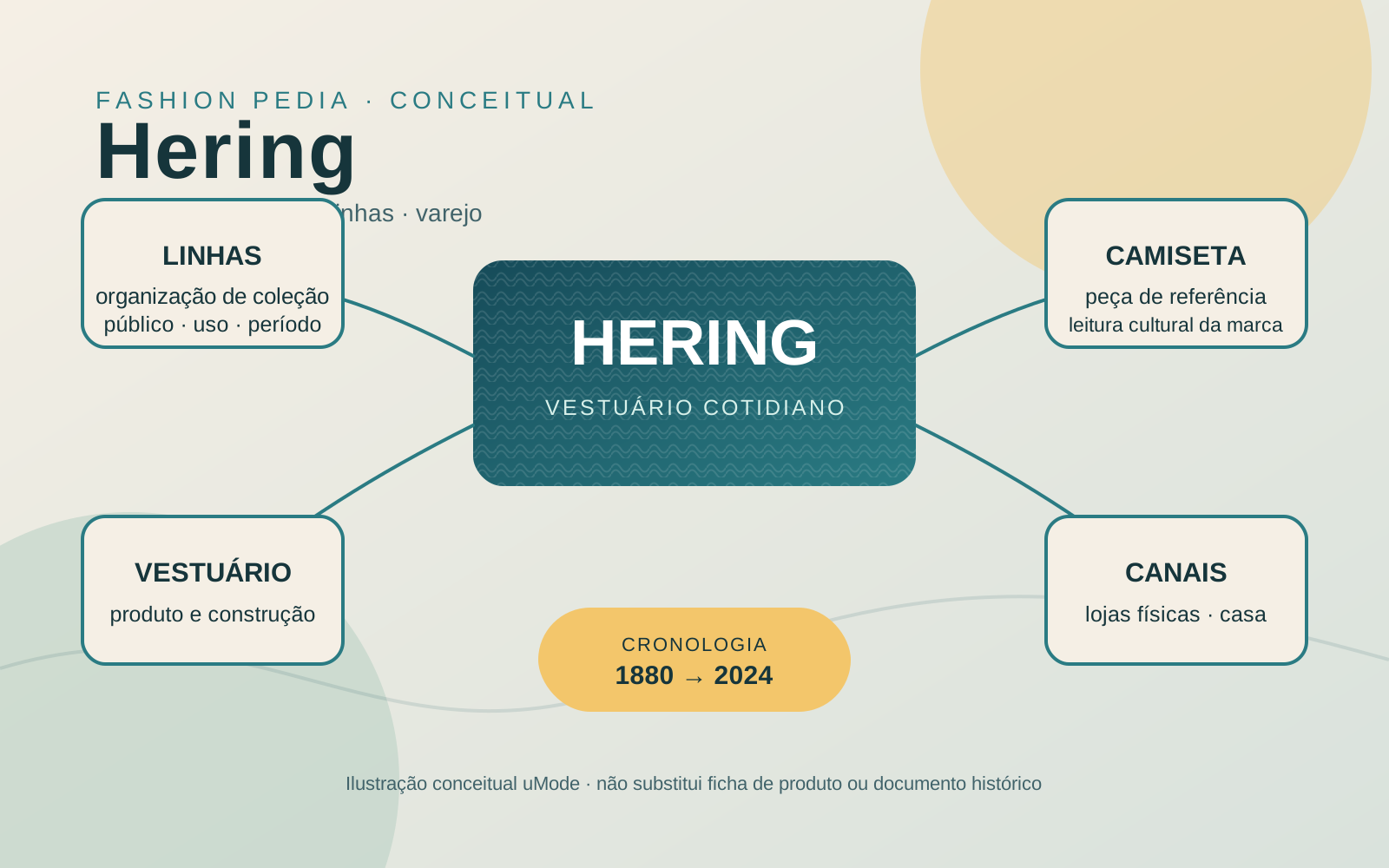
Hering is an apparel brand whose institutional timeline reaches back to 1880. Its public history combines the white T-shirt’s place in Brazilian culture with a corporate chronology that records its passage through Grupo SOMA and the formation of AZZAS 2154 in 2024.
On this page
What is Hering?
Hering is an apparel brand whose corporate timeline, published by AZZAS 2154, records its foundation in 1880. The brand has its own history, but its corporate position must be read as a sequence: Grupo SOMA records the acquisition of Hering and DZARM in 2021, and AZZAS 2154 records its formation in 2024 through the union of Arezzo&Co and Grupo SOMA.
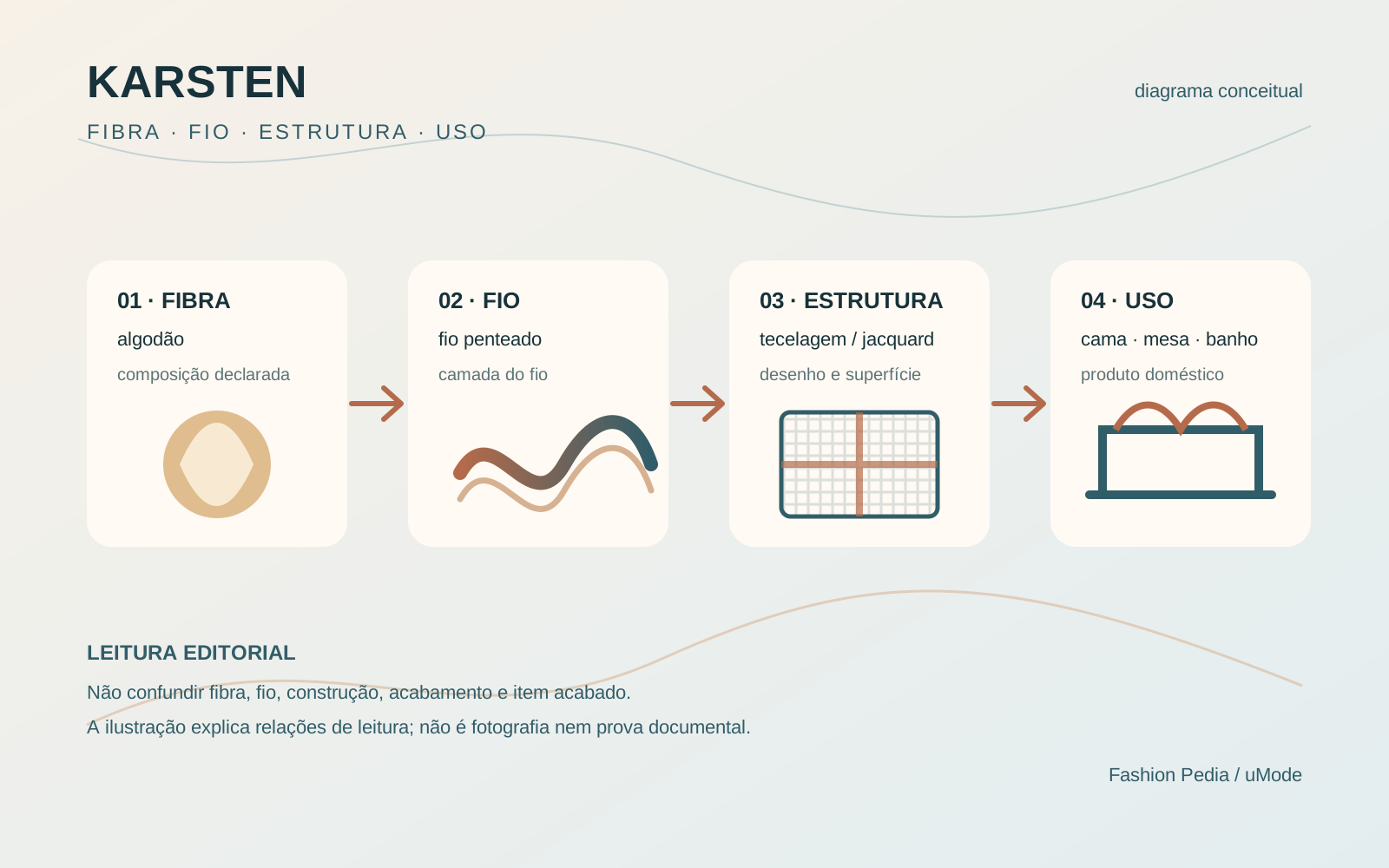
This distinction prevents the product entity from being confused with the corporate group. In the vocabulary of fashion, Hering is the brand; fashion retail is the selling environment; collection management is the set of decisions that organizes lines, garments and periods. The terms connect, but they are not interchangeable.
How does the T-shirt appear in the brand’s history?
The white T-shirt has a specific place in Hering’s institutional narrative. The brand’s page describes the garment as moving, during the 1970s and 1980s, from being presented only as underwear to being associated with style, freedom and youth expression in Brazil. This account helps explain why the T-shirt functions as a recognizable symbol without reducing the whole apparel universe to one garment.
The same page describes an early beginning with a small manual loom. That image belongs to the company’s institutional narrative and should not be used as a shortcut for deciding the fibres, knit structures, fabric weight or finishing of a current product without a technical specification. To study a garment, the correct level is the item: fibre content, construction, fit, measurements, finishes and care instructions.
The distinction matters when Hering is discussed alongside T-shirt, cotton or sportswear. A category name does not determine the material, and the historical association with a white T-shirt does not prove that every article uses the same construction. Technical reading begins with the specific product information.
What does the corporate timeline add?
The AZZAS 2154 sequence brings together milestones from different companies, so each date must remain attached to its subject. In 2007, the timeline records the merger between Arezzo and Schutz, from which Arezzo&Co was born. In 2010, it records Animale and Farm joining to create Grupo SOMA. In 2020, it records Grupo SOMA’s IPO on B3. In 2021, it records Grupo SOMA’s acquisition of Hering and DZARM. In 2024, it records the union of Arezzo&Co and Grupo SOMA to form AZZAS 2154.
This sequence does not make Hering synonymous with Arezzo&Co, Grupo SOMA or AZZAS 2154. It explains the corporate frame in which the brand appears today and preserves the difference between fashion history, business history and product history.
Why is this distinction useful in the fashion chain?
For buyers, students and collection management teams, the distinction defines the question to ask. The timeline answers “when and in which group does the brand appear?”; the institutional page answers how the company narrates its trajectory; a product specification answers fibre content, measurements and care. Mixing these layers produces weak conclusions about material, manufacturing, assortment or commercial performance.
Hering is therefore a Brazilian apparel-brand case that needs two scales of reading: the symbolic scale of the T-shirt and the corporate scale of the transactions recorded by AZZAS 2154. Neither replaces the concrete analysis of a garment or collection.
Verified facts
- AZZAS 2154’s corporate timeline records Hering’s foundation in 1880.
Source: ri.azzas2154.com.br ↗ - AZZAS 2154 was formed in 2024 through the union of Arezzo&Co and Grupo SOMA.
Source: ri.azzas2154.com.br ↗ - AZZAS 2154’s timeline records Grupo SOMA’s acquisition of Hering and DZARM in 2021.
Source: ri.azzas2154.com.br ↗ - Grupo SOMA went public on B3 in 2020, according to AZZAS 2154’s timeline.
Source: ri.azzas2154.com.br ↗ - AZZAS 2154’s timeline records Animale and Farm joining in 2010 to create Grupo SOMA.
Source: ri.azzas2154.com.br ↗ - AZZAS 2154’s timeline records the 2007 merger between Arezzo and Schutz, from which Arezzo&Co was born.
Source: ri.azzas2154.com.br ↗ - Hering’s institutional page describes an early beginning with a small manual loom.
Source: hering.com.br ↗ - Hering’s institutional page describes the transformation of the white T-shirt, in the 1970s and 1980s, from underwear into an item associated with style and youth expression in Brazil.
Source: hering.com.br ↗
Related entries
Cotton
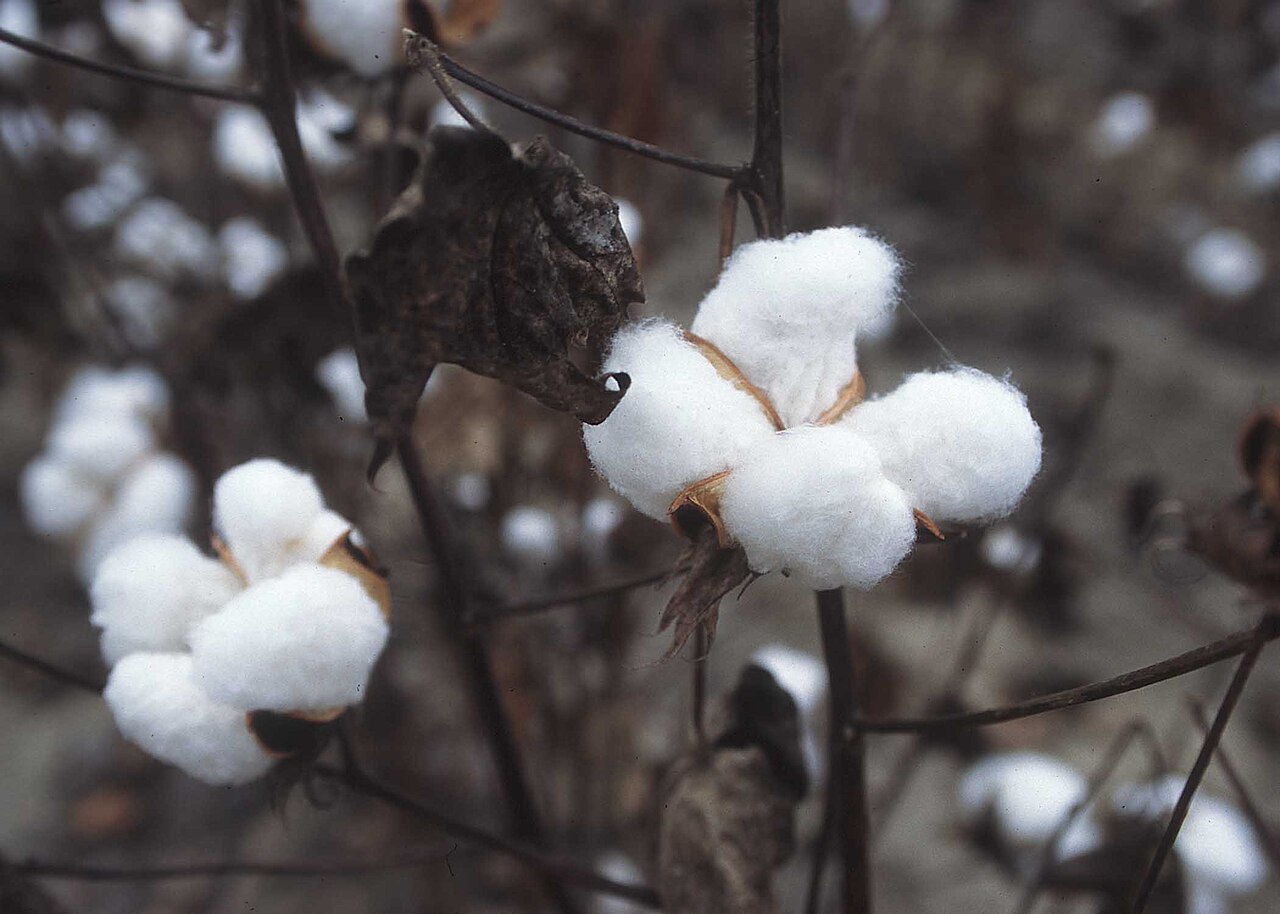
Cotton is the most widely used natural fiber in the global textile industry. Grown around the seeds of the cotton plant (Gossypium), it is prized for comfort, breathability and versatility in apparel.

Collection management
Collection management coordinates a fashion line's journey from idea through production, service and disposal by connecting people, product data, processes, decisions, versions and events across teams and partners.
Sources
Want to apply this to your operation?