Agreste garment cluster
The Agreste garment cluster is a Pernambuco apparel segment within the state’s local productive arrangement, centered on Caruaru, Santa Cruz do Capibaribe, and Toritama and extending to neighboring towns. Its history, formal concentration, and tax infrastructure place it within Brazil’s fashion supply chain.
On this page
What is Agreste garment cluster?
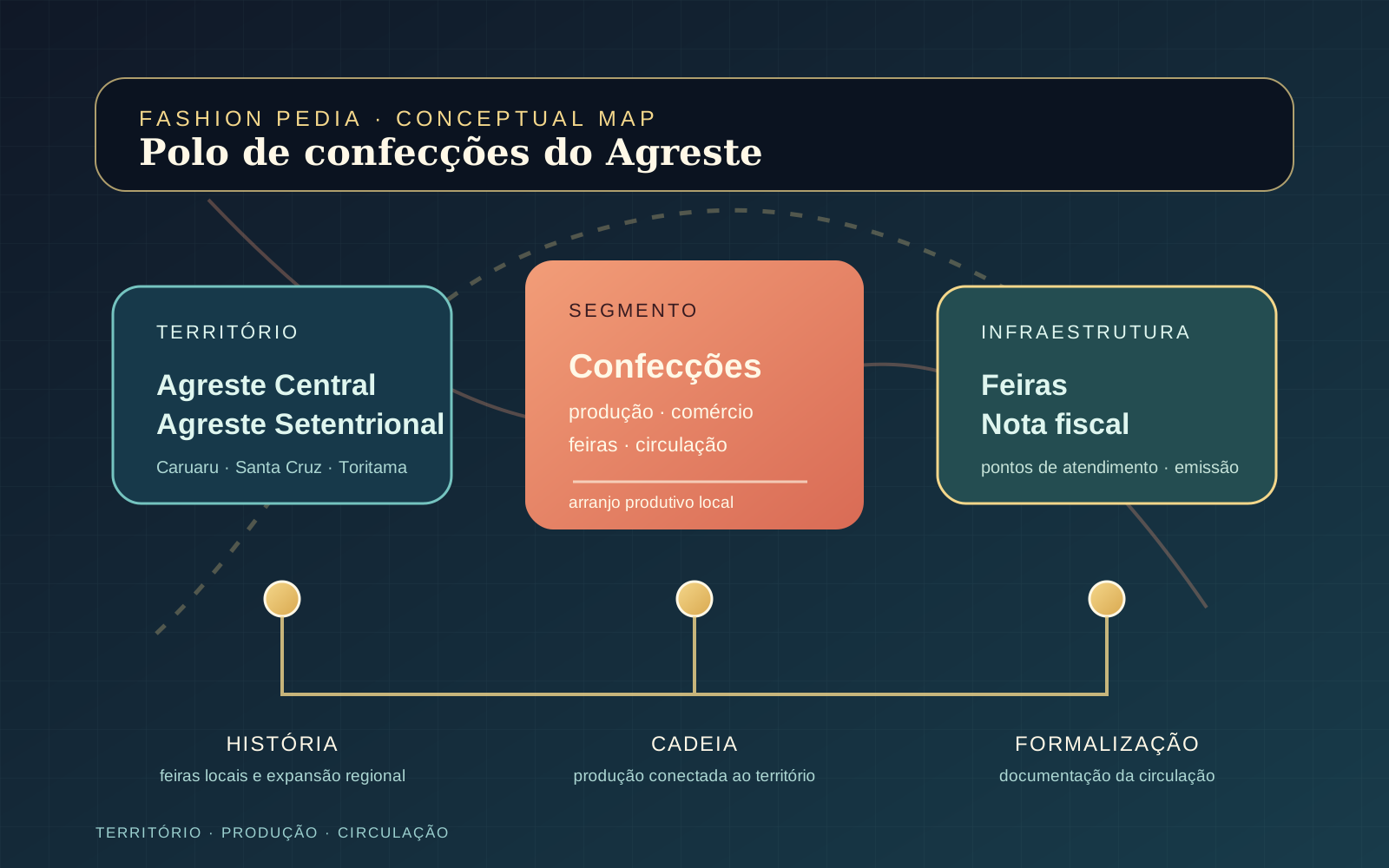
The Agreste garment cluster is Pernambuco’s regional garment segment within a local productive arrangement, with three central cities and a surrounding area of neighboring towns. This territorial scale distinguishes it from a single factory, brand, or fair: it is a regional layer of the fashion supply chain connected to production, commerce, and support services.
The documented origin reaches back to the mid-1950s in Santa Cruz do Capibaribe, when handcrafted products were distributed through local fairs. The later rise of Caruaru and Toritama in different decades helps explain why the cluster should not be reduced to one city or one specialization.
How is the cluster distributed and measured?
The territorial concentration appears in ADEPE’s 2021 data: 17,458 active employment links and 2,018 establishments in Pernambuco’s garment sector, concentrated mainly in the Central and Northern Agreste. These are formal-sector measures for the state; they do not automatically equal the total number of people working in the cluster, the number of garments produced, or regional revenue.
The Força Local Program provides another lens. From 2019 to 2021, garment-cluster projects supported by ADEPE totaled BRL 2,346,660.83 and benefited 1,576 people. This describes supported projects, not all private investment and not a measure of economic performance. When regions are compared, employment links, establishments, beneficiaries, and project value must remain separate units.
Within the fashion supply chain, the cluster can be connected to sector associations, the Brazilian textile ecosystem, supplier sourcing, and product development. These links help navigation between neighboring subjects, but they do not make the concepts interchangeable.
What circulation and formalization infrastructure appears in the sources?
SEFAZ-PE describes Expresso da Moda service points at Moda Center in Santa Cruz do Capibaribe, Parque das Feiras in Toritama, and Feira de Caruaru. The same structure is connected to the issuance of one-off electronic invoices for stallholders, buyers, and transactions moving through the territory.
Nova Nota da Moda expanded this service to immediate issuance through a smartphone, tablet, notebook, or computer, including the cities that make up the cluster. The official communication says that the update removed a wait that could reach 48 hours. This matters because it reveals a tax and logistics layer of the segment: beyond making and selling garments, the cluster relies on mechanisms that document the movement of goods.
Why does the cluster matter to Brazilian fashion?
The Agreste garment cluster matters because it concentrates regional production history, formal employment links, establishments, and places for selling and documenting goods. A sound reading must distinguish the cluster from an individual company and avoid assigning to the whole group features that belong only to one city, program, or period.
It can also be compared with other territorial fashion segments, such as the Ceará fashion chain, and with commercial-decision topics such as store clusters. These editorial links situate scale and function; they do not claim that the territories are equivalent.
Verified facts
- The Agreste garment cluster is part of Pernambuco’s garment local productive arrangement and is centered on Caruaru, Santa Cruz do Capibaribe, and Toritama, with neighboring towns across parts of the Central and Northern Agreste.
Source: adepe.pe.gov.br ↗ - The cluster’s origin is dated to the mid-1950s in Santa Cruz do Capibaribe, where handcrafted products were made for distribution at local fairs.
Source: adepe.pe.gov.br ↗ - Caruaru and Toritama began to gain prominence in the cluster from the 1970s and 1980s, respectively.
Source: adepe.pe.gov.br ↗ - RAIS data for 2021 recorded 17,458 active employment links in Pernambuco’s garment sector, concentrated mainly in the Central and Northern Agreste.
Source: adepe.pe.gov.br ↗ - RAIS data for 2021 recorded 2,018 establishments in Pernambuco’s garment sector, also concentrated mainly in the Central and Northern Agreste.
Source: adepe.pe.gov.br ↗ - From 2019 to 2021, garment-cluster projects supported by ADEPE’s Força Local Program totaled BRL 2,346,660.83 and benefited 1,576 people.
Source: adepe.pe.gov.br ↗ - SEFAZ-PE locates Expresso da Moda service points at Moda Center in Santa Cruz do Capibaribe, Parque das Feiras in Toritama, and Feira de Caruaru.
Source: sefaz.pe.gov.br ↗ - Nova Nota da Moda allows buyers at Moda Center, in Santa Cruz do Capibaribe, Toritama, Caruaru, and the cluster’s other cities to issue one-off electronic invoices immediately using a smartphone, tablet, notebook, or computer.
Source: sefaz.pe.gov.br ↗ - The modernization of Nota da Moda removed a wait that could reach 48 hours for invoice issuance, according to SEFAZ-PE’s communication.
Source: sefaz.pe.gov.br ↗
Related entries
Texbrasil
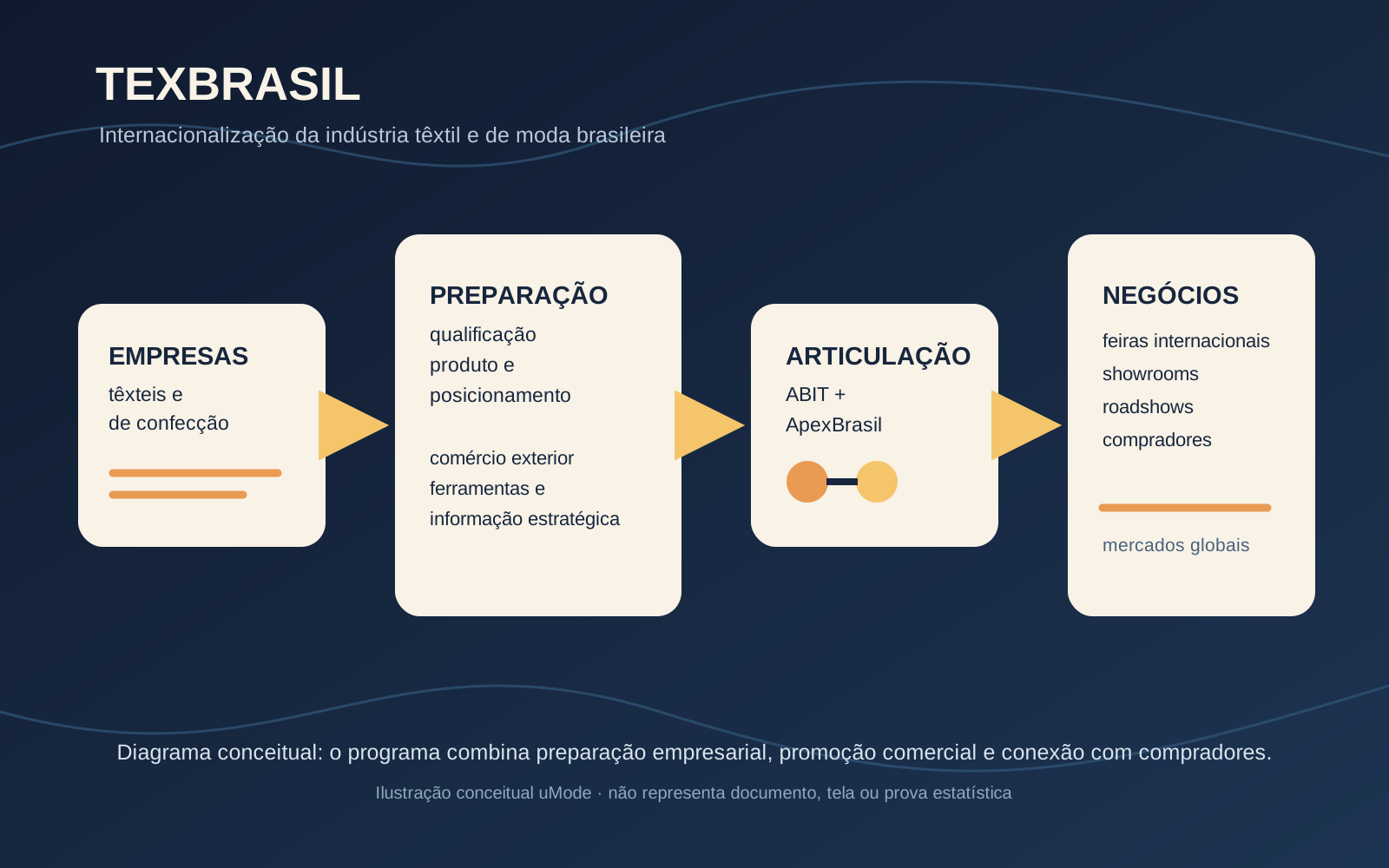
Texbrasil is the Brazilian Textile and Fashion Industry Internationalization Program, delivered through a partnership between Abit and ApexBrasil. It works with textile and apparel companies on export preparation, trade promotion and connections with international markets.
Fashion sourcing
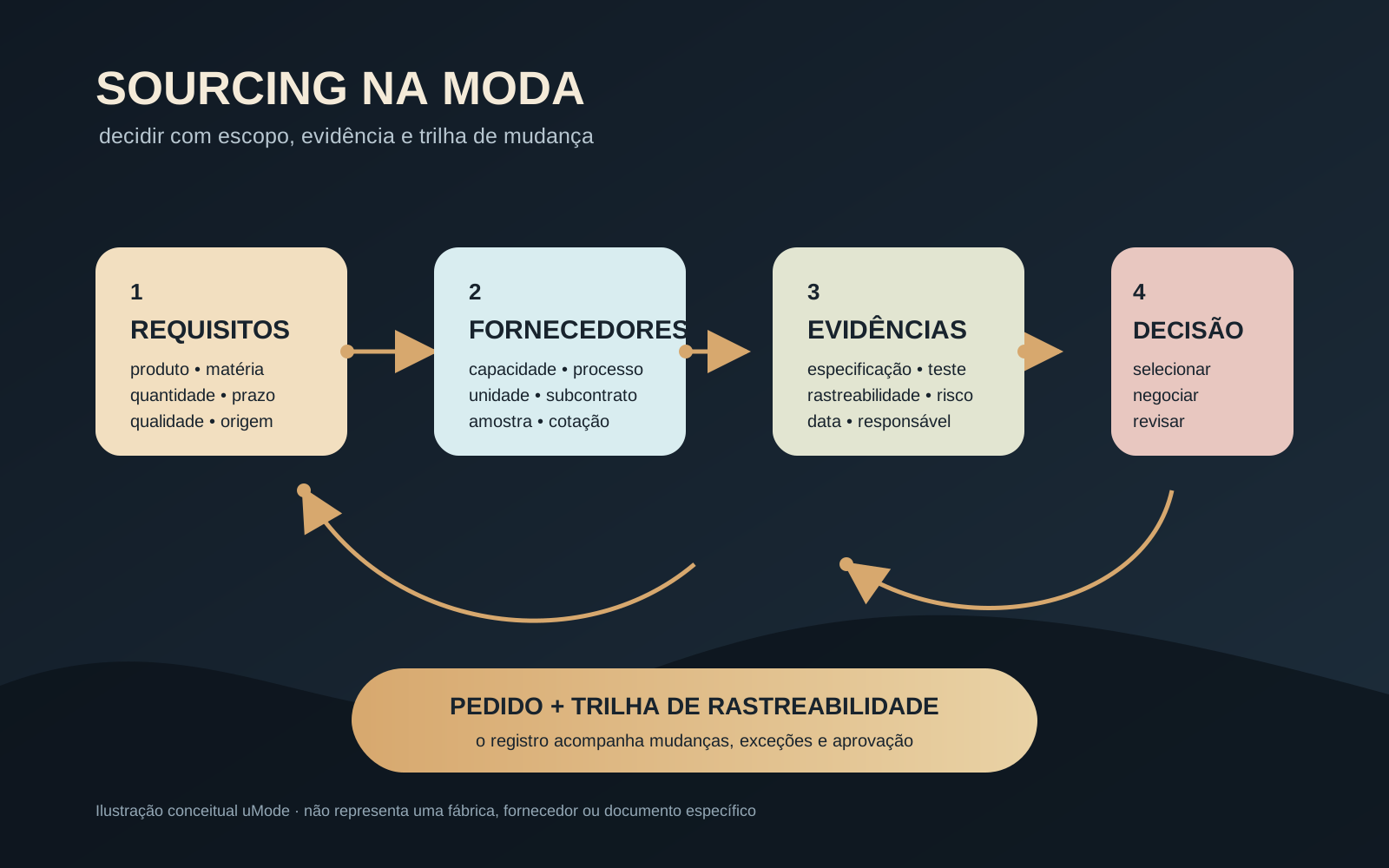
Fashion sourcing turns product requirements into a verifiable decision about materials, suppliers, capacity, cost, timing and risk. It connects samples, evidence and purchase orders without reducing supplier choice to the lowest price.
Fashion product development
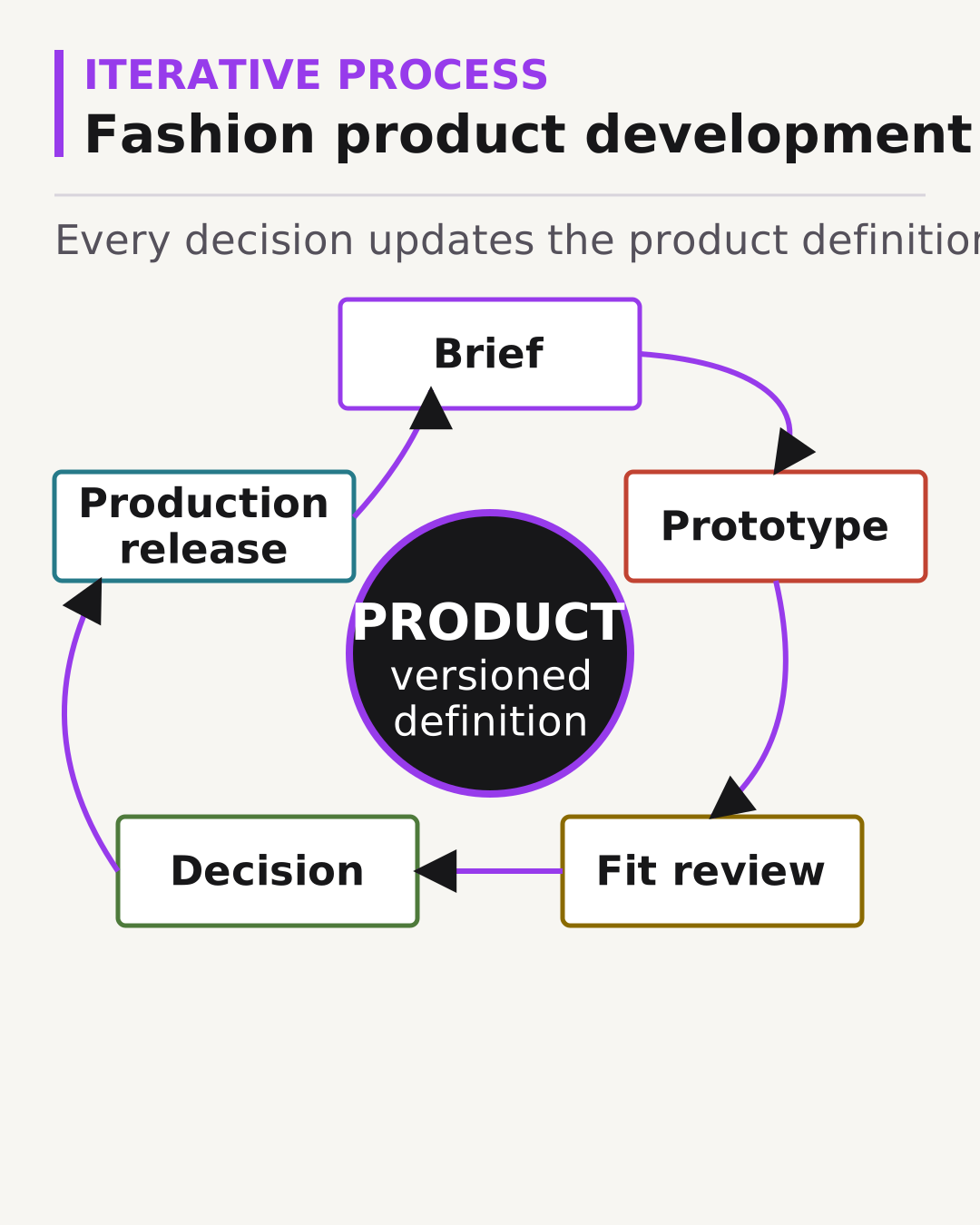
Fashion product development is the process that turns an opportunity or brief into a product specified and approved for manufacturing. It coordinates concept, assortment, materials, patternmaking, samples, fit, cost, quality, compliance and timing through decision cycles rather than an isolated creative sequence.
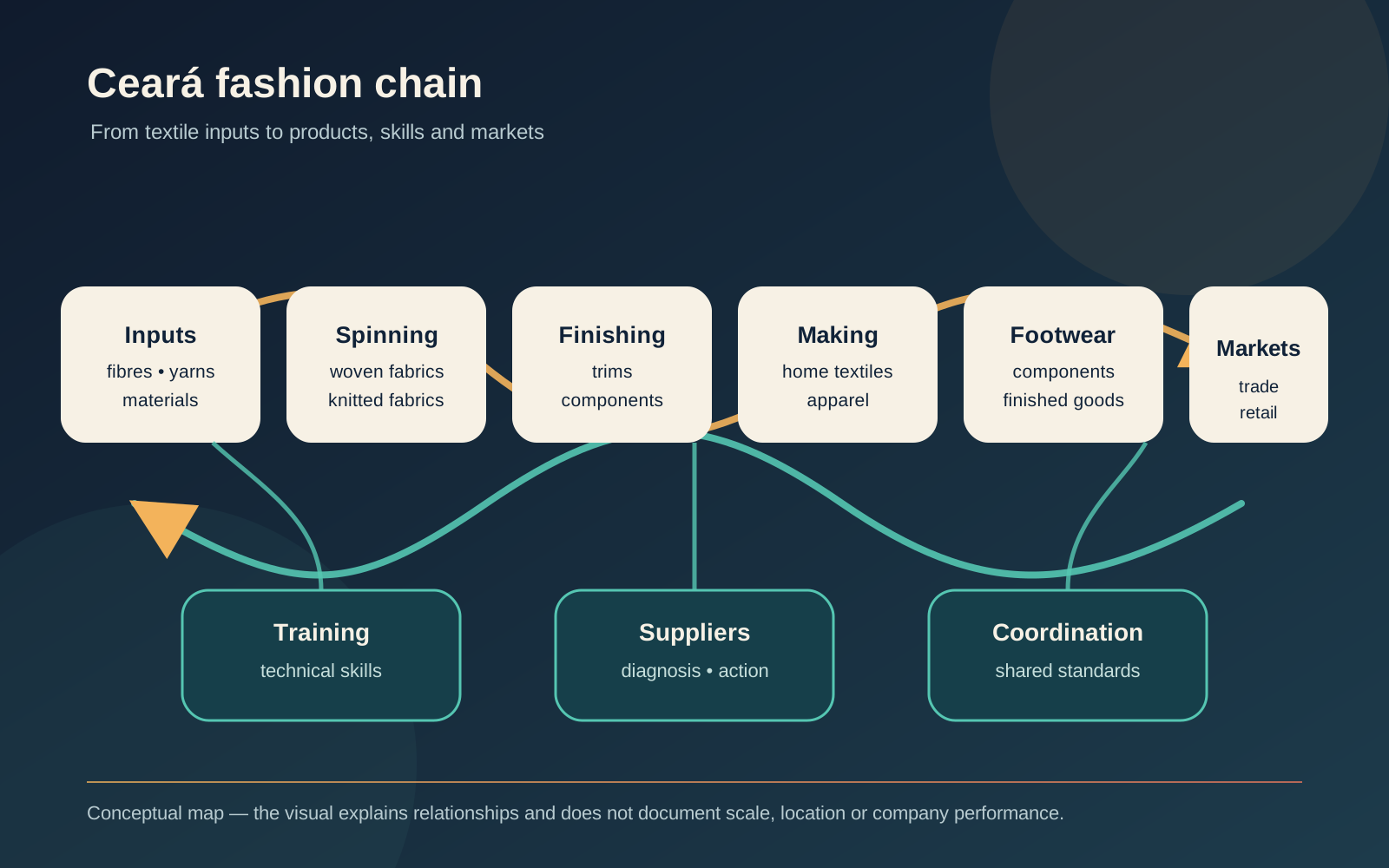
Ceará fashion chain
Ceará fashion chain. Ceará’s fashion chain connects textiles, apparel and footwear through spinning, weaving, knitting, finishing, trims, components, vocational training and finished-product manufacturing. The state description also records integration across the chain, more than 100,000 direct jobs, and a footwear-industry snapshot of approximately 57,000 formal jobs in 2019.
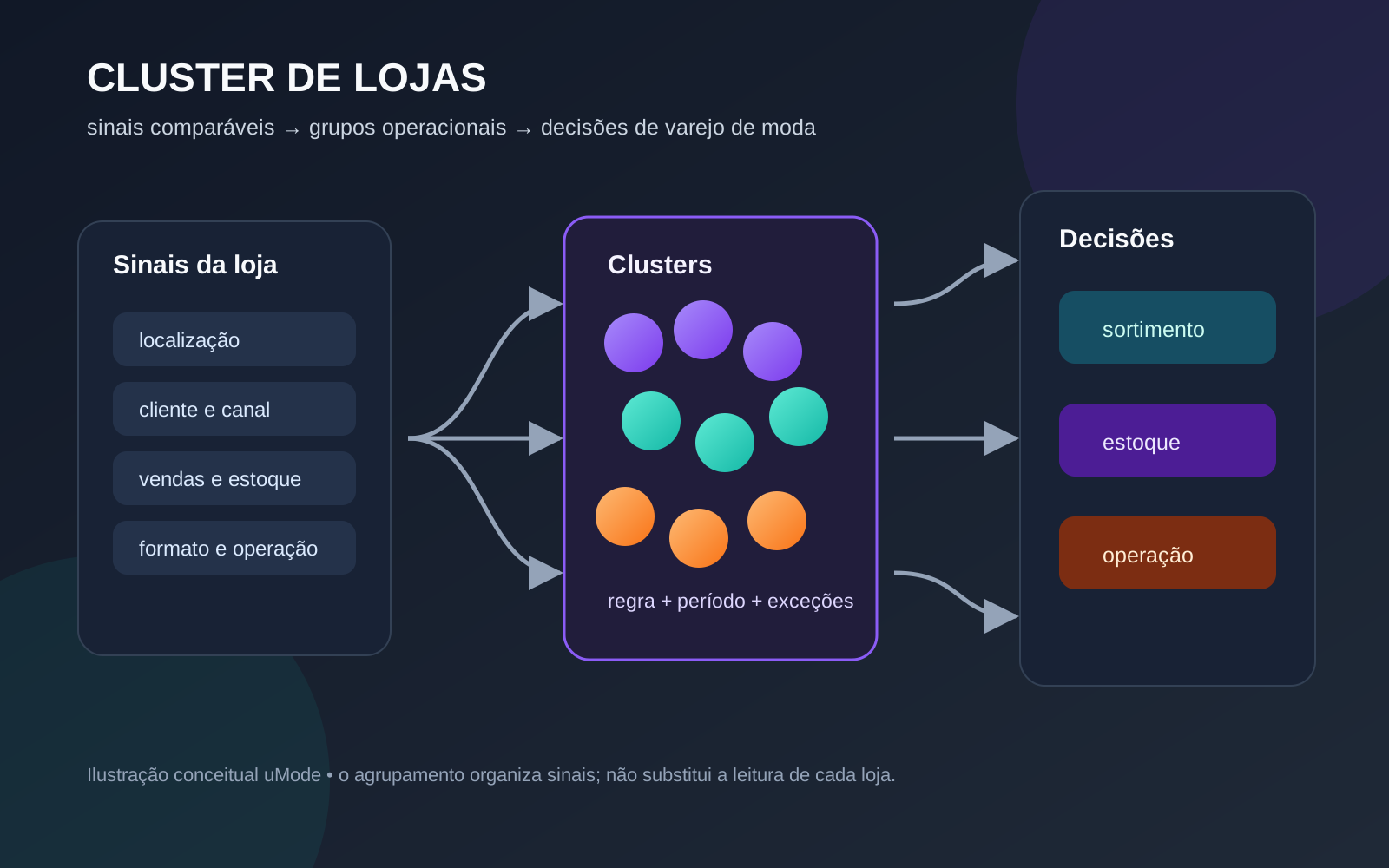
Store clustering in fashion retail
Store clustering in fashion retail. Store clustering is the process of grouping points of sale around relevant patterns in location, customer behavior, assortment, or operations so retail decisions can be made with more context. In fashion, it helps distinguish store needs without assuming that every unit should receive the same mix or inventory.
Sources
- https://www.adepe.pe.gov.br/wp-content/uploads/2023/06/APL-DA-CONFECCAO-EM-PERNAMBUCO.pdf
- https://www.sefaz.pe.gov.br/Noticias/Paginas/Facilidade-na-emiss%C3%A3o-de-notas-fiscais-do-Polo-de-Confec%C3%A7%C3%B5es-do-Agreste.aspx
- https://www.sefaz.pe.gov.br/Noticias-Destaque/Paginas/Governo-de-Pernambuco-moderniza-Nota-da-Moda-e-garante-emiss%C3%A3o-imediata-de-notas-fiscais-no-Polo-T%C3%AAxtil-do-Agreste.aspx
Want to apply this to your operation?