Textile spinning
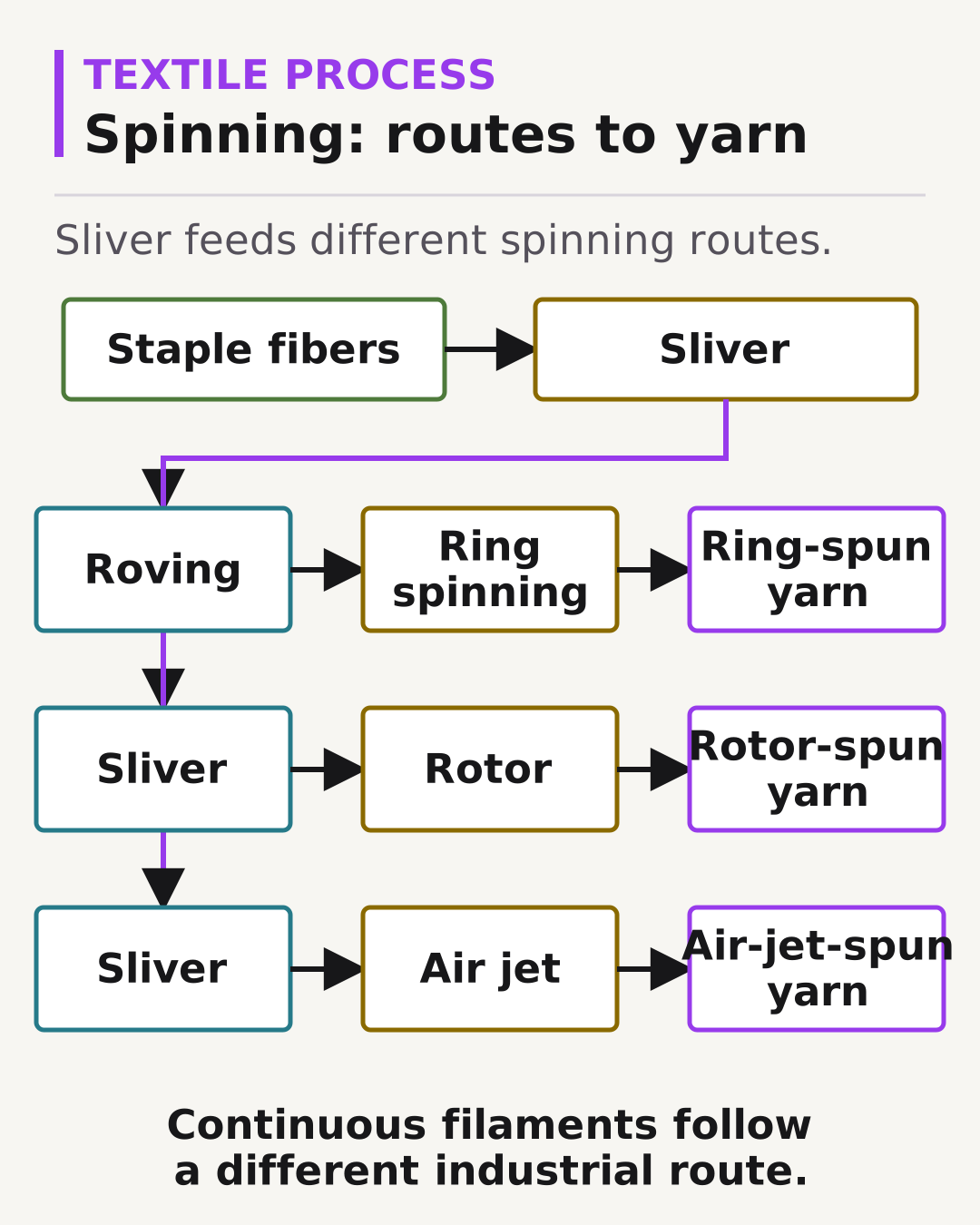
Yarn production follows two distinct technical routes: spinning turns staple textile fibers into yarn through preparation, alignment, attenuation, and consolidation, while continuous-filament processing assembles or transforms filaments without repeating the full preparation used for short fibers. These routes determine properties of yarn sent to weaving or knitting.
On this page
What is textile spinning?
Spinning is the controlled transformation of a mass of textile fibers into yarn with length, linear density, and cohesion suitable for industrial use. There are two general routes: staple fibers such as cotton and flax must be organized and consolidated, while continuous filaments, common in materials such as polyester, are assembled or transformed without repeating the full preparation sequence used for short fibers. In the staple-fiber route, industry separates fiber preparation, spinning preparation, and end spinning, followed by winding when the selected system requires a later package.
The result is not merely "a yarn." The process determines count or linear density, mass evenness, twist, strength, and hairiness. These variables influence machine stops, appearance, hand, and material behavior in weaving, knitting, and dyeing.
How are fibers prepared?
Preparation begins by opening bales and blending small portions of fiber, followed by cleaning and carding. The card separates and aligns the material; the draw frame combines card slivers to increase homogeneity, parallelize fibers, and reduce mass variation. When combed cotton yarn is required, the comber removes short fibers before the final drawing passages. Combing therefore changes raw-material yield, cost, and expected quality and should not be recorded as a marketing name alone.
In the ring route, the final sliver feeds the roving frame. It reduces linear density and creates roving with enough cohesion for transport and feeding into the spinning frame. This roving is specific to ring spinning: rotor and air-jet systems receive sliver directly. Recording linear density with an explicit unit makes it possible to follow the progressive reduction of fiber mass through to finished yarn.
How do end-spinning systems differ?
In ring spinning, rollers attenuate the roving and a rotating spindle inserts twist; the ring and traveler guide winding onto the bobbin. The yarn must then be transferred to a cone or cheese. In rotor spinning, an opening roll individualizes fibers from the sliver and delivers them to a rotating rotor, which forms the yarn and winds it directly into a usable package. In air-jet spinning, rollers attenuate the sliver and an air vortex organizes fibers into the yarn structure, also removing the separate roving and later winding stages.
None of these system names replaces a performance specification. System, raw material, count, and twist must be read together because different routes produce different structures and behavior even when the declared fiber composition is identical.
Why does spinning matter in product development?
Spinning connects fiber choice to measurable fabric behavior. A useful technical specification should record composition, spinning system, count, twist direction and level, and the relevant evenness and hairiness criteria. Structuring these fields reduces conflicting interpretations among design, development, suppliers, and quality teams, preserves version history, and makes samples comparable when they appear equivalent by composition alone.
This chain also improves decision traceability: when a fabric changes in hand, strength, or appearance, the team can investigate fiber, preparation, system, and yarn package instead of treating every deviation as a generic supplier problem. Spinning therefore becomes operational product data rather than an invisible detail.
Verified facts
- Yarn production follows two general routes: spinning staple fibers and processing continuous filaments.
Source: rieter.com ↗ - For staple fibers, the industrial process is organized into fiber preparation, spinning preparation, and end spinning.
Source: rieter.com ↗ - During opening and carding, fibers delivered in bales are separated, cleaned when necessary, and aligned.
Source: rieter.com ↗ - In combed-cotton spinning, the comber removes short fibers to enable the production of higher-quality yarn.
Source: rieter.com ↗ - Drawing aligns, parallelizes, and blends semi-oriented fibers after carding; an initial passage may combine six to eight card slivers.
Source: cottonworks.com ↗ - The roving frame produces roving as a preparation used only for ring spinning, reducing sliver linear density to suit the planned yarn count.
Source: cottonworks.com ↗ - In ring spinning, roving is drafted, twisted by a rotating spindle, and wound onto a bobbin through the ring-and-traveler combination.
Source: cottonworks.com ↗ - In rotor spinning, sliver feeds an opening roll, individualized fibers enter a rotating rotor, and yarn leaves in a ready-to-use package without roving or separate winding.
Source: cottonworks.com ↗ - In air-jet spinning, roller drafting attenuates sliver before it enters a vortex zone where air currents form the yarn structure; the package can proceed directly to weaving or knitting.
Source: cottonworks.com ↗ - Twist creates frictional forces that hold fibers together in yarn.
Source: cottonworks.com ↗ - After spinning, winding removes imperfections and presents the yarn in a package suitable for later textile processes.
Source: rieter.com ↗ - Carding and drawing are fundamental yarn-manufacturing processes: carding opens, cleans, and separates tufts, while the draw frame improves sliver mass irregularity and fiber parallelization.
Source: onlinecourses-archive.nptel.ac.in ↗
Related entries
Cotton
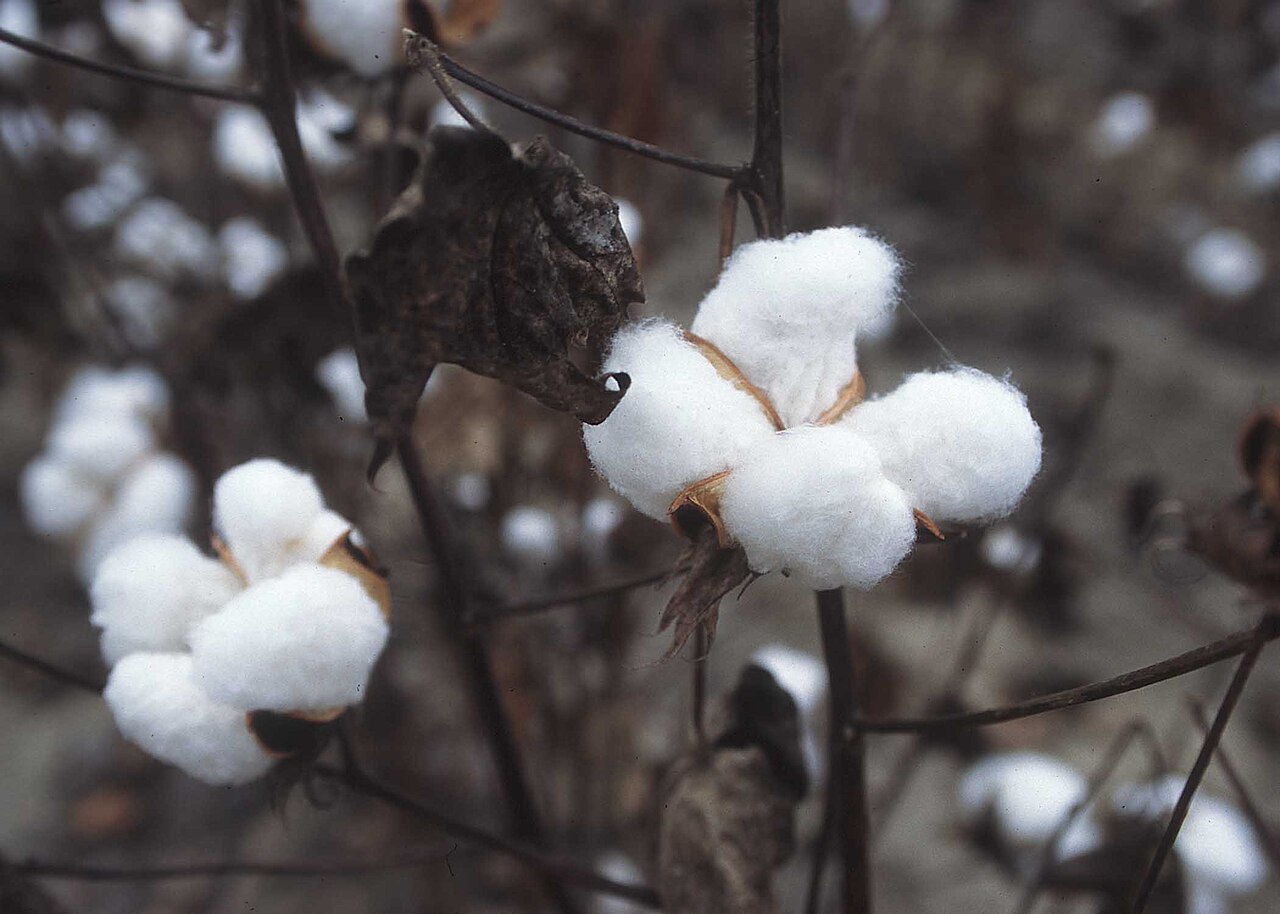
Cotton is the most widely used natural fiber in the global textile industry. Grown around the seeds of the cotton plant (Gossypium), it is prized for comfort, breathability and versatility in apparel.
Polyester
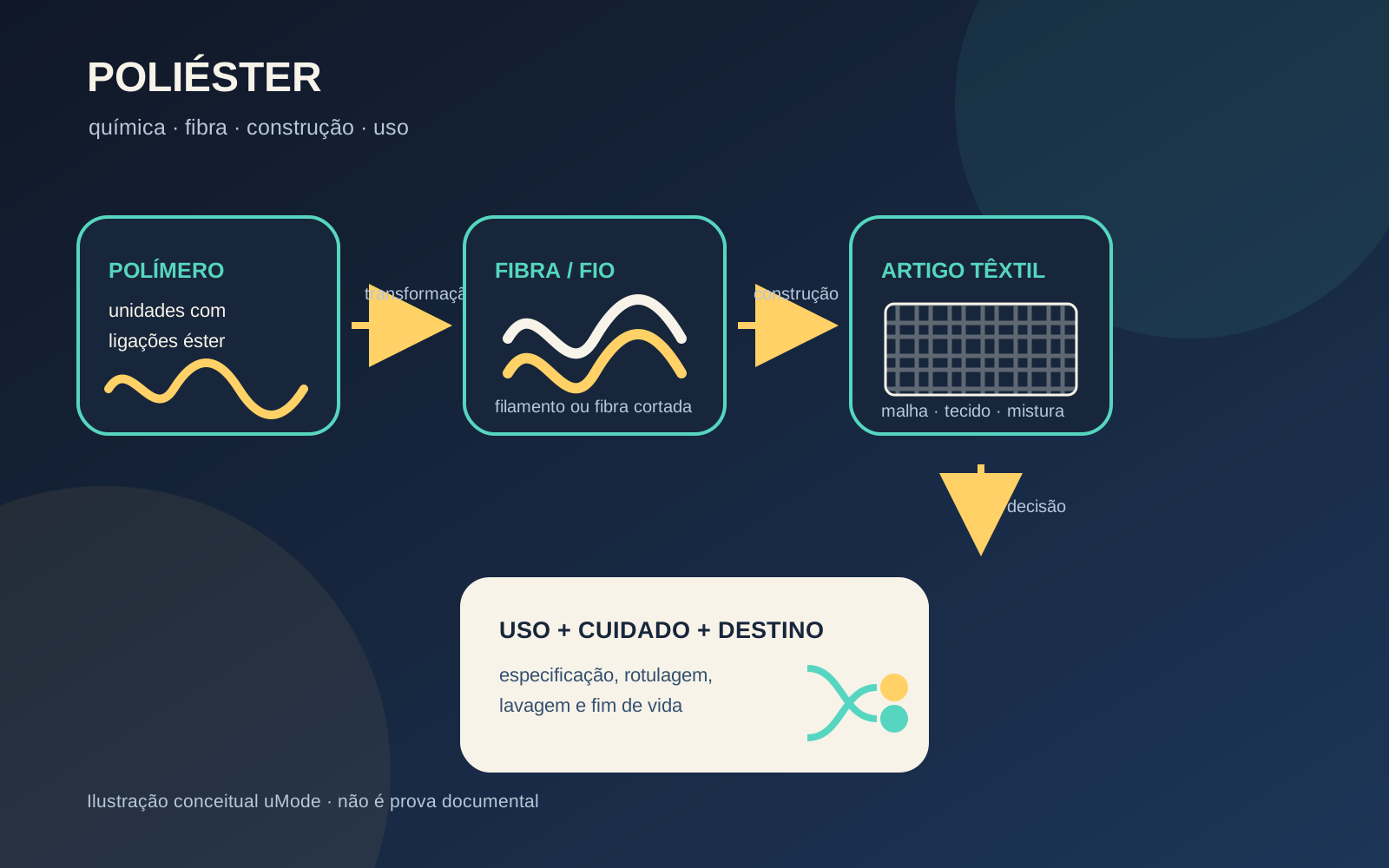
Polyester is a family of polymers with ester linkages; in fashion, the name most often refers to textile fibers and products based on PET. The result still depends on fiber, yarn, construction, and the rules that govern fiber composition and care.

Industrial weaving
Weaving is the process of forming fabric by regularly interlacing two yarn systems: warp in the lengthwise direction and weft across the width. The construction results from warp preparation, shed formation, weft insertion and beat-up, and control of yarn delivery and fabric take-up.
Industrial knitting
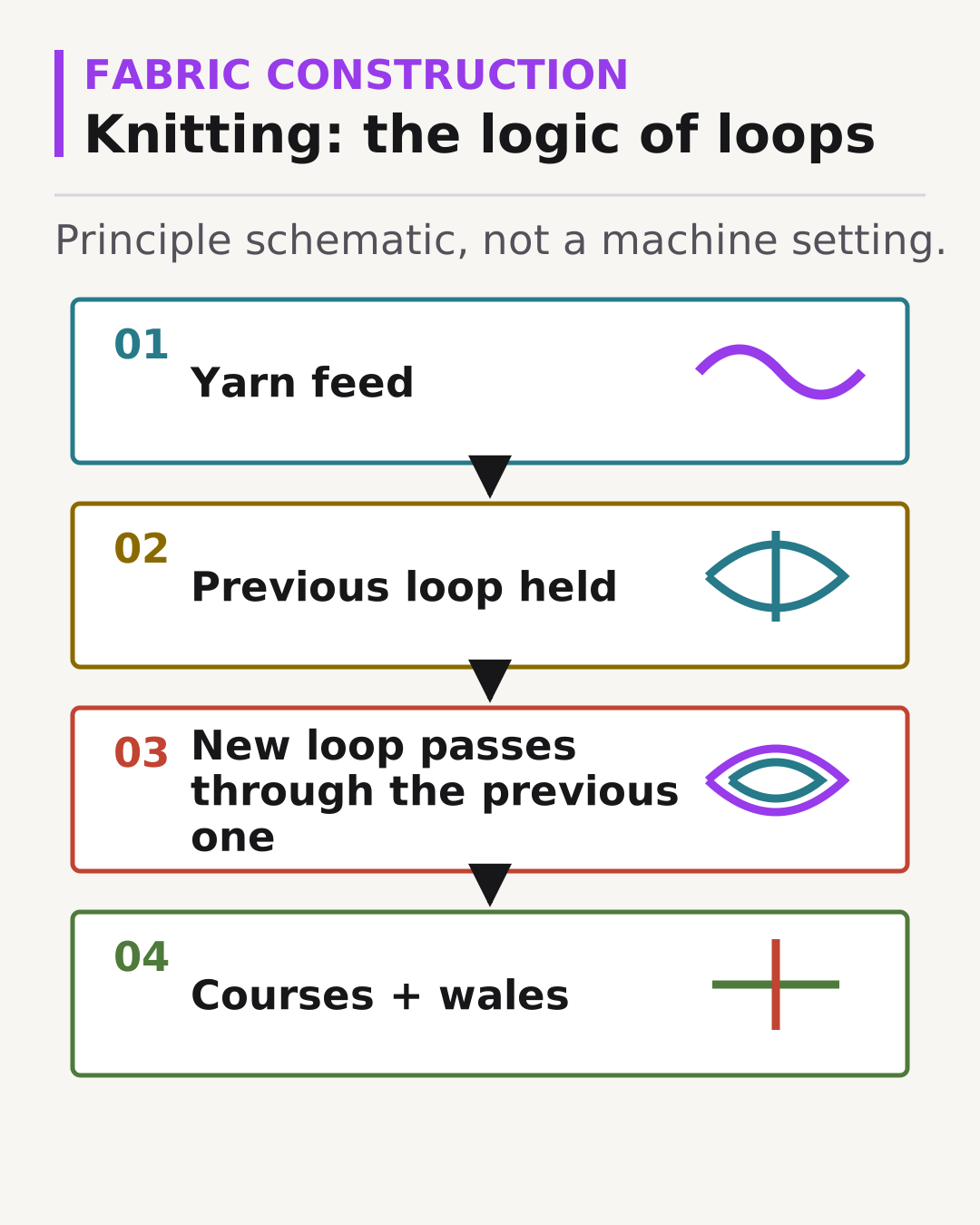
Knitting is the process of forming fabric through series of intermeshed loops. It divides into weft knitting, in which yarn travels across the width and needles form loops in sequence, and warp knitting, in which parallel yarns feed needles that work simultaneously along the fabric length.

Fashion product technical specification
A technical specification is the controlled information set that translates an approved fashion product into verifiable sampling and manufacturing requirements. It brings together drawings, materials, measurements, construction, tolerances, identification, labelling, comments and revision history; its content varies by category, company, market and stage.
Sources
- https://www.rieter.com/investor-relations/strategy/textile-market-and-spinning-process
- https://cottonworks.com/learning-hub/yarn-manufacturing/fiber-preparation-for-spinning/
- https://cottonworks.com/learning-hub/yarn-manufacturing/yarn-spinning/
- https://onlinecourses-archive.nptel.ac.in/noc18_de04/preview
Want to apply this to your operation?