Industrial knitting
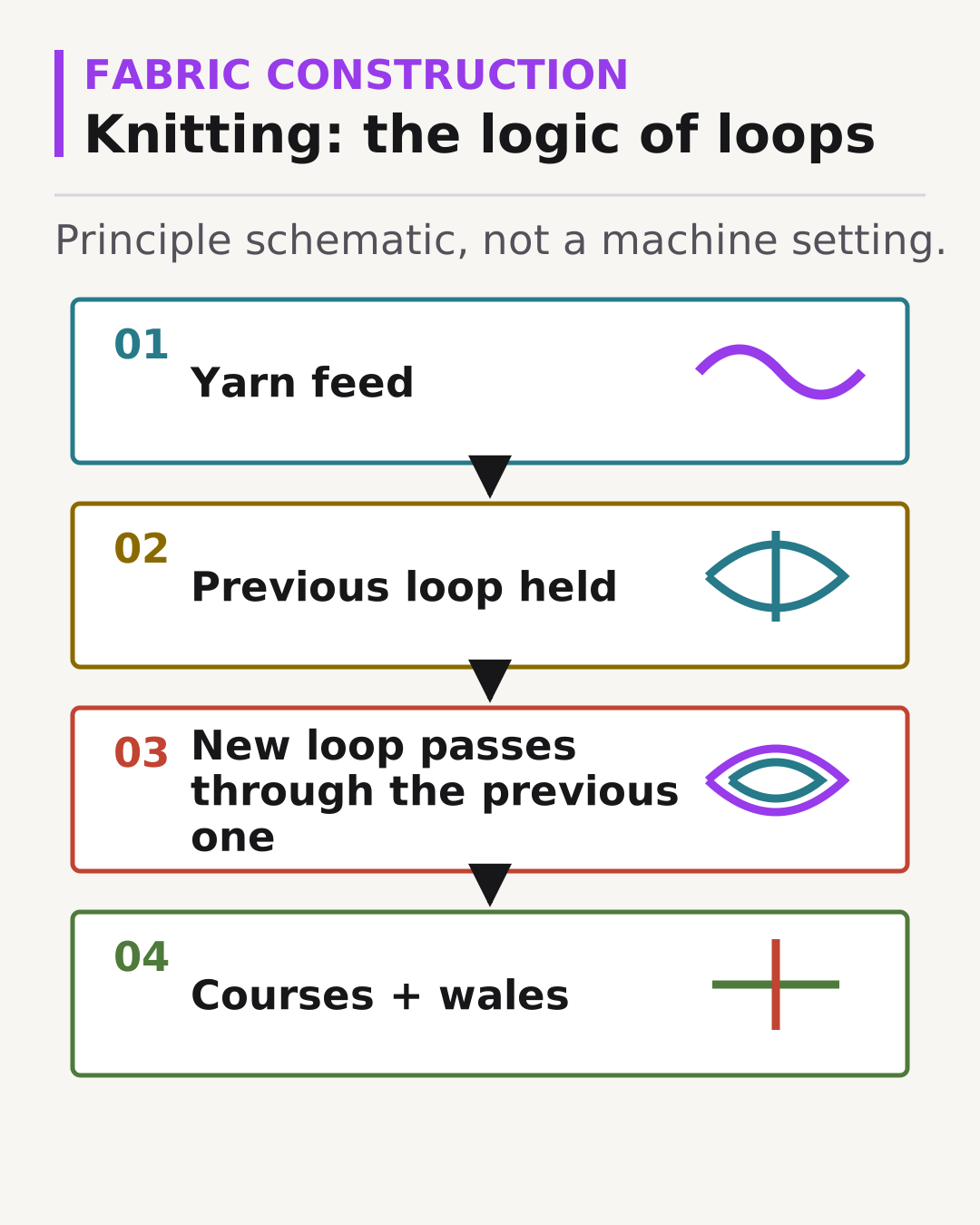
Knitting is the process of forming fabric through series of intermeshed loops. It divides into weft knitting, in which yarn travels across the width and needles form loops in sequence, and warp knitting, in which parallel yarns feed needles that work simultaneously along the fabric length.
On this page
What is industrial knitting?
Knitting forms fabric through series of intermeshed loops. Unlike weaving, which crosses two yarn systems, knitting builds surface and volume by leading yarn through successive loops. This geometry tends to allow greater deformation and recovery, but final behavior depends on yarn, stitch, density, finishing, and relaxation state, not on the label "knit" alone.
Yarn comes from spinning and must combine evenness, twist, friction, and elasticity with the equipment. During production, tension is usually low, but yarn repeatedly contacts guides and needles. Consistent preparation and feeding are therefore part of the process, especially when elastane or multiple yarns are used.
How is the structure described?
The loop is the basic unit. Courses are horizontal rows produced by adjacent needles during a cycle; wales are vertical sequences of interlinked loops. Stitch density is the product of wales per unit width and courses per unit length. Because knitted fabric responds to tension and relaxation, measurement must state sample condition and should not be treated as an absolute value outside its method.
Three fundamental actions organize many constructions: knit, tuck, and float. Their combinations produce surfaces such as jersey, rib structures such as rib, and designs with different volume and elasticity. Stitch length, machine gauge, needle count, and feeding complete the technical description.
What is the difference between weft and warp knitting?
In weft knitting, yarn travels across the width and neighboring needles form a course in sequence. A single feed can build the fabric. Circular machines produce tubular fabric in a spiral around a cylinder; flat machines arrange needles in beds and use a traveling carriage to form course after course. Sweaters and shaped parts associated with flat knitwear widely use the flat configuration.
In warp knitting, yarns with a predominantly vertical path are fed from warp beams or creels while the needles move together on needle bars. Beam preparation and threading are therefore central to repeatability. Both routes can make apparel fabrics, but they have distinct feeding, preparation, and formation architectures.
How do machines and needles form loops?
The needle captures yarn and forms a new loop through the previous one. Machines use latch, bearded, or compound needles according to principle and application. On flat machines, cams in the carriage control needle movement; on circular machines, the cylinder and sometimes the dial arrange needles and selections around the circumference. Electronic double-knit equipment can select needles individually and produce continuous tubes or separated pieces.
These resources do not guarantee performance by themselves. Feeding, tension, stitch, selection, density, and fabric take-down must remain synchronized. A change in any parameter can alter width, mass, design, and dimensional stability.
Why does knitting matter in product development?
Knitting requires visual decisions to be recorded as reproducible parameters. A technical specification must distinguish weft from warp, circular from flat, stitch structure, gauge, stitch length, density, composition, elastane feeding, and measurement condition. Photographs and free-form names help communication but do not replace these fields.
Connecting parameters, samples, and approvals reduces rework and preserves the reason for each change. It also makes it possible to verify the effect of finishing on width, mass, and stability and to compare planned and actual results without parallel controls. Course, wale, stitch length and gauge stop being isolated terms when they are tied to a sample, a measurement method and an approved version.
Verified facts
- Knitting forms fabric through series of intermeshed loops, which are the basic units of the structure.
Source: archive.nptel.ac.in ↗ - The two general formation principles are weft knitting and warp knitting.
Source: archive.nptel.ac.in ↗ - In weft knitting, the general yarn path crosses the width; in warp knitting, it follows the fabric length.
Source: archive.nptel.ac.in ↗ - A wale is a vertical sequence of intermeshed loops, while a course is the row produced by adjacent needles during one knitting cycle.
Source: archive.nptel.ac.in ↗ - Stitch density equals the product of wales per unit width and courses per unit length.
Source: archive.nptel.ac.in ↗ - The needle is the machine element that forms the loop; latch, bearded, and compound needles are used according to machine type.
Source: archive.nptel.ac.in ↗ - Knit structures are variations of three fundamental stitches: knit, tuck, and float.
Source: cottonworks.com ↗ - A circular weft-knitting machine forms a fabric tube in a spiral configuration around a cylinder.
Source: cottonworks.com ↗ - On flat knitting machines, cams mounted on the carriage move the needles while the carriage travels horizontally over the beds and produces course after course.
Source: groz-beckert.com ↗ - In warp knitting, all needles move together on needle bars; the yarn path is predominantly vertical and yarns are generally fed from warp beams or creels.
Source: groz-beckert.com ↗ - Electronic double-knit circular machines can produce seamless garments as continuous tubular fabric or as separated pieces.
Source: santoni.com ↗
Related entries
Textile spinning
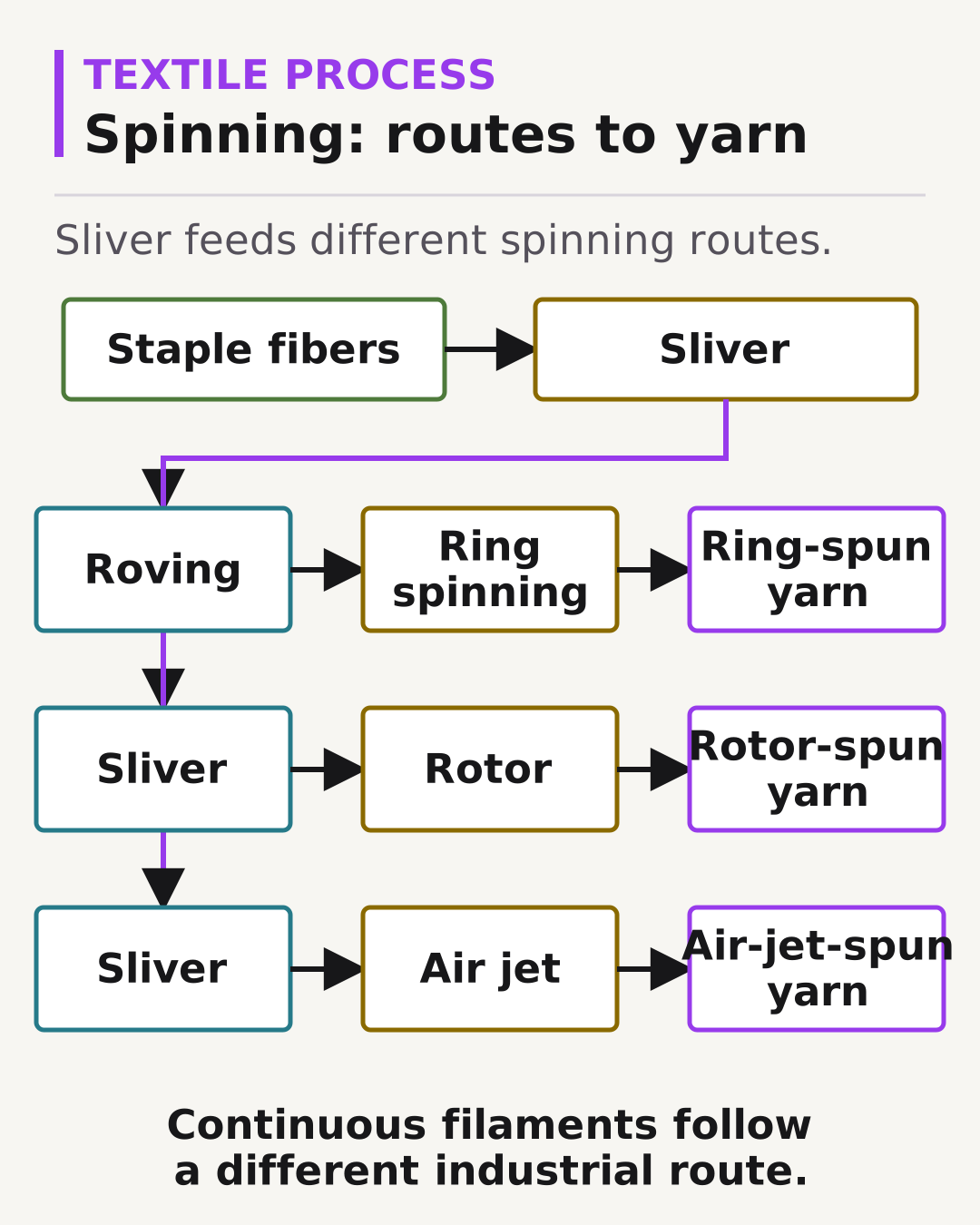
Yarn production follows two distinct technical routes: spinning turns staple textile fibers into yarn through preparation, alignment, attenuation, and consolidation, while continuous-filament processing assembles or transforms filaments without repeating the full preparation used for short fibers. These routes determine properties of yarn sent to weaving or knitting.

Industrial weaving
Weaving is the process of forming fabric by regularly interlacing two yarn systems: warp in the lengthwise direction and weft across the width. The construction results from warp preparation, shed formation, weft insertion and beat-up, and control of yarn delivery and fabric take-up.
Jersey
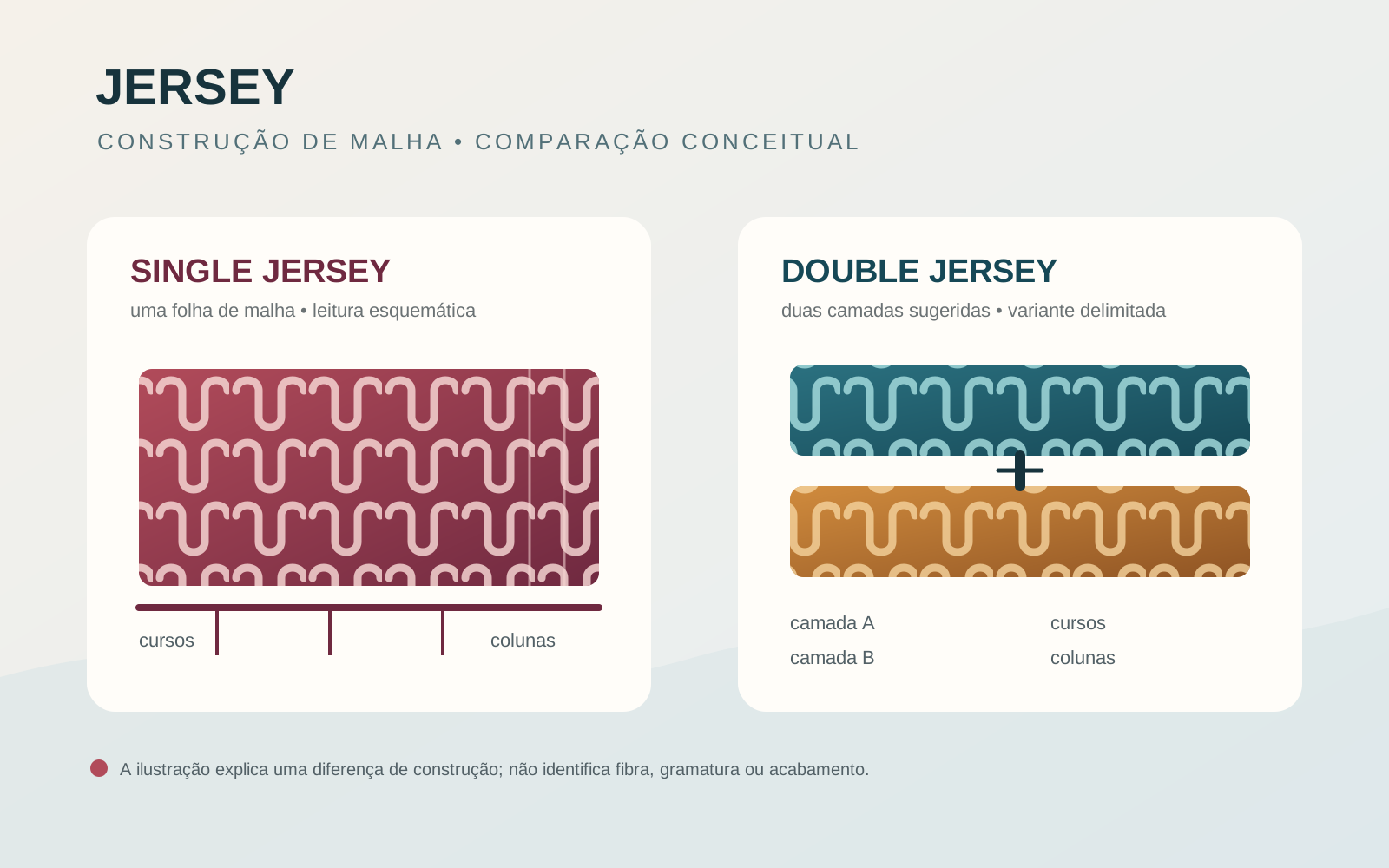
Jersey is a weft-knit material made through loop formation; the name does not identify a single fiber. The source distinguishes single jersey, a single sheet of knit fabric, from the specifically described double-jersey variant; fiber content and construction belong in separate specification fields.
Elastane
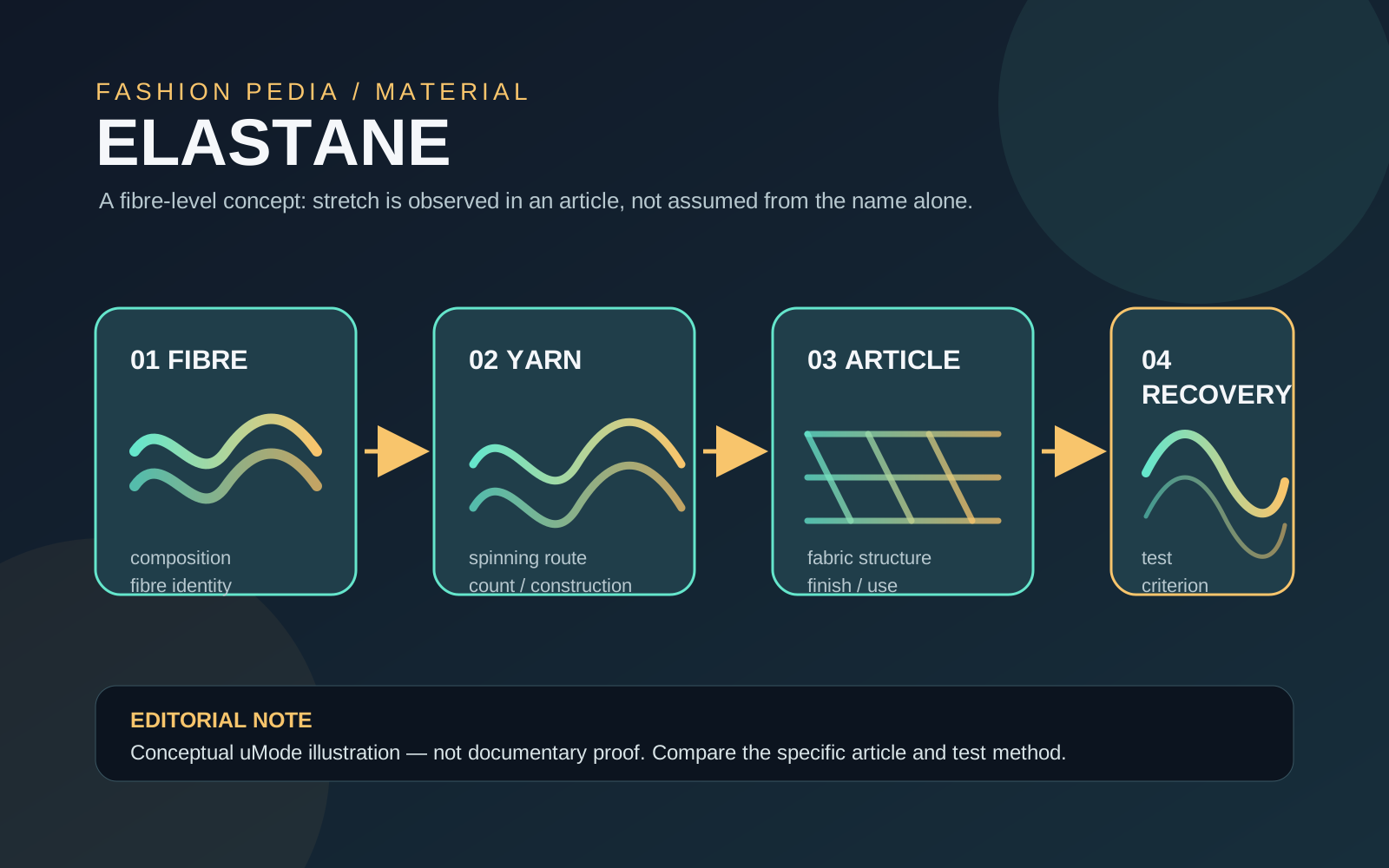
Elastane is a synthetic elastofibre defined in Regulation (EU) No 1007/2011 as containing at least 85% by mass of segmented polyurethane and recovering rapidly and substantially toward its initial length after being stretched to three times that length. In fashion, it should be treated as a fibre: the yarn, fabric and garment still require their own specification.

Fashion product technical specification
A technical specification is the controlled information set that translates an approved fashion product into verifiable sampling and manufacturing requirements. It brings together drawings, materials, measurements, construction, tolerances, identification, labelling, comments and revision history; its content varies by category, company, market and stage.
Sources
- https://archive.nptel.ac.in/content/storage2/courses/116102005/m1-introduction/l2-knitting.htm
- https://archive.nptel.ac.in/content/storage2/courses/116102008/introduction%20and%20basic%20concepts/basic%20concepts.html
- https://cottonworks.com/learning-hub/knitting/knit-basics/
- https://www.groz-beckert.com/en/products/knitting/
- https://santoni.com/en/products/seamless/smdj-2t
Want to apply this to your operation?