Implementing PLM for fashion
Implementing PLM for fashion. A technical and operating route that connects briefs, packs, materials, samples, suppliers, approvals, and changes in a traceable product flow.
On this page
Implementing PLM for fashion
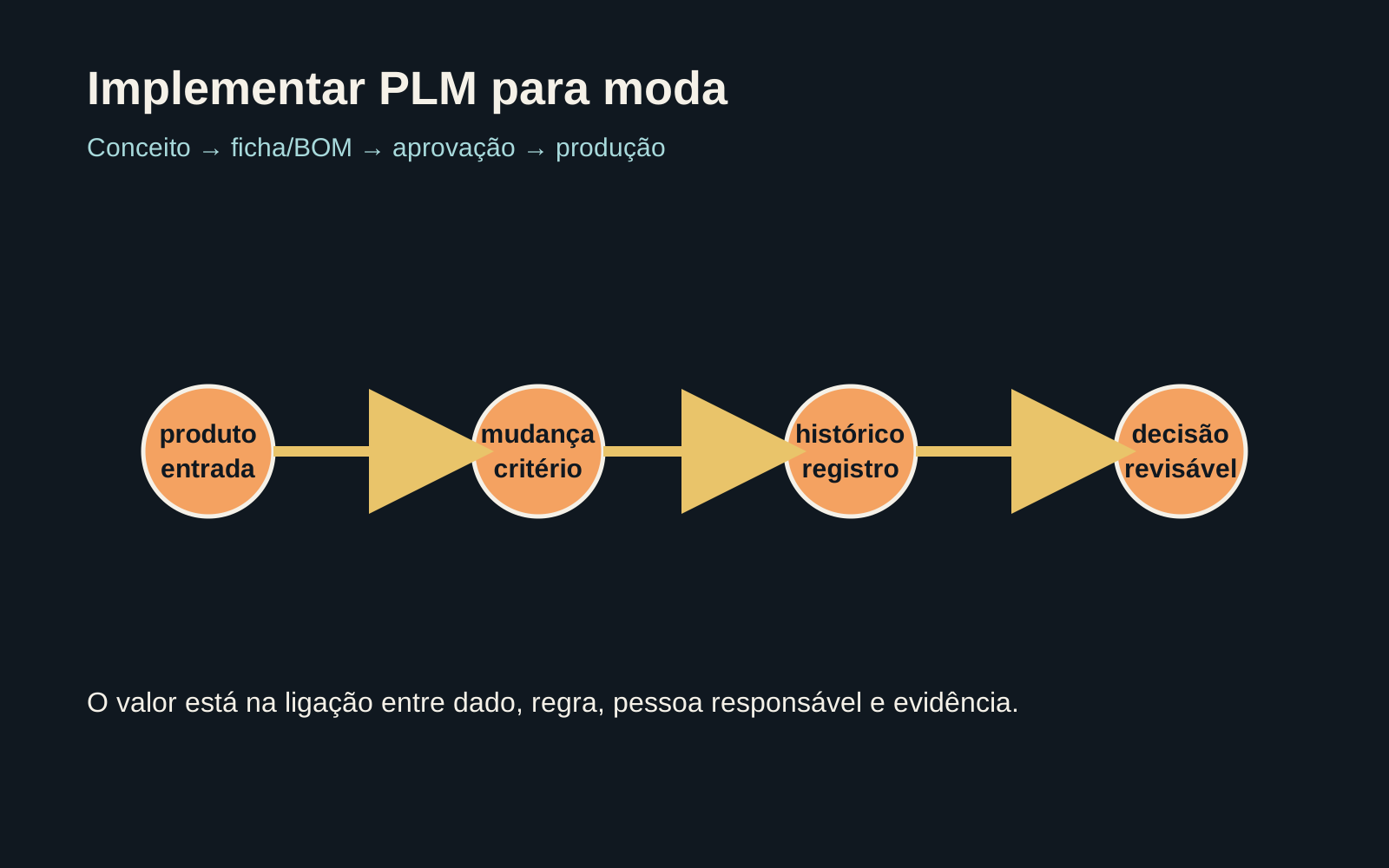
Implementing PLM for fashion creates a continuous thread between collection intent and delivered product. The goal is not simply to store files. It is to preserve the context of every style, variant, color, size range, material, trim, measurement, sketch, pack, BOM, sample, comment, supplier, and change. The implementation must show the active version, its approver, affected dependencies, and the path from decision to production.
What is Implementing PLM for fashion?
Model a style as an object connected to variants, channels, markets, and seasons. A fabric change can alter cost, weight, labeling, testing, lead time, and imagery; composition should therefore not remain free text. The BOM should connect component, quantity, unit, waste, supplier, and version. IBM describes PLM across concept, design, procurement, production, service, and disposal while integrating people, data, processes, and systems.
Define boundaries between PLM, ERP, PIM, and design tools. PLM governs definition, collaboration, and change; ERP executes transactions; PIM organizes publishing attributes; CAD and prototyping support visual and technical representation. Write the boundaries as data contracts covering master identifier, owner, sync frequency, error handling, and conflict rules. Connect the ERP handoff to purchasing and the PIM handoff to channel content rather than copying every field everywhere.
Where can a team start without automating disorder?
Map the current process before configuring screens. Follow a pack from brief to sample: who creates measurements, who adds trims, where the supplier responds, how comments become tasks, and when a version freezes. Choose a pilot with measurable pain, such as sample approval or material substitution. Define states, required inputs, authority, deadline, output, and exception path.
How can every change leave useful traceability?
A request should state reason, affected items, likely cost, risk, timing, and evidence. Impact analysis should reach labels, tests, inventory, content, and purchase orders, not only the style screen. Change management must separate proposal, analysis, approval, and release. IBM describes a structured proposal-and-approval process; PTC highlights governance, traceability, and coordinated engineering changes.
Which indicators show that PLM is working?
Measure coverage and quality first: complete packs, BOMs without orphan components, resolved comments, approvals on the correct version, changes with impact analysis, and supplier responses on time. Then track cycle time, rework, sample errors, and PLM-to-ERP discrepancies. Fashion data governance defines meaning; material traceability connects composition to evidence.
Expand in waves across product, suppliers, quality, cost, production, and after-sales. Each wave needs acceptance criteria, role-based training, sample migration, rollback plan, and an owner. PLM does not repair poor vocabulary or ambiguous approval; it exposes those weaknesses in the workflow where they are cheaper to fix.
Verified facts
- PLM manages a product lifecycle from concept and design through procurement, production, service, and disposal.
Source: ibm.com ↗ - PLM integrates people, data, processes, and business systems.
Source: ibm.com ↗ - PLM tools provide centralized product-data repositories.
Source: ibm.com ↗ - Those repositories support collaboration and course correction as markets or technologies change.
Source: ibm.com ↗ - PDM, also called PLM 1.0, incorporated bills of materials and handled larger CAD files.
Source: ibm.com ↗ - A BOM lists every component and raw material required to build and maintain a product.
Source: ibm.com ↗ - PLM enables collaboration among geographically dispersed multidisciplinary teams.
Source: ptc.com ↗ - The information used by those teams should be trusted and up to date.
Source: ptc.com ↗ - PLM provides a foundation for a digital-thread strategy with context-aware product information.
Source: ptc.com ↗ - PLM supports supply-chain agility and business continuity.
Source: ptc.com ↗
Related entries
How to structure fashion data governance
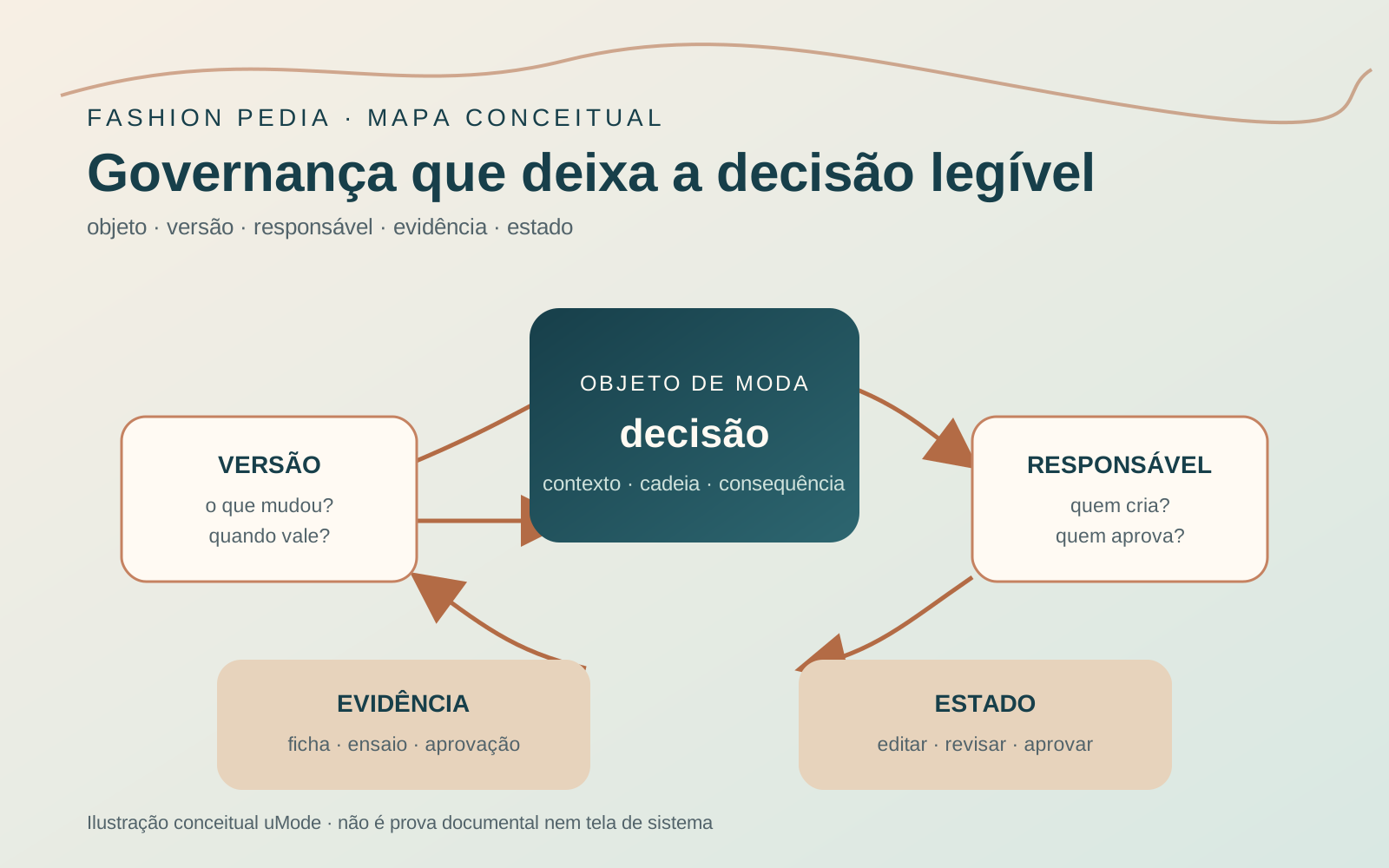
How to structure fashion data governance. Fashion data governance organizes objects, meanings, owners, versions, permissions and evidence around product and supply-chain decisions. A useful structure starts with a critical workflow, states what must be known at each step, and connects a decision to the record that lets another person verify it.
How to Give Company Context to AI
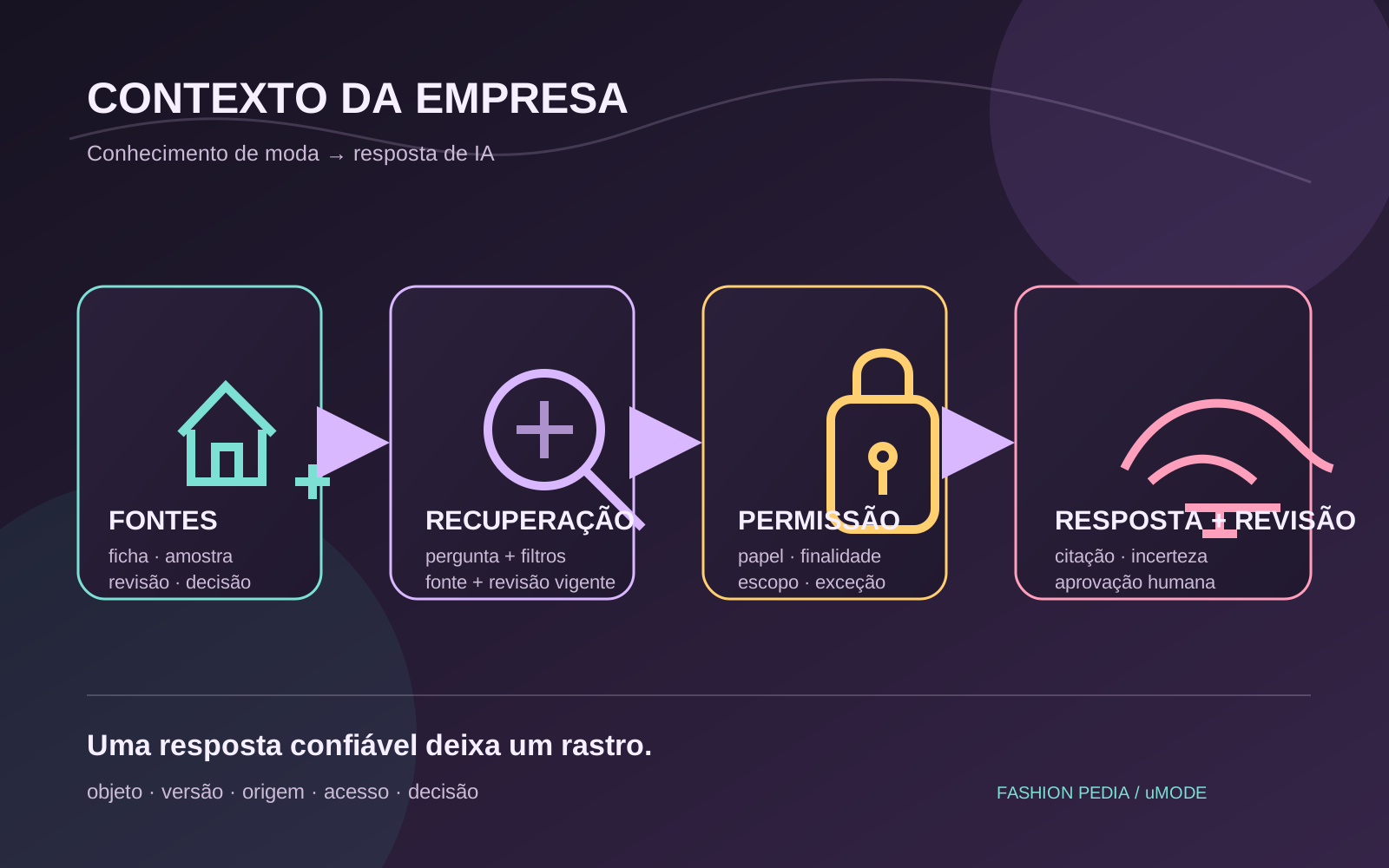
How to Give Company Context to AI. Giving company context to AI means turning scattered knowledge into retrievable information bounded by source, scope, freshness, and permission. The process combines a trusted knowledge base, relevant retrieval, clear instructions, and human evaluation—not simply a longer prompt.
Implementing PLM for fashion
Implementing PLM for fashion. A technical and operating route that connects briefs, packs, materials, samples, suppliers, approvals, and changes in a traceable product flow.
Sources
Want to apply this to your operation?