Tweed
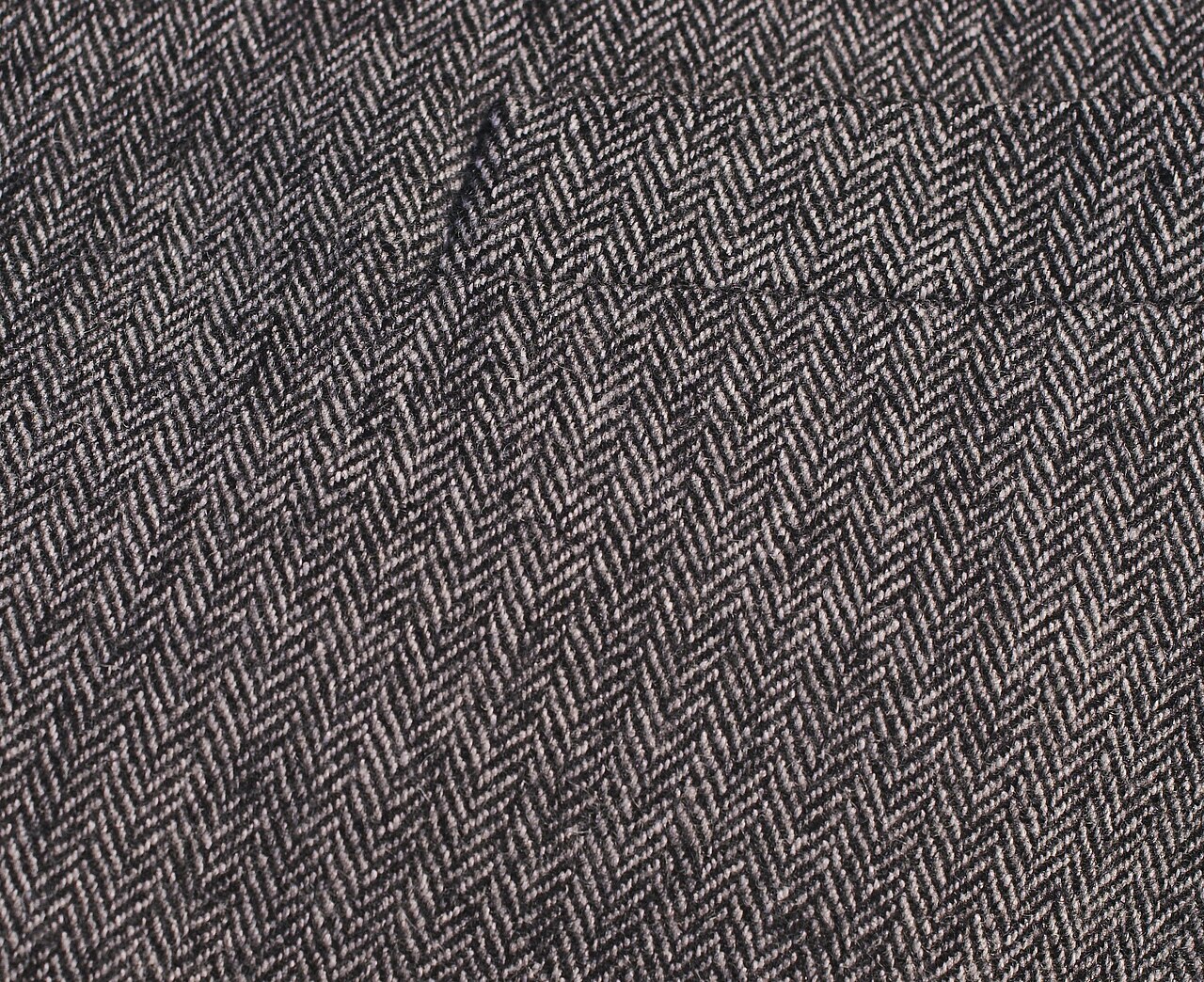
Tweed is a wool fabric with a soft, open and flexible texture, usually more closely woven than homespun, and commonly made in plain, twill or herringbone structures. Colour effects may come from mixing dyed wool before spinning; composition, structure and finishing are still required to specify the actual cloth.
On this page
What is Tweed?
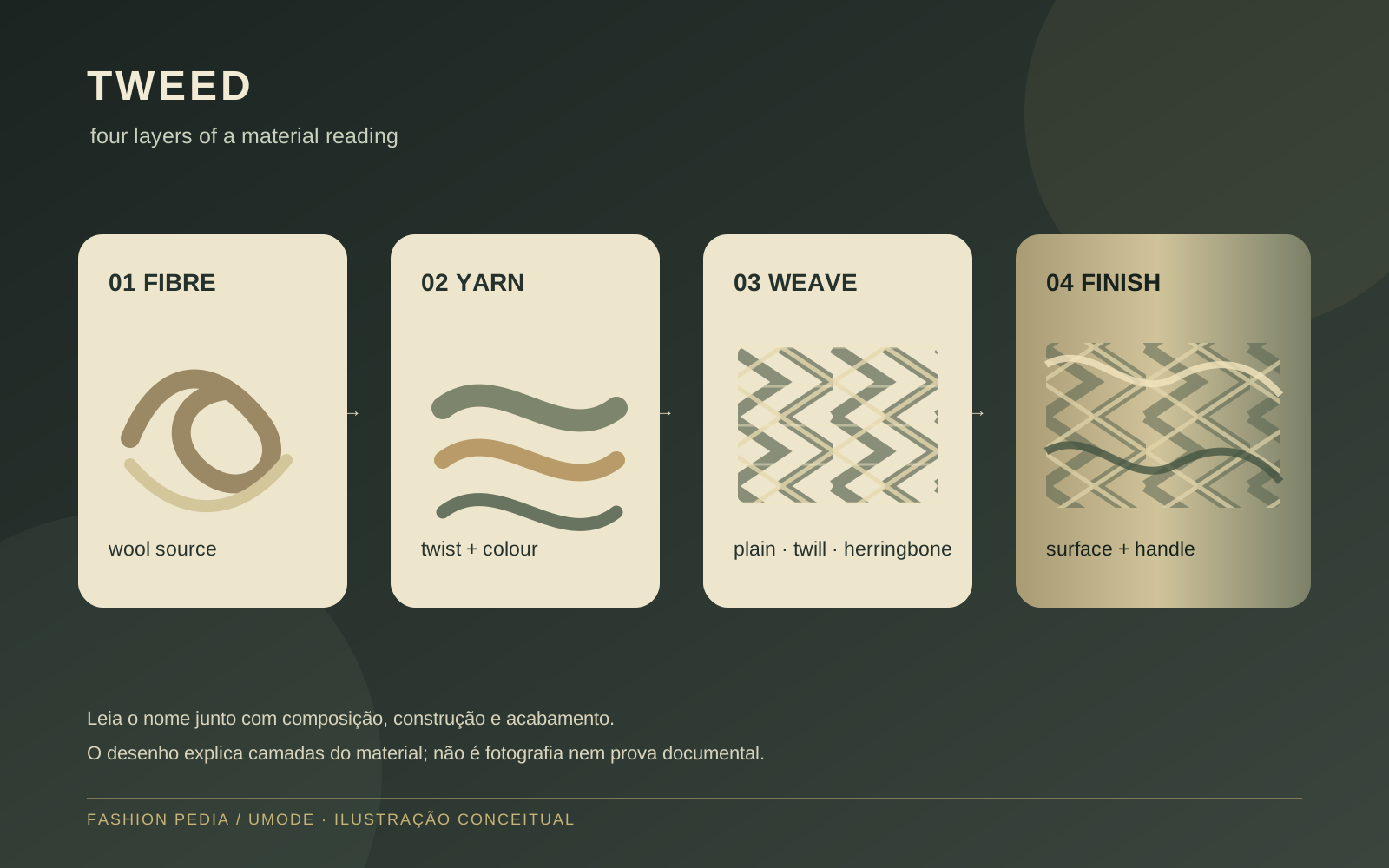
Tweed is a wool fabric with a soft, open and flexible texture, usually more closely woven than homespun. The classic description also includes plain, twill and herringbone structures, so the name does not identify one single weave or appearance. Colour effects may come from mixing dyed wool before spinning. In a product record, fibre, yarn, construction and finishing should therefore be recorded instead of treating “tweed” as a complete specification.
This separation keeps wool distinct from the finished cloth. Wool is the fibrous material; yarn is the spun element; weaving organizes warp and weft; finishing changes the surface after the loom. A herringbone sample and a plain-weave sample may share a commercial name, but each should be described by its observable construction and by the actual article received.
How is tweed made?
Harris Tweed provides a documented example of these operations. During preparation, coloured and white wools are weighed in predetermined proportions, mixed, and given oil to facilitate spinning and other processes. Twist is imparted during spinning, and the yarn gains strength for weaving.
The yarn is then made into a warp and sent to the home weaver with weft yarn for a hand loom. After weaving, the cloth returns to the mill for finishing; at that point it still contains spinning oil and impurities from the loom. The final stages described by the authority include scouring, milling with a certain amount of felting, and cropping the surface before inspection. This route shows why spinning, weaving and textile finishing are not synonyms for tweed: they are different operations and layers in the chain.
What should a fashion team specify?
Start with the declared or observed construction: plain, twill or herringbone. Record composition, yarn count and twist when available, weight, usable width, thickness, direction, pattern, colour, finishing and sample behaviour. Mixing dyed wool before spinning may create colour effects, but appearance does not replace composition or establish provenance by itself.
Woolmark describes Merino wool fibre as having a structure that helps regulate temperature, manage moisture, resist odour, stretch and recover. This is a statement about Merino fibre, not a promise for every tweed: fabric performance depends on the fibre used, yarn, construction and finishing. A tech pack should keep that distinction and connect each requirement to a sample, method and evaluation condition.
For approval, compare the received lot with the identified approved sample and record visual, dimensional and handle variations. Relate the material to the intended use, patternmaking, sewing, lining and the care information for the actual article. When a requirement is measurable, quality control should retain method, unit, condition and result; when the decision is tactile or visual, describe the criterion and context.
What are the limits of the name?
“Tweed” should not be used as a shortcut to guarantee drape, strength, comfort, origin or environmental impact. Plain, twill or herringbone describes a fabric organization; it does not prove fibre content. A colour effect may come from mixing wool before spinning; it does not prove that two articles with the same appearance use the same yarn or finish.
Tweed should also be separated from a finish that merely imitates its surface and from a fibre used in one particular variant. Purchasing documentation should retain article, supplier, composition and lot. If the approved sample differs from the delivered cloth, record the deviation before deciding; a fit approval can reveal behaviour in a garment, but it does not replace material identification.
Graph relations
Wool · Spinning · Weaving · Textile finishing · Tech pack · Quality control
Verified facts
- Tweed is a wool fabric with a soft, open and flexible texture, usually more closely woven than homespun.
Source: en.wikipedia.org ↗ - Tweed may be woven in plain, twill or herringbone structures.
Source: en.wikipedia.org ↗ - Colour effects in tweed yarn may be obtained by mixing dyed wool before it is spun.
Source: en.wikipedia.org ↗ - After weaving, Harris Tweed returns to the mill for the finishing stage.
Source: harristweed.org ↗ - In Harris Tweed preparation, coloured and white wools are weighed in predetermined proportions, mixed, and given oil to facilitate spinning and other processes.
Source: harristweed.org ↗ - In Harris Tweed spinning, twist is imparted to the yarn and it gains strength for weaving.
Source: harristweed.org ↗ - In the Harris Tweed process, yarn is made into a warp and sent to the home weaver with yarn to be used as weft on a hand loom.
Source: harristweed.org ↗ - After weaving, Harris Tweed returns to the mill for finishing, and the woven cloth still contains spinning oil and impurities from the loom.
Source: harristweed.org ↗ - Harris Tweed finishing includes scouring, milling with a certain amount of felting, and cropping the surface before inspection by the authority.
Source: harristweed.org ↗ - Woolmark describes Merino wool fibre as having a structure that helps regulate temperature, manage moisture, resist odour, stretch and recover.
Source: woolmark.com ↗
Sources
Want to apply this to your operation?