Neoprene
Neoprene is a family of synthetic rubbers, also called polychloroprene, that can be supplied as solid rubber, latex, or closed-cell foam. In fashion, its behavior must be read through construction: thickness, foaming, lamination, and the finished article determine the performance that a designer or product team actually encounters.
On this page
What is Neoprene?
Neoprene is a family of synthetic rubbers produced by polymerizing chloroprene, also known as polychloroprene. This is a material definition, not a textile-fiber definition: the same name can describe solid rubber, latex, or foam. In fashion, that distinction prevents a bulky appearance from being mistaken for a complete composition. A product record should separate the polymer from the article’s construction and connect it to neighboring materials such as polyester and elastane.
The material has an industrial history: a chemical-safety reference records its development in 1930 by a DuPont company scientist. That origin places neoprene among early synthetic rubbers with broad uses, but it does not mean that every contemporary fashion article has the same formulation. The family can be supplied as sheet, sponge, extruded material, or molded form; the supply form already changes cutting, joining, and inspection decisions.
How does its structure change performance?
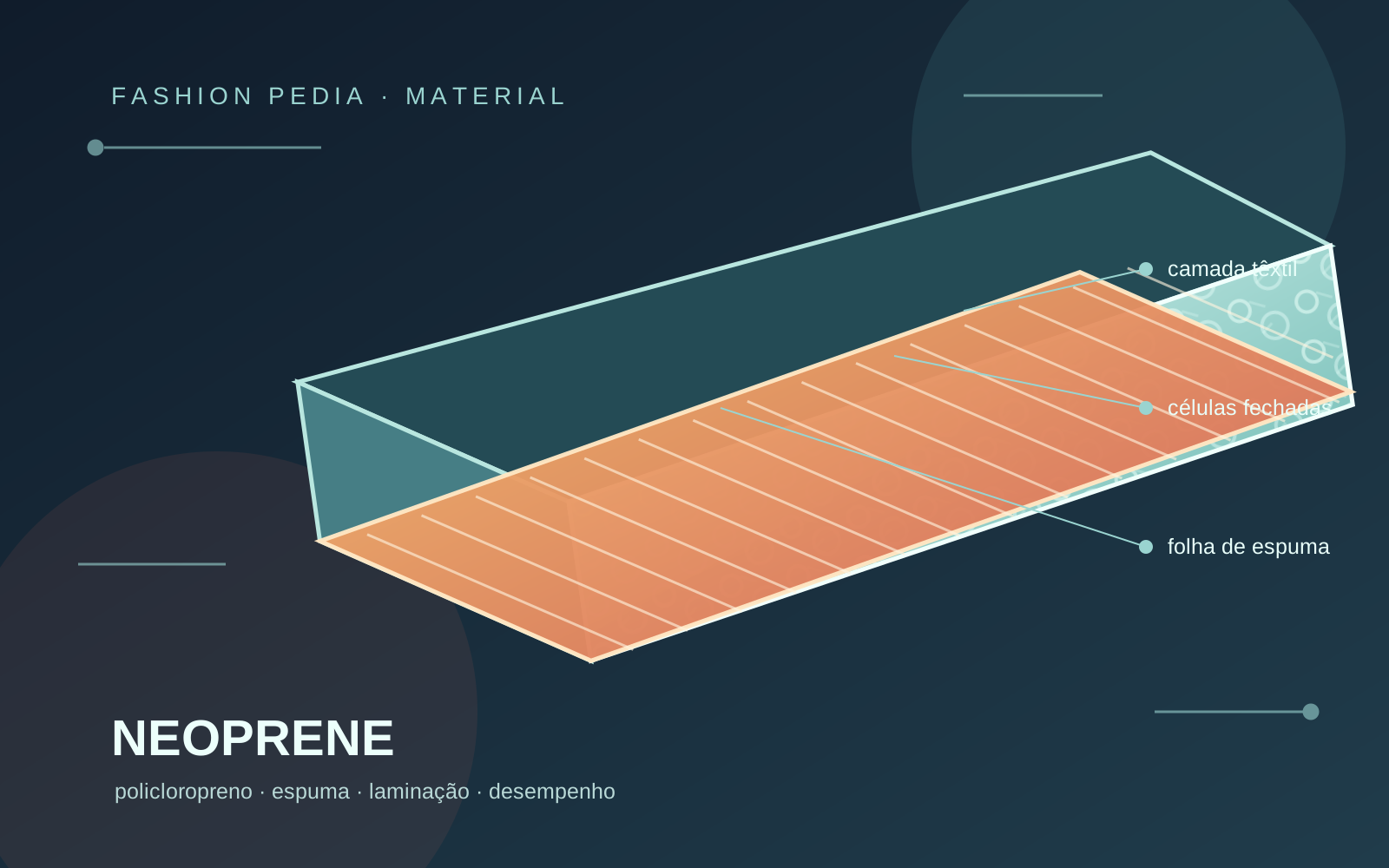
Neoprene performance depends on physical form and assembly. Closed-cell foam neoprene is used in wetsuits and drysuits for thermal insulation; the foam is also buoyant and compresses under pressure. Thickness, density, textile backing, and pressure conditions therefore belong to the article specification, not to a universal promise attached to the word “neoprene.” A sheet may receive a knitted or other textile backing through lamination, while solid rubber raises different questions from foam.
Sources describe good chemical stability and flexibility across a wide temperature range. They also describe resistance to weathering, ozone, and chemicals, together with flexibility that tolerates repeated bending, stretching, and compression. Those characteristics can guide selection, but they do not replace testing: a fashion product still combines layers, seams, zippers, adhesives, and linings. The technical sheet should connect each requirement to the component that is expected to deliver it.
The described production sequence can include polymerization, washing, filtration, drying, and shaping by calendaring or extrusion. This is why “neoprene” is not enough as a purchasing specification. For sample approval, record supply form, thickness, width, coatings, stretch direction, joining method, and care instructions for the finished article. The commercial name is a starting point; construction is the operational information.
Where does the material enter fashion?
In fashion and adjacent performance products, neoprene is clearly used for wetsuits, gloves, and diving equipment, applications associated with buoyancy, insulation, and water resistance. It can also support sculptural garments, accessories, and sports products when a team needs a stable surface or a foam with physical presence. The use must stay precise: a wetsuit is one application, not the definition of every article sold under the name.
Development starts with the use question. If insulation is the priority, the team examines foam and thickness; if visual stability matters, it examines sheet, backing, and cutting; if mobility matters, it examines bending, stretching, and compression in the assembled product. Patternmaking should be tested with real seams and trims. During quality control, the sample should be compared with its specification rather than judged from color, shine, or apparent thickness.
Neoprene is not synonymous with elastane: the first is a family of synthetic rubbers, while the second is a fiber used in elastic textile structures. That difference affects composition, disposal, sewing, hand, and care. A record that says only “neoprene” leaves the material form, layers, and process unresolved. It is more useful to connect the input to wetsuit, foam, and lamination, while keeping material, construction, and product distinct.
How should a team specify the material?
A robust specification identifies the supplied form—solid, latex, sheet, sponge, extruded, or molded—and then records thickness, backing, finish, joining method, and care. The supplier’s description should be checked against a physical sample, because a family-level resistance claim is not automatically the resistance of a seam or finished garment. The same reasoning applies to water, heat, oil, and chemical exposure: the requirement must be defined for the actual assembly.
Neoprene matters to product development because it connects polymer chemistry, foam structure, and garment construction without reducing the subject to a visual trend. It is a material choice that calls for specification, testing, and precise language. In fashion product development, the practical gain is recording what was actually bought and approved; in quality control, it is testing the right question on the right layer.
Verified facts
- Neoprene, also called polychloroprene, is a family of synthetic rubbers produced by polymerizing chloroprene.
Source: en.wikipedia.org ↗ - Neoprene maintains flexibility across a wide temperature range and has good chemical stability.
Source: en.wikipedia.org ↗ - The material is sold as solid rubber or latex and is used in a variety of products.
Source: en.wikipedia.org ↗ - Foamed neoprene is used in wetsuits and drysuits as thermal insulation.
Source: en.wikipedia.org ↗ - Neoprene foam is buoyant and compresses under pressure.
Source: en.wikipedia.org ↗ - Neoprene can be made in sheet, sponge, extruded, and molded forms.
Source: belloframelastomers.com ↗ - The described neoprene production sequence includes polymerization, washing, filtration, drying, and shaping by calendaring or extrusion.
Source: belloframelastomers.com ↗ - Neoprene is described as resistant to weathering, ozone, and chemicals, with flexibility that tolerates repeated bending, stretching, and compression.
Source: belloframelastomers.com ↗ - Neoprene is used for wetsuits, gloves, and diving equipment because of its buoyancy, insulation, and water resistance.
Source: belloframelastomers.com ↗ - Neoprene was developed in 1930 by a DuPont company scientist and is generally stronger and harder than natural rubber.
Source: chemicalsafetyfacts.org ↗
Sources
Want to apply this to your operation?