Malwee
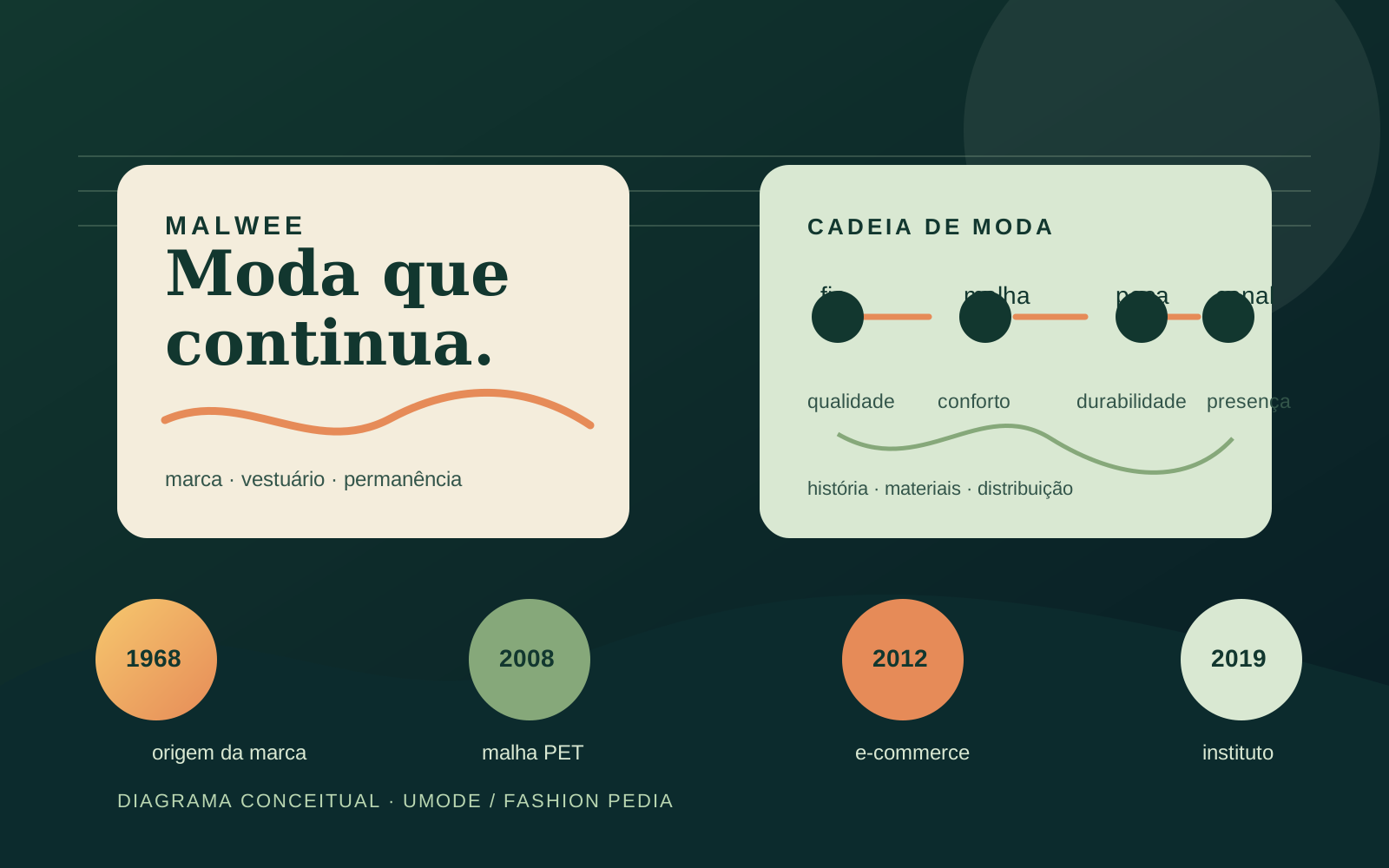
Malwee is a Brazilian apparel brand created in 1968 as a fashion collection focused on garment quality and comfort. The brand currently presents itself as timeless, democratic and designed for clothes that last, within Grupo Malwee.
On this page
What is Malwee?
Malwee is a Brazilian apparel brand whose institutional origin is placed in 1968, when it was created as a fashion collection focused on garment quality and comfort. The brand is presented within Grupo Malwee, but it should not be conflated with the business group, Instituto Malwee or the other labels in the portfolio. Keeping those levels separate is essential when reading operating data, environmental initiatives and sales channels.
The brand currently describes its proposition as “fashion without a full stop”: clothes that last, do not become irrelevant with every collection and seek to serve different body types, ages and styles. This is institutional positioning, not an independent assessment of quality or durability. In the fashion-chain vocabulary, the brand connects to collection management because its editorial proposition emphasizes continuity and permanence; that connection does not prove a specific internal planning method.
How does Malwee sit in the fashion chain?
Malwee combines brand presence with multichannel distribution. Grupo Malwee reports that Malwee's exclusive e-commerce operation began in 2012 and that the group is present in more than 25,000 points of sale in Brazil, including multibrand stores, franchises, owned stores, the Aqui Tem Malwee network and online channels. The figure is an institutional statement about the group, not a count of Malwee stores alone.
The same source describes an industrial chain with dyeing, cutting, sewing, printing, embroidery, folding and dispatch operations in Jaraguá do Sul. This locates the brand within concrete apparel stages, from wet processing and assembly to distribution. It does not establish that every Malwee product passes through every stage or that all suppliers are inside owned facilities. For sourcing decisions, fashion sourcing is a navigation relation, not an unpublished process attribution.
Which material and environmental milestones are documented?
The group's sustainability page records a collection made with PET knit in 2008 and another made with shredded cotton and colored organic cotton in 2011. This is a historical record attributed to Grupo Malwee; it does not turn every current Malwee line into a single-material collection or amount to a certification. A technical reading must keep recycled polyester, shredded cotton and organic cotton as distinct material categories with different composition and traceability requirements.
Since 2014, the group says it has issued annual reports on environmental and social initiatives and performance based on GRI guidelines. Those reports provide a documentary trail for investigating goals, periods and company-attributed indicators; the existence of a reporting series is not, by itself, proof of environmental performance. Instituto Malwee, created in 2019 to concentrate the group's social and environmental actions, is a related institutional entity, not the brand itself.
Why does Malwee matter in Brazilian fashion?
Malwee matters as a case of a Brazilian apparel brand combining a permanence-oriented identity, a history beginning in 1968, online sales since 2012 and distribution connected to a broader business operation. For market research, it is useful to separate the label, Grupo Malwee, Instituto Malwee and retail channels before comparing scale or positioning.
In the Fashion Pedia graph, fashion retail helps examine channels; Hering, Lunelli and Karsten are editorial relations with other Brazilian ecosystem entities, not corporate equivalences or automatic comparisons. The sources support a specific trajectory and positioning: Malwee appears as an apparel brand, while figures, facilities, reports and initiatives must retain the scope of Grupo Malwee or Instituto Malwee.
Verified facts
- The Malwee brand was created in 1968 as a fashion collection focused on garment quality and comfort.
Source: grupomalwee.com.br ↗ - Malwee presents itself as a timeless and democratic fashion brand for different body types, ages and styles.
Source: grupomalwee.com.br ↗ - The brand page associates Malwee's proposition with clothes that last and do not become irrelevant with each collection.
Source: grupomalwee.com.br ↗ - Malwee's exclusive e-commerce operation was launched in 2012.
Source: grupomalwee.com.br ↗ - Grupo Malwee reports a presence in more than 25,000 points of sale in Brazil, including multibrand stores, franchises, owned stores, the Aqui Tem Malwee network and online channels.
Source: grupomalwee.com.br ↗ - The group's described industrial trajectory includes dyeing, cutting, sewing, printing, embroidery, folding and dispatch operations in Jaraguá do Sul.
Source: grupomalwee.com.br ↗ - Grupo Malwee says it has reported initiatives and environmental and social performance in annual reports based on GRI guidelines since 2014.
Source: grupomalwee.com.br ↗ - Grupo Malwee records the launch of a PET-knit collection in 2008 and a collection made with shredded cotton and colored organic cotton in 2011.
Source: grupomalwee.com.br ↗ - Instituto Malwee was created in 2019 to concentrate Grupo Malwee's social and environmental actions.
Source: institutomalwee.org.br ↗
Related entries

Collection management
Collection management coordinates a fashion line's journey from idea through production, service and disposal by connecting people, product data, processes, decisions, versions and events across teams and partners.
Fashion sourcing
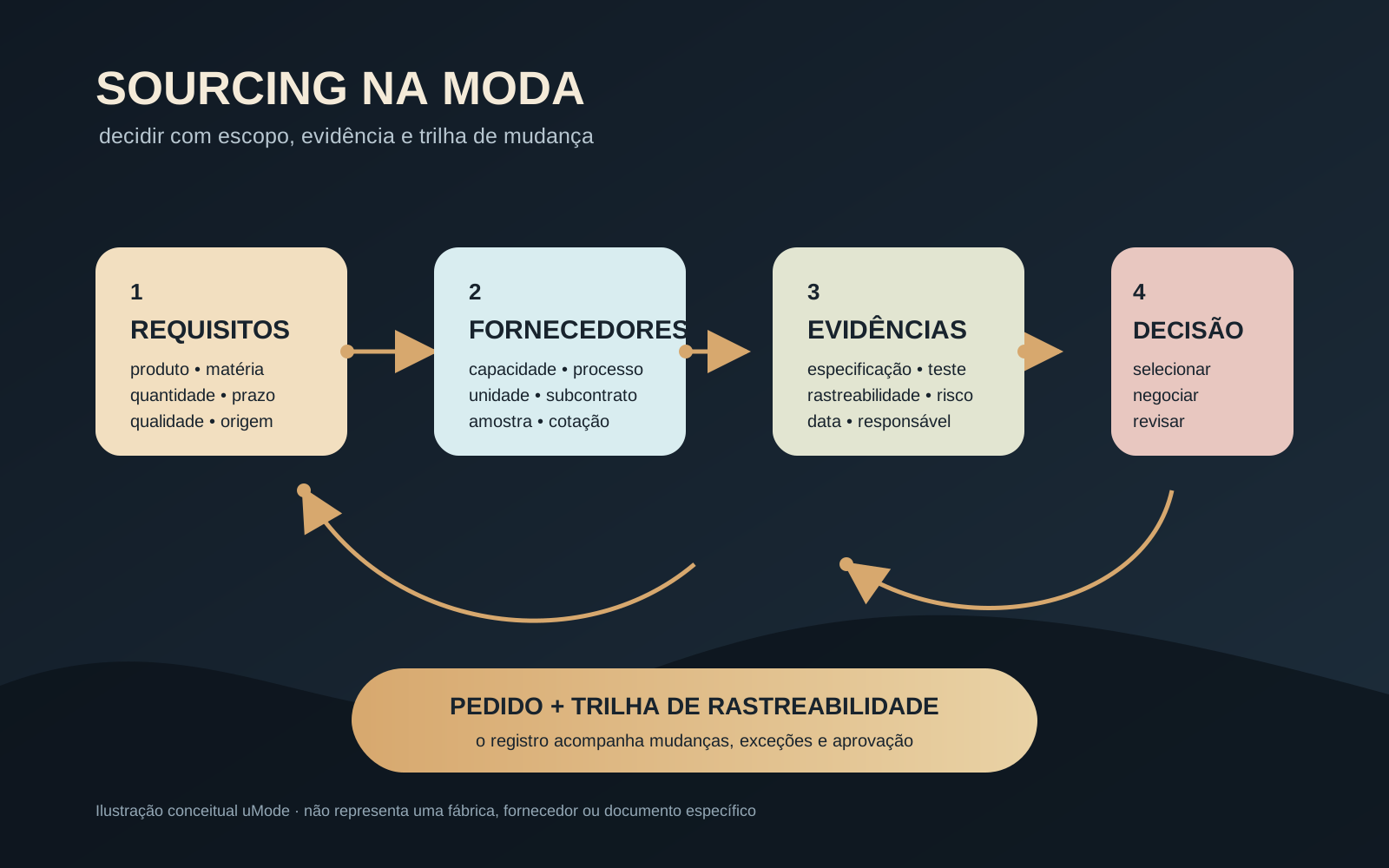
Fashion sourcing turns product requirements into a verifiable decision about materials, suppliers, capacity, cost, timing and risk. It connects samples, evidence and purchase orders without reducing supplier choice to the lowest price.
Hering
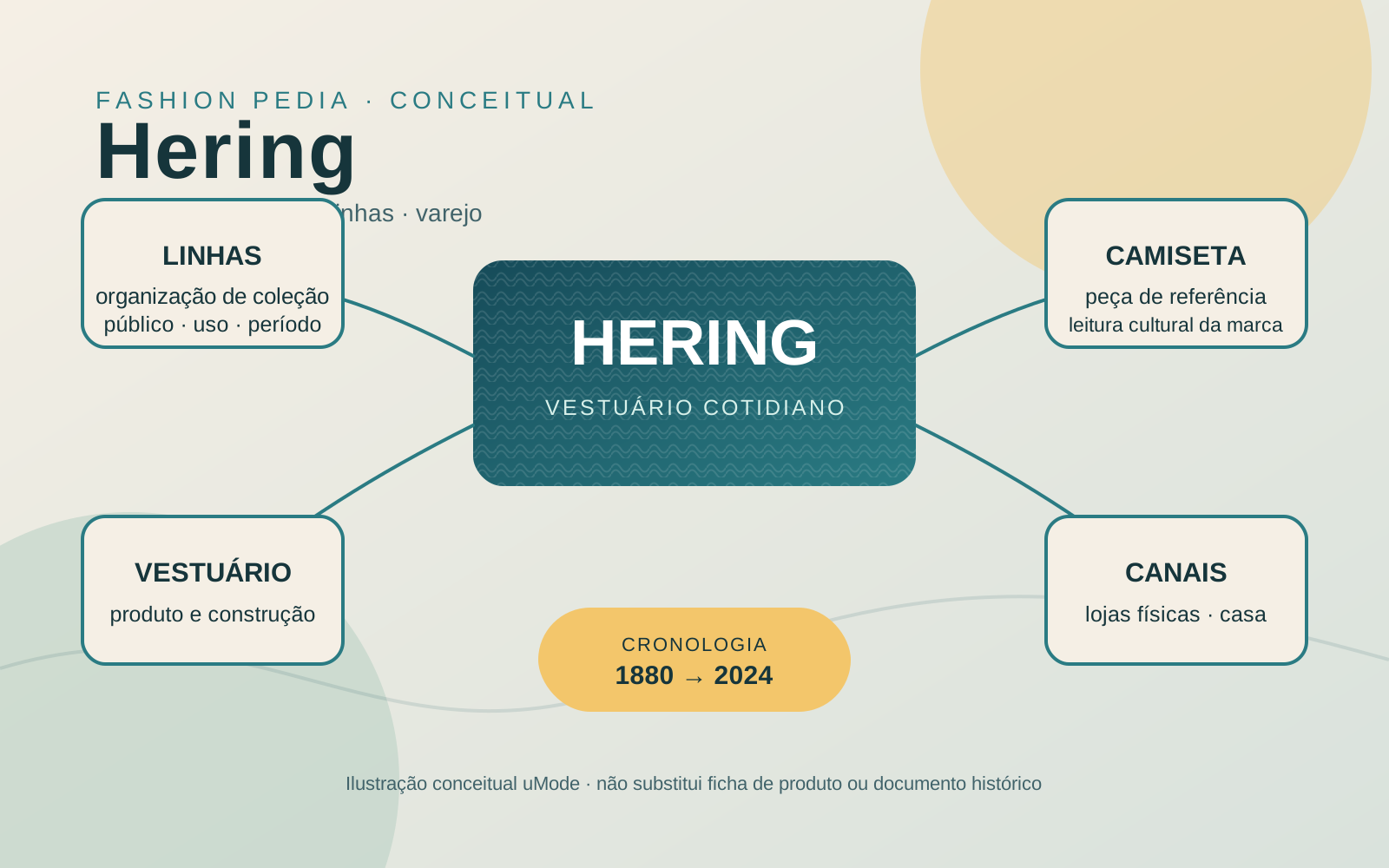
Hering is an apparel brand whose institutional timeline reaches back to 1880. Its public history combines the white T-shirt’s place in Brazilian culture with a corporate chronology that records its passage through Grupo SOMA and the formation of AZZAS 2154 in 2024.
Karsten
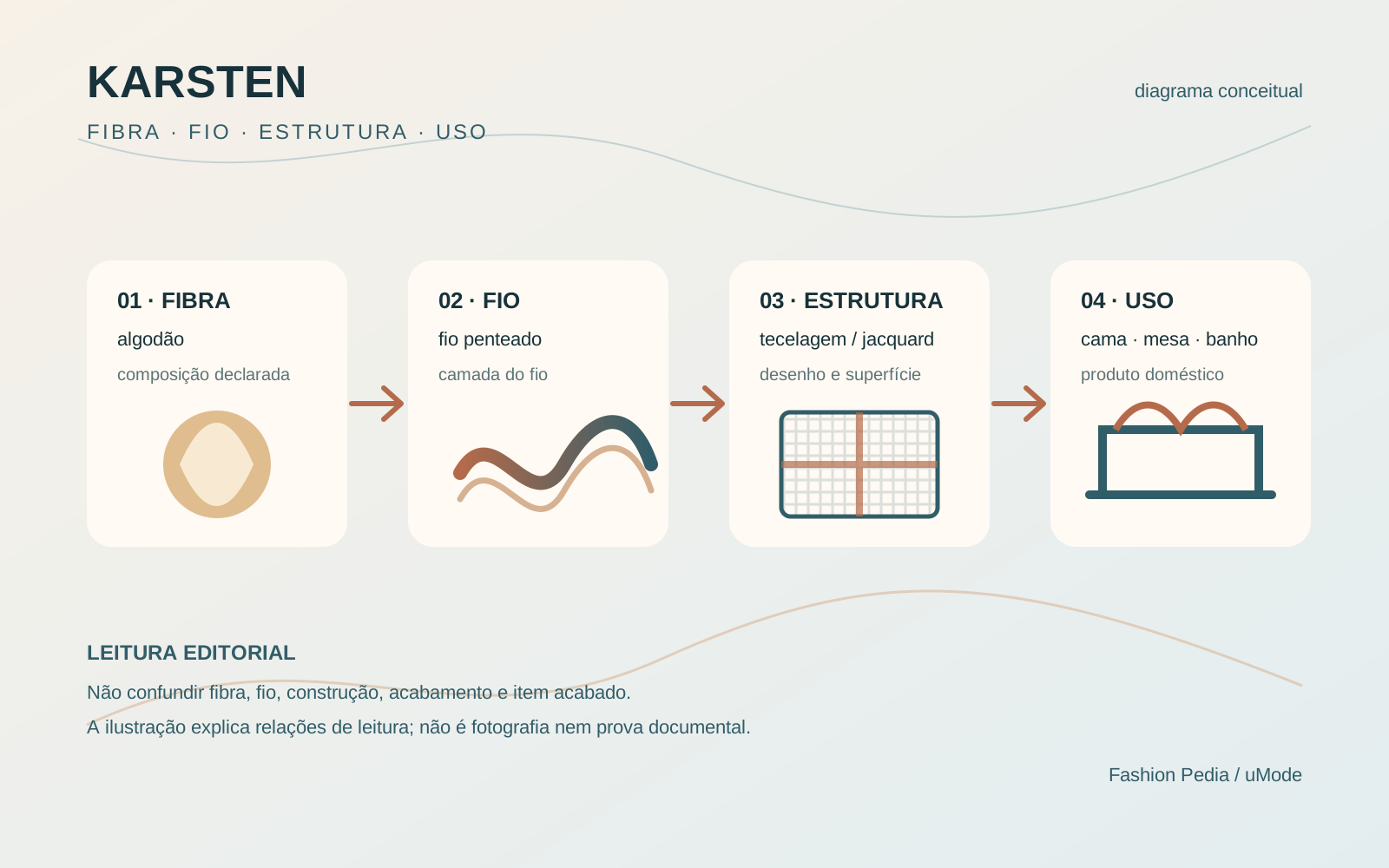
Karsten is a Brazilian home-textile brand focused on bed, table, bath and home-decor textiles, headquartered in Blumenau, Santa Catarina. Its documented history begins in 1882, develops through an in-house spinning operation, and reaches a domestic product range that explicitly uses cotton, jacquard, combed-yarn and thread-count terminology.
Sources
Want to apply this to your operation?