Karsten
Karsten is a Brazilian home-textile brand focused on bed, table, bath and home-decor textiles, headquartered in Blumenau, Santa Catarina. Its documented history begins in 1882, develops through an in-house spinning operation, and reaches a domestic product range that explicitly uses cotton, jacquard, combed-yarn and thread-count terminology.
On this page
What is Karsten?
Karsten is a Brazilian home-textile brand covering bed, table, bath and home-decor textiles. FIESC places its documented beginning in 1882, in a small weaving operation in Blumenau using looms brought from Germany and called Tecelagem Roeder, Karsten & Hadlich. That starting point is more useful than a generic longevity claim: it locates the company in weaving and identifies the material origin of the factory.
The chronology also connects infrastructure with manufacturing. In the nineteenth century, the company used the waters of the Itajaí-Açu River to generate power for spinning machines and looms. It began making table linens in 1916 and decorative fabrics in 1941. In 1971, it became a publicly traded company; in 1977, it installed its own spinning mill. These milestones allow Karsten to be read across several stages of the textile chain without turning any single date into proof of current market leadership.
How should Karsten's materials and products be read?
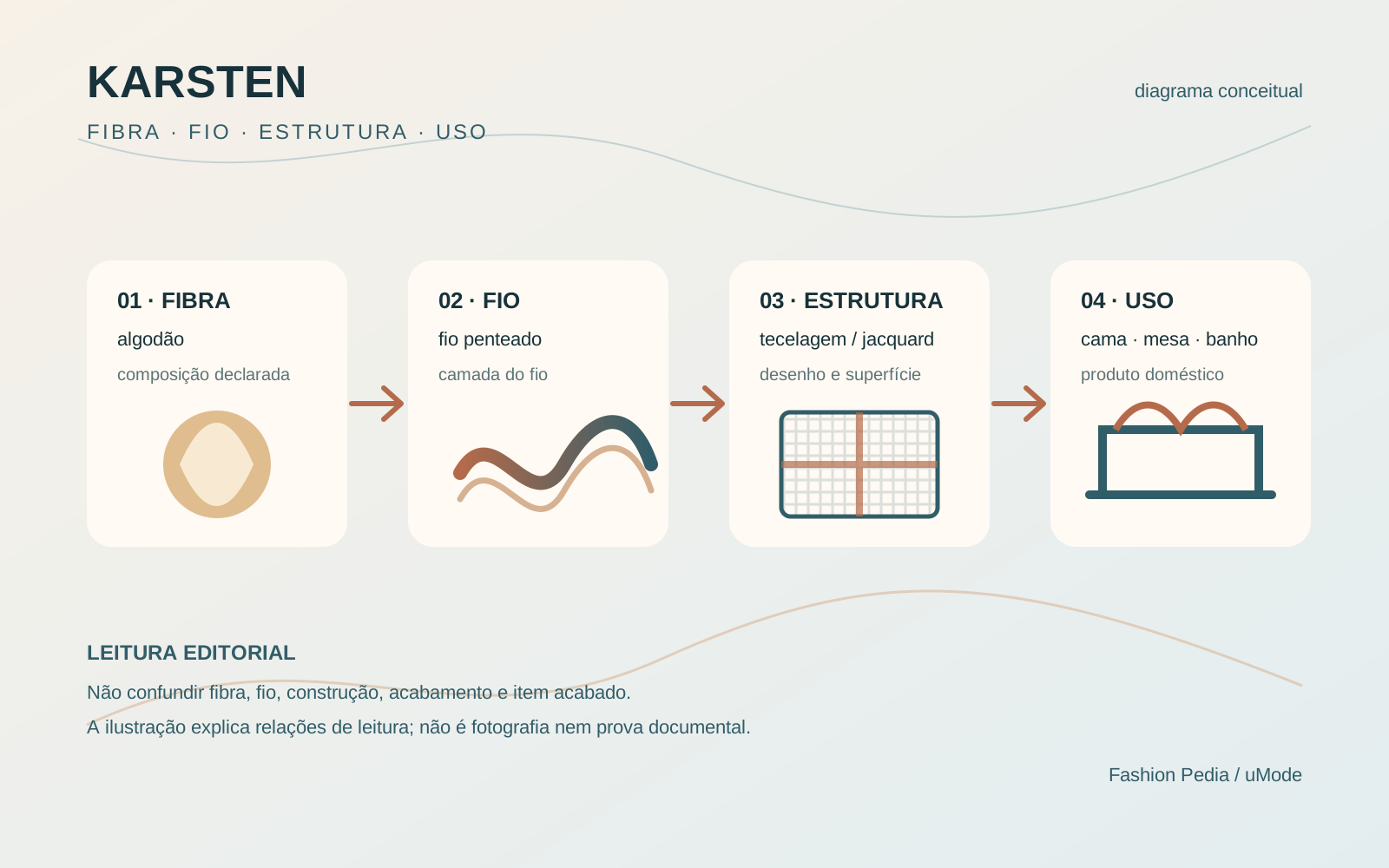
A technical reading should keep fibre, yarn, structure and finished item separate. In the brand's own institutional language, cotton is associated with softness; jacquard is associated with the texture of designs; and combed yarn appears in towels. These are different descriptive layers, not synonyms: cotton names the stated fibre, combed yarn names a yarn characteristic, and jacquard names a way of building a design and surface. The commercial page, in turn, displays a single-bed children's comforter identified as 200-thread and 100% cotton. That is a product example visible at the time of access, not a universal specification for the whole range and not automatic proof of performance.
Thread count therefore needs to remain attached to the article that presents it and to its stated composition. In the documented case, the item is a single-bed children's comforter with 200 threads and 100% cotton. The wording should not be expanded to say that all of the brand's bedding uses the same count, nor should it assign superior quality without a test method. When products are compared, the product record should keep composition, construction, finishing and intended use distinct.
The presence of cotton, jacquard and weaving makes Karsten a useful entry point into textile vocabulary. The link to the textile and apparel chain helps distinguish fibre-and-yarn transformation from household-product stages; ABIT and Santa Catarina's textile cluster extend institutional navigation without proving a corporate or ownership relationship with Karsten.
Why does Karsten matter to Brazil's textile chain?
Karsten matters here through the combination of a long documented factory history, an identifiable domestic portfolio and a chain described across more than one operation. The 1977 in-house spinning milestone is particularly useful for industrial reading because it connects the brand to yarn production, while the table-linen and decorative-fabric milestones show documented expansion into applications. FIESC also reported in 2021 that Karsten was headquartered in Blumenau, had a factory in Ibirama, a distribution centre in Gaspar and a presence in more than 20 countries; those figures and locations must remain tied to the article's date rather than being treated as automatically current.
For product research, the entry works as a map: identify the stated fibre or composition first, then the yarn, then the construction or surface, and finally the household article and its use. For market research, the same discipline prevents the brand, the publicly traded company, the online store and the regional cluster from being treated as interchangeable entities. Karsten can be connected to other graph nodes through subjects such as cotton, jacquard and weaving, but each relation remains editorial navigation rather than evidence of ownership, equivalence or performance.
Verified facts
- Karsten's history began in 1882 in a small weaving operation called Tecelagem Roeder, Karsten & Hadlich, with looms brought from Germany.
Source: fiesc.com.br ↗ - In the nineteenth century, Karsten generated power from the waters of the Itajaí-Açu River to run spinning machines and looms.
Source: fiesc.com.br ↗ - Karsten began producing table linens in 1916 and decorative fabrics in 1941.
Source: fiesc.com.br ↗ - Karsten became a publicly traded company in 1971.
Source: pt.wikipedia.org ↗ - In 1977, Karsten installed its own spinning mill, completing the production chain described by the historical source.
Source: pt.wikipedia.org ↗ - Karsten presents itself as a Brazilian brand and reports more than 140 years of history, with products for bed, table, bath and home decoration.
Source: karsten.com.br ↗ - Karsten's official page describes cotton, jacquard designs and combed-yarn towels as elements of its portfolio and product language.
Source: karsten.com.br ↗ - Karsten's official commercial page lists a single-bed children's comforter identified as 200-thread and 100% cotton among the displayed products.
Source: karsten.com.br ↗ - In a 2021 report, FIESC described Karsten as headquartered in Blumenau, with a factory in Ibirama, a distribution centre in Gaspar and a presence in more than 20 countries.
Source: fiesc.com.br ↗
Related entries
Cotton
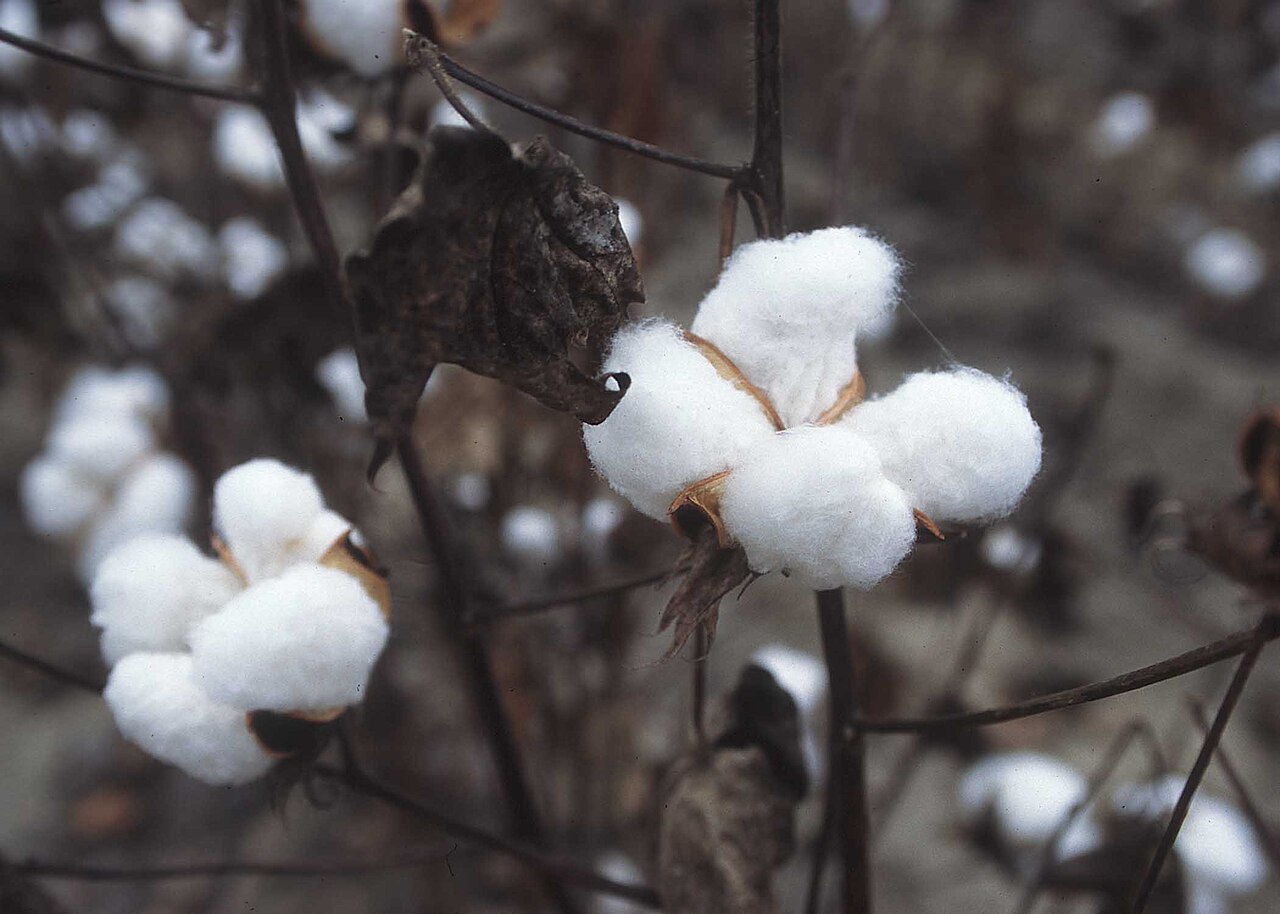
Cotton is the most widely used natural fiber in the global textile industry. Grown around the seeds of the cotton plant (Gossypium), it is prized for comfort, breathability and versatility in apparel.
Jacquard
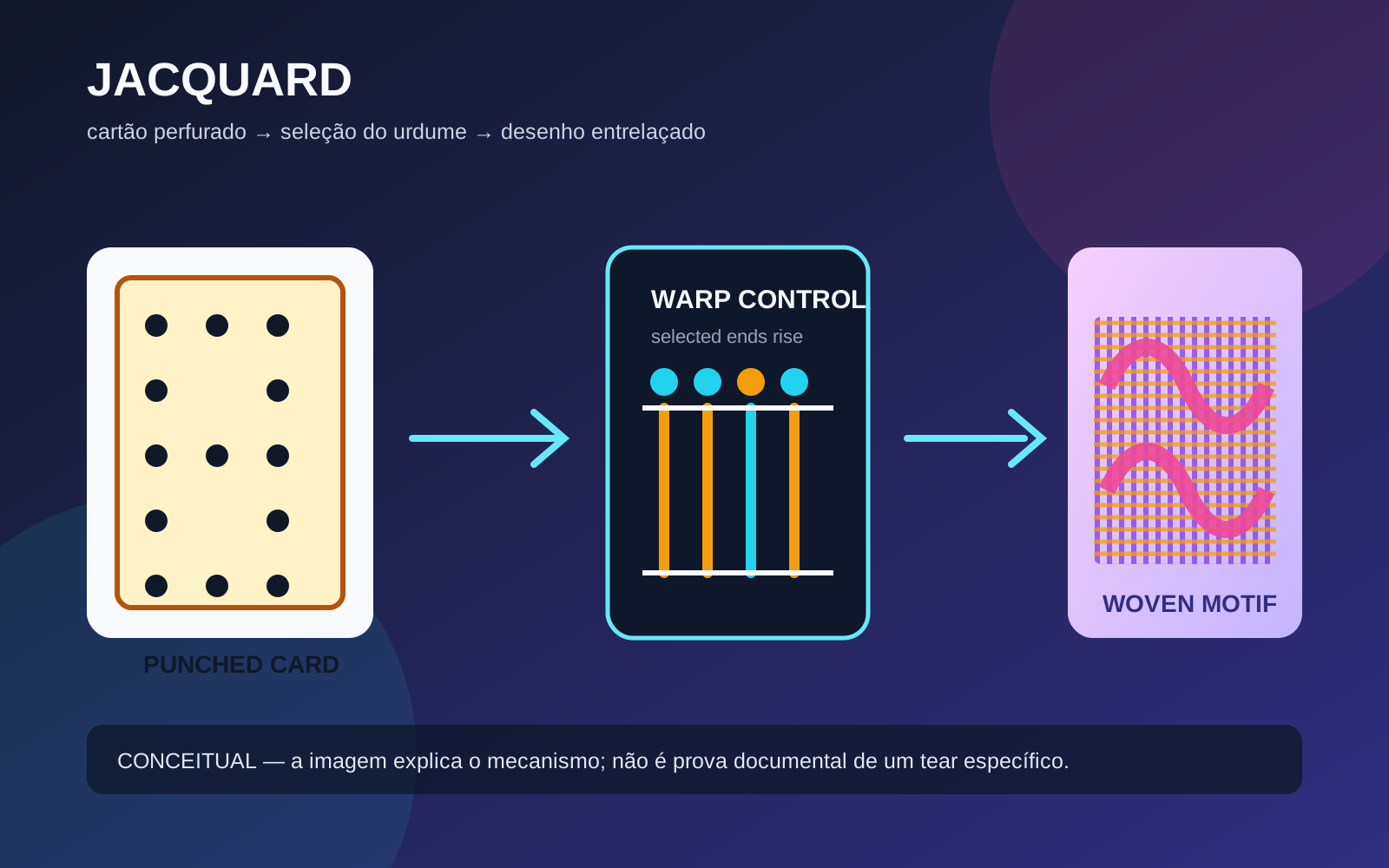
Jacquard refers to a weaving mechanism and, by extension, to fabrics or constructions in which controlled warp selection helps form a design. Joseph-Marie Jacquard patented the invention in 1804; in apparel development, a Jacquard specification must separate construction, fiber content, motif scale, and observed behavior.

Industrial weaving
Weaving is the process of forming fabric by regularly interlacing two yarn systems: warp in the lengthwise direction and weft across the width. The construction results from warp preparation, shed formation, weft insertion and beat-up, and control of yarn delivery and fabric take-up.
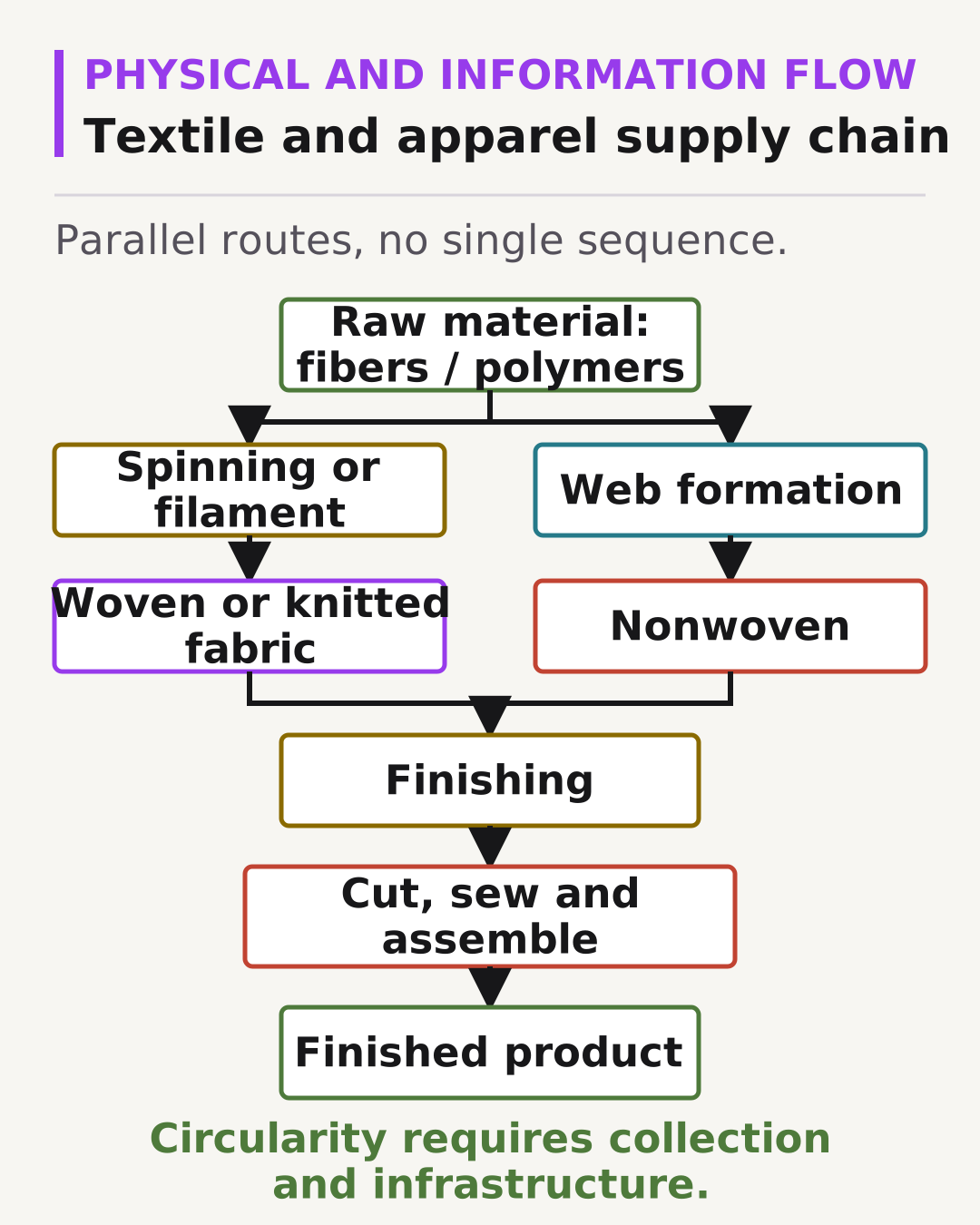
Textile and apparel supply chain
The textile and apparel supply chain transforms natural or manufactured raw materials into yarns, woven or knitted fabrics, and then finished articles. Its reference flow covers fibres, spinning, material formation, wet processing, cutting and assembly, while the real system also includes suppliers, subcontracting, distribution, use and recovery routes.
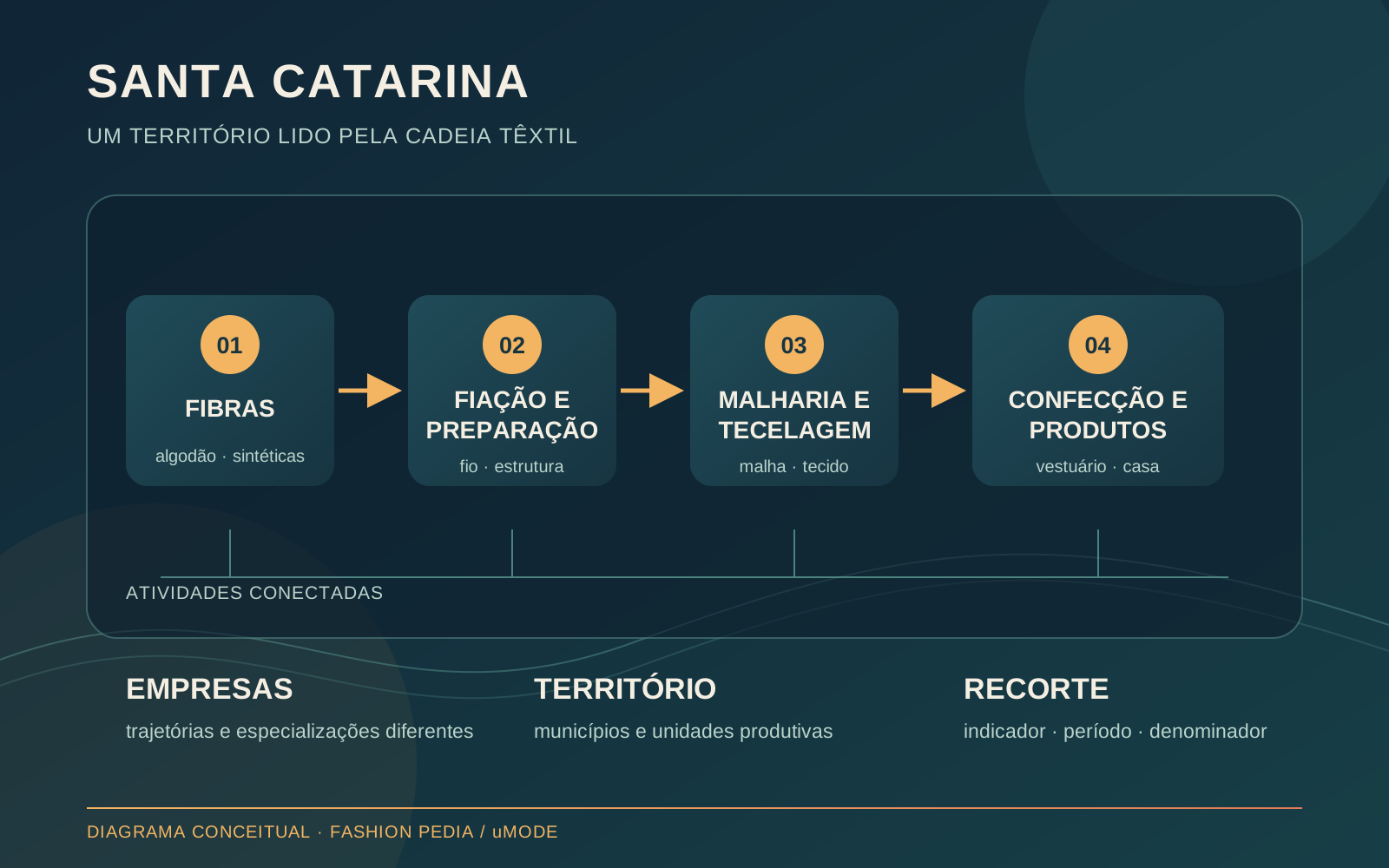
Santa Catarina textile cluster
Santa Catarina textile cluster. Santa Catarina's textile cluster is best understood as an arrangement of activities spanning textiles, apparel, leather and footwear rather than as a single company. In FIESC's Competitiveness Atlas, the arrangement accounted for 12.1% of Santa Catarina's Gross Industrial Production Value in 2022.
Sources
Want to apply this to your operation?